20-year-old patient: You’re never too young to get colorectal cancer

“I learned the reason right after my diagnosisgenetic testing showed I have Lynch syndrome. It’s a hereditary condition that makes me more likely to develop multiple cancers over my lifetime. I am the first person in my family to have it.”

How having Lynch syndrome has helped me

If there’s anything good to be said about having Lynch syndrome, it’s probably that it made me eligible to participate in a clinical trial …” 

https://www.mdanderson.org/cancerwise/20-year-old-patient–you-re-never-too-young-to-get-colorectal-cancer.h00-159538956.html

If you have been avoiding your colonoscopy because the prep makes you nervous, check out this blog (and stop delaying)!

“An Individual Doesn’t Get Cancer, a Family Does”

I had always assumed that this type of potentially life-saving information would be openly shared within the family. And that the individual’s doctors would alert other family members as well. Naively, I had believed the “duty to warn” applied to genetic cancer risks.

https://www.facingourrisk.org/blog/an-individual-doesnt-get-cancer-a-family-does

Risk-stratified faecal immunochemical testing (FIT) for urgent colonoscopy in Lynch syndrome during the COVID-19 pandemic

Lynch syndrome is a hereditary cancer disease resulting in an increased risk of colorectal cancer. Findings are reported from an emergency clinical service implemented during the COVID-19 pandemic utilising faecal immunochemical testing (‘FIT’) in Lynch syndrome patients to prioritise colonoscopy while endoscopy services were limited.

Fifteen centres participated from June 2020 to March 2021. Uptake was 68.8 per cent amongst 558 patients invited.

Conclusion

FIT demonstrated clinical value for Lynch syndrome patients requiring colorectal cancer surveillance …. Further longitudinal investigation on FIT efficacy in Lynch syndrome is warranted and will be examined under the ‘FIT for Lynch’ study (ISRCTN15740250).

https://academic.oup.com/bjsopen/article/7/5/zrad079/7260320?login=false

AliveAndKickn Podcast – Dr Jose Perea 

“I talk with Dr Jose Perea Garcia, Digestive Surgeon as well as cancer researcher in MadridWe talk about how surgery has evolved and management of the Lynch Syndrome patient compared to sporadic casesWe compare some protocols and coverage in the US vs elsewhere such as Spain where there is government run.  Urban vs rural is an issue everywhere.  I convince Dr Garcia to offer me a ticket to an Atletico Madrid game if I get there, including if they play Real Madrid.” 

https://www.aliveandkickn.org/podcast-1/episode/26556485/aliveandkickn-podcast-dr-jose-perea-garcia

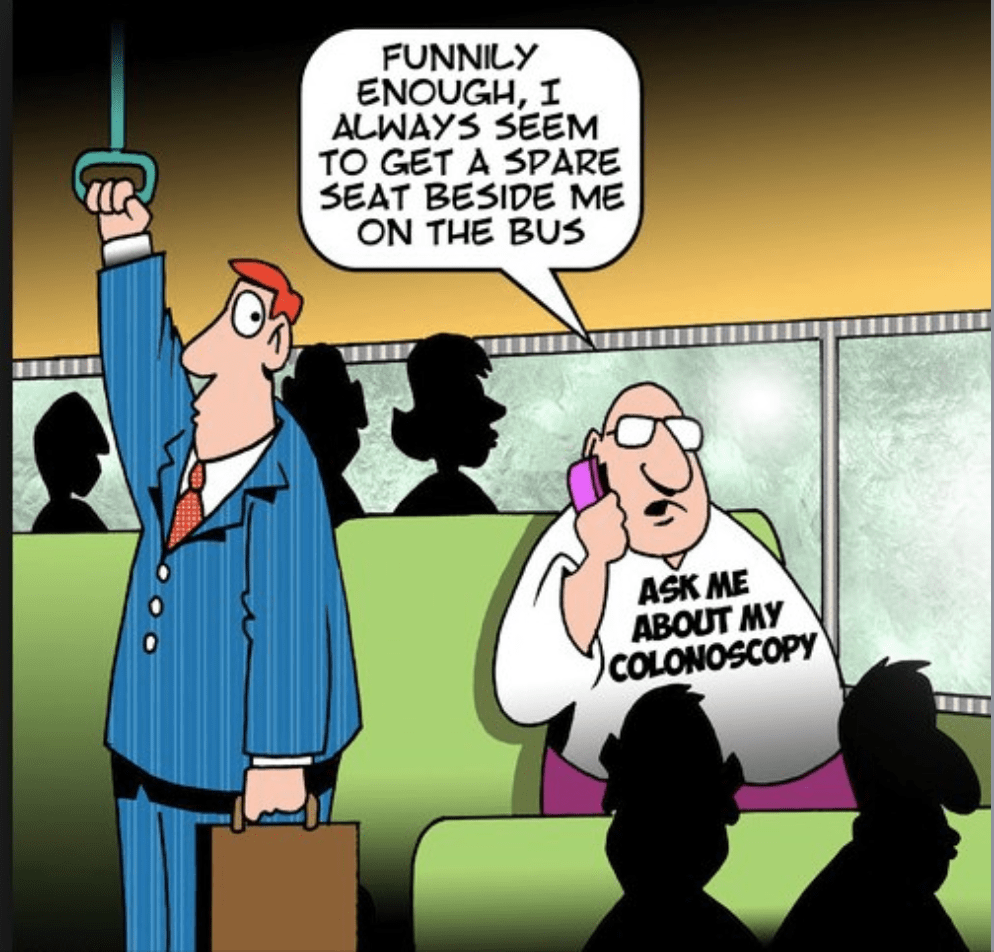
The ins and outs and ups and downs of a colonoscopy

A colonoscopy is a test to look at your bowel using a small camera. 

Bowel preparation is required by taking a strong laxative. You will take this the day before the test to empty your bowel. The test works best when your bowel is empty and there is nothing to block the camera going into the bowel and having a look.

You will have to go to a hospital endoscopy unit to have the test.

The test is a day procedure.

The test is done by a doctor or an advanced practice nurse, called an endoscopist.

You will have a choice of doing the test with sedation or no sedation.

Generally the test can take up to 20 minutes.

Before you leave, you will be told what was seen during the test and if any samples were taken or if any polyps were removed. 

(Personally I have undergone aprox 15 colonoscopies and I can say that the preparation and procedure are worthwhile particularly if you have a family predisposition to cancer or have symptoms like blood in your stool. They have probably saved my life as during one of these procedures cancer was detected…I had no symptoms).

https://www2.healthservice.hse.ie/organisation/nss/news/the-ins-and-outs-and-ups-and-downs-of-a-colonoscopy/

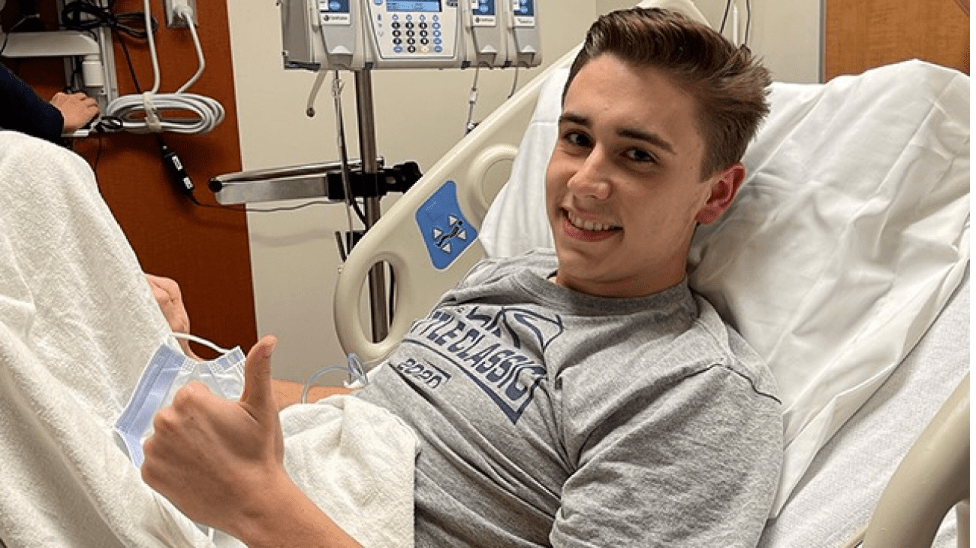
NICE publishes guidance on using Faecal Immunochemical Tests in primary care

The National Institute for Health and Care Excellence (NICE) have published new guidance on the use of a home test called faecal immunochemical test, known as FIT, in people with symptoms of possible bowel cancer.

Doctors have been advised by NICE to offer people with symptoms of possible bowel cancer a home test kit to help reduce waiting times for diagnostic tests, like a colonoscopy or flexi-sigmoidoscopy.

The new guidance will now see everyone with suspected bowel cancer receive a FIT kit.

Those with a positive result will be referred for a colonoscopy or other tests for further investigation. However, GPs can refer people for a colonoscopy without a positive FIT result if they think its necessary and where symptoms persist.

https://www.bowelcanceruk.org.uk/news-and-blogs/news/nice-publishes-guidance-fit-primary-care/

We need a genomics-savvy healthcare workforce

Genetics has long been used in specific areas of medicine, such as for the diagnosis of rare diseases caused by pathogenic mutations or in the context of prenatal genetic testing; however, it is now diffusing across many domains of clinical practice.

The interpretation of clinical genetic information and its communication to patients are by no means trivial. In the case of genetic tests, for example, the ideal scenario is that the test provides information on whether the patient carries an actionable pathogenic variant.

The increasingly central role of genomics in healthcare means that not only are more genetic counselors needed, but also multidisciplinary teams are essential for utilising genomic technologies in the clinical setting.

A rapidly evolving genomic revolution is poised to shape the future of healthcare, but its full clinical potential can be realized only with the development of a multidisciplinary healthcare workforce capable of evolving to stay abreast of rapidly developing genetic technologies.

https://www.nature.com/articles/s41591-023-02522-1