Lynch Syndrome online training for primary care clinicians

The training involves watching a short video which covers:

  • A brief overview of Lynch syndrome
  • Their personalised cancer prevention programme
  • An introduction to the Lynch syndrome quick guide and how it can help you identify and manage your patient’s care
  • How to manage their first-degree family members’ care

The Upsides and Downsides of Cancer Genetic Testing

Living with a hereditary cancer syndrome inevitably brings uncertainty. Despite taking preventative measures, the knowledge of increased risk frequently lingers in my mind.

https://www.curetoday.com/view/the-upsides-and-downsides-of-cancer-genetic-testing

Resistant Starch

Taking a supplement of 30 grams of “resistant starch” a day – about the amount in two slightly unripe bananas – reduced the risk of multiple forms of cancer in people with a rare genetic condition.

Consuming resistant starch – a dietary fibre found in oatmeal, beans and bananas – reduces the risk of upper gastrointestinal cancers by nearly 50 per cent in people with Lynch syndrome. This is the first time a nutrient has been shown to prevent these cancers in people with the condition.

The nutrient supplement finding is significant because upper gastrointestinal cancers tend to be the deadliest for people with Lynch syndrome, says Matthew Yurgelun at the Dana-Farber Cancer Institute in Boston, Massachusetts, who wasn’t involved in the work.

https://www.newscientist.com/article/2330638-starch-supplement-reduces-the-risk-of-some-hereditary-cancers/?_ptid=%7Bkpdx%7DAAAAweYhyn3zhAoKcmJhNGYxWmNwZRIQbGt0Z2dpOHVzaTBmZzY2OBoMRVhMRlE5SEFCMVVTIiUxODIwMW9nMDgwLTAwMDAzMmRsYWJpZm1hbjJybHVxZGMzaDhzKhtzaG93VGVtcGxhdGVRSU9EQUhKOTFLS1oyMjcwAToMT1Q5RzRJMVpFNkRHQg1PVFZJRUVNM0I3N1pLUhJ2LYUA8Bh5ZHJkd3pqNTdaDTUxLjE3MS4yNDkuMjhiA2Rtc2ifxa2mBnAKeAQ

See: Cancer Prevention with Resistant Starch in Lynch Syndrome Patients in the CAPP2-Randomized Placebo Controlled Trial: Planned 10-Year Follow-up. https://www.capp3.org/media/26287/capr-22-0044_published_paper.pdf

What is the Lynch syndrome registry?

The Lynch syndrome registry pilot study led by The Cancer Screening and Prevention Research Group at Imperial College London, records information about the health status of individuals with Lynch syndrome. A select group of Lynch syndrome patients who have previously taken part in the Cancer Prevention Project 3 (CaPP3) trial will be invited to participate in the pilot study from across four hospitals in England.

The Lynch syndrome registry records and analyses important information about people with Lynch syndrome. This helps to understand how people with Lynch syndrome are looked after and cared for across England. All information is held on a secure and confidential computer database.

The registry will ultimately be an efficient system that with the help of the bowel cancer screening programme will allow nationally coordinated care for Lynch syndrome families. It will also become a valuable central research resource that could be used to support other studies.

https://www.lynchregistry.org.uk/index.html

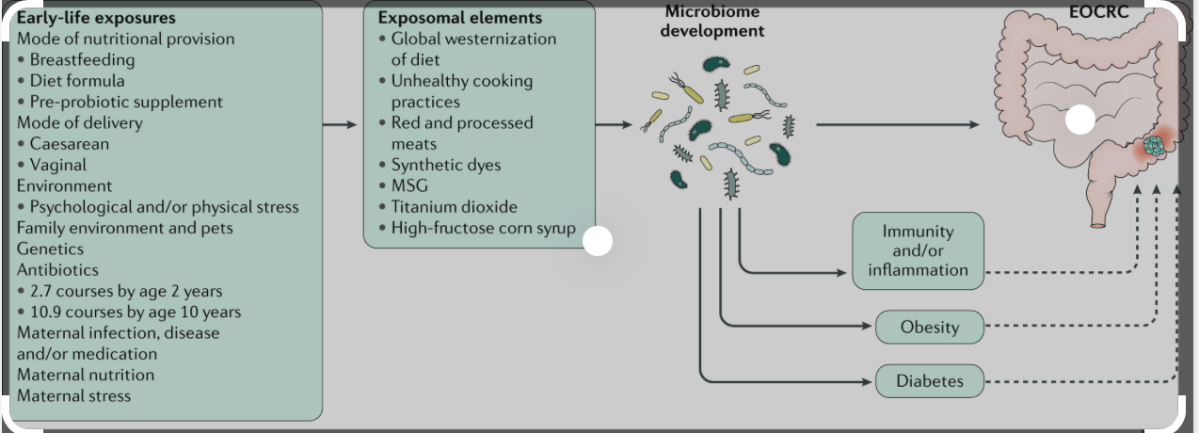
Lights and shadows in the early-onset colorectal cancer management and research: An integrative perspective – Physician scientist with patient advocates

https://www.sciencedirect.com/science/article/pii/S1521691823000318

Practice points

  • -The global importance that Early-onset colorectal cancer (EOCRC) is acquiring, makes a joint and worldwide effort necessary to unravel the problem.
  • -Although most EOCRC cases seem to be sporadic, there is still an important proportion belonging to families with well-defined colorectal cancer predisposition syndromes.
  • Excluding hereditary syndromes, general population screening strategies don’t cover most cases in the majority of countries, except in some defined ones with first-degree relatives with colorectal cancer.
  • -At present, the management of EOCRC should be considered a lifelong process: from the early care of symptoms to avoiding delays in diagnosis; through a multidisciplinary treatment in both the present and future; and with considerations for the possible consequences in the short and long term.
  • -The participation of patients in each step of the process, as well as in the awareness of the problem is especially critical in EOCRC.

“How to set up an in-house nurse-led colorectal Lynch syndrome clinic”

In this paper, Filipe Carvalho goes through how he set- up his service, and outlines the essential steps to consider when setting up and managing an in-house nurse-led colorectal Lynch syndrome clinic.

The NHS long term plan sets a target that by 2028, 75% of cancers will be diagnosed at an early stage. One of the ways this ambition will be reached is through targeted screening and personalised surveillance of those most at risk of developing cancer, such as those with Lynch syndrome.

It highlights the educational requirements, patient criteria, the importance of thorough planning and the need to liaise-on with key stakeholders.

https://www.magonlinelibrary.com/doi/abs/10.12968/gasn.2023.21.6.22

Baseline Features and Reasons for Nonparticipation in the Colonoscopy Versus Fecal Immunochemical Test in Reducing Mortality From Colorectal Cancer (CONFIRM) Study, a Colorectal Cancer Screening Trial

The Colonoscopy Versus Fecal Immunochemical Test in Reducing Mortality From Colorectal Cancer (CONFIRM) randomized clinical trial sought to recruit 50 000 adults into a study comparing colorectal cancer (CRC) mortality outcomes after randomization to either an annual fecal immunochemical test (FIT) or colonoscopy.

Conclusions and relevance: In this cross-sectional analysis of veterans(enrollment was through 46 Department of Veterans Affairs medical centers, comprised veterans aged 50 to 75 years with an average CRC risk and due for screening). choosing nonenrollment in the CONFIRM study, those who declined participation more often preferred FOBT or FIT over colonoscopy. This preference increased over time and was strongest in the western US and may provide insight into trends in CRC screening preferences.

https://pubmed.ncbi.nlm.nih.gov/37432690/

The English National Lynch Syndrome Transformation Project

There is consistent evidence of the cost-effectiveness and clinical benefit of a structured diagnostic pathway in patients with LS following a diagnosis of cancer linked to cascade testing in families. 

Existing guidelines recommend universal testing of newly diagnosed colorectal and endometrial cancer for Lynch syndrome.

….Another approach to deliver effective diagnosis is to develop ‘mainstreaming’ models whereby patients are offered constitutional genetic testing by their cancer treating teams locally, rather than relying on referral of eligible patients to tertiary services such as clinical genetics.

Conclusions

Whilst there is increased awareness of the cancer risks associated with LS, and other aspects of the condition, by clinicians, there remain significant gains which can be made in diagnosis and subsequent lifelong management of people with LS.

Effective diagnosis needs to deliver people with this condition to effective clinical risk mitigation through a range of mechanisms including nationally coordinated and quality-assured colonoscopic surveillance.

In this project, we have aimed to develop expertise within cancer teams across England, with clear responsibilities, leadership from within which will ensure that the patients they are managing with cancer will receive appropriate testing and delivery diagnosis.

The responsibility for managing cascade testing remains with specialist genomics services.

However lifelong care of people diagnosed with this condition depends on awareness of who this population is, as defined through a national registry, and access to regional multidisciplinary expertise.

https://www.bsg.org.uk/service-success-stories/the-english-national-lynch-syndrome-transformation-project/

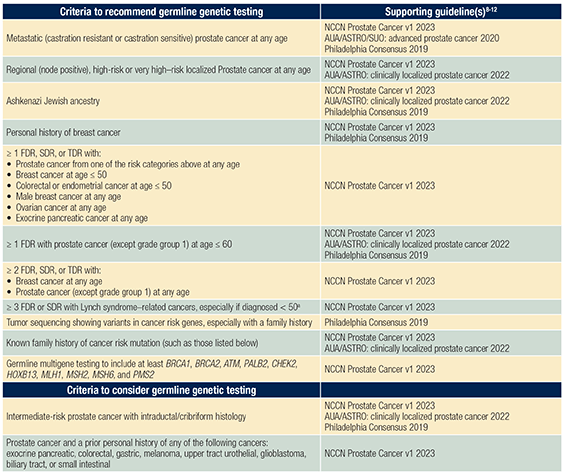
Understanding the Underutilisation of Germline Genetic Testing in Prostate Cancer

https://dailynews.ascopubs.org/do/understanding-underutilization-germline-genetic-testing-prostate-cancer

Germline genetic testing, no longer an “exceptional” test offered only to select families with multiple generations of cancer, has become the standard of care for many cancers, including prostate cancer. It is imperative that patients be offered timely testing, as positive results may inform shared patient–physician decision-making for regulatory-approved therapies. 

Key Points:

  • Indications for and implications of germline testing in patients with prostate cancer have expanded over the past decade, particularly related to precision therapies and management.
  • Germline testing for prostate cancer is vastly underused despite many patients qualifying for testing.
  • It is imperative that a variety of well-studied genetics service delivery models be used to help overcome recognized barriers to the implementation of germline testing for prostate cancer so that patients and their families receive the most effective care.

Be aware of gene changes and cancer in your family and take part in screening to reduce your risk of cancer.

https://www.cancer.ie/cancer-information-and-support/cancer-types/bowel-colorectal-cancer/lynch-syndrome