The Role of Colonoscopy in the Management of Individuals with Lynch Syndrome: A Narrative Review

Rather than continuing to shorten the timing of endoscopic surveillance, other early diagnostic techniques and subsequent prevention strategies should be forecasted in order to allow a more effective and customised endoscopic surveillance of individuals with Lynch Syndome.

Subjects with LS need clear and repeated explanations about the value of endoscopic surveillance. Often, they also require psychosocial support. The usefulness of specialised programs aiming to remind patients of the dates of both exams and clinical follow-ups has been demonstrated 

Open Questions 

These hypotheses raise several questions: assuming that there is more than one pathway to CRC, what is the relative contribution of each? Are there different genetic backgrounds? Which are they?

https://pmc.ncbi.nlm.nih.gov/articles/PMC10417258/

“For many cancers, Ireland is now 1-2 standard-of-care innovations in cancer treatment behind international comparators”

It seems to me that this headline quotation from Prof Barry of the @INFO_NCPE likely has taken him out of context in relation to Anti-Cancer Drugs.

Let me try to help make sense of this:

1. The only public funding that has gone into anti-cancer drug discovery and development that I am aware of over the past 10 years in Ireland, is funding to commercialise academic discoveries. The commercialisation of drug discovery and development is a strategic, deliberate government policy.

2. When a commercial company is successful in demonstrating that a drug improves cancer outcomes, these companies are legally obliged to maximise profit for the company’s shareholders (as far as I understand, maybe I’m wrong here).

3. The rate at which new anti-cancer drugs that objectively improve cancer outcomes achieve regulatory approval (by the EMA or FDA) is accelerating.

4. To continue to offer to public cancer patients the international standard of care (eg NCCN or ESMO recommended) anti-cancer therapies is by definition going to cost public cancer care providers more money. This is how the whole system is deliberately designed.

5. EMA approval does not guarantee an impact on the “standard of care”. For an oncologist to prescribe any high cost anti-cancer therapy in public hospitals in Ireland, first, the pharmaceutical company must apply to the @HSELive to have their drug reimbursed. Many companies do not even apply. Next, they must commit to a reimbursement process that takes 2-3 years, with no guarantee of a successful reimbursement outcome.

6. As long as I have worked for the HSE, the prescribing options available to public Medical Oncologists have been robustly restricted to drugs that have been approved through this reimbursement process.

7. No public consultant has the authority or ability within the existing system to ‘authorise’ expenditure for any high cost anti-cancer drug by signing a prescription, unless the HSE has explicitly authorised this prescription. The authorisation status is publicly available here: https://hse.ie/eng/services/list/5/cancer/profinfo/chemoprotocols/

8. If I tried to prescribe a high cost anti cancer drug that hadn’t been through the HSEs reimbursement process, it would not make it past the hospital pharmacist. In any publicly funded hospital.

9. For many cancers, Ireland is now 1-2 standard-of-care innovations in cancer treatment behind international comparators. In other words, for a long time now, the HSE has had total control over what a consultant oncologist can prescribe within the HSE. The problem is that the approval of emerging therapies is too slow, and not keeping pace with international standards, or with the private healthcare sector in Ireland.

@IMT_latest @med_indonews @hseNCCP @OECI_EEIG @IrishCancerSoc @INFO_NCPE

The comprehensive English National Lynch Syndrome Registry:

Lynch Syndrome (LS) is a cancer predisposition syndrome caused by constitutional pathogenic variants in the mismatch repair (MMR) genes.

To date, fragmentation of clinical and genomic data has restricted understanding of national LS ascertainment and outcomes, and precluded evaluation of NICE guidance on testing and management. To address this, via collaboration between researchers, the National Disease Registration Service , NHS Genomic Medicine Service Alliances, and NHS Regional Clinical Genetics Services, a comprehensive registry of LS carriers in England has been established.

The most frequently identified pathogenic MMR genes were MSH2 and MLH1 at 37.2% (n = 3362) and 29.1% (n = 2624), respectively. 35.9% (n = 3239) of the ENLSR cohort received their LS diagnosis before their first cancer diagnosis (presumptive predictive germline test). Of these, 6.3% (n = 204) developed colorectal cancer, at a median age of initial diagnosis of 51 (IQR 40–62), compared to 73 years (IQR 64–80) in the general population

The establishment of a secure, centralised infrastructure and mechanism for routine registration of newly identified carriers ensures sustainability of the data resource.

https://www.thelancet.com/journals/eclinm/article/PIIS2589-5370(24)00044-0/fulltext

GDPR and Clinical Trials Position Paper

What the Position Paper on GDPR contains

  • Data that demonstrates strong public support in Ireland for clinical trials, and the sharing of health information under controlled circumstances.
  • Clear calls to action that the Government can take to ameliorate the effect of Ireland’s interpretation of GDPR/HRR relating to clinical trials (& health research)
  • A legal analysis of the spirit and purpose of GDPR, and how it is applied to health research in Ireland
  • An overview of the GDPR-related issues besetting the clinical trials community
  • Data showcasing the variability of Ireland’s approach to GDPR & clinical trials
  • Comparative data from EU countries highlighting differences in approach between Ireland and other jurisdictions

What is the impact of GDPR interpretation in Ireland?
In a word, considerable – and it impacts patients and clinicians directly.

You can read the report by clicking on the image (left) or by clicking the button below. 

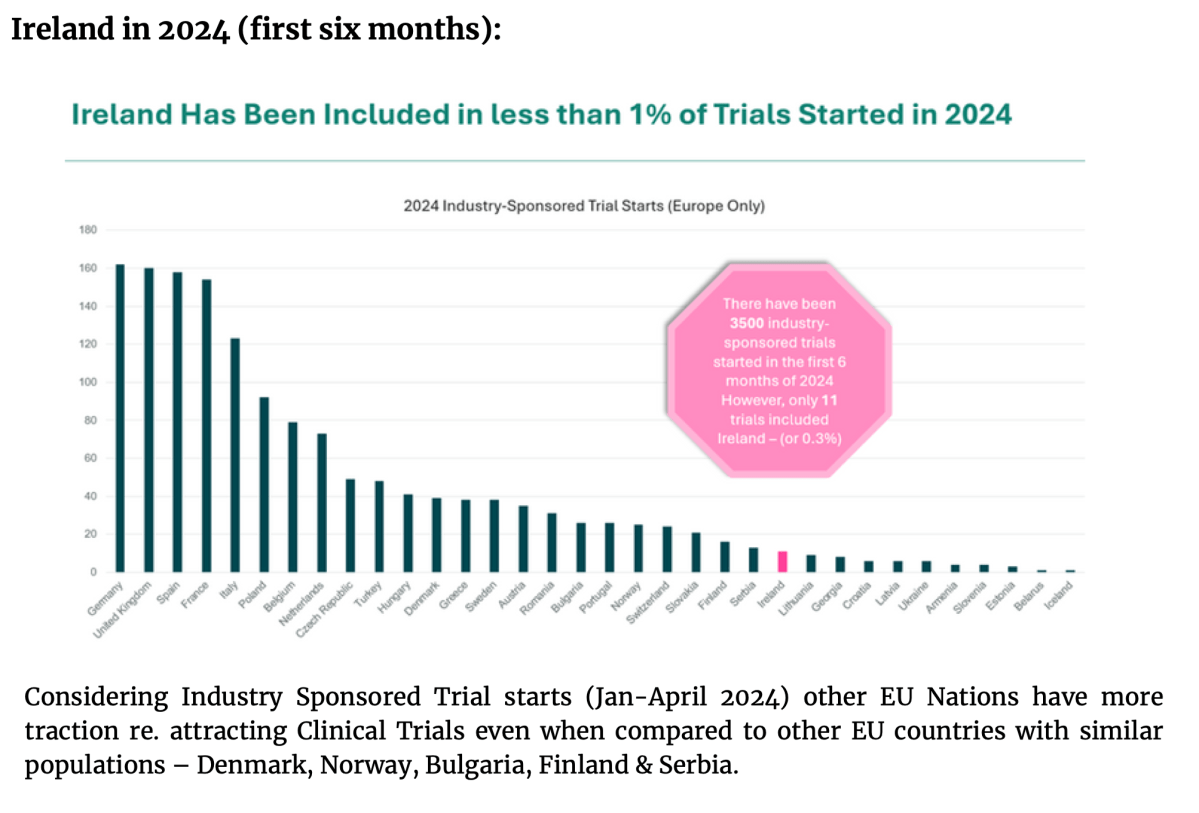
Clinical Trials Information System (CTIS)

Patients and the public can now find information about clinical trials being conducted in Ireland.

You can see which illnesses clinical trials are developing new treatments for, where the trials are taking place, such as in a certain hospital, and find contact details for the sponsor.

Visit the Clinical Trials Information System (CTIS) Public Portal and use the advanced search to search the database of ongoing clinical trials: https://euclinicaltrials.eu/search-for-clinical-trials/?lang=en

The CTIS Public Portal is part of new regulations to make clinical trial information clearer and more accessible.

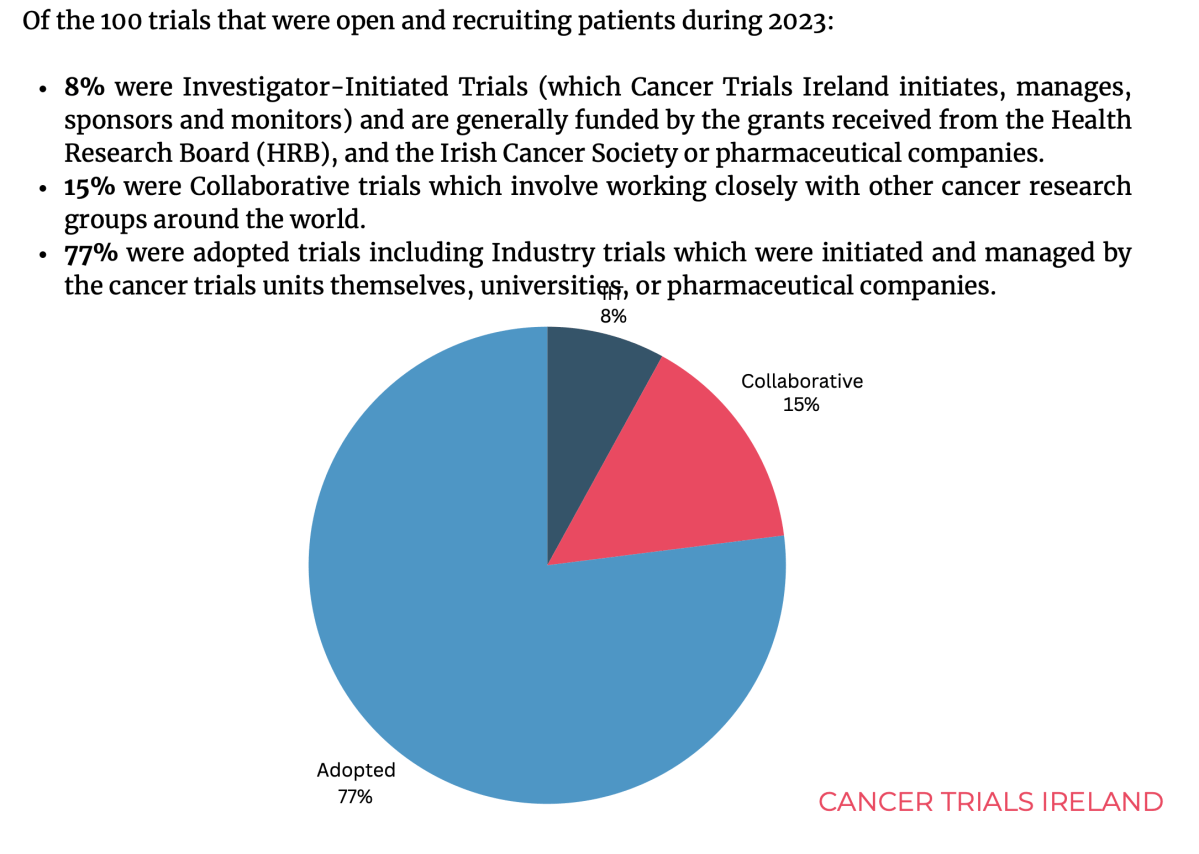
Cancer Trials Ireland

Cancer Trials Ireland is a national network dedicated to advancing cancer
care through clinical trials
, where new treatments and approaches are
thoroughly tested. They unite clinical specialists, researchers, and key
stakeholders to drive evidence-based improvements in cancer outcomes.

See 2023 report:

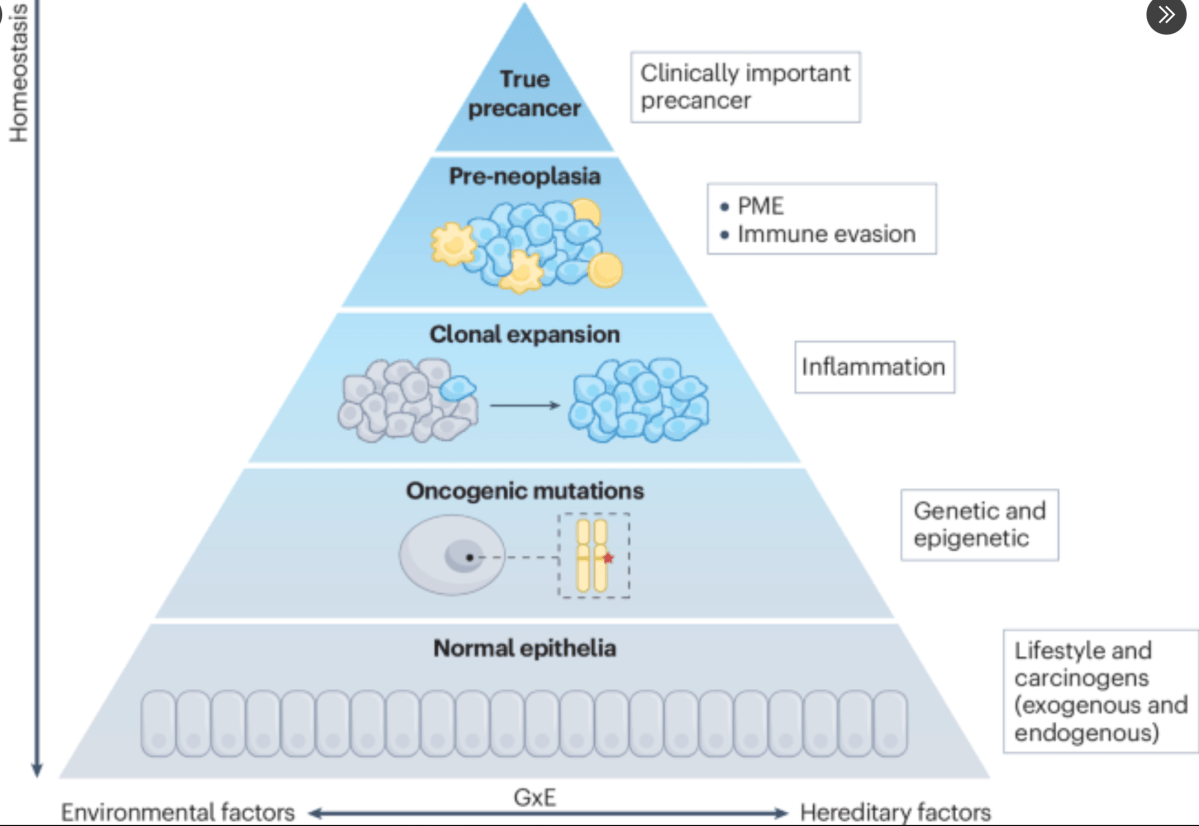
Defining precancer: a grand challenge for the cancer community

The term ‘precancer’ typically refers to an early stage of neoplastic(abnormal growth of cells) development that is distinguishable from normal tissue owing to molecular and phenotypic alterations, resulting in abnormal cells that are at least partially self-sustaining and function outside of normal cellular cues that constrain cell proliferation and survival.

Provides a starting point for a conceptual framework for defining precancer, which is based on molecular, pathological, clinical and epidemiological criteria, with the goal of advancing our understanding of the initial changes that occur and opportunities to intervene at the earliest possible time point.

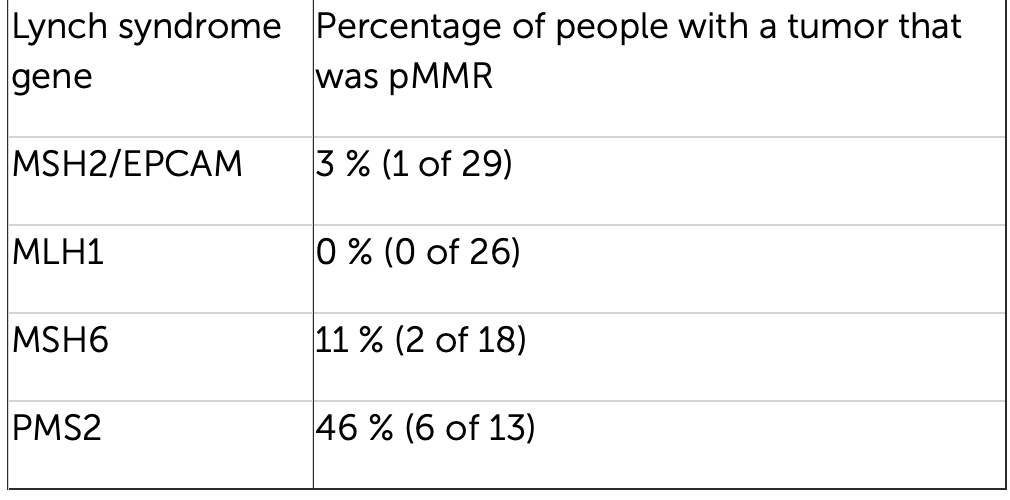
Prevalence and Clinical Implications of Mismatch Repair-Proficient Colorectal Cancer in Patients With Lynch Syndrome

Conclusion:

Patients with LS remained at risk for MMR-P(proficient) CRC, which was more prevalent among patients with MSH6 and PMS2 variants. MMR-P CRC was later onset and more commonly metastatic compared with MMR-D(deficient) CRC. Confirmation of tumour MMR/MSI status is critical for patient management and familial risk estimation.

When people with Lynch syndrome develop cancer, their tumours typically have a related set of features or biomarkers known as deficient mismatch repair (dMMR) and high microsatellite instability (MSI-High). However, occasionally people with Lynch syndrome have cancers that are proficient in mismatch repair (pMMR or MMR-P) and have microsatellite stability (MSS or MSI-Low) –more like the colorectal cancers found in people without Lynch syndrome. This study shows that 10 percent of people with Lynch syndrome may have these types of cancers.

https://ascopubs.org/doi/abs/10.1200/PO.22.00675

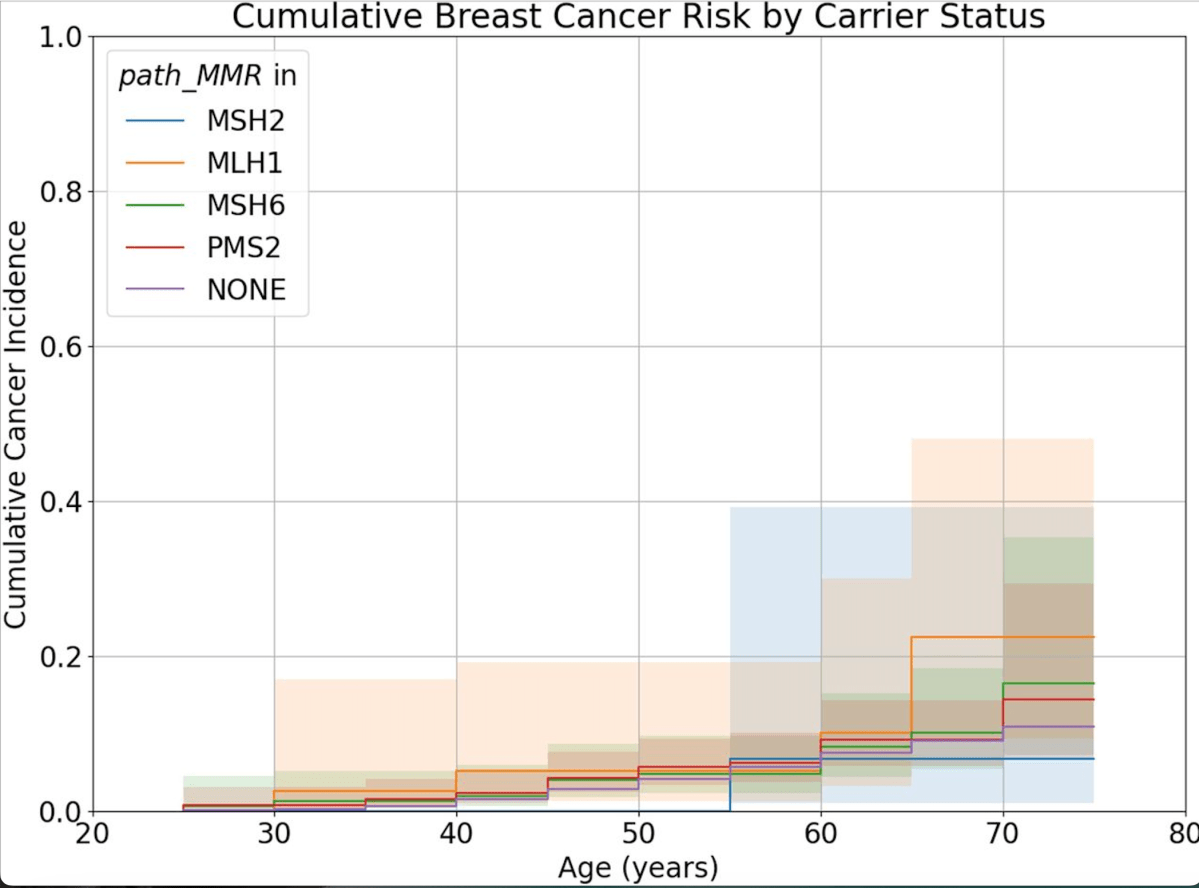
Estimating cancer risk in carriers of Lynch syndrome variants in UK Biobank

Conclusion:

 These results support offering incidentally identified carriers of any path_MMR surveillance to manage colorectal cancer risk.

Incidentally identified carriers of pathogenic variants in MLH1MSH2 and MSH6 would also benefit from interventions to reduce EC risk. The results suggest that Breast Cancer is not an LS-related cancer.

https://jmg.bmj.com/content/61/9/861

One test to detect multiple cancers – where are we now?

Most cancers diagnosed at an earlier stage have a better prognosis. Detecting and diagnosing cancer earlier can mean there are more treatment options for patients and, ultimately, can help people survive cancer and lead longer, better lives.  

What are multi-cancer tests?

As described above, an MCT is a tool that searches for multiple cancers in one sample, typically blood, urine, breath, or stool. All MCTs share some similarities, but the ways they identify cancers can be slightly different.  

MCEDs(multi-cancer earlier detection tests) could completely change what cancer screening looks like by making it possible to screen for multiple cancers with one test. MCEDs could also allow us to screen for cancers that aren’t covered by individual screening programmes, including less common cancers. That means MCEDs could be a more efficient way to find more types of cancer earlier, when they are more curable, helping people live longer, better lives. 

https://news.cancerresearchuk.org/2024/06/12/multi-cancer-tests-mced-tests-where-are-we-now/