Don’t feel bad if you’ve put it off—just do it

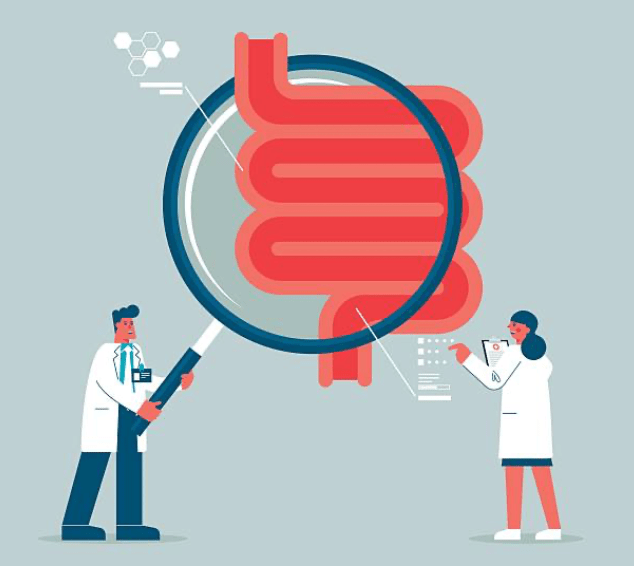
The article “8 Things Doctors Want You to Know Before Your Colonoscopy” (TIME, May 6, 2026) explains what to expect from a colonoscopy and aims to reduce anxiety around the procedure. 

Key takeaways

  1. Colonoscopies are important preventive screenings
    • They are one of the most effective ways to detect colorectal cancer early and can prevent cancer by finding and removing precancerous polyps during the procedure.
  2. The preparation is often the hardest part
    • Doctors say patients typically find the bowel-cleansing preparation more unpleasant than the procedure itself. A clean colon is essential because it helps doctors see abnormalities clearly. 
  3. The procedure itself is usually painless
    • Most people receive sedation or anesthesia and remember little or nothing about the exam. The colonoscopy generally takes only a short time. 
  4. You should follow prep instructions carefully
    • Diet restrictions and laxative instructions may seem inconvenient, but inadequate preparation can reduce the quality of the exam and may require repeating it. 
  5. Finding polyps doesn’t automatically mean cancer
    • Polyps are common, especially as people age. Most are benign, but removing them helps prevent some from eventually becoming cancerous. 
  6. There are risks, but serious complications are uncommon
    • Colonoscopy is considered a safe procedure, though, like any medical intervention, it carries some risks that should be discussed with a healthcare provider. 
  7. Alternative screening options exist
    • Stool-based tests and newer blood tests are available for some patients, but a positive result typically requires follow-up with a colonoscopy. Many specialists still consider colonoscopy the most comprehensive screening tool. 
  8. Don’t delay screening because of embarrassment or fear
    • Doctors emphasise that colorectal cancer is often preventable or highly treatable when caught early, and the temporary inconvenience of screening is far outweighed by its benefits. 
Bottom line

The article’s central message is that while colonoscopies have an intimidating reputation, the procedure is usually straightforward, safe, and highly effective at preventing and detecting colorectal cancer. The preparation is often the most challenging aspect, but completing screening on schedule can have major long-term health benefits.

“Could taking aspirin halve the risk of bowel cancer?”

Podcast: https://www.genomicsengland.co.uk/podcasts/could-taking-aspirin-halve-the-risk-of-bowel-cancer

1. Low-dose aspirin appears to significantly reduce bowel cancer risk in people with Lynch syndrome

2. Earlier research showed about a 50% reduction in bowel cancer

3. Lynch syndrome is a major inherited cancer-risk condition

4. Prevention is a growing role for genomics

5. Aspirin is not risk-free

6. Screening remains extremely important

7. Family testing can be life-changing

8. Scientists are still studying how aspirin works

Bottom line

The podcast’s core message is that for people with Lynch syndrome, a daily low-dose aspirin regimen could become a powerful, relatively simple way to reduce bowel cancer risk, especially when combined with genomic testing and regular screening.
It highlights how genetic knowledge can enable earlier and more effective cancer prevention.

Cancer almost killed me. We’re treating this disease all wrong

“I am a survivor of early onset rectal cancer(Age 27). Chemotherapy, radiotherapy and brutal surgery saved my life, removing my tumour along with my large intestine, bladder, prostate, rectum, pelvic floor and the base of my spine. I now live with two stoma bags and a body irrevocably changed by treatment.”

I’m confronted by an unpleasant truth: we brace for diagnosis and invest in treatments while neglecting prevention.

Prevention is often deprioritised because its benefits are delayed, less visible, and harder to measure, unlike treatment which delivers immediate, tangible outcomes.

Cancer cases are projected to rise sharply by 2050, making a treatment-focused model economically and practically unsustainable.

Up to 40% of cancers are preventable, yet most research funding is still directed toward treatment rather than prevention.

A common belief is that prevention is a weak market, as it requires convincing healthy people to take action.

This is contradicted by widespread adoption of preventive drugs like statins and Ozempic, showing people will engage when benefits are clear and tangible.

Historical failures in dietary supplement trials created lasting scepticism and made funders more risk-averse toward prevention research.

Advances in genetics, biomarkers, and technology now make targeted, cost-effective prevention strategies more feasible.

Political and media incentives favour treatment, as saving identifiable patients attracts more attention than preventing future cases.

This imbalance in visibility and incentives drives funding and policy decisions.

Reframing prevention as urgent, feasible, and scalable is essential to reduce cancer burden and protect healthcare systems.

https://www.thetimes.com/uk/healthcare/article/cancer-research-cure-prevention-scientist-oxford-fnpmzqfbr

Prospective Lynch syndrome database

A prospective Lynch syndrome database is important because it allows researchers, clinicians, and policymakers to collect and analyse long-term, standardised data on people with Lynch syndrome (LS).

(Using Chat GPT)

📌 In short: A prospective Lynch syndrome database is essential because it produces high-quality, unbiased evidence on cancer risks, surveillance effectiveness, and preventive strategies, directly improving patient care and shaping clinical guidelines.

Here are the key reasons why it matters, based only on reliable clinical and research perspectives:

  1. Natural history understanding
    • Prospective data (collected forward in time) helps clarify the true risks of different cancers (colorectal, endometrial, ovarian, gastric, etc.) in Lynch syndrome carriers.
    • It reduces biases compared to retrospective reports, which often overestimate risks due to selective reporting of severe cases.
  2. Better risk stratification
    • Different mismatch repair (MMR) gene variants (MLH1, MSH2, MSH6, PMS2, EPCAM) carry different cancer risks.
    • A prospective database helps define more precise, gene-specific and even sex-specific risk estimates, which guide personalized surveillance.
  3. Evaluation of surveillance effectiveness
    • Prospective registries allow direct measurement of how colonoscopy intervals (e.g., every 1–2 years) affect cancer incidence, stage at diagnosis, and mortality.
    • They can test whether surveillance reduces advanced cancers, enabling evidence-based guideline updates.
  4. Assessment of preventive strategies
    • Allows evaluation of risk-reducing interventions such as aspirin (e.g., CAPP2/CAPP3 trials), prophylactic surgeries, or lifestyle modifications.
    • Can help identify who benefits most from preventive measures.
  5. Improved clinical counseling
    • Physicians and genetic counselors can give patients more reliable, individualized risk information, reducing uncertainty and supporting informed decisions.
  6. Data for health policy
    • National or international databases provide evidence for cost-effectiveness of surveillance and preventive programs.
    • This supports resource allocation and insurance coverage for Lynch syndrome management.
  7. Research opportunities
    • Creates a resource for studying modifiers of cancer risk (genetic, environmental, lifestyle).
    • Enables collaboration across centers and countries for rare cancers within LS populations.

https://plsd.eu

 National Electronic Health Record (EHR)

EHR will be a digital system that holds a person’s full health and social care information in one place. It will replace paper files and local IT systems by allowing staff to record, update and access all health information in one place.

Access to digital health records has been a long-sought objective in Irish healthcare for many years.

To date(March 25), the Health Service has rolled out a number of electronic health record (EHR) systems in different sites in recent years. These include the National Rehabilitation Hospital, the National Forensic Mental Health Service, St. James Hospital, Mater Misericordiae University Hospital, roll-out across the bigger Maternity Hospitals extending EHR coverage to 70% of births nationally by the end of 2025. The National Children’s Hospital EHR deployment will be the most comprehensive EHR deployment in the state when the hospital is commissioned.

Ireland needs one digital health record for every citizen that can be access by health professionals across the service.

To achieve this, the HSE are following a three-step approach: delivering the HSE Health App, developing a National Shared Care Record (NSCR), and regional deployments of enterprise level Electronic Health Record systems that span acute and community healthcare.

HSE has completed the procurement for the National Shared Care Record (NSCR) programme and has now been mobilised, with the contract for building the NSCR technology platform awarded to EY, Better and Kainos.

The NSCR brings together healthcare information from various sources such as hospitals, GP practices, and Community care into a single place, making them available at the point of care and self-care in read only format. By having access to key healthcare information in one place means healthcare professionals will be able to make more informed, safer decisions and to focus more time on direct patient care while patients will be better informed and empowered to manage their own healthcare. 

A phased roll-out of the national shared care record is due to commence in Q4 2025 in the South-East region with University Hospital Waterford. The system will then extend to other regions from 2026 with additional information being added over time.

https://www.oireachtas.ie/en/debates/question/2025-03-04/696/

Lynch Syndrome – Cascade Testing

Cascade testing refers to testing “at-risk” family members for a gene mutation, once the mutation has been found in a family member.

For Lynch syndrome, once family members get cascade testing, they can also benefit from screening, cancer prevention, and early detection strategies.

So if a family member has Lynch syndrome

You can ask your GP to refer you to a cancer genetics service.

Family members who can get a test include:

  • parents
  • brothers or sisters
  • children age 18 and over

Ask your relative for a copy of their Lynch syndrome test result or a letter you can bring to your GP appointment – if they have one.

If you get a Lynch syndrome diagnosis, your relatives can ask their GP to refer them to a cancer genetics service. This is known as cascade testing. It is also known as predictive testing.

Lynch syndrome test results can help your healthcare team:

Creation of a future European Network of National Cancer Mission Hubs (NCMHs)

ECHoS is an European project, funded by Horizon Europe Programme, that aims to support the implementation of the Cancer Mission activities in all Member State and Associated Country (MS/AC) through the establishment and development of National Cancer Mission Hubs (NCMHs) operating at national, regional, and local levels. By establishing NCMHs in each MS/AC, European citizens and organisations in health, research, and beyond, will be voiced and their voices will echo together.

ECHoS broad scope seeks to take cancer-policy dialogues beyond research and innovation, and health systems, covering also other relevant areas in cancer control and support, such as employment, education, and socioeconomic aspects.

To guarantee alignment and progress in the field of cancer, ECHoS will be guided by impacting subareas of Cancer Mission – namely prevention, early detection and treatment, quality of Life and survivorship – as well as equity, sustainability, and cross-cutting EU priorities such as social engagement and digital health.

http://www.cancermissionhubs.eu

Digital for Care —A Digital Health Framework for Ireland: 2024-2030

-Patient as an empowered partner: We will empower patients by giving them broader access to their own health information through a patient app, provide access to more digital health services, including virtual care offerings, whilst enabling greater autonomy and choice over their care options.

Workforce and workplace: We will enable our workforce by providing them with the technology, systems, and skills they need to deliver the best possible care and services to patients in the modernised healthcare system. 

Digitally Enabled and Connected Care: We will drive future investment and make architectural decisions based on the ability of systems to share clinical information and deliver connected care. We will make it possible for healthcare professionals, and others who support delivery of care, to be able to access the information needed about their patients when and where they need it, regardless of where those patients were treated previously. 

Data driven services: We will leverage data analytics, business intelligence, visualisation, dashboards, and other digitally enabled management tools to provide greater insights into the health service and its operation. This will create opportunities for increased productivity, efficiency and more precise direction of resources to areas of greatest need, and where they will have the maximum impact. 

Digital health ecosystem & innovation: We will embed continuous improvement within the health and social care system. This will be enabled by innovation via improving ongoing collaboration, improved procurement pathways, increased participation, and promoting research excellence. This strategic principle also details key considerations for the Digital health ecosystem as we prepare for the technologies of the future.

Secure foundations & digital enablers: We will continue to build cyber resilience and put in place the key enablers needed to deliver this digital health strategic roadmap, underpinned by strong governance, cultural change, standards, interoperability, infrastructure, architecture, and legislation.

https://www.gov.ie/en/publication/0d21e-digital-for-care-a-digital-health-framework-for-ireland-2024-2030/

European Health Data Space (EHDS) Regulation

What are the implications for patients?

The primary goal of the EHDS is to empower patients to access their health data and enable health professionals to consult patients’ medical records, through Electronic Health Records (EHRs). It will enable citizens in the EU to access, manage, and share their health data electronically (primary use), and facilitate its use for public interest, policy making, and research (secondary use). 

To ensure a successful enforcement of the regulation and mitigate any unintended consequences, we call on Member States and the European Commission to prioritise the following key actions during the implementation period: 

  • Accessibility and Usability: EHR systems must be user-friendly, with clear interfaces. 
  • Transparency: Patients should have transparent information in lay language on how their health data is collected, stored, used, and protected within the EHDS framework. 
  • Consent: It is crucial to provide patients with complete information on the opt-out mechanism from the re-use of health data for secondary purposes. 
  • Digital Health Literacy: It is essential to continue promoting digital health literacy programmes, especially in underserved and rural communities. 
  • Stakeholder Engagement: The EHDS stakeholder forum should function as a true advisory board, whose feedback and recommendations are actively incorporated and acted upon. 
  • Financial Considerations: Addressing concerns about the financial burden on Member States and regions is crucial for sustainable implementation.  
  • Security and Privacy: Ensuring state-of-the-art security measures to strengthen the protection and cybersecurity surrounding data storage and processing is of utmost importance. 
  • Minimising Legal Uncertainty: It is critical to reduce legal uncertainties surrounding the implementation of EHDS. 

Drug Approval/Reimbursement Process in Ireland

Once a medicine has been approved at a European level, the pharmaceutical company will make separate applications for reimbursement at a national level in different EU or EEA countries. In Ireland these applications are made to the HSE Corporate Pharmaceutical Unit (CPU) who then commission the National Centre for Pharmacoeconomics (NCPE) to carry out an assessment on that medicine.

A full health technology assessment (HTA) is a systematic assessment of the clinical and cost-effectiveness of a medicine. Only a selection of medicines are required to undergo a full HTA as part of the drug reimbursement process. The NCPE full HTA assessment takes approximately 18 weeks to complete, exclusive of the duration the HTA is queried with the Applicant (approximately five weeks as part of the stop/clock process). The full HTA report consists of the following information:

  • Disease background and epidemiology
  • Detailed description of current clinical practice and treatment options
  • Detailed description of the intervention (drug) under assessment
  • Detailed review of the clinical and comparative efficacy of the drug under assessment
  • Detailed review of the safety and comparative safety of the drug under assessment
  • Detailed review of the cost-effectiveness of the drug under assessment
  • Detailed review of the budget impact of the drug under assessment.

The outcome of a full HTA is a recommendation to the HSE on reimbursement. 

I’m confused…

Do public cancer patients have the same chance of living as those with health insurance? It appears you have across all cancers a better, faster access to cutting-edge drugs in the private system compared to the public system

Are pharmaceutical companies making separate applications for reimbursement at a national level in a timely manner? If so why is this?

Is NCPE adhering to its own time frames? If not why?

It appears that up to 40% of the new medicines approved by the EMA are not even assessed by the HSE because its approval system is so protracted it can sometimes take up to three years for the health authority to decide whether to provide the drug free of charge.Is this a process being used to slow down the approval of new drugs to save money?

Who is actually in Charge of spending the Taxpayers money?????