Understanding Cancer Genetics and Hereditary Cancer Risk

https://www.nature.com/articles/s41431-026-02212-9

What is This About?

This article discusses how scientists have discovered that some cancers run in families due to inherited genetic changes. It explains how this knowledge is changing how doctors test for, treat, and prevent cancer.

Key Historical Milestones
  • 1971: Scientists realised that cancer typically requires two genetic “hits” (mutations) to develop, explaining why some families have more cancer cases
  • 1980s-1990s: Researchers identified specific genes that, when mutated, dramatically increase cancer risk (like BRCA1, BRCA2, and others)
  • Today: Doctors now use genetic testing to identify people at high risk and personalise their cancer prevention and treatment plans
The Big Shift: Connecting Two Worlds

Historically, scientists studied:

  1. Somatic mutations (cancer-causing changes that occur only in tumour cells)
  2. Inherited mutations (genetic changes passed down through families)

These were studied separately. Now they’re integrated: if a tumour shows certain genetic changes, doctors test whether the patient inherited that same mutation—which could affect treatment options and what other cancers they might develop.

Current Challenges
  • Many cases remain unexplained: Even with advanced testing, we still don’t know why many families have elevated cancer risk
  • Rare genetic variants: New testing reveals many rare mutations whose danger level is unclear
  • Need for standards: Hospitals need to agree on testing procedures, how to interpret results, and what to tell patients
Emerging Tools and Solutions
  • Polygenic risk scores: Mathematical models predicting cancer risk based on multiple genetic factors
  • Liquid biopsies: Blood tests to detect cancers earlier
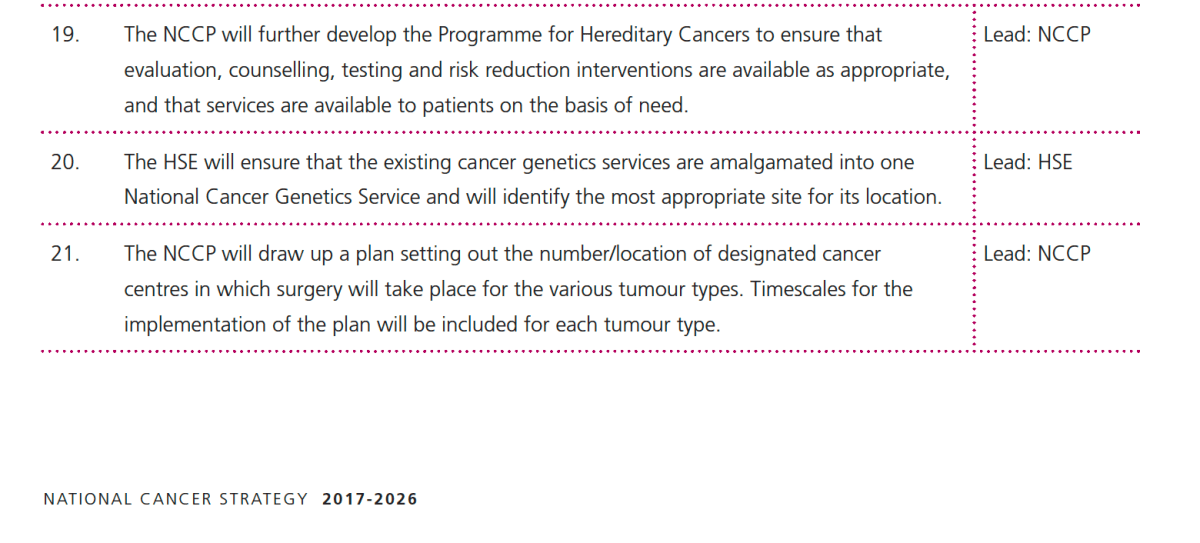
  • Advanced sequencing: New technologies to find previously unknown cancer genes
The Human Side

The article emphasises that genetic testing isn’t just scientific—it affects quality of life, family planning decisions, and emotional well-being of people carrying these mutations.

Bottom Line

Hereditary cancer genetics is rapidly evolving, offering better ways to identify at-risk individuals, prevent cancers, and tailor treatments—but significant work remains to make these advances accessible to everyone.

“Tell your family” sounds straightforward. But in practice, it’s usually a bit more complicated…..

We don’t talk nearly enough about WHO is responsible for sharing genetic test results with family members.

While one person may undergo genetic testing, this information affects the entire family.

How we communicate that information matters.

This responsibility usually falls on the proband (the person who undergoes genetic testing first). But every family is different.

🔸 What if you’re still trying to process the result yourself?
🔸 What if you’re estranged from the person who needs to know?
🔸 What if someone else in the family is closer to the person you need to share with?

Primary burden: Patients are generally expected to pass on health and risk details to at-risk relatives.
Healthcare provider assistance: Doctors and genetic counsellors frequently supply family communication letters or record copies to make sharing easier.

Even at the best of times, family dynamics can be tricky (and not just around the holidays!). Now throw in the decision to have genetic testing, receiving powerful results, and having the responsibility of relaying those results to your family members. You guessed it – it can get complicated. The issues that can come up when sharing genetic test results have the potential to throw off any family. And with good reason: genetic test results are intensely personal. These results can change everything, as you probably already know.

Some suggestions I came across…

  • Call or meet face-to-face:  If you have a close relationship with a family member, this might be a good option
  • Send a letter or email, consider social media:  If you’re not as close with a family member, this could work. Your doctor or genetic counselor might even have examples to use, or be able to help you write this.  Social media can be an effective way to consider contacting relatives, particularly if you use direct messages (instead of public posts).
  • Give them what they need:  Your exact test result, with the gene and any mutation(s) found, is what relatives need if they want to do their own testing.
  • Be supportive, but not pushy:  Your relative may be hearing this information for the first time, which can be challenging
  • Give them space:  Time may help them digest the details
  • Offer to be available and share resources:  They might need your help to answer questions, or just to listen.
  • Don’t expect them to do what you did:  Even though they may support your decision to have testing, they may not want it themselves – and this is ok, because everyone is different

“Could taking aspirin halve the risk of bowel cancer?”

Podcast: https://www.genomicsengland.co.uk/podcasts/could-taking-aspirin-halve-the-risk-of-bowel-cancer

1. Low-dose aspirin appears to significantly reduce bowel cancer risk in people with Lynch syndrome

2. Earlier research showed about a 50% reduction in bowel cancer

3. Lynch syndrome is a major inherited cancer-risk condition

4. Prevention is a growing role for genomics

5. Aspirin is not risk-free

6. Screening remains extremely important

7. Family testing can be life-changing

8. Scientists are still studying how aspirin works

Bottom line

The podcast’s core message is that for people with Lynch syndrome, a daily low-dose aspirin regimen could become a powerful, relatively simple way to reduce bowel cancer risk, especially when combined with genomic testing and regular screening.
It highlights how genetic knowledge can enable earlier and more effective cancer prevention.

No other landscape in medicine has changed as drastically as the field of Clinical Genetics – Is Ireland behind the curve?

Advances in technology have been a major driver of the explosion of knowledge in genetics, now allowing us to sequence the entire human genome in a short period of time and at a fraction of the cost of previous years.

This has led to a better understanding of the natural history of cancer, the ability to assess genetic risk for cancer across populations, the development of clinical management strategies to reduce cancer risk, the development of novel therapeutic agents which target genetic alterations, and to improved education of patients and providers about genetic risk.

Hereditary cancer is hard enough to navigate, so we are thankful for patient-friendly information to help inform the decision-making process.

https://www.stjames.ie/cancer/yourtreatmentandcare/servicesandtreatments/cancergeneticsservice/

Genetic testing is a vital tool in enabling individuals to be proactive in their health care to achieve the best possible outcomes.

It’s very important for everyone to understand their cancer risks based on their personal or family history since their personal risk level may necessitate earlier, more frequent, and/or more intensive cancer surveillance.

This is the best way to ensure that you are doing everything you can to prevent cancer or catch it early when treatment has the best outcome.

At present cancer genetics services in Ireland are underdeveloped and underfunded. Only a fraction of staff required are in place. As a result long waiting times, extra cost to the state because cancers are not prevented and discovered at a later stage.

Cancer Genetic Appointments

During your appointment, a member of the team will confirm your family history/ family tree details with you and may ask about other medical conditions in your family (where known).

If a cancer genetic alteration (gene fault) exists in your family, or there is a possibility of an inherited genetic alteration, our team will discuss the condition and outline the choices and options available to you.

What is ‘Diagnostic Cancer Genetic Testing’?

Diagnostic cancer genetic testing is helpful when an individual with cancer is unaware of whether a gene alteration is present within their family. A blood test can be taken either from you or an eligible family member (i.e. the blood test must be taken from someone with cancer), to identify any alteration (gene fault) in your DNA. If a cancer gene alteration exists, it may be responsible for causing cancer in you, and/ or in other family members.

What is ‘Predictive Cancer Genetic Testing’?

If a cancer gene alteration is identified in your family, you may opt to undergo a predictive cancer genetic test to determine if you carry your family’s alteration, using a blood sample taken from you.

https://www.stjames.ie/cancer/yourtreatmentandcare/servicesandtreatments/cancergeneticappointments/

The increasing role of cancer genetic counsellors

November 14 was Genetic Counsellor Awareness Day in Ireland and around the world. It’s important to note that it is an ‘awareness’ day rather than an ‘appreciation’ day because genetic counselling is still an under-recognised field. Genetic counsellors are healthcare professionals who provide information and support to families and individuals who are at risk for or affected by a genetic condition.

We have 17 cancer genetic counsellors and two genetic counselling assistants at City of Hope to handle this volume. In contrast, there are five cancer genetic counsellors at St James’s Hospital in Dublin.

Dr O’Shea said the St James’s cancer genetic service welcomed Minister for Health Stephen Donnelly’s announcement of funding to implement the Hereditary Cancer Model of Care in 2025. Genetic counsellors are a key part of delivering optimal oncology care. To respond to the demand for access to cancer genetic testing and counselling, permanent funding for 20 cancer genetic counsellors in oncology care is required nationally to serve a population of 5.3 million people. Additionally, a step forward to increase the capacity of genetic counsellors in the Irish health system is a HSE-funded training pathway.

A genetic mutation can save lives – Lynch syndrome paves the way for cancer vaccines and personalised treatments

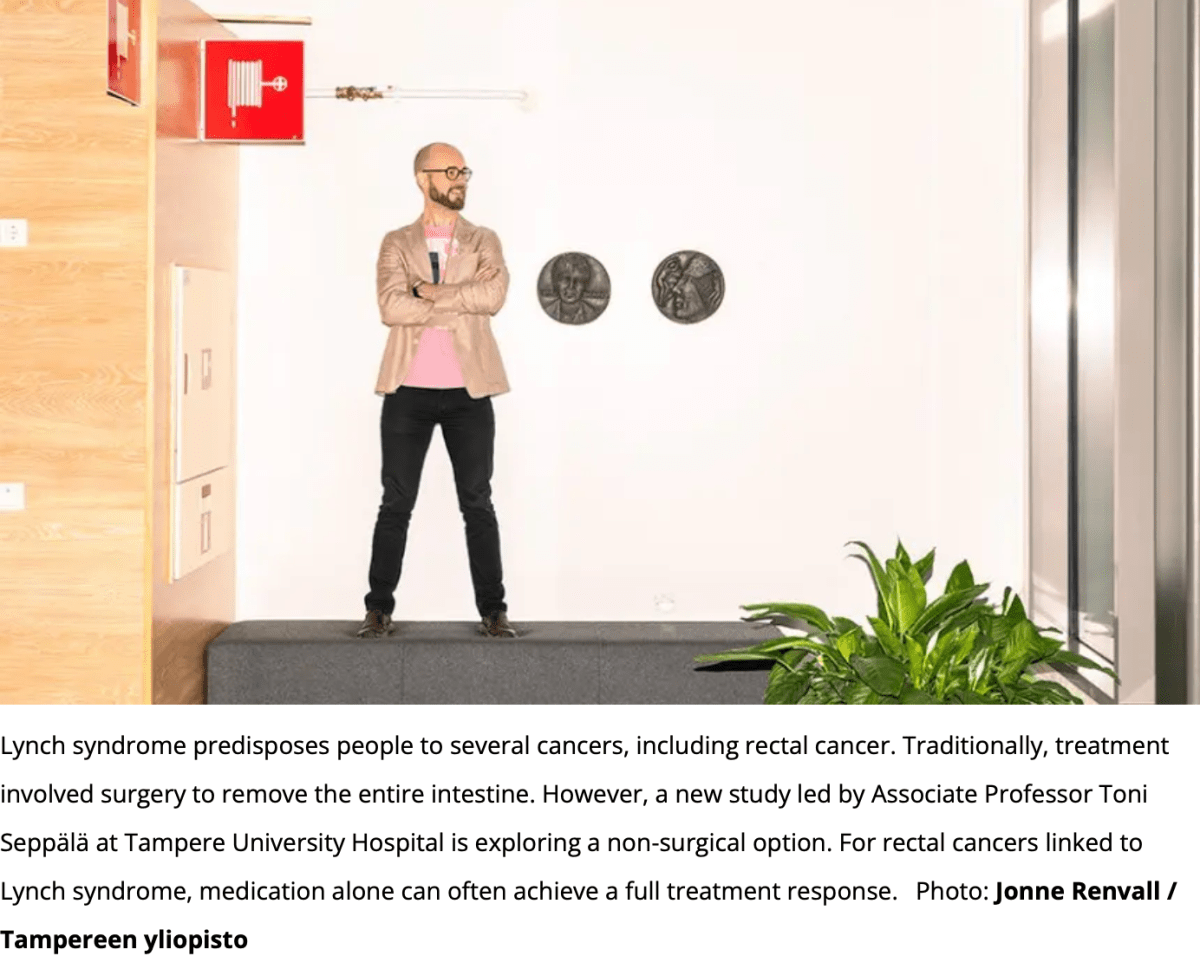
While Lynch syndrome increases the risk of cancer for its carriers, it also provides a unique opportunity to understand disease mechanisms. It is likely that the first preventive cancer vaccine will be specifically developed against cancers caused by Lynch syndrome.

From the individual’s perspective, Lynch syndrome and its prevalence in the population is not a positive thing, but from the research standpoint it is, meaning that the disease can also benefit patients.

“Currently, there is intense development work on cancer-preventive vaccines, which will soon be tested in large patient groups. The most progress has been made with cancers linked to Lynch syndrome. It will be a major breakthrough when we can prevent cancers that we know are likely to develop,” Seppälä says.

In Lynch syndrome, identifying carriers of the genetic mutation is vital because healthcare interventions can greatly benefit these patients. Generally, there needs to be greater awareness in society about the importance of molecular profiling. 

https://www.tuni.fi/en/news/genetic-mutation-can-save-lives-lynch-syndrome-paves-way-cancer-vaccines-and-personalised

Why biomarkers matter

Your biomarker profile can help you and your doctor personalise your treatment.

Biomarkers for colorectal cancer are used for diagnosis, progression, prognosis, and for treatment planning.

MSI-H and MSS biomarkers indicate the stability of the DNA in a tumour.

Colorectal cancer tumours are often referred to as having an “MSI status,” meaning they are described as either MSI (microsatellite instable) or MSS (microsatellite stable). They cannot be both.

What does an abnormal MSI-H level mean?

Approximately 15% of colorectal tumours are MSI-H and dMMR.

In most of these cases, the mutation was caused by a non-hereditary(somatic) gene abnormality in one of the MMR genes (MLH1, MSH2, MSH6, or PMS2) in a cancer cell.

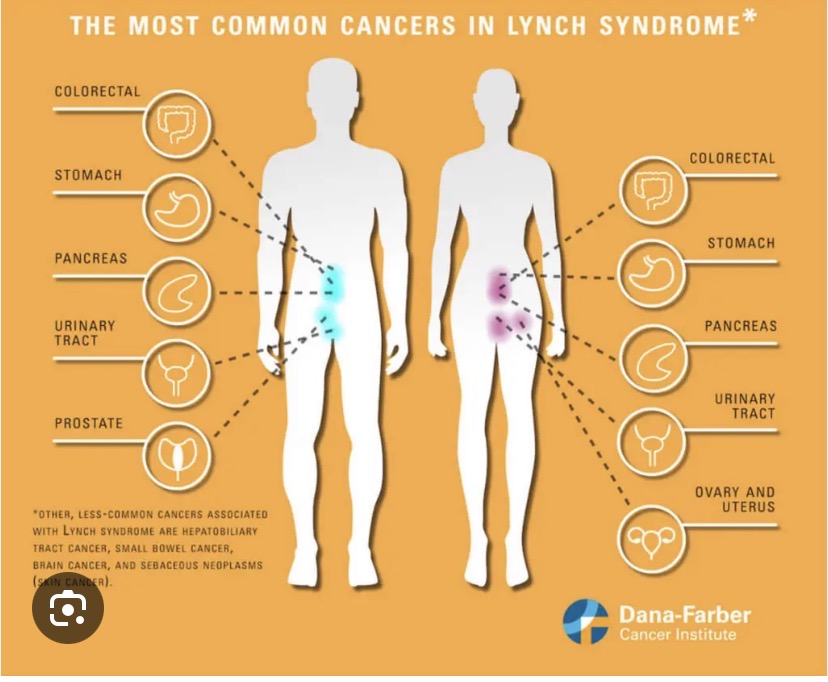
In 3-5% of colorectal patients, dMMR and MSI-H are caused by Lynch syndrome. In these patients, a hereditary mutation (germline mutation) in one of the four main MMR genes is passed from one generation to another. Individuals with Lynch syndrome are at higher risk of developing colorectal, endometrial (uterine), gastric, ovarian, and other cancers.

https://colorectalcancer.org/treatment/types-treatment/why-biomarkers-matter?fbclid=IwY2xjawGS4ZdleHRuA2FlbQIxMAABHbYOX7PocmBtDNPHc2xa9sZkA9PksceERIsPMZvOxLKfG4JN-vr7soOjmw_aem_irNH19G4iH7a4SZxGpm4Wg

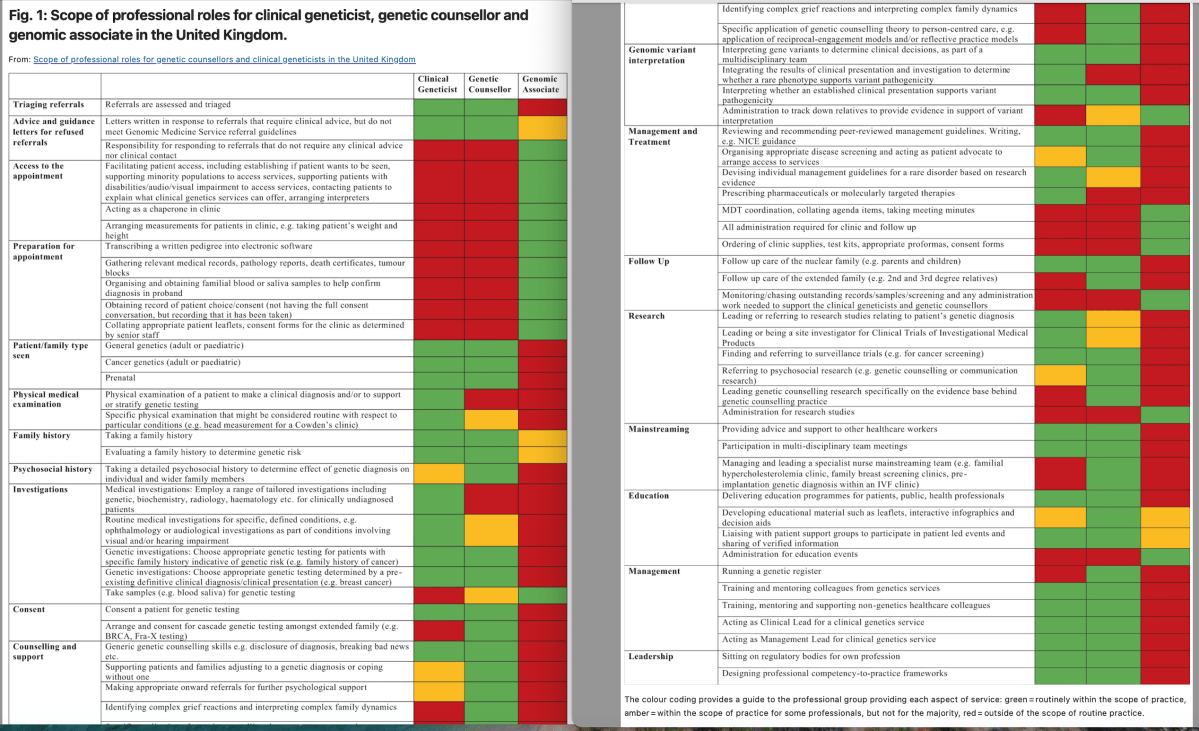
The role of the Genetic Counsellor in the multidisciplinary team: the perception of geneticists in Europe(2022)

Genetics has begun to be considered a key medical discipline which can have an impact on everyday clinical practice. Therefore, it is necessary to understand what the most effective way is of caring for people affected by or at risk of genetic disorders.

This new profession has difficulties in being recognised in some countries(including Ireland), it seems clear that these highly competent professionals are essential for in-patient care and in the multidisciplinary team.

In the United Kingdom clinical geneticists are medically qualified Members/Fellows of the Royal College Physicians or equivalent, where Clinical Genetics is an affiliated medical specialty. Genomic or genetic counsellors are allied health professionals with Masters level accreditation from the Genetic Counsellor Registration Board included in the Academy for Healthcare Science register and clinical scientists (genomic counselling specialty) accredited by the Health and Care Professions Council. https://www.nature.com/articles/s41431-022-01214-7/figures/1

This research(although limited) brought to light the importance of the multidisciplinary team in caring for patients with or at risk of genetic disorders by highlighting the role and necessity of the genetic counsellor within the team. 

https://www.nature.com/articles/s41431-022-01189-5?fromPaywallRec=false