Gynaecological cancers: ‘What strikes me is how easy it would have been to dismiss that one symptom’

Úna Kealy didn’t have any of the typical symptoms of a gynaecological cancer before she was diagnosed with stage one cervical cancer in 2016 at age 43.

Kealy says she is “living proof” that early intervention works and believes other women should be aware of their bodies and seek medical advice if any changes or concerns.

https://www.irishtimes.com/health/2025/09/19/gynaecological-cancers-what-strikes-me-is-how-easy-it-would-have-been-to-dismiss-that-one-symptom/

Sometimes we need permission to be grumpy 

Sometimes we need permission to be grumpy and ungrateful and selfish. We need to allow ourselves the opportunity to take a day off from being a better person. 

Then we can wake up again the next day and marvel at the wonder of a perfect soft-boiled egg.

After Being Declared Cancer-Free

Most people believe that once a person is declared to be cancer-free that all is over.

Long after the doctor has given you this wonderful news, you still think about your journey and wonder if the cancer will come back. But, you keep these thoughts in your mind and live with this sense of fear always lingering in the back of your mind wondering if you just might be one of the very few for whom the cancer will return.

Being realistic, just about every survivor will think about this on occasion. When it comes time for yearly testing, you pray and hope beyond hope that nothing new will be discovered. This is perfectly natural but if you find yourself having these thoughts frequently, it is time to do yourself a favor and seek professional help.

Disease is what the body has, while illness is what the person lives with

Treating disease without attending to illness may succeed clinically but fail humanly. To practise medicine is not only to chart what the body endures, but to bear witness to what the person carries—and to recognise that both records belong in the same story.

COPING WITH CANCER: SEEING A COUNSELLOR

I never felt like “it” couldn’t happen to me. It’s just genetics. Luck of the draw. It’s how the universe works. Not to make light of things, but in a phrase it is what it is.”

“Neither did I feel the the need for a support group. The last thing I wanted to do when I wasn’t being a cancer patient is be a cancer patient.”

“Patients” are the actual end users of Medical Research.

“Patient” partners improve researcher understanding of the real life priorities and impact of their work.  

Few or no people define or refer to themselves as patients. They understand that a patient is less than a whole person, is less than what they are. I would prefer thinking of ‘people’ engaged in their health and health care.

Patients” can also be experts in the lived experience of their own diagnoses,  who contribute to medical research and education teams as partners in meaningful academic projects.

Bowel Cancer in Ireland: 

Patients, Bowels, Basics, and Breakthroughs
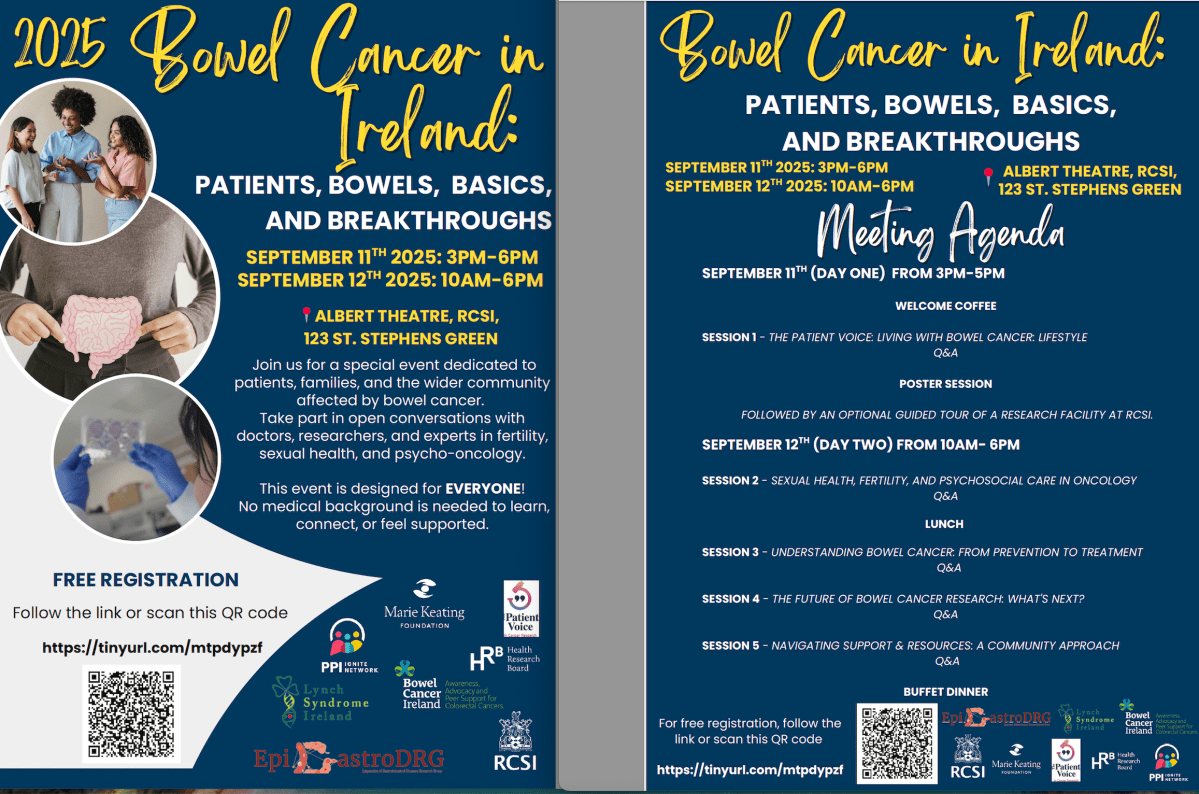
On 11th & 12th September, RSCI is holding a bowel cancer event dedicated to patients, families, and the wider community affected by this cancer. 

PVCR Chair Prof Amanda McCann is leading a session on Friday 12th September at 1:30pm on “The Importance of PPI in Research” with PhD students from ColoMARK and patient advocates from Bowel Cancer Ireland.

There will also be open conversations with doctors, researchers, and experts in fertility, sexual health, and psycho-oncology across the two days. 

You can click here or scan the QR code below to register. Any questions or concerns can be directed to EpiGastroDRG@outlook.com

You can also check out their free bowel cancer informational booklet here or through the QR code below to the right.

Finding Support in Unexpected Places Through Hereditary Cancer Advocacy

Key Takeaways:
  • Hereditary cancer syndromes, despite genetic differences, share common challenges like risk-reducing surgeries and emotional burdens, necessitating comprehensive advocacy and support.
  • Honest dialogue about the complexities of living with hereditary cancer risks is crucial, even if it involves discussing difficult truths about surgical outcomes.
  • Amy Byer Shainman exemplifies effective advocacy through education, films, and writings, providing a voice to those navigating genetic cancer risks.
  • Real support involves empathy and standing by individuals, acknowledging their complex stories and ensuring they don’t face their challenges alone.

https://www.curetoday.com/view/finding-support-in-unexpected-places-through-hereditary-cancer-advocacy?fbclid=IwY2xjawMTrS1leHRuA2FlbQIxMQABHtD4vd53G8khEpi8yVRc1ZgAOJl9xhoSxSr8M0l9AKHWTT2W_PiwqsoIE03m_aem_I5FK0MsU87kUn0EuHxXBUA

‘A Quiet Love’ review: Sensitive documentary follows three deaf Irish couples

Documenting the relationships of three very different deaf Irish couples, A Quiet Love is an intimate, big-hearted celebration of everyday triumph over adversity.

As its title suggests, the film does not paint its subjects as all-conquering heroes, rather normal people navigating a challenging path through life. In allowing its subjects to tell their own stories entirely in their own words – all communicate through Irish Sign Language (ISL) – the film effectively spotlights a community not often given space on screen.

https://www.screendaily.com/reviews/a-quiet-love-review-sensitive-documentary-follows-three-deaf-irish-couples/5206665.article

Patients, Bowels, Basics and Breakthroughs

Very excited to share that @rcsi_irl ‘Patients, Bowels, Basics and Breakthroughs’ is back!!!

This two day event is aimed at bringing together the patient & professional community to explore the landscape of bowel cancer, with focus on the unique challenges of early-onset disease like fertility, sexual health and much more!

Learn about the latest research directly from those carrying out the work! It will feature fantastic speakers from across Ireland, the UK and Europe and powerful patient voices sharing their lived experiences.

There’ll be exciting panel discussions, a poster session and even a lab tour! 

What makes this event even more special is the people behind it. The fabulous (and I mean fabulous!) RCSI Epigastro Disease Research Group who have opened their doors to ourselves at @lynchsyndromeireland & @BowelCancerIreland and welcomed us as valued team members to co-organise these important events. This is more than patient involvement this is true PPI partnership. Together we can do more.

This free event is open to patients and their family members, carers, healthcare professionals and members of the public who would like to learn more about this very common cancer. 

When: 11 & 12 September 2025

Where: RCSI St Stephens Green Dublin 

Registration is essential. Scan the QR code on poster to register today. Please share the event with anyone who you feel would benefit or be interested.  

Let’s talk about bowel cancer, let’s do it all together!

#bowelcancer #CancerResearch #PPI#EOCRC