Colectomy

Colectomy is a surgical procedure to remove all or part of your colon. Your colon, part of your large intestine, is a long tubelike organ at the end of your digestive tract. Colectomy may be necessary to treat or prevent diseases and conditions that affect your colon.

There are various types of colectomy operations:

  • Total colectomy involves removing the entire colon.
  • Partial colectomy involves removing part of the colon and may also be called subtotal colectomy.
  • Hemicolectomy involves removing the right or left portion of the colon.
  • Proctocolectomy involves removing both the colon and rectum.

Colectomy surgery usually requires other procedures to reattach the remaining portions of your digestive system and permit waste to leave your body.

https://www.mayoclinic.org/tests-procedures/colectomy/about/pac-20384631

Anti-cancer drug reimbursement in Ireland…..the balance is not right.

Until relatively recently, the role of a medical oncologist was to weigh up the probable benefits and toxicities of the best available anticancer therapy, and offer professional advice, based on data and experience on the best possible option.

At the threat of being sued if they made a bad decision. Increasingly, the best possible treatment option is not available to medical oncologists as an option.

The best possible treatment option is a question relating to published clinical trial data, international clinical guidelines, and professional opinion, for specific cancer patients.

All of the people currently charged with the responsibility of making reimbursement decisions for new cancer drugs in Ireland have a very difficult job. As difficult as that job is, they do not have to sit in front of someone who has cancer now, requiring a clinical treatment decision.

Tomorrow, again, I will politely ask a drug company for free drug supply.

Michael McCarthy @mccarthymt7 Consultant Medical Oncologist @ University Hospital Galway

Manual For Men booklet

This booklet looks at how your lifestyle affects your cancer risk and how to spot cancer early. It includes details on testicular and prostate cancer. It also gives you tips on how to make the best of a visit to your doctor.

https://www.cancer.ie/cancer-information-and-support/cancer-prevention/mens-health

Health Research Charities Ireland(HRCI)

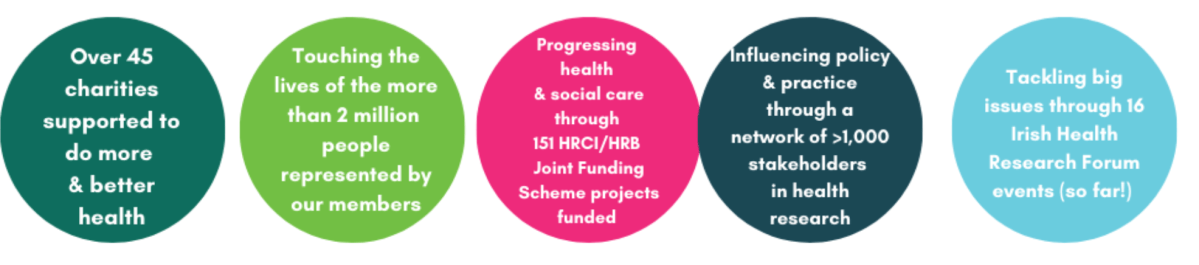
Health Research Charities Ireland (HRCI) is the national umbrella organisation of charities engaged in health, medical and social care research, collectively representing over 2 million people in Ireland. We champion our members’ interests, to enhance the environment for health research in Ireland. We empower them to realise our shared vision of improving lives through impactful research.
We offer our members the potential for matched research funding through the Joint Funding Scheme, run in partnership with the Health Research Board. We also run the Irish Health Research Forum, bringing together all stakeholders to improve health research in Ireland.

Supporting patient pathway though gynaecological cancer

Women themselves may be unaware of the sometimes symptoms or may be too embarrassed to consult a doctor, and there remains a stigma associated with these diagnoses in some quarters. This reticence needs to be overcome and a more positive message developed to improve the prevention, screening, treatment and care of gynaecological cancers so that women throughout Europe have the best chance of survival and quality of life.

Ovarian, uterine, cervix and other gynaecological cancers are among the most common cancers to affect women, but collectively attract less attention than they deserve from the public and policy makers.

WHAT SHOULD YOU ASK THE DOCTOR?

Useful information before, during, and after your meeting with your doctor(s)

Brochure from ENGAGe (The European Network of Gynaecological Cancer Advocacy Groups is an ESGO network of European patient advocacy groups representing all gynaecological cancers)

https://engage.esgo.org/brochures/what-should-you-ask-the-doctor/

Uptake and patient-related outcomes of mainstreaming genetic testing: a systematic review and meta-analysis

Mainstreaming genetic testing refers to genetic testing for cancer susceptibility genes following cancer diagnosis, which is provided by nongenetic health professionals of the cancer-treating team.

Mainstreaming can be used to guide cancer treatment and secondary cancer prevention in the patient and to identify carriers in the family members of patients who test positive through cascade testing. We aimed to assess uptake and patient-reported outcomes of mainstreaming genetic testing.

Conclusion

Mainstreaming genetic testing uptake is associated with high uptake and satisfaction and low decision conflict, regret, and post-test distress. Quality and quantity of evidence across different types of cancers vary significantly.

https://www.ajog.org/article/S0002-9378(25)00259-5/abstract

In Our Scope of Practice: Genetic Risk Assessment and Testing for GI Cancers and Polyposis in Gastroenterology

 Uptake of genetic testing remains underutilised. 

This is a missed opportunity to identify patients and family members who could benefit from genetic testing to diagnose cancer susceptibility syndromes for which surveillance and preventive interventions exist.

Barriers for integration of genetic testing in routine practice include:

lack of awareness about genetic conditions by patients and providers,

concerns about genetic testing costs and implications for insurability,

challenges in implementing algorithms for risk assessment and coordinated care in complex medical systems.

This review addresses current evidence and guidelines for cancer risk assessment, genetic testing and management to enable GI clinicians to identify and care for individuals with genetic cancer-predisposition syndromes in routine practice.

https://www.gastrojournal.org/article/S0016-5085%2825%2900841-8/abstract

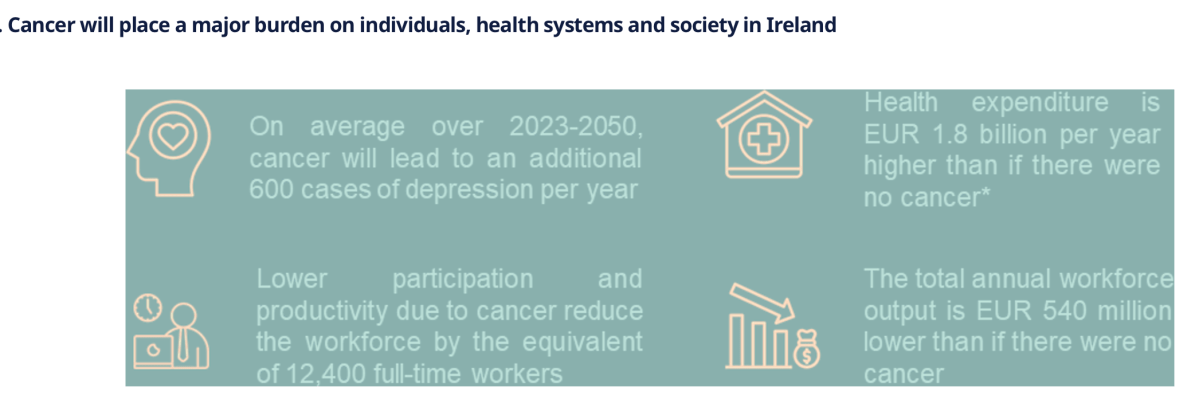
Tackling the Impact of Cancer on Health, the Economy and Society: Ireland

Despite advances, cancer remains a significant public health challenge in Ireland

Despite advances, cancer remains a significant public health challenge in Ireland.

Cancer is the leading cause of mortality in Ireland, and one in three premature (before the age of 75) deaths (30%) will be due to cancer between 2023 and 2050.

In total, there will be an estimated 3 500 premature deaths from cancer every year, and the average population life expectancy will be 2.1 years lower than if there were no cancer.

https://www.oecd.org/en/publications/tackling-the-impact-of-cancer-on-health-the-economy-and-society_40335421-en/ireland_7eaa3751-en.html

Tackling the Impact of Cancer on Health, the Economy and Society: Ireland

Action on key cancer risk factors would reap a wide range of benefits

Meeting international policy targets on major cancer risk factors would prevent around 10% of all cancer cases, avert 16% of premature deaths due to cancer, and reduce the burden of cancer on health expenditure by 12% in Ireland.

https://www.oecd.org/en/publications/tackling-the-impact-of-cancer-on-health-the-economy-and-society_40335421-en/ireland_7eaa3751-en.html

Access to oncology medicines in EU and OECD countries

Ensuring equal access to the latest cancer medicines is one of the most pressing challenges facing OECD health systems today.

Despite the emergence of new oncology drugs, disparities in patient access—particularly through clinical trials and early access programs—remain a critical issue.

Rising costs are also straining even the most affluent healthcare systems, making affordability a concern for all.

This working paper examines various aspects of inequalities in access to cancer medicines, covering key stages in a medicine’s life cycle, from marketing authorisation to reimbursement decisions and uptake in clinical practice.

The analysis draws on original findings from the 2023 OECD Policy Survey on Cancer Care Performance. It also explores potential strategies to stimulate competition among oncology medicine producers, which could create significant budget headroom, allowing reinvestment in new cancer medicines that offer substantial clinical benefits to patients.

https://www.oecd.org/en/publications/access-to-oncology-medicines-in-eu-and-oecd-countries_c263c014-en.html

National Cancer Registry Ireland

NCRI collects information on the diagnosis and primary treatment of the patient’s cancer. Data is collected on primary treatments that take place within approximately 12 months of diagnosis. 

Between 85% and 90% of all new tumour registrations are registered electronically from pathology reports shortly after the patient’s diagnosis. Other electronic data sources such as HIPE(collects demographic, clinical and administrative data on discharges from, and deaths in, acute public hospitals nationally), radiotherapy and death certificates may also create a small number of new tumour registrations.

One of the primary ways to share NCRI data is through reports and publications. These reports compile the latest statistics and analyses, and highlight many topics including:  

  • emerging cancer trends
  • the effectiveness of prevention and treatment initiatives
  • cancer disparities
  • areas where prevention efforts are needed  

These reports provide stakeholders with the necessary insights to guide decision-making. 

https://www.ncri.ie/en/data-collection/the-data-journey/the-patient