Lynch Syndrome

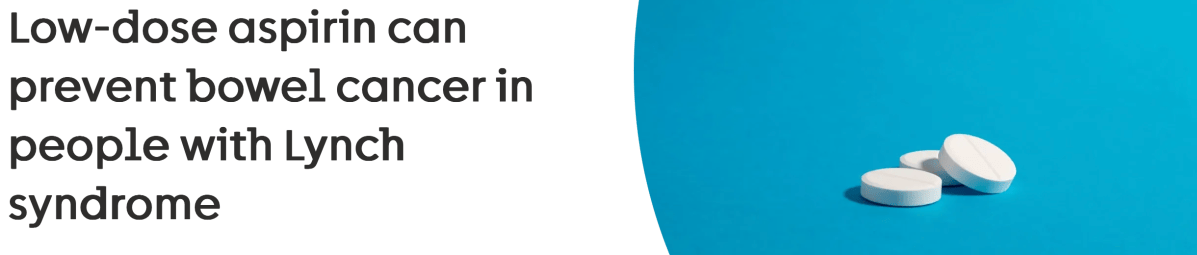
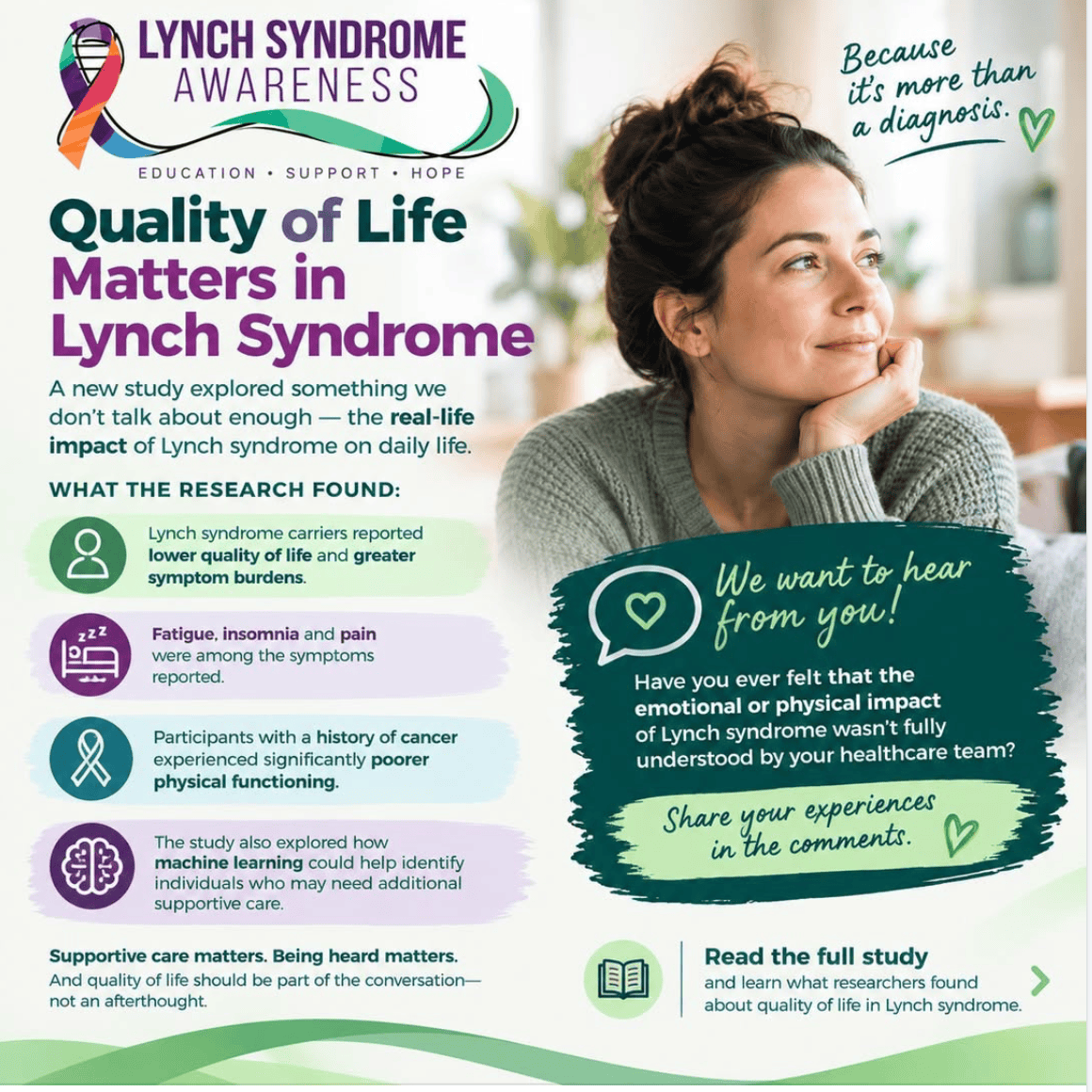
Lynch syndrome is an inherited condition that increases the risk of developing certain cancers, including colorectal, endometrial, and ovarian cancer.

On this page

https://www.canceraustralia.gov.au/impacted-by-cancer/lynch-syndrome#what-is-lynch-syndrome

Cancer Needs Trials

Cancer Trials: Better Treatments, Smarter Spending

For every hundred people who hear the words “you have cancer” in an Irish doctor’s office, only three or four will get onto an interventional clinical trial.

That’s not enough 
— and it’s something we can change.

By adding your name below, you’re helping us push for the funding needed to open more cancer trials in Ireland. You’re standing up for every patient and every family who deserves access to the very best care.

Sexual Health and Wellbeing

Sexual health and wellbeing are important parts of your overall physical and emotional health. Womb cancer and its treatment can affect these aspects of life in many ways. You may experience changes in how you feel about yourself, your body image, your self-confidence, and how you think others perceive you.

Emotional Impact of Womb cancer Treatment

Everyone’s emotional response to womb cancer and its treatment is unique—but many people share common feelings as they process the experience. It’s entirely natural to go through a wide range of emotions, including low mood, anxiety, frustration, anger, sadness, and shame. These reactions can stem from any aspect of diagnosis and treatment, including changes to the body, identity, and future plans.

There is no timeline for recovery, and every journey is personal. With patience, self-compassion, and open communication, it’s possible to rediscover intimacy in ways that feel authentic to you. 

Blame-Ridden Language in Medicine

Problematic Language: Words like claimsdenies, and failed treatment subtly blame or cast doubt on patients.

Dehumanizing Terms: Using labels like diabetic or epileptic defines people by their illness rather than as individuals.

Rooted in Tradition: These terms are passed down through medical training—not usually used with harmful intent, but still damaging.

Emotional Impact: Harsh or insensitive language (e.g., heart failure) can cause fear, anxiety, and distress in patients.

Need for Respectful Communication: Using person-first, respectful language builds trust and supports better care.

Real-World Molecular Testing in European Early-Onset Colorectal Cancer

The global incidence and mortality of early-age onset colorectal cancer (EOCRC, or CRC diagnosed under 50 years) has increased in recent decades.

High-risk surveillance and personalised oncological treatment may improve patients’ outcomes. This study aims to characterise real-world somatic and germline molecular profiles in European EOCRC patients.

Conclusions

Results support universal and paired somatic and germline multi-gene panels for all EOCRC patients, regardless of MMR status or family history. Systematic molecular testing approaches are necessary to address disparities in people with EOCRC. Larger unselected cohort studies would support validation of testing prediction models and estimates of clinically relevant variant actionability.

(Somatic testing analyses acquired genetic changes (mutations) in a person’s tumor cells to guide cancer treatment, while germline testing looks for inherited genetic mutations present in every cell of the body since birth)

https://onlinelibrary.wiley.com/doi/10.1002/ueg2.70112

Gynaecological cancers: ‘What strikes me is how easy it would have been to dismiss that one symptom’

Úna Kealy didn’t have any of the typical symptoms of a gynaecological cancer before she was diagnosed with stage one cervical cancer in 2016 at age 43.

Kealy says she is “living proof” that early intervention works and believes other women should be aware of their bodies and seek medical advice if any changes or concerns.

https://www.irishtimes.com/health/2025/09/19/gynaecological-cancers-what-strikes-me-is-how-easy-it-would-have-been-to-dismiss-that-one-symptom/

Therapeutic targeting of mismatch repair-deficient cancers

Key points
  • Immune-checkpoint inhibitors (ICIs) confer remarkably durable clinical benefit in many patients with DNA mismatch repair-deficient (MMRd) tumours.
  • MMRd tumours are thought to be responsive to ICIs because they harbour many single-base substitutions and frameshift mutations, which, if expressed, have the potential to encode tumour-specific immunogenic neoantigens.
  • Immune-mediated killing of MMRd cancer cells can be orchestrated by various effector cells, enabling MMRd tumours to respond to ICIs despite major histocompatibility complex (MHC) class I loss.
  • Most patients with MMRd tumours derive benefit from ICIs, although a substantial number have primary resistance and many more develop acquired resistance.
  • Many potential predictors of response and resistance to ICIs are under active investigation, but none are currently ready for clinical implementation.
  • The accurate diagnosis of MMRd status is an important determinant of ICI response. This is best achieved through a multimodal approach that involves immunohistochemical analysis of mismatch repair protein expression and microsatellite profiling.

MMRd seems to be acquired early during oncogenesis and is followed by the progressive accumulation of mutations and neoantigens, which ultimately predispose to immune sensitivity. 

https://www.nature.com/articles/s41571-025-01054-6

Patient-Centred Care,

I get worried when I see this term used……

Ideally, all patient care should be patient-centred, focusing on individual preferences, needs, and values, but the term “patient-centred care” highlights a shift from older, more physician-driven models to a partnership where the patient is a key decision-maker. This approach ensures care is coordinated, respectful, and empowering, leading to better patient satisfaction and health outcomes. 

What Patient-Centred Care Entails

  • Respect for Values and Needs: Healthcare professionals respect and respond to a patient’s unique values, preferences, and needs. 
  • Shared Decision-Making: Patients are actively involved in care planning and decisions, rather than having a one-size-fits-all solution imposed on them. 
  • Holistic Approach: Care extends beyond symptoms to include emotional, social, and spiritual concerns, recognising the whole person. 
  • Clear Communication: Information is shared clearly and openly, enabling patients to be informed and engaged. 
  • Coordination and Integration: Care is coordinated across different providers and settings to ensure a seamless experience. 

Why It’s a Shift from the Past

  • Past vs. Present: Historically, healthcare often followed routines and practices deemed most appropriate by professionals, with patients expected to conform. 
  • Empowerment: Patient-centred care empowers individuals, giving them a say in their health and promoting greater responsibility for their well-being. 

Benefits of Patient-Centred Care 

  • Improved Outcomes: Patients who are more engaged and informed tend to have better health outcomes.
  • Increased Satisfaction: Patients are more likely to be satisfied with their care when they feel their needs and preferences are met.
  • Enhanced Engagement: Patients feel more motivated to make healthy lifestyle choices when they are active participants in their care.
  • Greater Independence: By enhancing the quality of care, patients can often remain independent for longer.

Sometimes we need permission to be grumpy 

Sometimes we need permission to be grumpy and ungrateful and selfish. We need to allow ourselves the opportunity to take a day off from being a better person. 

Then we can wake up again the next day and marvel at the wonder of a perfect soft-boiled egg.

THISISGO.IE

The platform (on-line portal) which was developed ‘by patients for patients’ in partnerships with healthcare professionals, was launched in Sept 2021 and is aiming to change the landscape in how we support those with gynaecological cancers, including cervical, ovarian, endometrial, vulval and vaginal cancers.

Currently there are still significant deficits in the provision of information and support for women affected by gynaecological cancer the team at thisisGO.ie are working, whilst acknowledging the power of cooperation and collection action, to provide this one-stop shop for these women, their families and Health Care Providers via thisisGO.ie

The platform includes articles, videos, podcasts, useful resources, symptom tracker, decoding the science and service directory content. These materials address every stage of the specific cancer diagnosis, treatment and life with and after this cancer. The platform also supports Health Care Professionals in their clinical practice, offering useful articles such as How to Break Bad News and How to take a Sexual History from a Patient.’

thisisGO.ie is kindly supported by the Irish Cancer Society through its Women’s Health Initiative and by UCD Clinical Research Centre (CRC), OvaCare, GSK, Pfizer and patient donations.

Please see https://thisisgo.ie/