
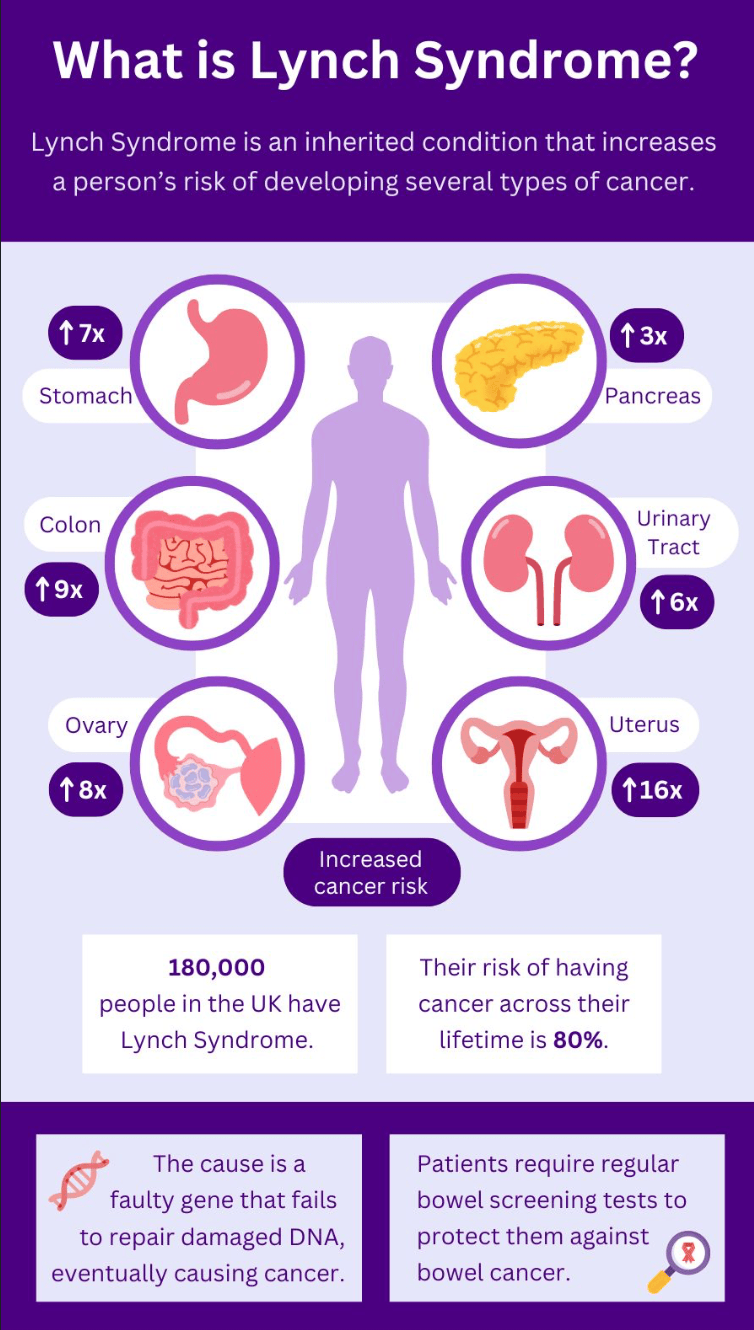
Lynch syndrome is a hereditary condition caused by changes in the genes involved in repairing mistakes in our DNA. People with Lynch syndrome have an increased risk of developing several types of cancer, including bowel cancer.
Regular bowel surveillance is an important part of managing this increased risk. People with Lynch syndrome are currently recommended to have regular colonoscopies to look for and remove pre-cancerous changes, or to detect bowel cancer at an early stage.
Author: Lynch Syndrome Ireland
Findings of Lynch syndrome surveillance colonoscopies across the UK.
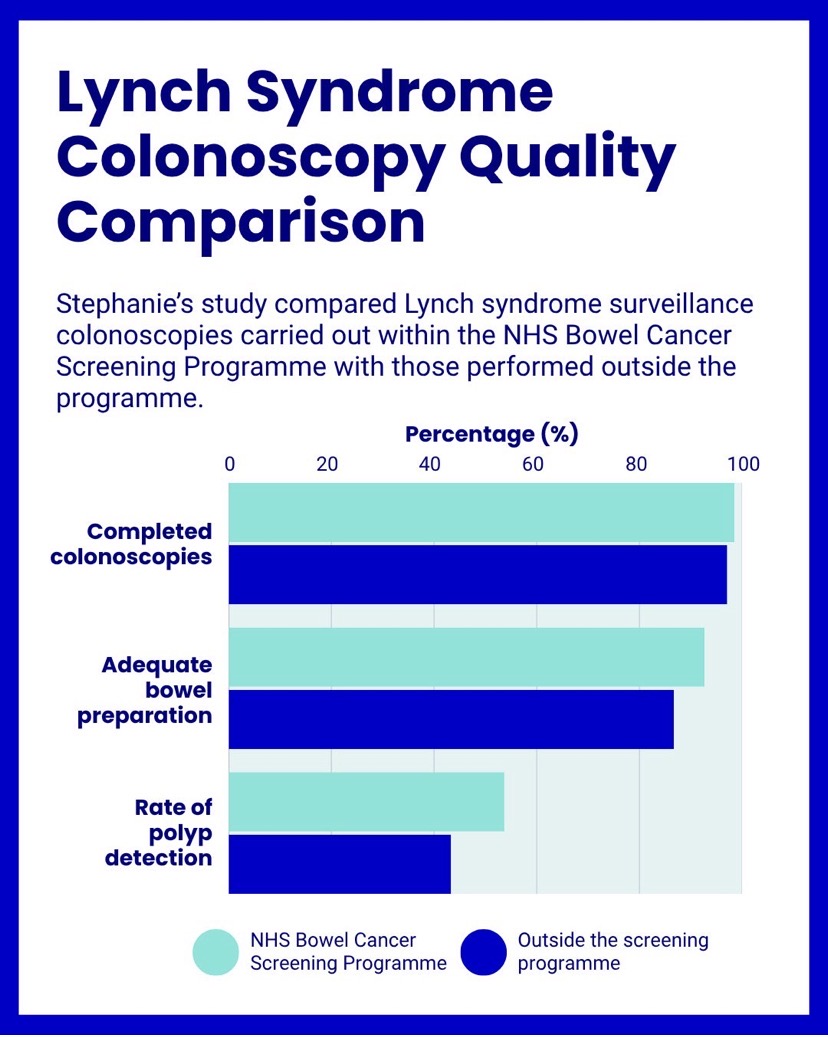
The authors conclude: “Lynch syndrome colonoscopy is generally being performed to a high standard, and procedures within the national screening programme appear to achieve particularly good quality and detection.”
If the population at large is to benefit from advances in genomic medicine, genetics services cannot do this alone
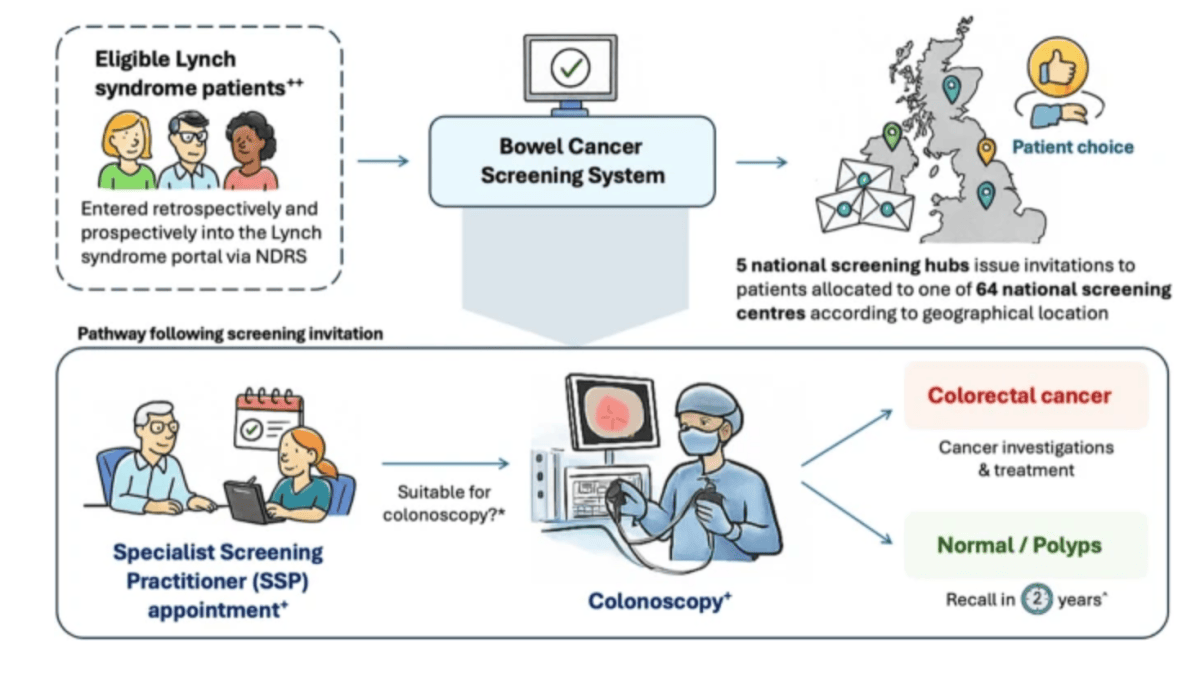
Outcomes from the English National Lynch Syndrome transformation project.
The NHS England LS Transformation project has driven equitable nationwide delivery of diagnosis testing for Lynch syndrome, with integration of ‘mainstreamed’ genetic testing into routine cancer care.
New diagnoses of LS have consistently increased each year from a total of 545 in 2020 to a total of 1394 in 2024 (an increase of 255% vs. a target of >50%).
Don’t be embarrassed about your body.

At 42, Danielle Ripley-Burgess has survived colon cancer three times. She was first diagnosed at 17, then at 25 and then again at 39.
I don’t have any family history, and there was no explanation at first, but I found out I have Lynch syndrome, a genetic disease that puts you at a higher risk for several cancers, with colon and rectal cancers at the top of that list. I’m the first in my family to have the mutation.
If you’re seeing something with your body that’s uncomfortable and weird, and you’re not ready yet to tell a doctor, tell somebody — a friend or family member. Don’t sit in that place of: something is wrong with your body, and you don’t know what it is. Don’t sit there alone. Don’t downplay what you’re seeing.
ColoMARK initiative
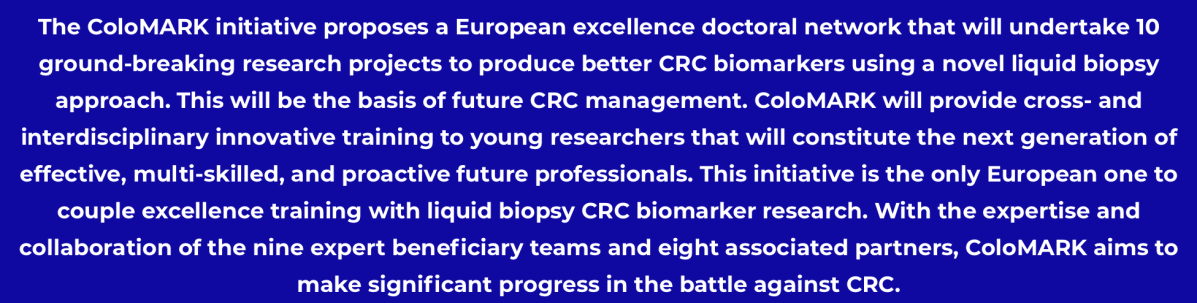
Cancer is a major health problem in the European Union (EU), and colorectal cancer (CRC) is the third most prevalent tumour..
To combat this, the EU has enforced important R&D measures such as Europe’s Beating Cancer Plan and the EU Mission: Cancer. However, the alarming numbers of new reported CRC cases in the EU-27 and the lives it claims are expected to rise by 27% in the next two decades due to various factors.
To address this, we need immediate solutions to better prevent, treat, and manage CRC.
One solution is liquid biopsy, which allows for a less invasive way to assess tumor molecular features. Despite a plethora of published CRC biomarkers, there is still a need to identify and develop novel, clinically useful biomarkers that can improve disease outcome.
There are still many unknowns about the patient-specific biological determinants of tumour initiation and dissemination, or how clonality affects disease progression and response. In addition, the lack of standardisation and reproducibility of the assays and the need for biomarker research sustainability beyond a project are also issues.
“Tell your family” sounds straightforward. But, in practice, it can be anything but.
In general this responsibility usually falls on the proband (the first person who undergoes genetic testing in the family). But every family is different.
When someone learns they have an inherited mutation in a cancer gene, that information is important for relatives. Because inherited mutations can be passed through families, a positive genetic test result may prompt relatives to consider testing of their own.
Sharing Genetic Test Results doesn’t reliably lead to relatives testing.
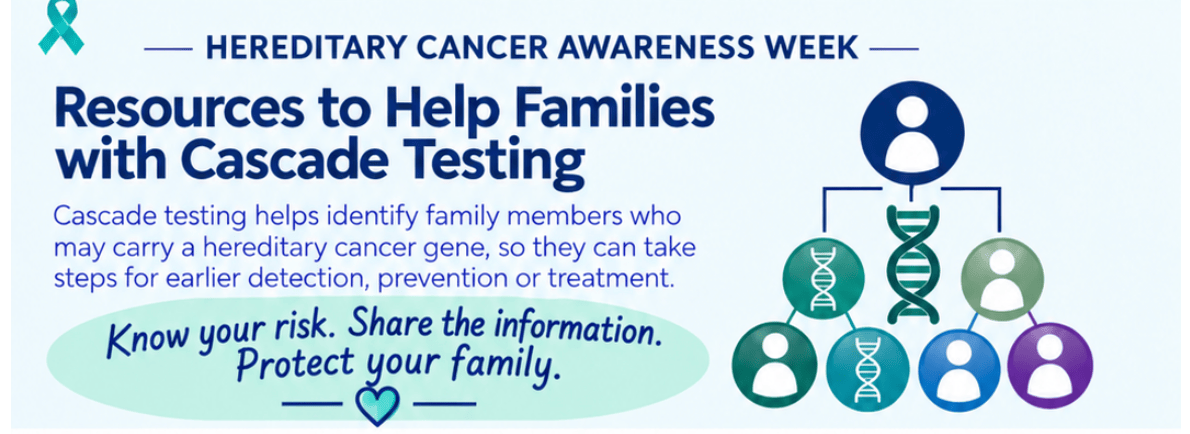
Cascade testing: testing family members after a cancer-related gene mutation is identified in a relative. Done well, it catches at-risk individuals before cancer develops, enabling earlier surveillance and better outcomes.
Studies suggest the problem isn’t that patients won’t share results, it’s that sharing doesn’t reliably lead to relatives testing.
Studies found that genetic counsellor involvement improved outcomes, whether measured by patient communication or actual testing.
Takeaway: Across both studies, cascade testing fails less because people don’t want to test, and more because the system doesn’t support the “last mile,” turning a patient’s willingness to share results into a relative’s completed test. Closing that gap, especially for underserved populations, will likely require more structured clinician involvement and better tools for ongoing family communication.
“Someone Like Me” for everyone who will hear the words “it’s cancer”
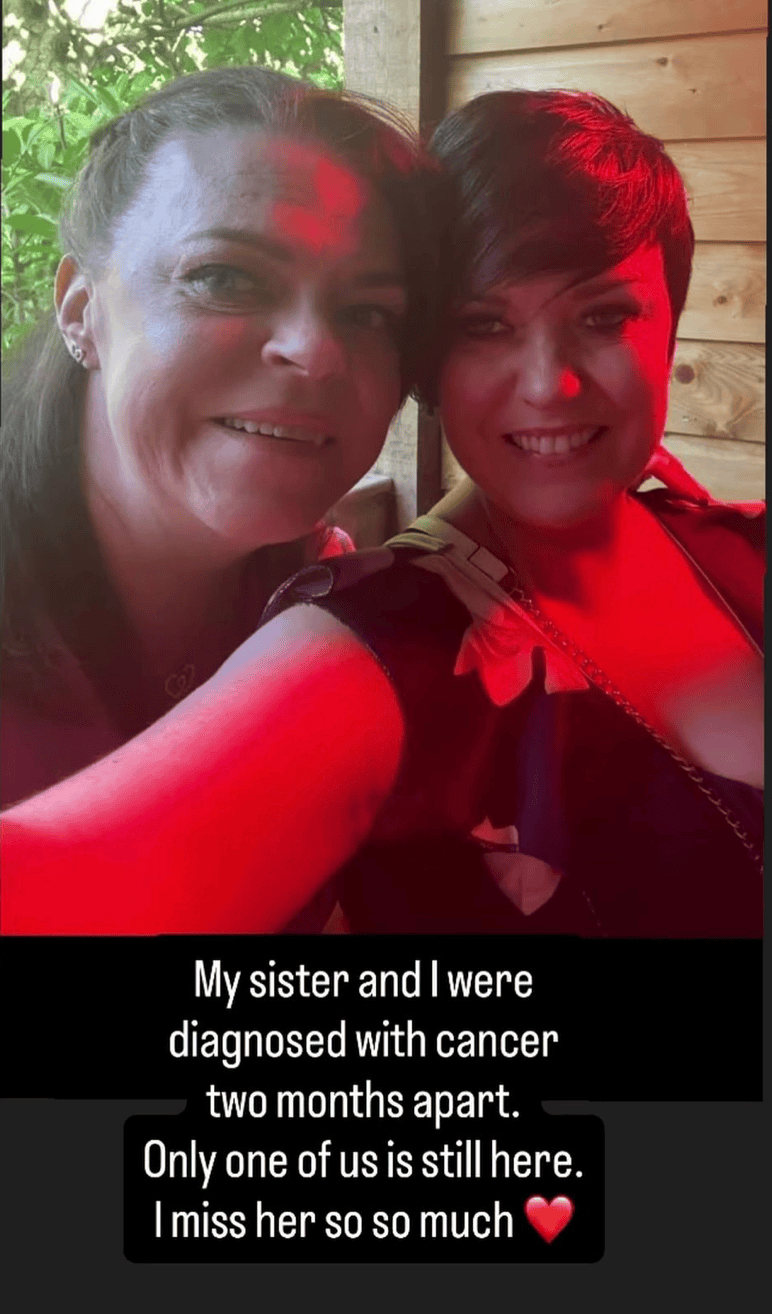
I kept thinking about how many people are diagnosed with cancer every single day, and how many of them are sitting there wondering:
“Who do I talk to?”
“Who understands what I’m going through?”
“Where are the people who just get it?”
That’s why I created Someone Like Me: a cancer community that connects people who understand because they’ve been there too. Whether you’re newly diagnosed, living with cancer, in remission, supporting someone you love.
And it’s free for patients and families. Because support and connection shouldn’t depend on what you can afford.
Outcomes of ‘in-house’ genetic testing within a specialist hereditary colorectal cancer registry

Approximately 5%–10% of colorectal cancer (CRC) cases are due to known Mendelian syndromes genetic conditions caused by a mutation in a single gene that follow predictable patterns of inheritance
This study aimed to report the diagnostic yield of constitutional genetic testing, alongside clinicopathological factors for hereditary CRC, within a specialised National Bowel Hospital, and outside traditional genetics referral pathways.
Conclusion
Genetic testing performed by our specialist unit provides patients with a high-yield, and effective genetic diagnosis, directly indicating comprehensive lifelong care, outside the context of a traditional genetics service.
Cancer and Intimacy

Lack of initiation becomes interpreted as lack of attraction.
Avoidance becomes interpreted as emotional withdrawal.
Difficulty communicating becomes interpreted as indifference.
Meanwhile, both people are likely carrying experiences they deeply wish the other person understood.
Many people notice changes in intimacy, communication, or how they feel in their body after treatment.

