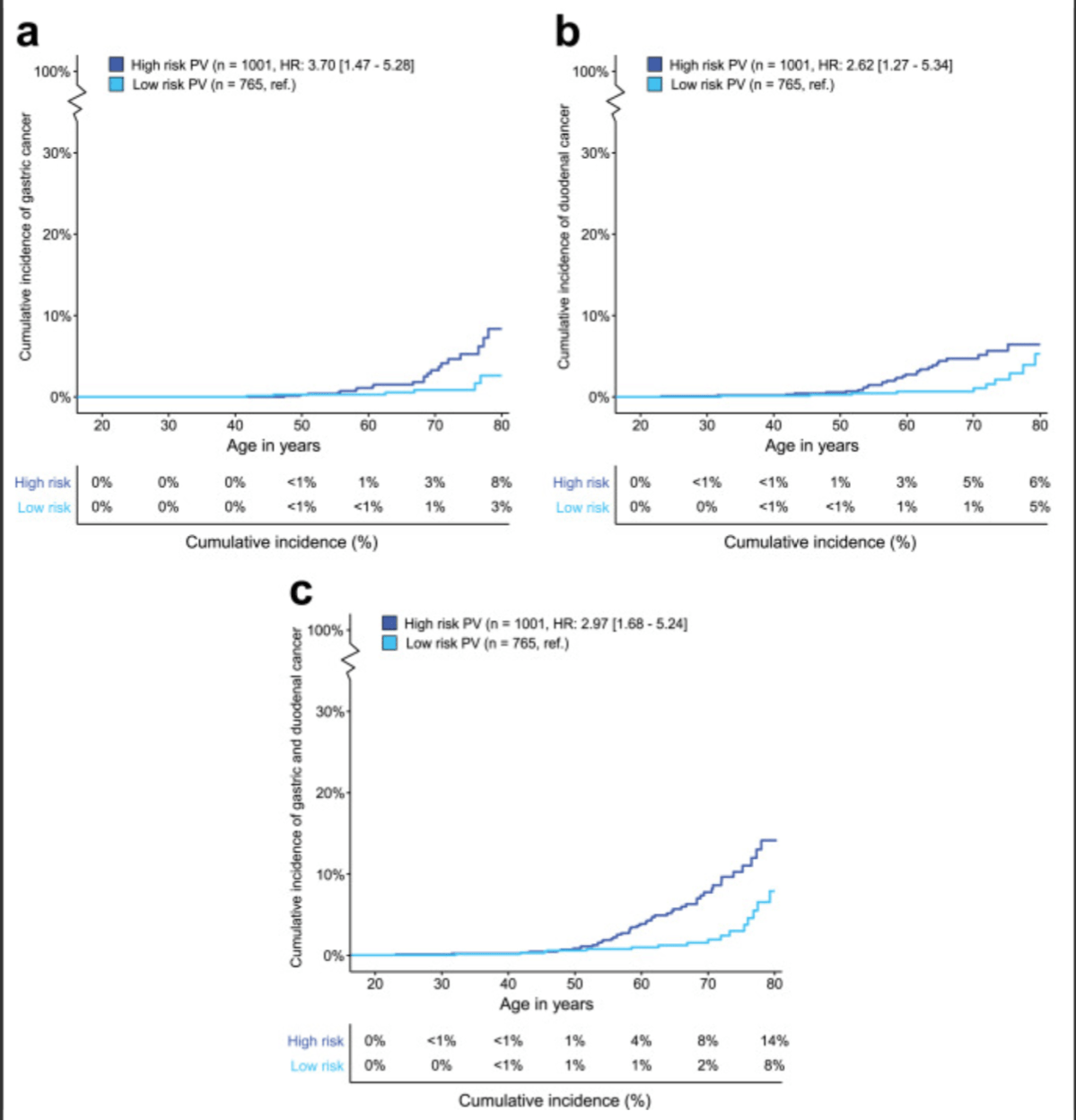
The benefit of EGD surveillance in individuals with Lynch syndrome is still a topic of debate.
Considering the invasive nature of the procedure, the patients’ burden, and—albeit small–the risks associated with conscious sedation and the procedure itself, it is essential to provide EGD surveillance only to individuals at high risk of developing GC and DC who could benefit from this procedure.
” Honestly, I now tell anyone coming to see me not to bring gifts, I just want to see you and have a laugh or two.
I discovered and concur also that the best gift someone can give is their attention and time. A casual visit or trip out for a cuppa and a chat about the ups and downs of life or gossip helps us feel like we still belong in this world.
All too often we get sidelined as if we had a contagious disease. In fact, in some ways people may see us as a walking disease rather than the person they knew before all this sickness lark happened.
Researchers have linked abnormal DNA methylation to several adverse outcomes, including human diseases.
So far, much of this research has been focused on cancer and tumour suppressor genes, since hypermethylation often results in the silencing of tumour suppressor genes in cancerous cells.
Compared to normal cells, the genomes in cancer cells have also been shown to be hypomethylated over all, with hypermethylation only occurring in the genes involved in tumour cell invasion, cell cycle control, DNA repair and other processes where silencing would lead to the spread of cancer.
In colon cancer, it is possible to detect hypermethylation early on in the course of disease, meaning hypermethylation may serve as a biomarker for the condition.
The decision regarding the multiple approaches to rectal cancer can be very challenging:
Summary
The NCCN Rectal Cancer Panel believes that a multidisciplinary approach, including representation from gastroenterology, medical oncology, surgical oncology/colorectal surgery, radiation oncology, pathology, and radiology, is necessary for treating patients with rectal cancer.
Patients with very-early-stage tumours that are T1, N0 and who meet carefully defined criteria can be managed with ESD or transanal local excision. A transabdominal resection is appropriate for other rectal lesions. A TNT approach, traditionally consisting of chemoRT/short-course RT and chemotherapy, is preferred when RT is being given.
However, ongoing clinical trials for rectal cancer are particularly focused on treatment approaches that omit surgery or RT, with the goal of improving outcomes for eligible patients. Careful surveillance is necessary to detect and manage recurrences in a prompt and effective manner.
The economic case for investment in palliative care is well established, evidence-based and firmly grounded.
Due to the lack of palliative care resources, the first interaction most people will have with it is when their loved one is reaching the end of life. As a result, it is not surprising that some people believe that it only comes into play when all other treatment options have failed.
Palliative care is so much more than end-of-life. It emphasises improving the quality of life for both patients and their families by focusing on the whole person rather than only their disease.
The PACE-NODESstudy for patients with Prostate Cancer is now re-opened at three sites in Ireland.
About this trial
The purpose of this study is to test an advanced type of external beam radiotherapy called stereotactic body radiotherapy (also known as SBRT) in 536 participants with high risk localised prostate cancer (that is, prostate cancer that has not spread beyond the prostate gland but is at high risk of growing quickly or spreading).
Importantly, this treatment delivers a potentially curative dose of radiotherapy in only 5 treatments over two weeks. Half the participants in the trial will receive radiotherapy to the prostate, the other half will have radiotherapy to the prostate as well as the surrounding lymph nodes. The investigators will follow patients in the trial for at least three and half years to see which treatment is best. The investigators will be looking at whether it is safe to give this treatment by reviewing any side-effects that occur and also assessing whether giving SBRT to the lymph nodes as well as the prostate reduces the chance of prostate cancer returning.
Today, a patient diagnosed with advanced prostate cancer has options.
Doctors can offer a suite of androgen-suppressing drugs to extend his life. There are genetic tests that can show whether he’s a candidate for more-targeted treatments. These tests can also reveal whether his family members are at higher risk for prostate and other types of cancer. This was not always the case.




 Lynch Syndrome Ireland