

I suppose you want to know how I coped though. Ready?
https://peakd.com/hive-121589/@clodaghdowning/when-i-was-told
I suppose you want to know how I coped though. Ready?
https://peakd.com/hive-121589/@clodaghdowning/when-i-was-told
A cancer diagnosis can be both physically and emotionally challenging.
As cancer patients learn how to cope with the disease and manage side effects, artificial intelligence (AI) tools like ChatGPT are emerging as valuable allies. This article explores ten ways ChatGPT can help you manage your cancer journey more effectively.
A cancer support centre provides emotional and practical support for people dealing with cancer. This includes those who have had a cancer diagnosis and their family and loved ones. Cancer support centres in Ireland are registered with the Charities Regulator. They are self-governed and self-funded.
Results identified four key themes:
(1) early-onset CRC treatment results in sudden physical, psychological and social impacts in all aspects of life;
(2) early-onset CRC patients have unique supportive care needs which are not recognised in current practice;
(3) there is a need for tailored information;
(4) a lack of support was identified in the areas of mental health, sexual health and fertility.
Study highlights numerous unique issues experienced by the early-onset CRC patient group during treatment. There is a need for change in clinical practice, along with the development of international guidelines and tailored resources for both patients and healthcare professionals, in order to improve care.
About time….loooong overdue.
Ireland has a Digital Health Strategy, but currently no centralised electronic health record system is in place.
The system allows 24-hour access by doctors and patients to their health information using a secure, free, open-source non-commercial platform.
It has been piloted by the HSE and is currently operational for around 15,000 patients, including Ukrainian refugees, International Protection Applicants, the homeless, the Roman Community and others.
It envisages that doctors will be able to access them in real time, from any location, reducing duplication of tests and making the system more efficient and safer.
https://www.rte.ie/news/health/2024/0626/1456756-digital-health/
Why am I back? Well, I got cancer.
If you are like me or close to someone like me, I wish to lighten your load with this blog and maybe give you a laugh every now and then.
Today was the day of my annual endoscopies – a flexible sigmoidoscopy, a gastroscopy, and a capsule endoscopy placed via gastroscopy.
Every little win is a win. There’s no point just bouncing onto the next worry, especially if it might never come.
Find joy now, in getting at least one out of three clear tests, and freedom to eat an ice cream sandwich.
https://www.cancer.ie/about-us/cancer-advocacy/prebudget-submission-2025
In the Lynch syndromes (LS) we now recognize a dynamic balance between two stochastic processes: MSI producing abnormal cells, and the host’s adaptive immune system’s ability to remove them.
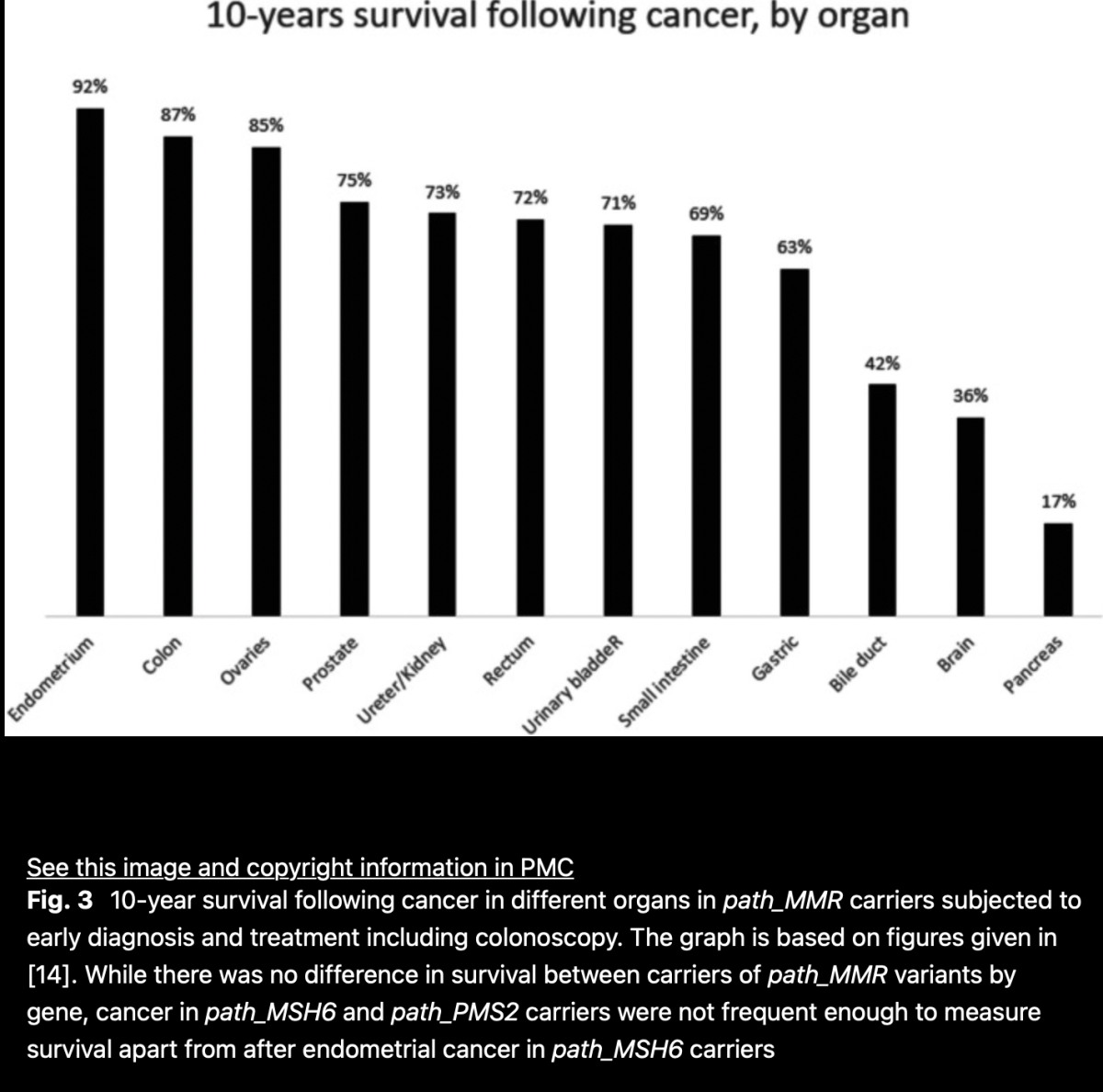
The latter may explain why colonoscopy surveillance does not reduce the incidence of colorectal cancer in LS, while it may improve the prognosis.
Most early onset colon, endometrial and ovarian cancers in LS are now cured and most cancer related deaths are after subsequent cancers in other organs.
Aspirin reduces the incidence of colorectal and other cancers in LS.
Immunotherapy increases the host immune system’s capability to destroy MSI cancers.
Colonoscopy surveillance, aspirin prevention and immunotherapy represent major steps forward in personalized precision medicine to prevent and cure inherited MSI cancer.


 Lynch Syndrome Ireland