

For a cancerous tumor to grow, it must overpower immune cells known as T cells. TIL((tumor-infiltrating lymphocyte – or TIL therapy) is showing promise in advanced lung cancers through clinical trials underway. Therapy restores the immune system’s natural ability to fight cancer cells.
Author: Lynch Syndrome Ireland
Bowels Basics & Breakthroughs

Scan QR code to download your copy of the new excellent patient guide to #BowelCancer in Ireland. Useful to all as contains important information on symptoms & screening – something everyone needs to be aware of! #BowelCancerAwarenessMonth

It was a project undertaken by University of Sheffield student, Yifeng, who conducted interviews with Lynch Syndrome advocacy organisations (Lynch Syndrome UK and Lynch Syndrome Ireland) to explore what (& how) they communicate on digital media.
Based on this, she created an animation to share with the #lynchsyndrome community.
This animation features information on the cancer risk brought by different #lynchsyndrome gene mutations (MLH1, MSH2, MSH6, PMS2, EPCAM).
Lynch syndrome: 10 things to know about this genetic condition

New Lynch syndrome registry ‘game-changing’ for patients

England’s latest Lynch syndrome patient database may transform the disease’s detection and monitoring, becoming a blueprint for other genomic diseases.
Why Lynch syndrome?
The English National Lynch Syndrome Registry holds over 9,000 patient records, but what is it about Lynch syndrome that warrants a national database? It ticked a number of boxes, from researchers knowing a lot about it to there being a strong public health argument to focus on.
Lynch syndrome is a fairly well-understood condition with a high penetrance. This makes cascade testing, which is where the patient’s family members are considered for testing, very likely to pick up new cases before Lynch syndrome-associated cancer develops – which can include colorectal and endometrial cancers. When new cases are found, there are ways in which risk can be reduced for those affected that are relatively cheap, available and simple. Advice on this includes a NICE recommendation to take aspirin and attending colonoscopies.
- GeNotes In the Clinic: Presentation: Patient with a genetic diagnosis of Lynch syndrome
- GeNotes knowledge hub: Lynch syndrome
- Patient film: Tom’s story: genomic testing and treatment for Lynch syndrome
Time for a balanced conversation about menopause

Check out The Lancet Series…..
Menopause is an inevitable life stage for half the world’s population, but experiences vary hugely. Some women have few or no symptoms over the menopause transition while others have severe symptoms that impair their quality of life and may be persistent.
Many women feel unsupported as they transition menopause. To better prepare and support women, the Lancet Series on menopause argues for an approach that goes beyond specific treatments to empower women with high-quality information, tools to support decision making, empathic clinical care, and workplace adjustments as needed.
https://www.thelancet.com/journals/lancet/article/PIIS0140-6736(24)00462-8/fulltext
Managing menopause after cancer

Prof Donal Brennan, Professor of Gynaecological Oncology in the UCD School of Medicine, University College Dublin, and colleagues have published a new featured review on menopause treatment for cancer patients.
Review aims to implement a more personalised and multidisciplinary approach in treatment of menopause symptoms after cancer.
(What about after surgical menopause?)
The article provides a comprehensive view of the current hormonal and non-hormonal therapy options studied and suggests a framework for more cost-effective and patient-focused models of care to meet the needs of a growing population of cancer survivors.
“Patients have repeatedly highlighted the burden of menopause symptoms after cancer treatment. They feel that these are often minimised or in some cases ignored,” said Prof Brennan. “
Key treatment advice points include:
- MHT is an effective treatment for vasomotor symptoms and seems to be safe for many patients with cancer, the paper states.
- Women younger than 45 years without contraindications should be offered an individualised treatment plan including MHT after cancer treatment.
- If MHT is contraindicated, non-pharmacological and non-hormonal treatments are available for vasomotor symptoms; vaginal oestrogen seems to be safe for most patients with cancer and growing evidence supports safety after breast cancer.
- Multidisciplinary management of menopause after cancer is essential and should include primary care and, if appropriate, allied health practitioners.
The Easy Part of Cancer

“As much as knowing more about your cancer can be debilitating, it can also be liberating. A well-informed patient can engage in substantive conversations with their doctors. It allowed me to participate in my care rather than having it done to me.”
The English National Lynch Syndrome Registry

Comprising over 9,000 patients with Lynch syndrome….Aims to improve the treatment of all patients living with the genetic condition.
Researchers from the Institute of Cancer Research (ICR), in collaboration with the National Disease Registration Service, the NHS Genomic Medicine Service Alliances and the NHS Regional Clinical Genetics Services, have set up the UK’s first-ever comprehensive database registry for Lynch syndrome patients to prevent cancer.
“By centralising patients’ genetic data, together with detailed information about the cancer diagnosis and treatments that these patients have received, researchers will gain crucial insights into Lynch syndrome… [unlocking] new opportunities for precision medicine and prevention, ultimately improving the lives of patients living with the condition.”
Lack of association between screening interval and cancer stage in Lynch syndrome may be accounted for by over-diagnosis; a prospective Lynch syndrome database report
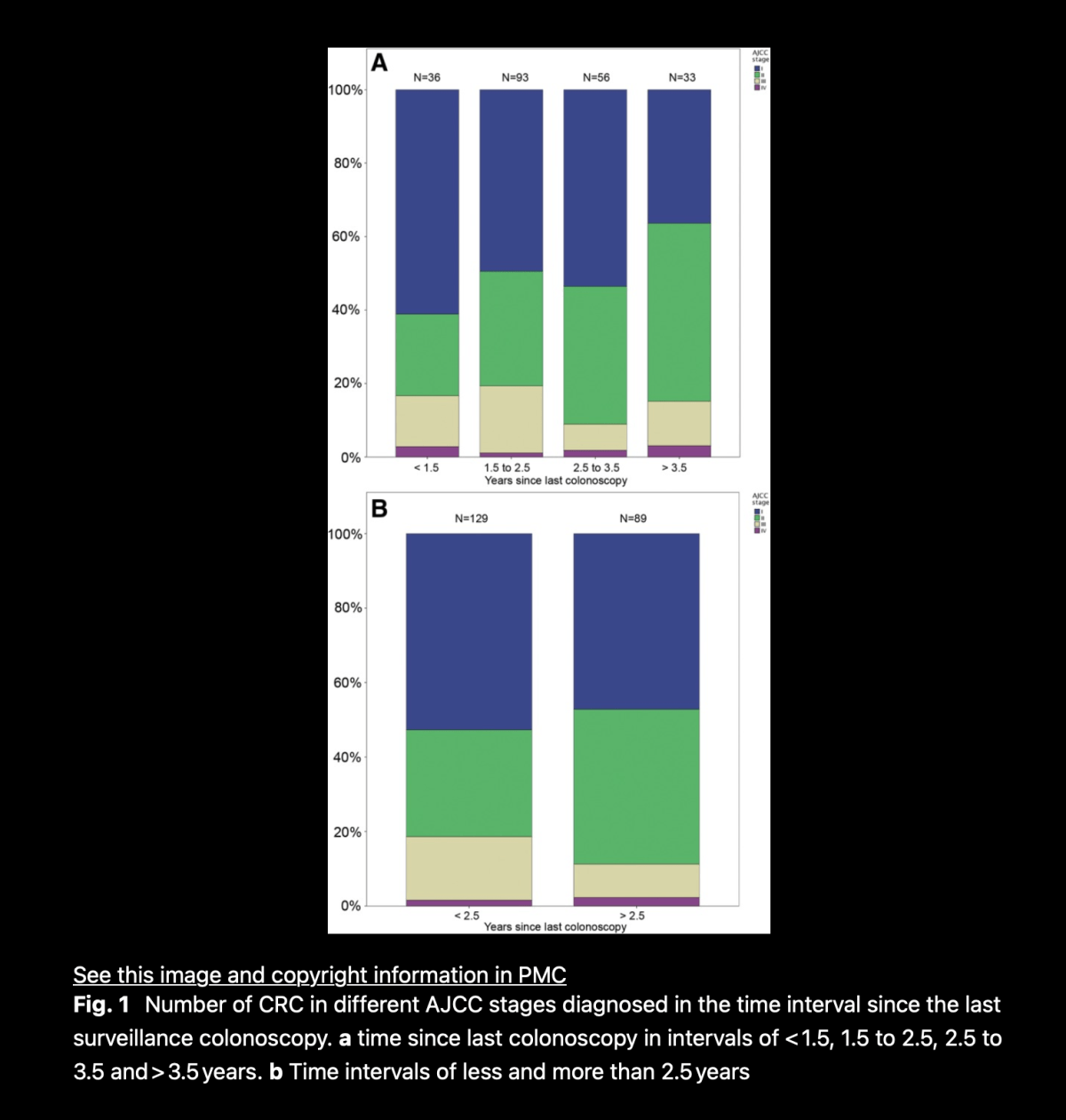
Recent epidemiological evidence shows that colorectal cancer (CRC) continues to occur in carriers of pathogenic mismatch repair (path_MMR) variants despite frequent colonoscopy surveillance in expert centres. This observation conflicts with the paradigm that removal of all visible polyps should prevent the vast majority of CRC in path_MMR carriers, provided the screening interval is sufficiently short and colonoscopic practice is optimal.
Our findings raise the possibility that some CRCs in path_MMR carriers may spontaneously disappear: the host immune response may not only remove CRC precursor lesions in path_MMRcarriers, but may remove infiltrating cancers as well. If confirmed, our suggested interpretation will have a bearing on surveillance policy for path_MMR carriers.
 Lynch Syndrome Ireland