We conclude that the incidence of OS in LS patients is significantly increased compared to the general population.
We suggest that osteosarcoma is part of the LS spectrum in adults and seems to be associated particularly with the path_MSH2 genotype. The association of STS with path_MMR variants is currently less clear, although there are case reports on young LS carriers with soft tissue sarcomas.
This is a fantastic trial….. the link to clinicaltrials.gov to have a look at the protocol. There are great investigators and great centers, and this is a very sensible randomised phase 2 trial design.
Is the use of digital tools part of the answer to reducing Ireland’s long Genetic Testing waiting lists??
Alternative models of genetic counselling are needed to meet the rising demand for genomic sequencing. Digital tools have been proposed as a method to augment traditional counseling and reduce burden on professionals; however, their role in delivery of genetic counseling is not established. This study explored the role of the Genomics ADvISER, a digital decision aid, in delivery of genomic counseling.
Conclusion(2021) of this study
Overall, this study proposes that use of a digital tool in conjunction with tailored counseling from a genetic counselor can enhance patient-centered care in the delivery of genomic counseling.
This study demonstrates that their digital tool contributed to enhancing patient-centered care in the delivery of genomic counselling.
Disclosure of genetic information raises ethical issues, mainly concerning autonomy, confidentiality, duty of beneficence, moral responsibility, and feasibility. The rights and duties of patients, relatives, and healthcare professionals are intertwined.
We suggest that healthcare professionals experienced in genetic counselling can consider disclosing risk by direct letter to at-risk relatives while taking into account the benefits of a family-mediated first contact and that counselling must be easily accessed when relatives want to make contact.
Direct contact has to be implemented in a framework of ethical considerations and good practice and tailored for both the individual patient and relatives.
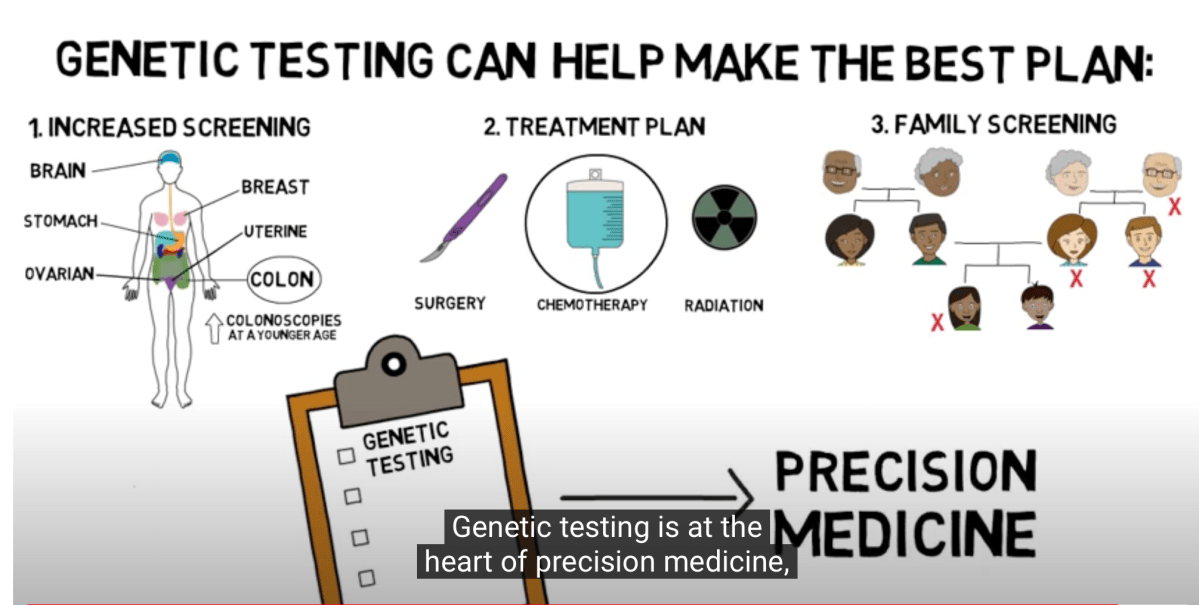
In recent years, breakthroughs in genetics and DNA testing have revolutionised healthcare, especially in cancer diagnosis, treatment, and care. By examining a person’s genes, we can now identify people at higher risk of developing certain cancers.
This allows healthcare providers to detect cancers at an earlier stage and make informed decisions about cancer management and surveillance. Crucially, they can also offer more effective personalised treatments and prevention strategies based on the patient’s genetic profile.
Report found:
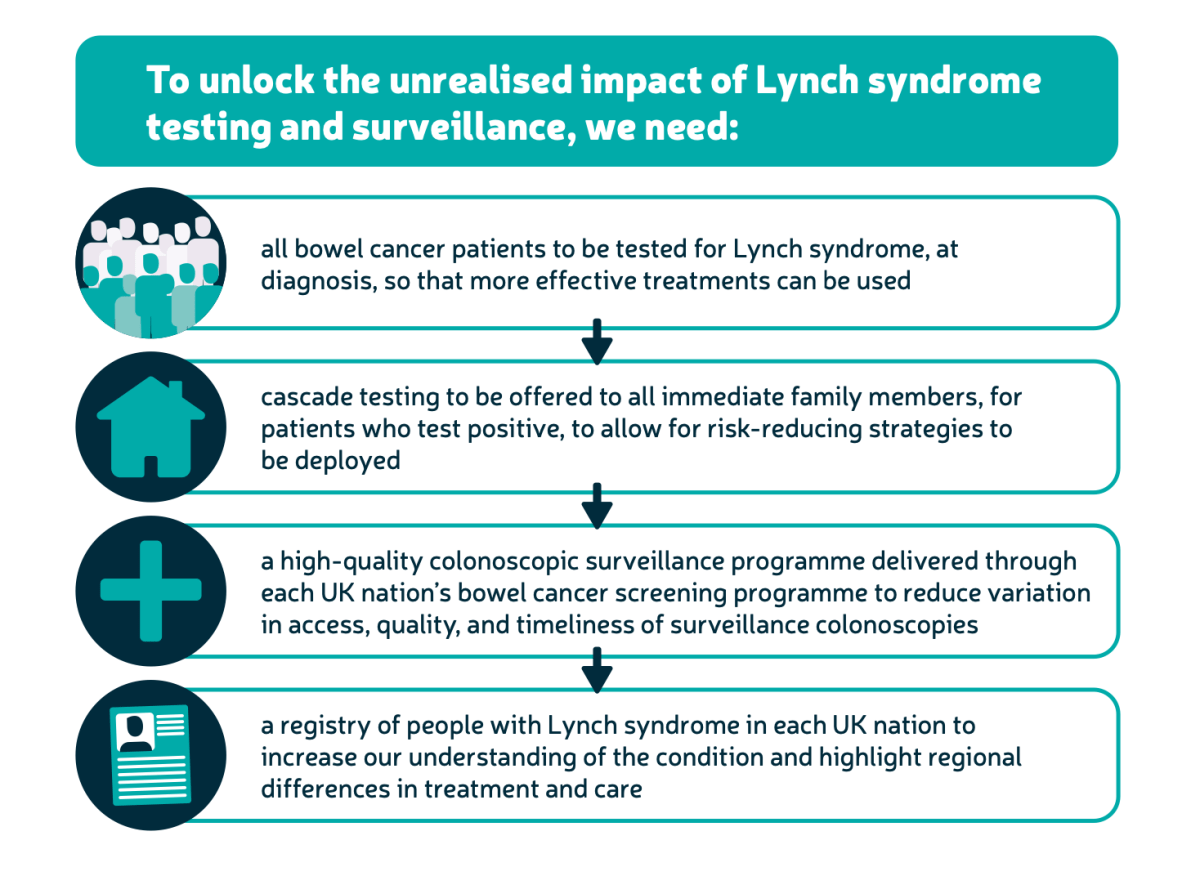
There have been significant improvements in genetic testing for bowel cancer patients, with an average of 9 in 10 newly diagnosed bowel cancer patients being tested over the last financial year, but workforce and capacity issues are still barriers.
Half of health authorities who responded, reported that family members of people with Lynch syndrome aren’t offered letters they can take to their GP, which is one route to accessing genetic counselling and testing.
A postcode lottery for life-saving routine surveillance colonoscopies exists. Although surveillance is offered to all Lynch syndrome patients in England through the Bowel Cancer Screening Programme, only 6 in 10 health authorities across Scotland, Wales and Northern Ireland offer surveillance colonoscopies in line with clinical guidance.
Major gaps in data collection and reporting on Lynch guidance and services are holding back Lynch syndrome care.
Testing all newly diagnosed bowel cancer patients for Lynch syndrome and implementing routine colonoscopic surveillance are crucial steps in meeting the early diagnosis goals set by governments and health services nationwide.
Clodagh Downing was experiencing symptoms for at least two years before her diagnosis of colorectal cancer, including recurring infections, an allergy to dairy, irregular bowel movements and bloating. Her blood tests were clear but when she developed fatigue and anaemia, a Google search suggested bowel cancer. In January 2021, she asked her GP for a colonoscopy. But at 48, her doctor told her she was too young.





 Lynch Syndrome Ireland