Improving Doctor, Patient, and Caregiver Communication

There is a great deal to be gained by improving communication between patients, family caregivers, and healthcare professionals — especially physicians. Better care for patients, less stress for caregivers, more efficient use of doctors’ time, and improved satisfaction for all concerned can be achieved when caregivers and patients communicate effectively with their care team.

Doctors at MSK are learning how to talk to patients, caregivers, and peers through their Communication Skills Research & Training (COMSKIL) program.

In this webchat, MSK experts will discuss how patients and caregivers benefit from this training, as well as how you can use communication techniques, research, and information from the program when talking to your doctors and loved ones.

Exploring Stakeholders’ Perspectives on Implementing Universal Germline Testing for Colorectal Cancer: Findings From a Clinical Practice Survey

CONCLUSION: This study(Eighty CGA-IGC members participated) demonstrates wide support among hereditary GI cancer experts for implementation of UGT for patients with CRC. However, alternative service delivery models using nongenetics providers should be considered to address the logistical barriers to UGT implementation, particularly the growing demand for genetic testing.

In conclusion, there is broad support for UGT for all newly diagnosed patients with CRC among the members of the CGA-IGC.

However, changes to practice, such as alternative service delivery models or standardization of test choice, will likely have to be implemented to meet the increased patient volume.

Additional studies are needed to compare UGT implementation strategies (eg, traditional or alternative service delivery models) to ensure there is equitable access to genetic testing and improved outcomes for patients with CRC.

https://ascopubs.org/doi/full/10.1200/PO.23.00440

The ins and outs and ups and downs of a colonoscopy

So what is a colonoscopy?

A colonoscopy is a test to look at your bowel using a small camera. The test looks for any small growths called polyps, or signs of disease, such as bowel cancer. If polyps are found they are usually removed during the test. This will reduce the risk of cancer developing. If they are not removed they might turn into cancer. If bowel cancer is found early, it’s easier to treat and there’s a better chance of recovery.

https://bit.ly/3lWzc80

(thisisGO.ie) is an online personalised resource for you and yours who have been impacted by a gynaecological cancer.

Phase 1 was launched on September 20th 2021.  It is a personalised
online resource for women impacted by cervical cancer.
If you have a partner in your life, this platform can also support them. If you are a health care provider working in the area this can also support you and your
practice. 

If you are newly diagnosed, receiving treatment, in surveillance
or living well with and beyond cancer thisisGO.ie has information that is
tailored to meet your needs.

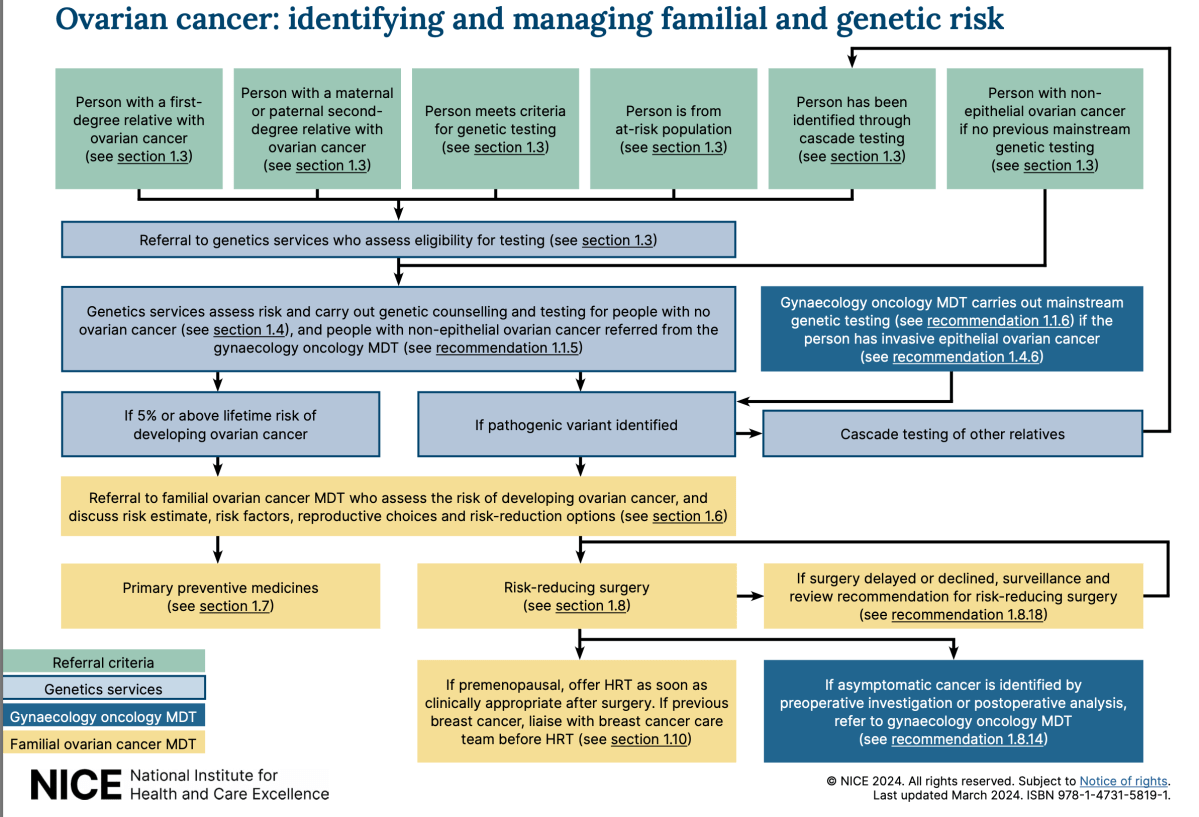
During 2022 the remaining 4 gynaecological cancers Ovarian, Uterine, Vulval and Vaginal were launched as well as the addition of a genetic pathway for those impacted by BRCA and Lynch Syndrome. 

Red flags for colorectal cancer in young adults

https://www.facingourrisk.org/XRAY/red-flags-for-colorectal-cancer-in-young-adults

Researchers were able to identify the following four signs that occurred more often in the group of patients with colorectal cancer compared to the group without colorectal cancer: 

  • rectal bleeding (which may be seen in stool)
  • pain in the abdomen (belly)
  • diarrhea
  • anemia (not having enough red blood cells to carry oxygen to tissues), which is found by a blood test

While these symptoms might be due to other underlying conditions, it is important not to ignore these symptoms if they continue. Among these four signs, rectal bleeding was most commonly associated with developing colorectal cancer.

Genetic testing and the future of medicine

More common signs of hereditary cancer include:

  • Multiple cases of cancer on the same side of the family, especially breast, colorectal, endometrial or ovarian cancers.
  • Cancer diagnosed before age 50, especially breast, colorectal or endometrial.
  • Rare cancers at any age, including:
    • ovarian
    • pancreatic
    • male breast
    • metastatic prostate

The future of genetic testing

Dr. Steiner is optimistic about the future of genetic testing and how it can impact healthcare care. “I think in the not-too-distant future, everybody will have comprehensive genetic testing done in order to prepare healthcare providers for any future issues a patient might develop.”

When that happens, genetic testing will be used more often to help people and their healthcare providers prevent unexpected diagnoses.

https://www.facingourrisk.org/XRAY/genetic-testing-and-future-of-medicine

Screening and testing practices for Lynch syndrome in Nova Scotians with endometrial cancer: a descriptive study

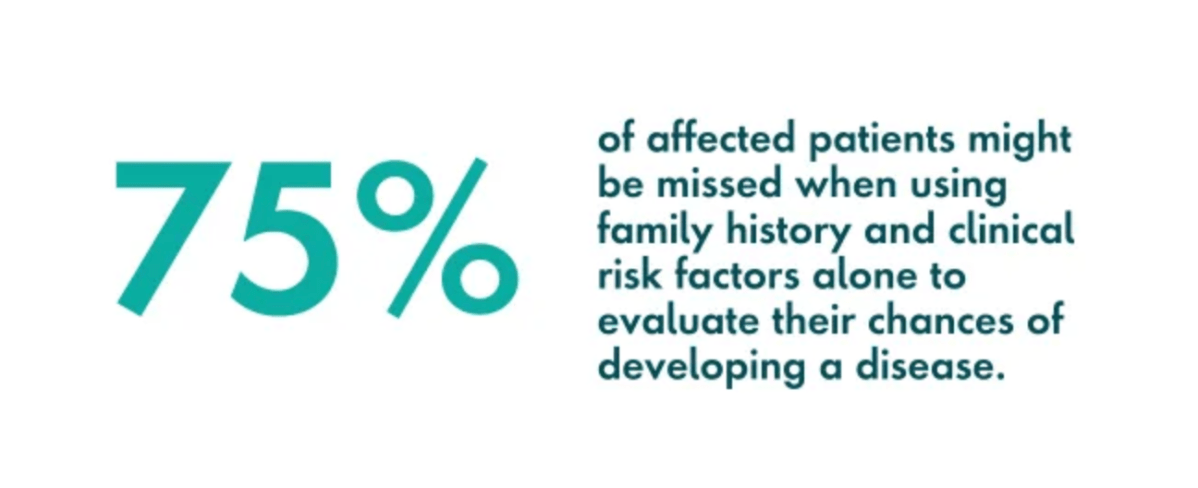
Identifying affected people is crucial to cancer management and in providing risk-reducing strategies for them and their affected relatives.

Results: They identified 465 people diagosed with endometrial cancer during the study period. Most were aged 51 years or older, and had obesity and low-grade early-stage endometrioid tumours. Tumour immunohistochemistry testing was performed in 444 cases (95.5%). Based on local criteria, 189 patients were eligible for genetic counselling, of whom 156 (82.5%) were referred to medical genetics. Of the 98 patients who underwent germline testing, 9 (9.2%) were diagnosed with Lynch syndrome.

The English National Lynch Syndrome transformation project: an NHS Genomic Medicine Service Alliance (GMSA) programme

ConclusionThis ongoing transformational project is strongly supported by stakeholders in England. Significant quality improvement has been implemented, facilitating systematic delivery of universal testing for LS nationally and reduction in variation in care.

“Only by ‘mainstreaming’ of genetic testing by the same cancer multidisciplinary teams that diagnose and treat cancer locally can we ever hope to effectively find diagnoses of Lynch syndrome and open up the door to better cancer prevention survival” Kevin Monaghan(Gastroenterologist from @StMarksGenomics)

We Know Exercise Prevents Cancer.A New Study Tells Us Why

The study was small (just 21 people), but it builds on a vast body of evidence linking regular exercise to a decreased risk of cancer, particularly colorectal cancer. But the MD Anderson researchers went a step further, investigating how exercise might lower cancer risk. 

https://www.medscape.com/s/viewarticle/997091?form=fpf

Novel Stool RNA Test More Sensitive for Detecting Colon Cancer Versus FIT

The novel multitarget stool RNA test (ColoSense) showed high sensitivity for detecting colorectal neoplasia(new, uncontrolled growth of cells) among adults ages 45 and older, according to the phase III prospective CRC-PREVENT trial.

https://www.medpagetoday.com/meetingcoverage/acg/106998