
Author: Lynch Syndrome Ireland

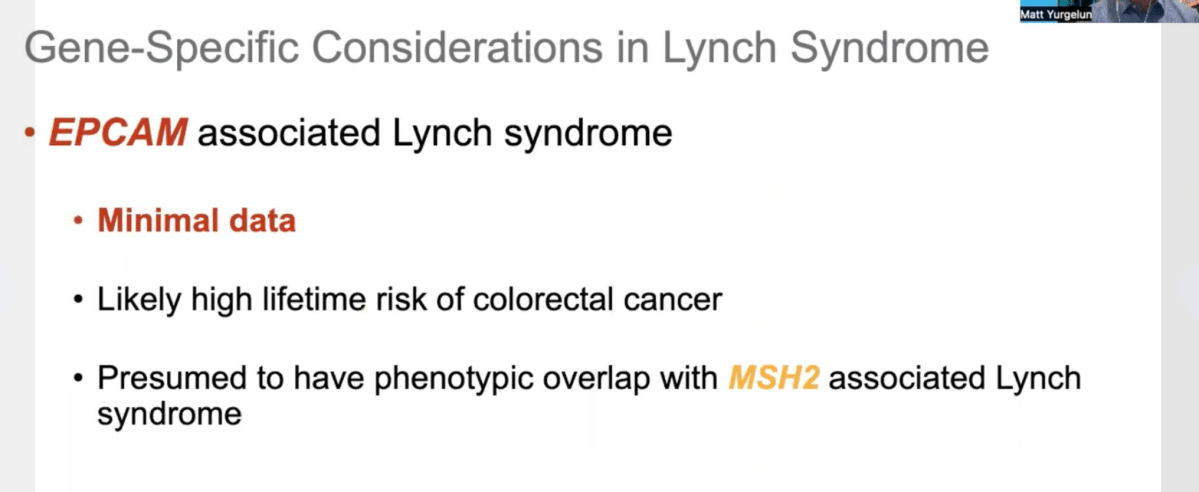
Gene-Specific Considerations in Lynch Syndrome: EPCAM
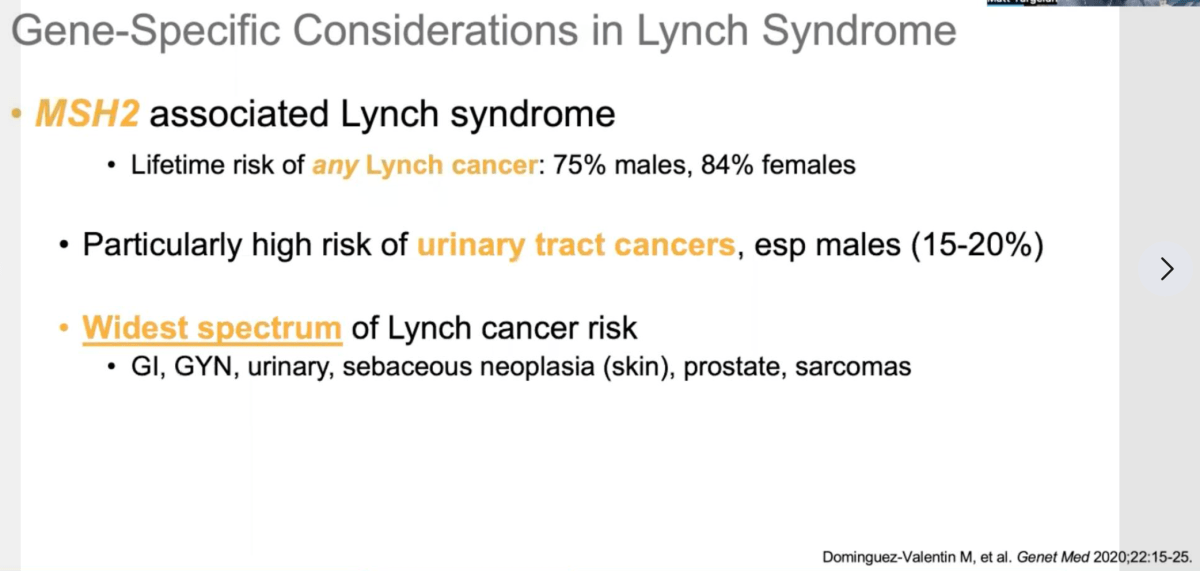
Gene-Specific Considerations in Lynch Syndrome: MSH2
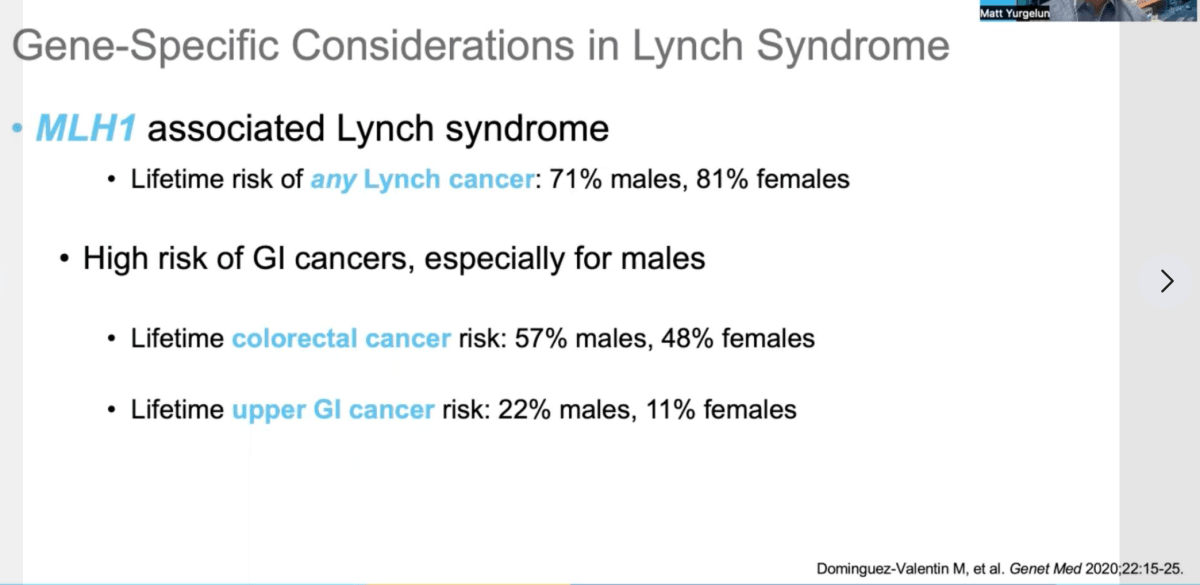
Gene-Specific Considerations in Lynch Syndrome -MLH1
NCCN guidelines

Genetic/Familial High-Risk Assessment: Colorectal
- NCCN Guidelines Version 1.2023
– Adenomatous Polyposis Testing Criteria
– Attenuated Familial Adenomatous Polyposis
– Colonic Adenomatous Polyposis of Unknown Etiology
– Familial Adenomatous Polyposis
– Juvenile Polyposis Syndrome
– Lynch Syndrome
– MUTYH-Associated Polyposis
– Peutz-Jeghers Syndrome
– Serrated Polyposis Syndrome
When Your Family Is Impacted by Hereditary Cancer – An Interview with My Sister

Cancer is scary and heredity (not just BRCA mutations) plays a huge role in some families.
Why prevention is better than treatment for any gynecological cancer

Launch of Hereditary Cancer Model of Care (Ireland)

Hereditary Cancer Model of Care provides the blueprint for the necessary development of services for the identification and management of people with an inherited cancer predisposition (e.g. Lynch syndrome or BRCA gene cancer risk), in order to harness the power of genetics to reduce cancer risk, and improve patient outcomes and quality of life.
The model of care will ensure/support the development of:
- Development of national guidance to underpin standardised best practice, including mainstreaming of cancer genetic testing
- Equitable access to hereditary cancer services for all
- Clear governance and clarity regarding the roles of national genetics and genomic structures, specialist cancer genetics services and regional cancer predisposition services, within an overarching model of care
- Commitment to the Sláintecare principles of right person, right place, right time – through the integration of genetic assessment and testing into regional services, with access to specialist genetic expertise as required
- Maximal use of technological solutions
- Timely access to genetics assessment and testing, including specialist cancer genetics expertise as required
- Timely access to clinical management of cancer predisposition, including risk reduction options
- Comprehensive and coordinated approaches to ongoing management
- Quality assurance of service
- Access to high quality patient information, psychological support and peer support for patients
- Education and training of health care professionals, including accredited training for those delivering mainstreamed pathways
Fallopian Tubes and Ovarian Cancer: What’s the Connection?

Ovarian cancer almost always starts in the fallopian tubes.
Why is it called ovarian cancer if it doesn’t start there? For a long time, the ovaries were assumed to be the source because that is where the cancer is concentrated at the time of diagnosis.
Who should consider the procedure?
Women who have an average risk of ovarian cancer who no longer desire fertility but also want to reduce the risk of developing ovarian cancer might consider the procedure. Women with an elevated risk due to a gene mutation or family history should speak to their genetic counselor or doctor for more information.
What are the benefits and drawbacks?
For women with an average risk of ovarian cancer, the surgery has the potential to reduce the likelihood of ovarian cancer. The surgery is not reversible and causes infertility. Pregnancy is still possible, though only via in-vitro fertilization. For pre-menopausal women, removal of the fallopian tubes only, and not the ovaries, does not induce menopause.
The recovery time for fallopian tube removal is a few days to a few weeks, though the overall recovery time will depend on the primary reason for surgery.
Children’s cancer – Irish Cancer Society
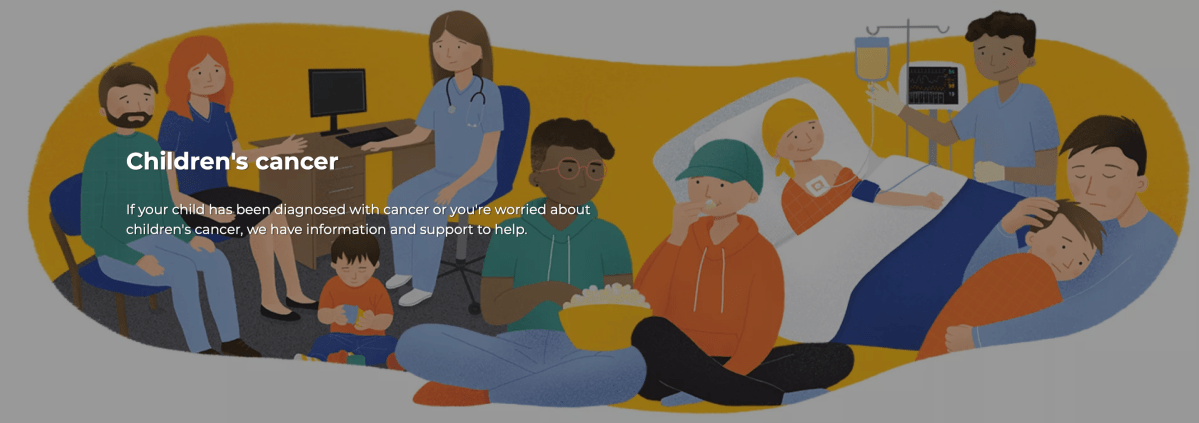
Cancer is rare in children. Around 190 children and teenagers under the age of 16 are diagnosed each year in Ireland. Children’s cancers are different to adult cancers. They often affect different parts of the body and behave differently. About 1 in every 3 cancers that affects children is leukaemia, which is a blood cancer. The most common tumours in children are brain and central nervous system tumours.
After a diagnosis of children’s cancer
Publications about children’s cancer
https://www.cancer.ie/cancer-information-and-support/childrens-cancer#classroom
 Lynch Syndrome Ireland