Advances in vaccine development for cancer prevention and treatment in Lynch Syndrome

https://doi.org/10.1016/j.mam.2023.101204

Highlights

  • •Tumors from Lynch syndrome patients have high mutation and neoantigen burden, which leads to high infiltration of T-cells.
  • •Certain tumor neoantigens are shared among Lynch syndrome patients due to mutations recurring in prone microsatellite loci.
  • •Several in silico tools have emerged to predict neoantigens and their immunogenicity from next-generation sequencing data.
  • •Lynch Syndrome patients are a defined and prevalent population with potential to benefit from cancer immune-interception.
  • •Neoantigen-based vaccines hold promise for the treatment and potential prevention of mismatch repair deficient cancers.

Real-world evidence research in metastatic colorectal cancer: raising awareness of the need for patient contributions

https://www.futuremedicine.com/doi/10.2217/fon-2022-1253

Conclusion

By providing evidence and insights into patient experiences without bias, RWE research is a valuable resource that complements RCT(randomised control trial) data.

The success of RWE research depends upon the active engagement of patients and their carers. Alongside education regarding the disease and its treatment, participation in RWE research may help empower patients with mCRC and other cancers to influence decisions concerning their own treatment. There is potential for increased patient engagement to help improve overall management of the disease. To increase the numbers of patients and carers participating in RWE studies, improved understanding and awareness of RWE research is needed, and clinicians are well placed to encourage this process. Engaging patients and carers throughout disease management is key to unlocking the potential for RWE to improve outcomes in mCRC.

It is now imperative that policy makers consider the value of this in their assessment and inclusion of treatments.

https://www.futuremedicine.com/doi/10.2217/fon-2022-1253

Your Hard Matters too!

What hard things have you gone through?
Are you going through something hard right now?

Do you tend to compare your hard things with the “hards” of others?

Pretty sure we all do this. It’s human nature, after all. And in Cancer Land this comparing thing goes on a lot.

Baseline Features and Reasons for Nonparticipation in the Colonoscopy Versus Fecal Immunochemical Test in Reducing Mortality From Colorectal Cancer (CONFIRM) Study, a Colorectal Cancer Screening Trial

The Colonoscopy Versus Fecal Immunochemical Test in Reducing Mortality From Colorectal Cancer (CONFIRM) randomized clinical trial sought to recruit 50 000 adults into a study comparing colorectal cancer (CRC) mortality outcomes after randomization to either an annual fecal immunochemical test (FIT) or colonoscopy.

Conclusions and relevance: In this cross-sectional analysis of veterans(enrollment was through 46 Department of Veterans Affairs medical centers, comprised veterans aged 50 to 75 years with an average CRC risk and due for screening). choosing nonenrollment in the CONFIRM study, those who declined participation more often preferred FOBT or FIT over colonoscopy. This preference increased over time and was strongest in the western US and may provide insight into trends in CRC screening preferences.

https://pubmed.ncbi.nlm.nih.gov/37432690/

The English National Lynch Syndrome Transformation Project

There is consistent evidence of the cost-effectiveness and clinical benefit of a structured diagnostic pathway in patients with LS following a diagnosis of cancer linked to cascade testing in families. 

Existing guidelines recommend universal testing of newly diagnosed colorectal and endometrial cancer for Lynch syndrome.

….Another approach to deliver effective diagnosis is to develop ‘mainstreaming’ models whereby patients are offered constitutional genetic testing by their cancer treating teams locally, rather than relying on referral of eligible patients to tertiary services such as clinical genetics.

Conclusions

Whilst there is increased awareness of the cancer risks associated with LS, and other aspects of the condition, by clinicians, there remain significant gains which can be made in diagnosis and subsequent lifelong management of people with LS.

Effective diagnosis needs to deliver people with this condition to effective clinical risk mitigation through a range of mechanisms including nationally coordinated and quality-assured colonoscopic surveillance.

In this project, we have aimed to develop expertise within cancer teams across England, with clear responsibilities, leadership from within which will ensure that the patients they are managing with cancer will receive appropriate testing and delivery diagnosis.

The responsibility for managing cascade testing remains with specialist genomics services.

However lifelong care of people diagnosed with this condition depends on awareness of who this population is, as defined through a national registry, and access to regional multidisciplinary expertise.

https://www.bsg.org.uk/service-success-stories/the-english-national-lynch-syndrome-transformation-project/

RESEARCH PARTICIPANTS

Deciding to take part in a clinical study is an important personal decision. This section aims to help you understand more about clinical research and how you can get involved.

Clinical research is research involving humans, their bio samples (e.g. blood sample) or their data. Clinical research is carried out with the aim of improving existing healthcare for the benefit of current and future patients. 

A research study/trial can involve ‘healthy participants’ (i.e. people who do not have an underlying medical condition) but more often, studies/trials involve patients with a specific health condition that we want to study. Research studies are designed to answer specific questions on how to prevent, diagnose or treat a particular disease.

There are two main types of clinical studies: Interventional trials and Observational studies.

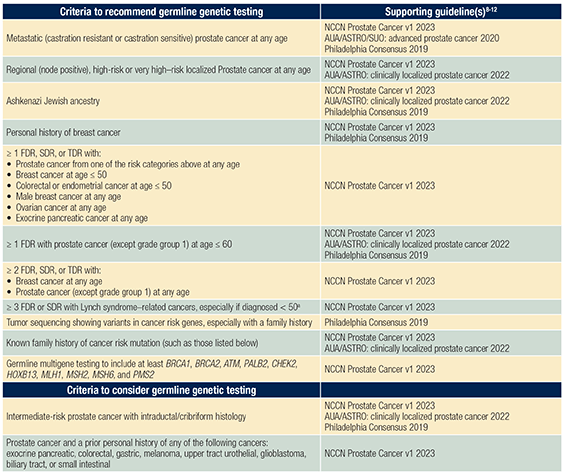
Understanding the Underutilisation of Germline Genetic Testing in Prostate Cancer

https://dailynews.ascopubs.org/do/understanding-underutilization-germline-genetic-testing-prostate-cancer

Germline genetic testing, no longer an “exceptional” test offered only to select families with multiple generations of cancer, has become the standard of care for many cancers, including prostate cancer. It is imperative that patients be offered timely testing, as positive results may inform shared patient–physician decision-making for regulatory-approved therapies. 

Key Points:

  • Indications for and implications of germline testing in patients with prostate cancer have expanded over the past decade, particularly related to precision therapies and management.
  • Germline testing for prostate cancer is vastly underused despite many patients qualifying for testing.
  • It is imperative that a variety of well-studied genetics service delivery models be used to help overcome recognized barriers to the implementation of germline testing for prostate cancer so that patients and their families receive the most effective care.

Be aware of gene changes and cancer in your family and take part in screening to reduce your risk of cancer.

https://www.cancer.ie/cancer-information-and-support/cancer-types/bowel-colorectal-cancer/lynch-syndrome