Lights and shadows in the early-onset colorectal cancer management and research: An integrative perspective – Physician scientist with patient advocates

https://www.sciencedirect.com/science/article/pii/S1521691823000318

Practice points

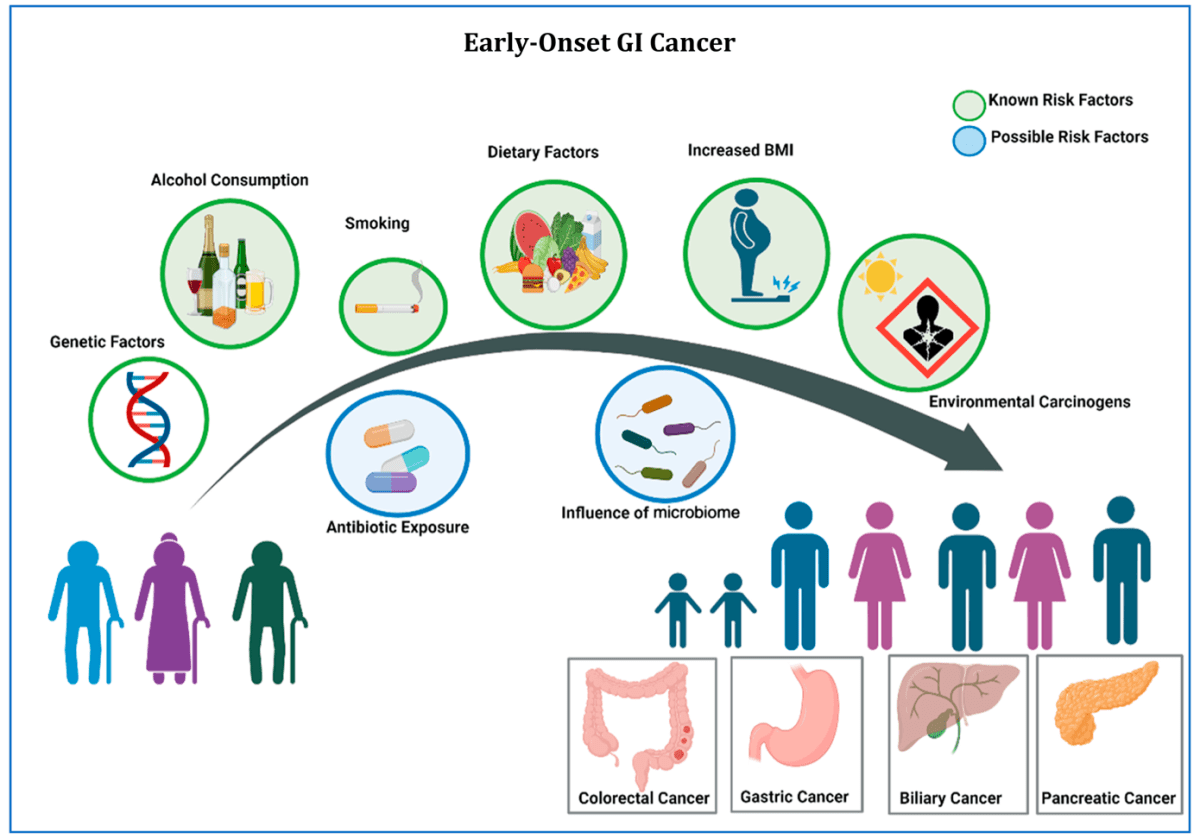
  • -The global importance that Early-onset colorectal cancer (EOCRC) is acquiring, makes a joint and worldwide effort necessary to unravel the problem.
  • -Although most EOCRC cases seem to be sporadic, there is still an important proportion belonging to families with well-defined colorectal cancer predisposition syndromes.
  • Excluding hereditary syndromes, general population screening strategies don’t cover most cases in the majority of countries, except in some defined ones with first-degree relatives with colorectal cancer.
  • -At present, the management of EOCRC should be considered a lifelong process: from the early care of symptoms to avoiding delays in diagnosis; through a multidisciplinary treatment in both the present and future; and with considerations for the possible consequences in the short and long term.
  • -The participation of patients in each step of the process, as well as in the awareness of the problem is especially critical in EOCRC.

Patient education – ICS

In our free Patient Education programmes, our cancer nurses provide information to guide you through and beyond your treatment including: what the treatment is, how it is given, managing side effects, and available supports.

We also have a programme for adult patients who have finished treatment or who are on maintenance therapy and living well with advanced cancer. Our Life and Cancer – Enhancing Survivorship (LACES) workshop can help you to adjust, live well, and feel your best, physically and emotionally.  

https://www.cancer.ie/cancer-information-and-support/patient-education

Hereditary and Familial Colorectal Cancer

While previous books on the topic have primarily focused on the genetic, molecular and pathological basis for these syndromes, there is a lack of information for busy physicians regarding the clinical management of hereditary cancer predisposition syndromes and colorectal cancer occurring in the familial setting.

The editors of this book have been fortunate to have received contributions from a multinational panel of expert clinicians who specialise in the clinical management of such individuals. They are extremely indebted to their generous contributions.

The Authors envisioned this book to be a leading manuscript and reference tool for those caring for patients and families of those with hereditary and familial colorectal cancer.

They hope to have achieved their aim to consolidate the current best practice and present it in a concise manner and see it as a crucial addition to current literature available.

While principally aimed at medical professionals, they trust that it will be of interest to genetic counsellor and nursing colleagues, as well as all those affected by the conditions described herein.

“How to set up an in-house nurse-led colorectal Lynch syndrome clinic”

In this paper, Filipe Carvalho goes through how he set- up his service, and outlines the essential steps to consider when setting up and managing an in-house nurse-led colorectal Lynch syndrome clinic.

The NHS long term plan sets a target that by 2028, 75% of cancers will be diagnosed at an early stage. One of the ways this ambition will be reached is through targeted screening and personalised surveillance of those most at risk of developing cancer, such as those with Lynch syndrome.

It highlights the educational requirements, patient criteria, the importance of thorough planning and the need to liaise-on with key stakeholders.

https://www.magonlinelibrary.com/doi/abs/10.12968/gasn.2023.21.6.22

Revealing the unique signatures of healthy guts as we age

The healthy elderly have a markedly different microbiome composition from those who were unwell…

Mechanistically, it’s not clear what is causing this divergence of increasingly unique microbiomes in healthy elderly people. Is this correlation or causation, in terms of healthy ageing? 

Sean Gibbons at the Institute for Systems Biology in Seattle, US, and co-workers will use their Global Grant for Gut Health to explore the unique gut microbial compositional signatures, gut microbial functional gene signatures, and associated blood metabolites in healthy elderly people.

Advances in vaccine development for cancer prevention and treatment in Lynch Syndrome

https://doi.org/10.1016/j.mam.2023.101204

Highlights

  • •Tumors from Lynch syndrome patients have high mutation and neoantigen burden, which leads to high infiltration of T-cells.
  • •Certain tumor neoantigens are shared among Lynch syndrome patients due to mutations recurring in prone microsatellite loci.
  • •Several in silico tools have emerged to predict neoantigens and their immunogenicity from next-generation sequencing data.
  • •Lynch Syndrome patients are a defined and prevalent population with potential to benefit from cancer immune-interception.
  • •Neoantigen-based vaccines hold promise for the treatment and potential prevention of mismatch repair deficient cancers.

Real-world evidence research in metastatic colorectal cancer: raising awareness of the need for patient contributions

https://www.futuremedicine.com/doi/10.2217/fon-2022-1253

Conclusion

By providing evidence and insights into patient experiences without bias, RWE research is a valuable resource that complements RCT(randomised control trial) data.

The success of RWE research depends upon the active engagement of patients and their carers. Alongside education regarding the disease and its treatment, participation in RWE research may help empower patients with mCRC and other cancers to influence decisions concerning their own treatment. There is potential for increased patient engagement to help improve overall management of the disease. To increase the numbers of patients and carers participating in RWE studies, improved understanding and awareness of RWE research is needed, and clinicians are well placed to encourage this process. Engaging patients and carers throughout disease management is key to unlocking the potential for RWE to improve outcomes in mCRC.

It is now imperative that policy makers consider the value of this in their assessment and inclusion of treatments.

https://www.futuremedicine.com/doi/10.2217/fon-2022-1253

Your Hard Matters too!

What hard things have you gone through?
Are you going through something hard right now?

Do you tend to compare your hard things with the “hards” of others?

Pretty sure we all do this. It’s human nature, after all. And in Cancer Land this comparing thing goes on a lot.

Baseline Features and Reasons for Nonparticipation in the Colonoscopy Versus Fecal Immunochemical Test in Reducing Mortality From Colorectal Cancer (CONFIRM) Study, a Colorectal Cancer Screening Trial

The Colonoscopy Versus Fecal Immunochemical Test in Reducing Mortality From Colorectal Cancer (CONFIRM) randomized clinical trial sought to recruit 50 000 adults into a study comparing colorectal cancer (CRC) mortality outcomes after randomization to either an annual fecal immunochemical test (FIT) or colonoscopy.

Conclusions and relevance: In this cross-sectional analysis of veterans(enrollment was through 46 Department of Veterans Affairs medical centers, comprised veterans aged 50 to 75 years with an average CRC risk and due for screening). choosing nonenrollment in the CONFIRM study, those who declined participation more often preferred FOBT or FIT over colonoscopy. This preference increased over time and was strongest in the western US and may provide insight into trends in CRC screening preferences.

https://pubmed.ncbi.nlm.nih.gov/37432690/

The English National Lynch Syndrome Transformation Project

There is consistent evidence of the cost-effectiveness and clinical benefit of a structured diagnostic pathway in patients with LS following a diagnosis of cancer linked to cascade testing in families. 

Existing guidelines recommend universal testing of newly diagnosed colorectal and endometrial cancer for Lynch syndrome.

….Another approach to deliver effective diagnosis is to develop ‘mainstreaming’ models whereby patients are offered constitutional genetic testing by their cancer treating teams locally, rather than relying on referral of eligible patients to tertiary services such as clinical genetics.

Conclusions

Whilst there is increased awareness of the cancer risks associated with LS, and other aspects of the condition, by clinicians, there remain significant gains which can be made in diagnosis and subsequent lifelong management of people with LS.

Effective diagnosis needs to deliver people with this condition to effective clinical risk mitigation through a range of mechanisms including nationally coordinated and quality-assured colonoscopic surveillance.

In this project, we have aimed to develop expertise within cancer teams across England, with clear responsibilities, leadership from within which will ensure that the patients they are managing with cancer will receive appropriate testing and delivery diagnosis.

The responsibility for managing cascade testing remains with specialist genomics services.

However lifelong care of people diagnosed with this condition depends on awareness of who this population is, as defined through a national registry, and access to regional multidisciplinary expertise.

https://www.bsg.org.uk/service-success-stories/the-english-national-lynch-syndrome-transformation-project/