Constitutional (germline) vs somatic (tumour) variants?

Constitutional (also known as germline) variants are present in all the body’s cells, including the germ cells, and can therefore be passed on to offspring e.g. Lynch Syndrome; Somatic variants arise during an individual’s lifetime in tissues other than the germ cells and so are not passed on.

Constitutional (germline) variants in cancer predisposition genes are present in affected individuals in all the body’s nucleic cells, as well as the cancer genome, and may therefore be inherited. These underlie inherited cancer predisposition syndromes, such as Lynch syndromeand hereditary breast and ovarian cancer syndrome.

https://www.genomicseducation.hee.nhs.uk/genotes/knowledge-hub/constitutional-germline-vs-somatic-tumour-variants/#clinical-example-cancer

How do we screen for bowel cancer?

POO...

In the UK Bowel cancer is a catch-all term for any cancers in the colon or rectum – sometimes called colorectal cancer. 

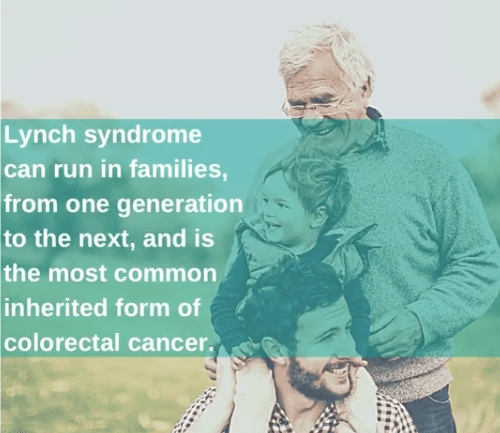
Faecal immunochemical testing(FIT)checking for blood in your poo – and other types of bowel cancer screening. This includes Lynch syndrome, a hereditary condition increasing the risk of certain types of cancer including bowel cancer.

https://patient.info/news-and-features/how-do-we-screen-for-bowel-cancer

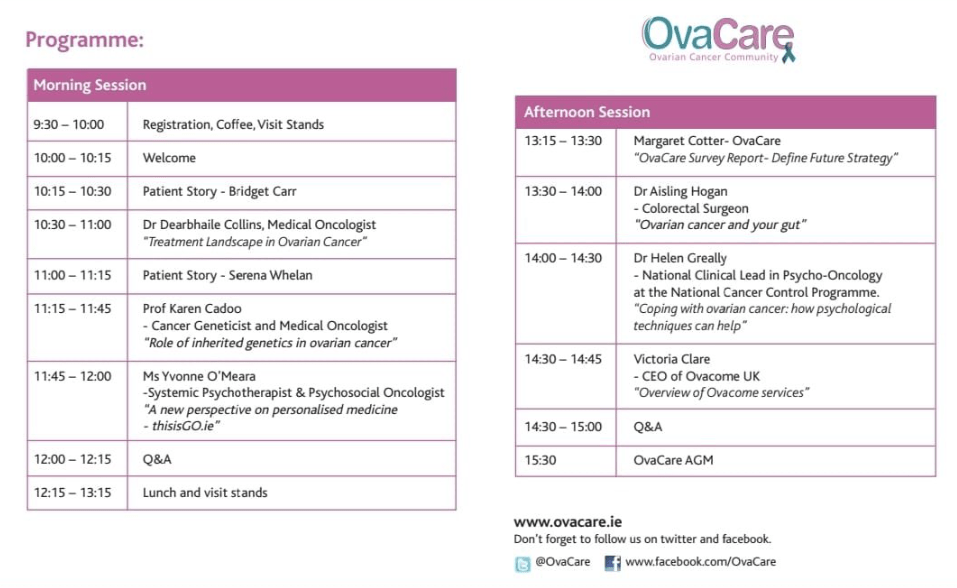
OvaCare Patient Day

The programme for Ovacare Patient day this coming Sat Nov 19th in #thedeanhotelGalway.

They can’t wait to finally be back in the room with you all!

There’s still time to register on http://Ovacare.ie

Cancer Genetics – Counselling Service in Ireland?

Coming to terms with a genetic predisposition to cancer in the family can leave a person with many questions. What does this mean for me? What does this mean for my child? Will my family be affected?

Is Ireland geared up to cater for the current and future demand in this area?

Is the Profession recognised in Ireland???

Do we provide training in Ireland???

Are counsellors registered in Ireland???

This article was written in 2019…has anything changed? @donnellystephen

https://www.irishtimes.com/life-and-style/health-family/genetic-counselling-answering-the-questions-after-the-diagnosis-1.3839162

“There are just 16 genetic counsellors working publicly and privately in Ireland…. Cancer Genetics Service at St James’s Hospital employs three trained genetic counsellors…..”

Has

Diagnosis and management of Lynch syndrome

Testing for Lynch Syndrome in all new diagnoses of colorectal or endometrial cancers is now recommended in the UK, and gastroenterologists can offer ‘mainstreamed’ genetic testing for LS to patients with cancer.

Because LS results in a high lifetime risk of colorectal, endometrial, gastric, ovarian, hepatobiliary, brain and other cancers, the lifelong care of affected individuals and their families requires a coordinated multidisciplinary approach.

Interventions such as high-quality 2-yearly colonoscopy, prophylactic gynaecological surgery, and aspirin are proven to prevent and facilitate early diagnosis and prevention of cancers in this population, and improve patient outcomes. 

A personalised approach to lifelong gene-specific management for people with LS provides many opportunities for cancer prevention and treatment which we outline in this review.

https://fg.bmj.com/content/13/e1/e80

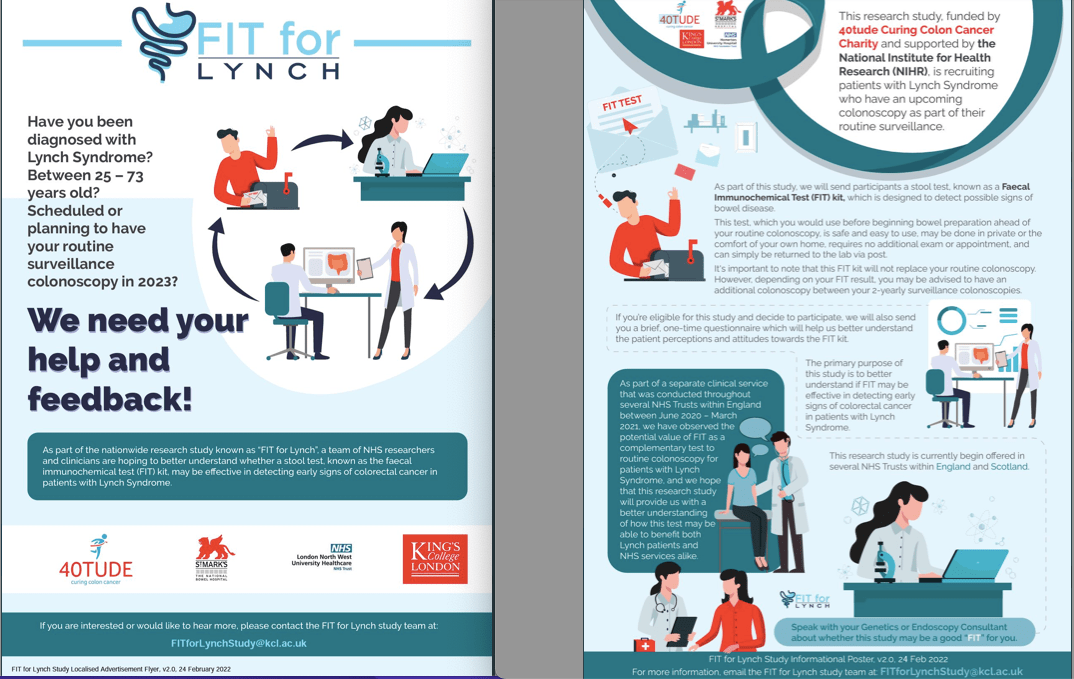
FIT for Lynch Study

This research study is currently being offered in
several NHS Trusts within England and Scotland.

Contact: fitforlynchstudy@kcl.ac.uk

I have a VUS (Variant of Uncertain Significance) Now what?

When you agree to genetic testing, you expect a yes or no answer:  yes, you have an abnormal change in a gene that increases your cancer risk, or no, you don’t. But sometimes, you might not get a clear “yes” or “no.” You might just get a “maybe.”

Are genetic variants of uncertain significance common?

Almost 20% of genetic tests identify a VUS. These tests come in different “sizes.” Some examine only a handful of genes associated with cancer at a time, while others analyze up to 80 genes. The more genes you look at, the more variants of uncertain significance you’ll find.

https://www.mdanderson.org/prevention-screening/family-history/genetic-testing.html

Genetic testing for cancer: Why it makes sense

Genetic testing has several important implications in the management of cancer

Genetic testing is generally done for patients with a significant family history of cancer, or some specific patterns of presentation of cancer. If a causative germline mutation is identified, the individual’s family members are also screened for it.

Thus, a cancer patient who gets suitable genetic testing done also helps save lives of family members by making them aware of any causative mutation present in their genes.

https://www.firstpost.com/health/genetic-testing-for-cancer-why-it-makes-sense-11582751.html

MyLynch: Your Personal Cancer Risk

Help your Family by Sharing

MyLynch was built by cancer researchers and statisticians from the BayesMendel lab at Dana-Farber Cancer Institute and Harvard University to help people with Lynch Syndrome (LS) understand how their LS can increase the risk of different cancers and to show them what they can do to lower their risks.

Did you know:

1. Lynch syndrome cancers are preventable and can be caught early… if the person knows they have Lynch syndrome. Catching cancers early means saving lives.

2. Only 1 in 100 people with Lynch syndrome know they have it.

3. Your parents, siblings, and kids have a 50% chance of having Lynch; your grandparents, aunts, uncles, cousins, and grandchildren are also at risk.

Sharing your Lynch diagnosis with your family can save their lives. Almost all people with Lynch syndrome share their diagnosis with their parents, siblings, and children.

But…

Some people never tell their other relatives.

Save a Life

You could save the life of a family member if you choose to share your diagnosis.

Your doctor can help you make a plan to tell your family or you can use a website like Kin Talk (kintalk.org).

Lynch Syndrome- St Marks

Patient Information – 2019

  1. What is the chance of developing cancer if a faulty gene is found? Not everyone who carries a Lynch syndrome pathogenic variant will develop cancer. The risk of developing cancer is considerably lower in those who know they have Lynch Syndrome compared to those who have it but are unaware of the diagnosis.