“For many cancers, Ireland is now 1-2 standard-of-care innovations in cancer treatment behind international comparators”

It seems to me that this headline quotation from Prof Barry of the @INFO_NCPE likely has taken him out of context in relation to Anti-Cancer Drugs.

Let me try to help make sense of this:

1. The only public funding that has gone into anti-cancer drug discovery and development that I am aware of over the past 10 years in Ireland, is funding to commercialise academic discoveries. The commercialisation of drug discovery and development is a strategic, deliberate government policy.

2. When a commercial company is successful in demonstrating that a drug improves cancer outcomes, these companies are legally obliged to maximise profit for the company’s shareholders (as far as I understand, maybe I’m wrong here).

3. The rate at which new anti-cancer drugs that objectively improve cancer outcomes achieve regulatory approval (by the EMA or FDA) is accelerating.

4. To continue to offer to public cancer patients the international standard of care (eg NCCN or ESMO recommended) anti-cancer therapies is by definition going to cost public cancer care providers more money. This is how the whole system is deliberately designed.

5. EMA approval does not guarantee an impact on the “standard of care”. For an oncologist to prescribe any high cost anti-cancer therapy in public hospitals in Ireland, first, the pharmaceutical company must apply to the @HSELive to have their drug reimbursed. Many companies do not even apply. Next, they must commit to a reimbursement process that takes 2-3 years, with no guarantee of a successful reimbursement outcome.

6. As long as I have worked for the HSE, the prescribing options available to public Medical Oncologists have been robustly restricted to drugs that have been approved through this reimbursement process.

7. No public consultant has the authority or ability within the existing system to ‘authorise’ expenditure for any high cost anti-cancer drug by signing a prescription, unless the HSE has explicitly authorised this prescription. The authorisation status is publicly available here: https://hse.ie/eng/services/list/5/cancer/profinfo/chemoprotocols/

8. If I tried to prescribe a high cost anti cancer drug that hadn’t been through the HSEs reimbursement process, it would not make it past the hospital pharmacist. In any publicly funded hospital.

9. For many cancers, Ireland is now 1-2 standard-of-care innovations in cancer treatment behind international comparators. In other words, for a long time now, the HSE has had total control over what a consultant oncologist can prescribe within the HSE. The problem is that the approval of emerging therapies is too slow, and not keeping pace with international standards, or with the private healthcare sector in Ireland.

@IMT_latest @med_indonews @hseNCCP @OECI_EEIG @IrishCancerSoc @INFO_NCPE
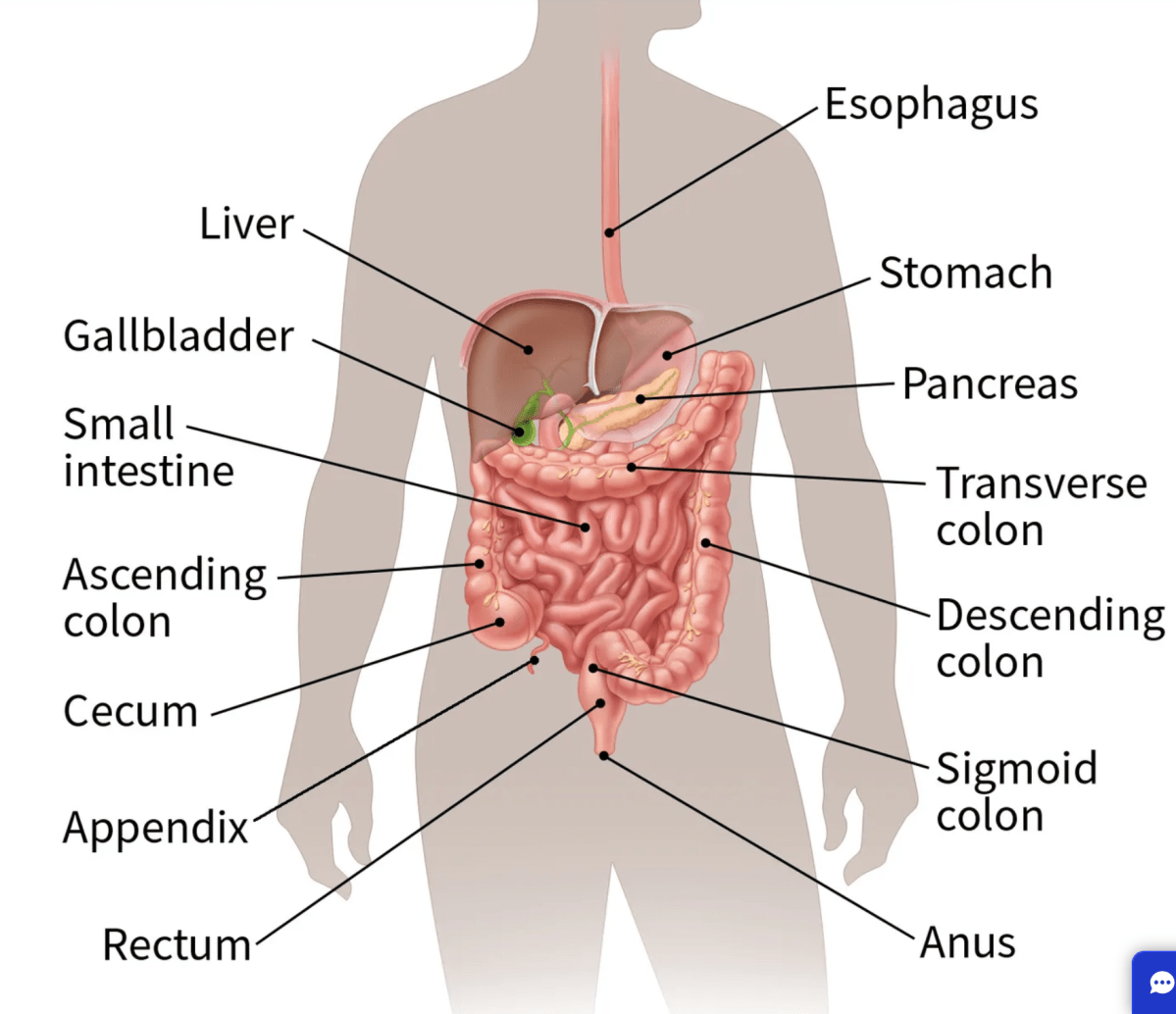
Colorectal cancer starts in the colon or the rectum. These cancers can also be called colon cancer or rectal cancer, depending on where they start. Colon cancer and rectal cancer are often grouped together because they have many features in common.

This article covers:

How do the colon and rectum work?

How does colorectal cancer start?

Polyps in the colon or rectum

How colorectal cancer spreads

Types of cancer in the colon and rectum

Be aware of signs and symptoms

It’s important for everyone to be aware of any changes in your body that are not normal for you, especially if you have an increased risk due to Lynch syndrome. Always get any changes checked by your GP, even if you have had a screening test or are due one soon.

https://www.cancer.org/cancer/types/colon-rectal-cancer/about/what-is-colorectal-cancer.html

https://www.cancer.ie/cancer-information-and-support/cancer-information/about-cancer/causes-of-cancer/cancer-and-genes/lynch-syndrome

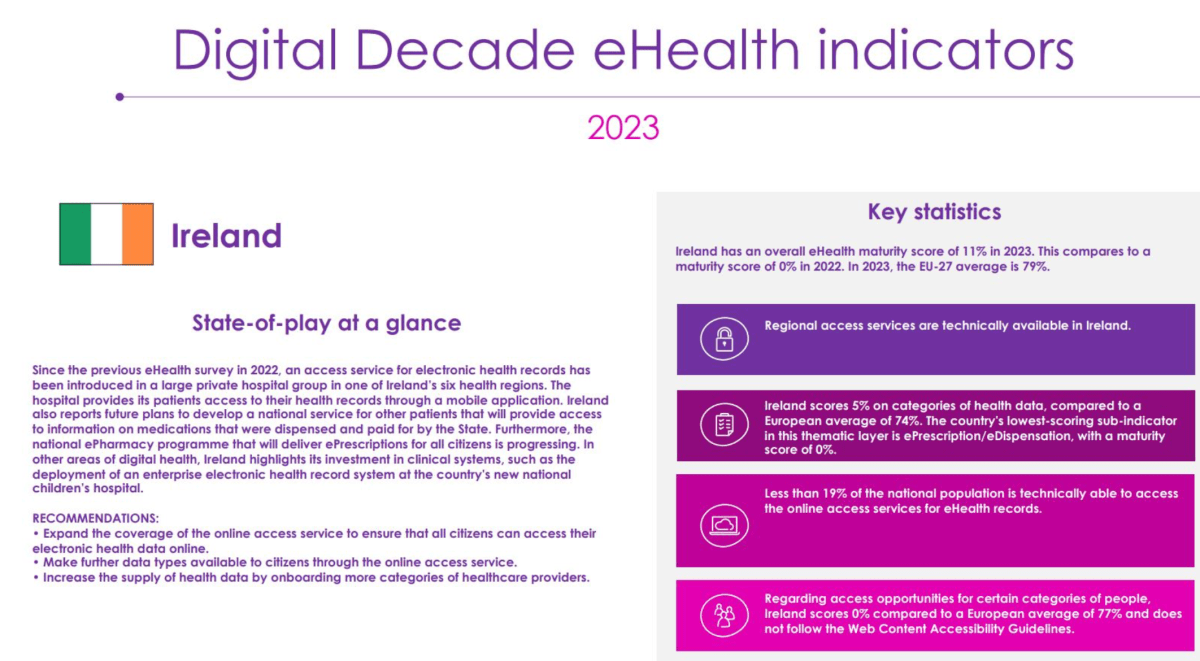
Digital Decade 2024: eHealth Indicator Study: Ireland Bottom Again

This report presents the latest results of the assessment on EU27 countries’ (plus Iceland and Norway) state-of-play towards delivering the Digital Decade’s e-Health target of 100% EU citizens having access to electronic health records by 2030.

The results describe the state of play as of 31 December 2023

https://digital-strategy.ec.europa.eu/en/library/digital-decade-2024-ehealth-indicator-study

The comprehensive English National Lynch Syndrome Registry:

Lynch Syndrome (LS) is a cancer predisposition syndrome caused by constitutional pathogenic variants in the mismatch repair (MMR) genes.

To date, fragmentation of clinical and genomic data has restricted understanding of national LS ascertainment and outcomes, and precluded evaluation of NICE guidance on testing and management. To address this, via collaboration between researchers, the National Disease Registration Service , NHS Genomic Medicine Service Alliances, and NHS Regional Clinical Genetics Services, a comprehensive registry of LS carriers in England has been established.

The most frequently identified pathogenic MMR genes were MSH2 and MLH1 at 37.2% (n = 3362) and 29.1% (n = 2624), respectively. 35.9% (n = 3239) of the ENLSR cohort received their LS diagnosis before their first cancer diagnosis (presumptive predictive germline test). Of these, 6.3% (n = 204) developed colorectal cancer, at a median age of initial diagnosis of 51 (IQR 40–62), compared to 73 years (IQR 64–80) in the general population

The establishment of a secure, centralised infrastructure and mechanism for routine registration of newly identified carriers ensures sustainability of the data resource.

https://www.thelancet.com/journals/eclinm/article/PIIS2589-5370(24)00044-0/fulltext

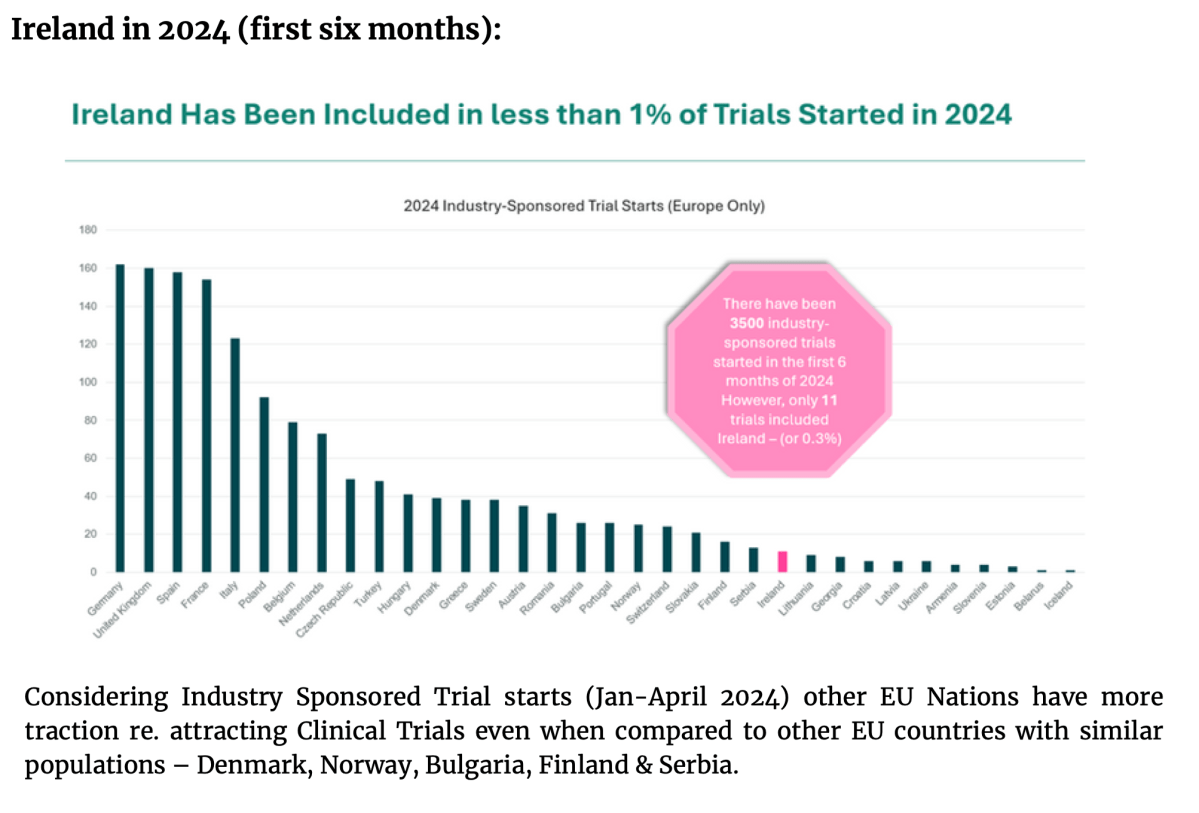
GDPR and Clinical Trials Position Paper

What the Position Paper on GDPR contains

  • Data that demonstrates strong public support in Ireland for clinical trials, and the sharing of health information under controlled circumstances.
  • Clear calls to action that the Government can take to ameliorate the effect of Ireland’s interpretation of GDPR/HRR relating to clinical trials (& health research)
  • A legal analysis of the spirit and purpose of GDPR, and how it is applied to health research in Ireland
  • An overview of the GDPR-related issues besetting the clinical trials community
  • Data showcasing the variability of Ireland’s approach to GDPR & clinical trials
  • Comparative data from EU countries highlighting differences in approach between Ireland and other jurisdictions

What is the impact of GDPR interpretation in Ireland?
In a word, considerable – and it impacts patients and clinicians directly.

You can read the report by clicking on the image (left) or by clicking the button below. 

Clinical Trials Information System (CTIS)

Patients and the public can now find information about clinical trials being conducted in Ireland.

You can see which illnesses clinical trials are developing new treatments for, where the trials are taking place, such as in a certain hospital, and find contact details for the sponsor.

Visit the Clinical Trials Information System (CTIS) Public Portal and use the advanced search to search the database of ongoing clinical trials: https://euclinicaltrials.eu/search-for-clinical-trials/?lang=en

The CTIS Public Portal is part of new regulations to make clinical trial information clearer and more accessible.

Resourcing health IT is an investment, not a cost

The current deficits in our digital infrastructure are significant, with inefficient and outdated information technology (IT) systems and hardware.

The continued absence of electronic health records (EHRs) also negatively impacts patient care, staff morale, and productivity.

With the majority of Irish hospital records still paper-based, there is an urgent need to fund a national EHR hospital-wide system without delay.

A fit-for-purpose digital health system for Ireland is essential to provide health staff with the necessary digital tools to optimise efficiency, collaboration, and productivity in a more modern health service. With these tools, consultants will be able to deliver improved accessibility, more efficient workflows, and most importantly enhanced patient care and safety.

What is Lynch Syndrome?

It is a type of inherited cancer syndrome associated with a genetic predisposition to different cancer types. This means people with Lynch syndrome have a higher risk of certain types of cancer.    

What causes Lynch syndrome?

What are the signs of Lynch syndrome?

How is Lynch syndrome diagnosed?

How is Lynch syndrome inherited?

What are the estimated cancer risks associated with Lynch syndrome?

What are the cancer screening options for Lynch syndrome? (USA)

Questions to ask the health care team

https://www.aliveandkickn.org/what-is-lynch-syndrome-1

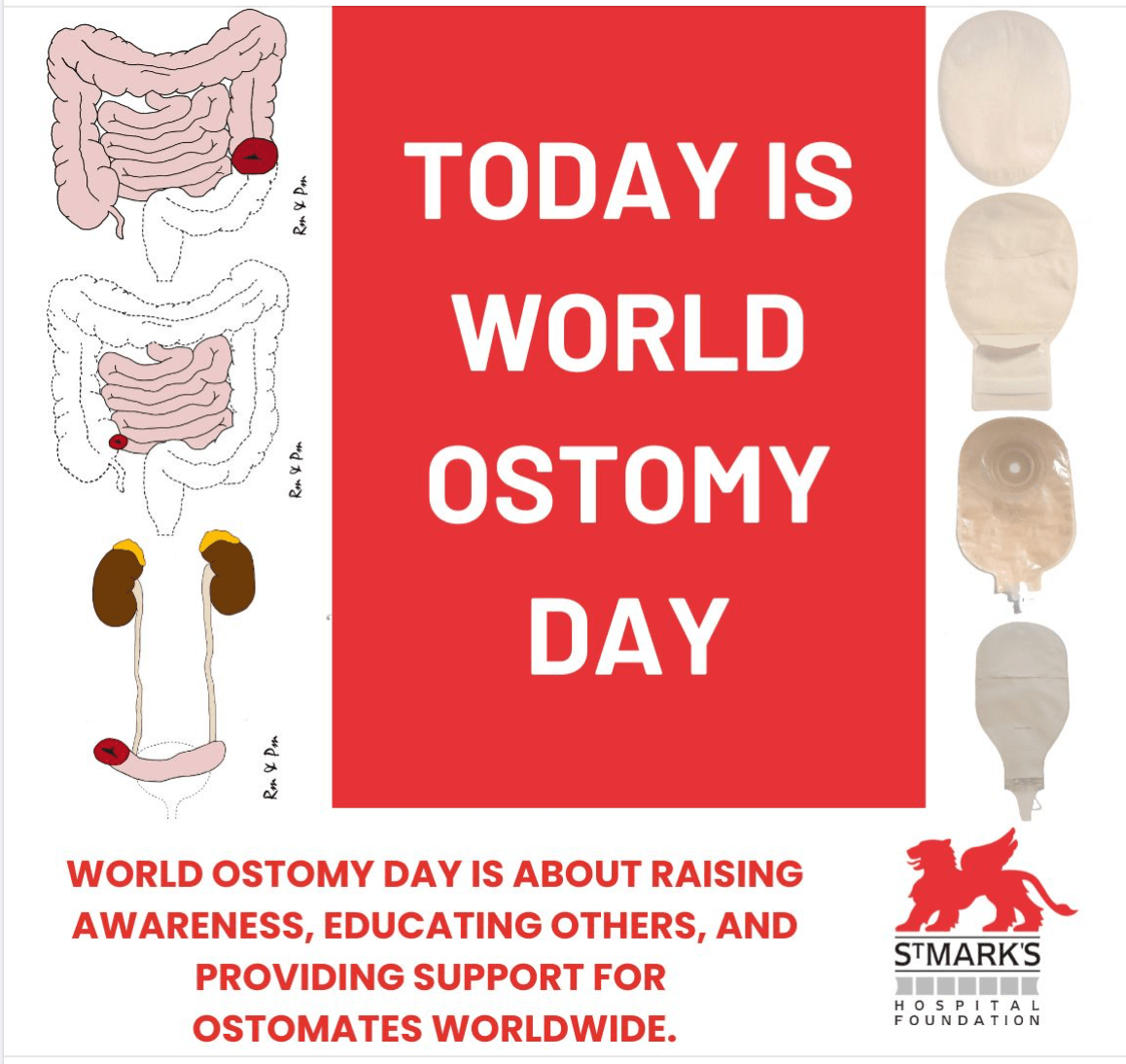
Today is World Ostomy Day

Did you know that 1 in 355 people in the UK live with an ostomy? These numbers represent individuals who show incredible strength, resilience, and determination every single day.

World Ostomy Day is about raising awareness, educating others, and providing support for ostomates worldwide. It’s a chance to celebrate the courage of those who live with an ostomy and to break down stigma. Every story is unique, every journey inspiring!

➡️ Help us make a difference:

💬 Share your story or words of encouragement

❤️ Raise awareness by talking about ostomies and your experience

🙌 Show support to the ostomy community by using the hashtag #WeAreStMarks and #WorldOstomyDay!

Findings of the National Engagement on Digital Health and Social Care

Digital improvements will lead to greater availability of health information,
improvements in decision-making, and ultimately safer care and better outcomes for patients.

International experience highlights that engagement is crucial in order to learn what is acceptable to people and to help develop person centred digital systems.

The public overall are positive about the move to digital health and social care
services, and want to be consulted on the format and delivery of digital care.

Professionals think that an online health record will empower people to be more in control of their health.

https://www.hiqa.ie/reports-and-publications/health-information/findings-national-engagement-digital-health-and-social