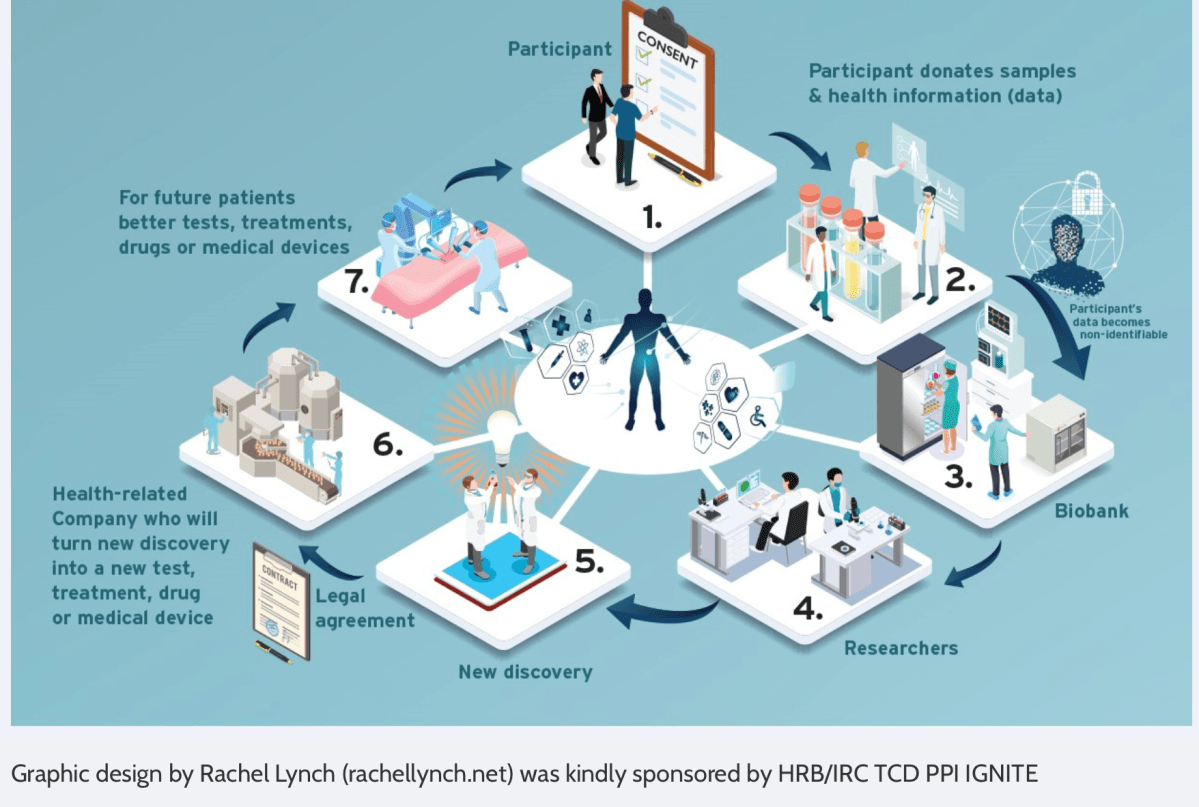
A biobank collects biological samples and linked medical information from volunteers to help researchers study diseases and improve patient outcomes.
Plans by St James’s Hospital to create Ireland’s largest shared medical biobank, storing patient samples and health data to support future research and treatments.
The project has received about €10 million in funding from the Health Service Executive and is expected to become operational within roughly two years.
Prof Colm Bergin said the aim is to combine patient data, samples and diagnostics under strong ethical and regulatory oversight to improve healthcare outcomes.
Unlike many existing Irish biobanks that focus on single diseases, the new system is intended to be broad and “agnostic to condition,” potentially including all patients accessing healthcare services.
Programme manager Dr Suzanne Bracken said the long-term ambition is for the facility to grow into a national or even European biobank hub by the 2030s.
Doyle said she hopes wider participation will eventually contribute to cures for illnesses like leukaemia, calling the chance to help future patients “very powerful.”
A negative predictive test in an at-risk first-degree relative can abruptly relieve years of hyper vigilance, catastrophising, and inherited-cancer anticipatory grief.
A multigenerational pattern of early-onset colorectal cancer and subsequent biliary tract malignancy illustrates the lived reality of Lynch-associated penetrance and variable tumor spectrum.
Inherited phenotypic resemblance can amplify concern about unseen pathogenic variants, highlighting how identity, family memory, and genetic risk perception interact.
Avoidance of lifelong colonoscopic surveillance, prophylactic interventions, and downstream costs reframes educational and life planning, particularly during major transitions such as graduate training.
Equitable access to genetic counselling/testing and informed consent remains central, given divergent outcomes across families and the enduring burden for those who test positive.
Unfortunately in Ireland you may have to wait, at the moment, for up to 3 years in the Public System for a Genetic Test.
Social media has become an accepted part of academic life. However, as Fernando Vianna, Rafael AlcadipaniandIsleide Fontenelle argue many of its underlying dynamics run counter to core academic values. Given these tensions should academics opt out or find ways to use social media more critically?
In our recent work, we argue that social media is not a neutral tool. It actively reorganizes academic life through three dynamics: spectacularisation, ephemerality, and academic narcissism.
William Gallagher Cancer Biologist and Research-Oriented Entrepreneur
‘To Retweet or Not Retweet this article’….one aspect that this interesting piece seems to overlook is the usefulness of social media in facilitating non-academics to engage with academic work beyond the stuffy confines of what has become a somewhat flawed, often pay-as-you-play, publishing racket…please note my intentional sensational comments…may get more likes???
Platform cultures differ markedly across Instagram, TikTok, and X, producing divergent informational ecosystems that can skew perceived norms, risks, and expectations for people with hereditary cancer syndromes.
Visibility remains inequitable, with dominant imagery favoring reconstructed, normative survivorship and marginalising flat closure, stoma, male, LGBTQ+, and non-White experiences, amplifying isolation.
Content creation functions as uncompensated caregiving labor, including crisis messaging, education, and emotional support, often performed during illness and recovery with minimal structural support.
Moderation and algorithms can penalise medically relevant recovery images and suppress high-effort posts, contributing to burnout, self-censorship, and reduced dissemination of credible patient narratives.
Community-generated support can be clinically consequential by normalising preventive interventions, countering misinformation that spreads faster than facts, and fostering timely care-seeking and shared decision-making.
“Being honest and accurate on social media matters, even when it is tough and the algorithm works against you.
This research is a reminder: our stories matter, and our voices bring hope and connection to those searching for support. Moving forward, it’s crucial for all of us to keep working together, be mindful of the content we create, and build a space where everyone feels seen and heard.”
On 1st April BowelScreen increased the eligible age range to 57-71.
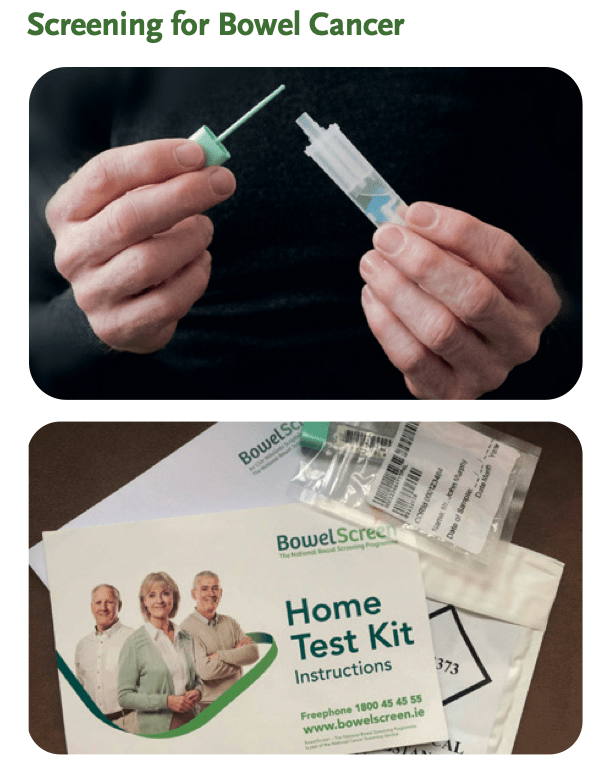
A simple easy free test carried out in your own home.
If you are in this age range…Is your GP aware that you have/have not taken this test? Should they be aware?
Less than 50% offered this test avail of it….WHY?
BowelScreen invite people for screening every two years
57-year-olds can expect their first invitation for bowel screening between their 57th and 59th birthday
People aged 71 who have previously taken part will be offered their next test when they are due
If you have never taken part in bowel screening and are in the age range, you can request a free test kit using the online register at hse.ie/bowelscreen
Most eligible people are on their register. If you haven’t received a test when expected, you can visit hse.ie/bowelscreen to check you are on our register, provide your contact details, and find out when your test is due.
Benefits of Screening
Prevention: The test can identify precancerous polyps before they develop into cancer.
Early Detection: Finds cancer early, when it is easier to treat, increasing the chance of recovery.