https://www.nature.com/articles/s41431-026-02212-9
What is This About?
This article discusses how scientists have discovered that some cancers run in families due to inherited genetic changes. It explains how this knowledge is changing how doctors test for, treat, and prevent cancer.
Key Historical Milestones
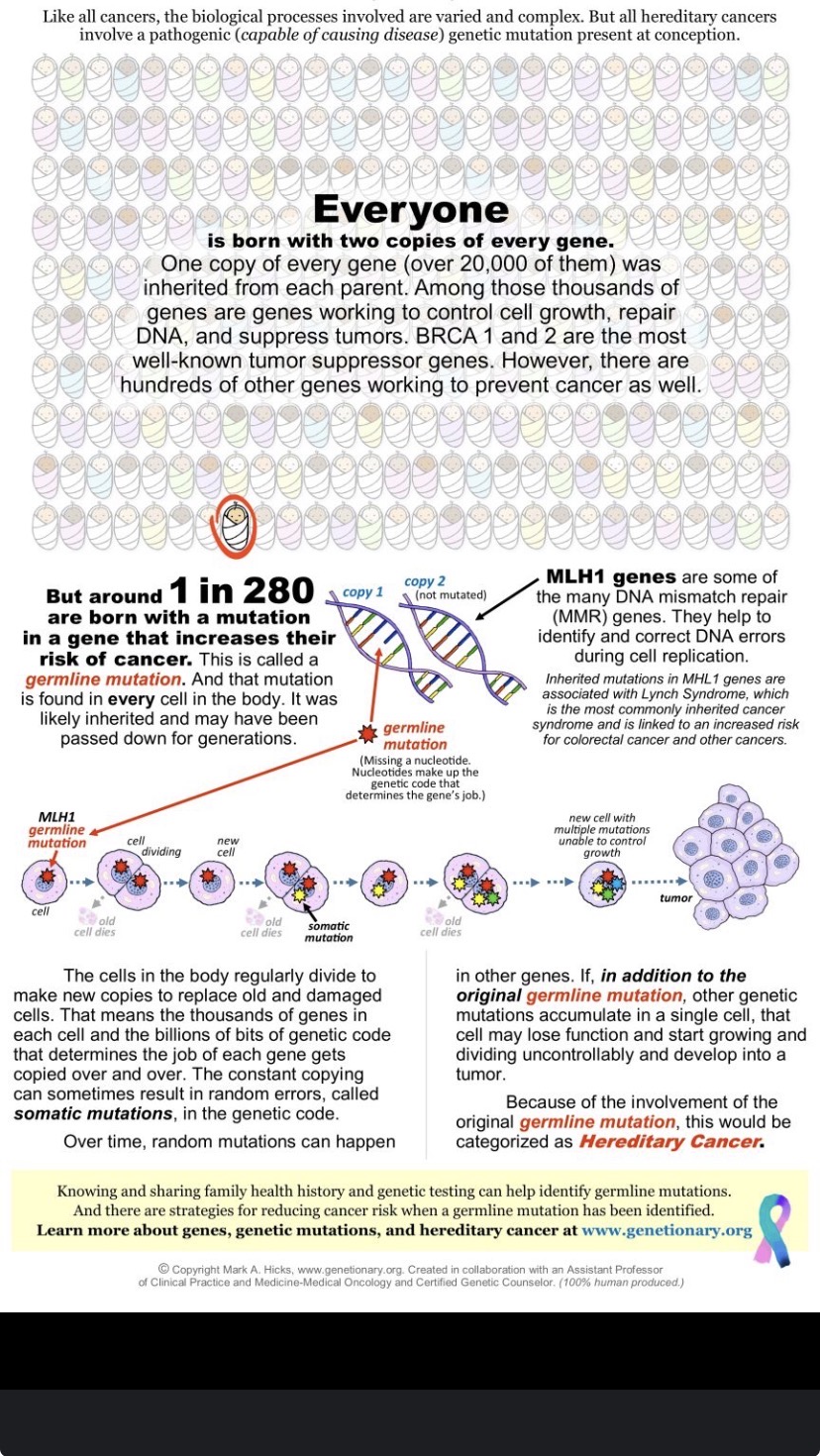
- 1971: Scientists realised that cancer typically requires two genetic “hits” (mutations) to develop, explaining why some families have more cancer cases
- 1980s-1990s: Researchers identified specific genes that, when mutated, dramatically increase cancer risk (like BRCA1, BRCA2, and others)
- Today: Doctors now use genetic testing to identify people at high risk and personalise their cancer prevention and treatment plans
The Big Shift: Connecting Two Worlds
Historically, scientists studied:
- Somatic mutations (cancer-causing changes that occur only in tumour cells)
- Inherited mutations (genetic changes passed down through families)
These were studied separately. Now they’re integrated: if a tumour shows certain genetic changes, doctors test whether the patient inherited that same mutation—which could affect treatment options and what other cancers they might develop.
Current Challenges
- Many cases remain unexplained: Even with advanced testing, we still don’t know why many families have elevated cancer risk
- Rare genetic variants: New testing reveals many rare mutations whose danger level is unclear
- Need for standards: Hospitals need to agree on testing procedures, how to interpret results, and what to tell patients
Emerging Tools and Solutions
- Polygenic risk scores: Mathematical models predicting cancer risk based on multiple genetic factors
- Liquid biopsies: Blood tests to detect cancers earlier
- Advanced sequencing: New technologies to find previously unknown cancer genes
The Human Side
The article emphasises that genetic testing isn’t just scientific—it affects quality of life, family planning decisions, and emotional well-being of people carrying these mutations.
Bottom Line
Hereditary cancer genetics is rapidly evolving, offering better ways to identify at-risk individuals, prevent cancers, and tailor treatments—but significant work remains to make these advances accessible to everyone.