
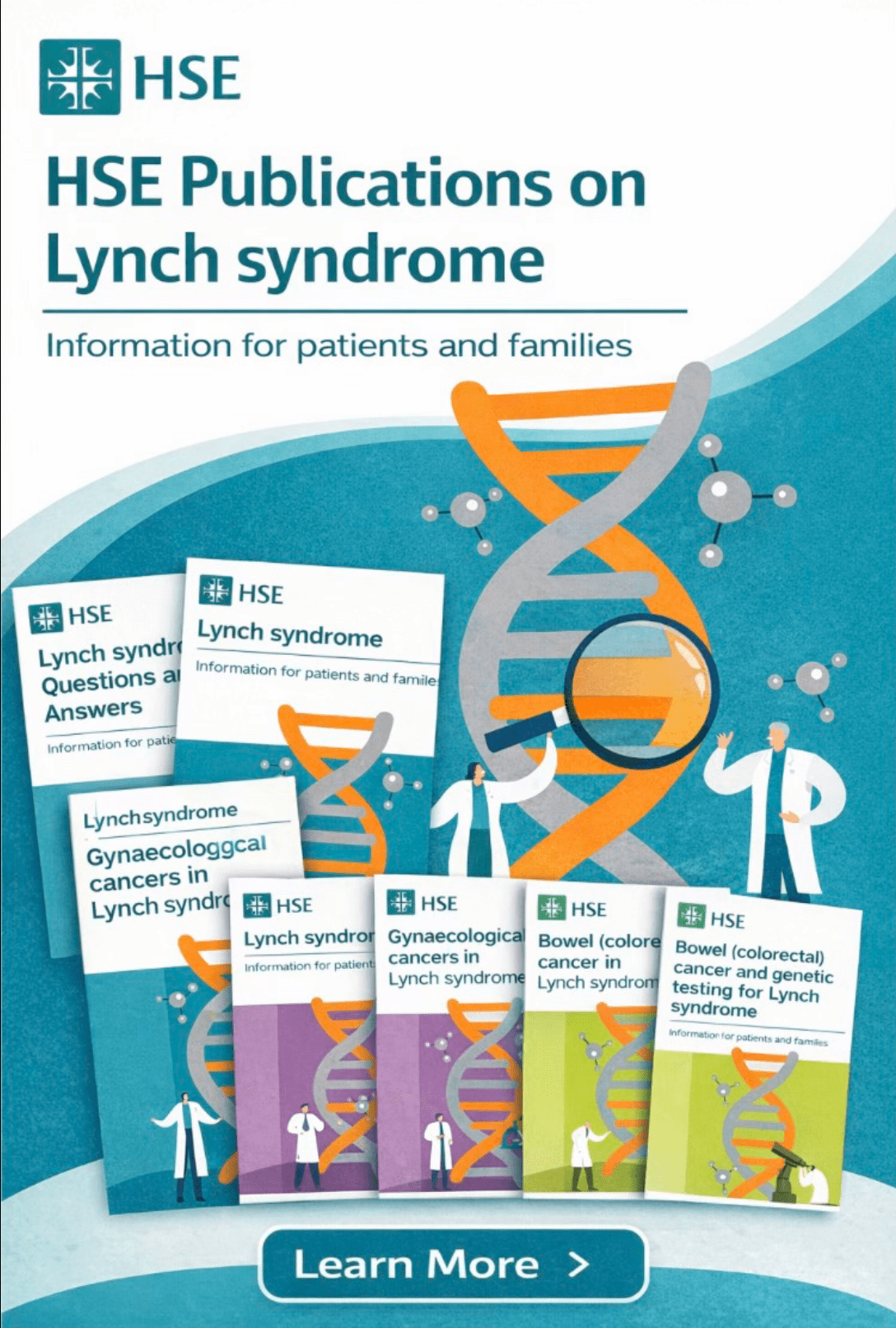
Available here:
HSE Publications on Lynch Syndrome
Available here:
Available here:
Conclusion: the incorporation of total neoadjuvant therapy(TNT) as the standard of care for patients with Locally advanced rectal carcinoma(LARC) would mean intensification of treatment as compared with chemoradiotherapy(CRT) alone with its associated toxicity, without conclusive evidence of improved response rates or overall survival.
Therefore, we feel that CRT should remain the standard of care for patients with LARC. Future research should focus on novel biomarkers, enabling identification of patients who will substantially benefit from a TNT regimen to justify the added toxicity.
A new study shows that receiving an updated COVID vaccine reduced people’s risk of severe disease and death in all age groups.
💉Reduced people’s risk of ER by 29%
💉Reduced risk of hospitalisations by 39%
💉Reduced the risk of death by 64%
💉Vaccination was effective in all age groups and “in persons with or without major chronic conditions.”
Just 21 percent of the adult U.S. population got vaccinated against COVID last year—a proportion that has been steadily declining. With less vaccine-induced immunity, Perlman says, more people “would benefit even more from getting vaccinated this year.”
Cancer came as no surprise for one survivor.
Learn how the family history and a genetic syndrome put them at high risk.
Delving into the role of genetic counsellors in cancer care.
And the hope for a vaccination.
Lynch syndrome is an inherited condition that increases the risk of developing certain cancers, including colorectal, endometrial, and ovarian cancer.
On this page
https://www.canceraustralia.gov.au/impacted-by-cancer/lynch-syndrome#what-is-lynch-syndrome
For every hundred people who hear the words “you have cancer” in an Irish doctor’s office, only three or four will get onto an interventional clinical trial.
By adding your name below, you’re helping us push for the funding needed to open more cancer trials in Ireland. You’re standing up for every patient and every family who deserves access to the very best care.
Sexual health and wellbeing are important parts of your overall physical and emotional health. Womb cancer and its treatment can affect these aspects of life in many ways. You may experience changes in how you feel about yourself, your body image, your self-confidence, and how you think others perceive you.
Everyone’s emotional response to womb cancer and its treatment is unique—but many people share common feelings as they process the experience. It’s entirely natural to go through a wide range of emotions, including low mood, anxiety, frustration, anger, sadness, and shame. These reactions can stem from any aspect of diagnosis and treatment, including changes to the body, identity, and future plans.
There is no timeline for recovery, and every journey is personal. With patience, self-compassion, and open communication, it’s possible to rediscover intimacy in ways that feel authentic to you.
Problematic Language: Words like claims, denies, and failed treatment subtly blame or cast doubt on patients.
Dehumanizing Terms: Using labels like diabetic or epileptic defines people by their illness rather than as individuals.
Rooted in Tradition: These terms are passed down through medical training—not usually used with harmful intent, but still damaging.
Emotional Impact: Harsh or insensitive language (e.g., heart failure) can cause fear, anxiety, and distress in patients.
Need for Respectful Communication: Using person-first, respectful language builds trust and supports better care.
The global incidence and mortality of early-age onset colorectal cancer (EOCRC, or CRC diagnosed under 50 years) has increased in recent decades.
High-risk surveillance and personalised oncological treatment may improve patients’ outcomes. This study aims to characterise real-world somatic and germline molecular profiles in European EOCRC patients.
Results support universal and paired somatic and germline multi-gene panels for all EOCRC patients, regardless of MMR status or family history. Systematic molecular testing approaches are necessary to address disparities in people with EOCRC. Larger unselected cohort studies would support validation of testing prediction models and estimates of clinically relevant variant actionability.
(Somatic testing analyses acquired genetic changes (mutations) in a person’s tumor cells to guide cancer treatment, while germline testing looks for inherited genetic mutations present in every cell of the body since birth)






 Lynch Syndrome Ireland