Blog

What I Wish I Was Told About Lynch Syndrome

“The most challenging part of dealing with Lynch syndrome for me is the uncertainty surrounding my son’s health. The fear of him possibly inheriting the mutation gives me anxiety, especially since he hasn’t been tested yet. If it were solely about me, I might have approached things differently — I may have postponed my prophylactic surgeries until after achieving menopause.”

“I didn’t have to face Lynch syndrome alone after realizing that support is always available. That support system, as well as staying ahead on check-ups and focusing on my wellbeing, guided my path after being diagnosed.”

The landscape of Lynch syndrome has significantly evolved over the past decade, with advancements in genetic testing, universal screening and predictive models improving early detection.

https://www.curetoday.com/view/what-i-wish-i-was-told-about-lynch-syndrome

Molecular profiling of pediatric and young adult colorectal cancer reveals a distinct genomic landscapes and potential therapeutic avenues

https://pubmed.ncbi.nlm.nih.gov/38849509/

This study delves into the genomic landscape of EO-CRC, specifically focusing on pediatric (PED) and young adult (YA) patients, comparing them with adult (AD) CRC. 

This study emphasizes the importance of comprehensive molecular investigations in EO-CRCs, which can potentially improve diagnostic accuracy, prognosis, and therapeutic decisions for these patients. Collaboration between the pediatric and adult oncology community is fundamental to improve oncological outcomes for this rare and challenging pediatric tumor.

Study: Colorectal Cancer Rates Are Rising Rapidly Among Children and Teens

This rise in colorectal cancer cases among young people has been well-documented in recent years. However, experts are still working to figure out what’s behind the trend.

The myth that someone can be too young to get cancer is just not true.

  • Colorectal cancer rates are rising significantly among people as young as 10, a new study has found
  • The report sheds more light on the fact that colorectal cancer is increasingly affecting people under the 45 years old—the age at which screenings are recommended to begin(USA).
  • Health officials should invest in more research on colorectal cancer in young people to reverse current trends, experts said.

https://www.health.com/study-colorectal-cancer-rates-children-teens-8648696

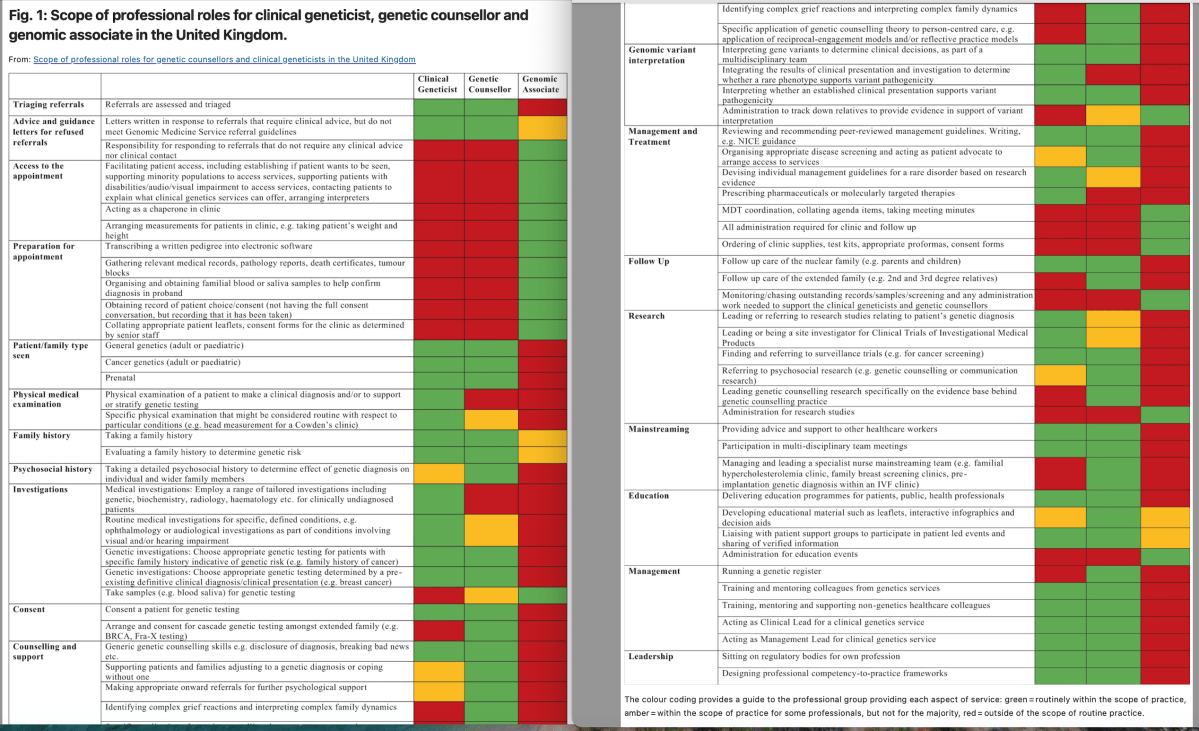
Joint ABS-UKCGG-CanGene-CanVar consensus regarding the use of CanRisk in clinical practice

Background

The CanRisk tool, which operationalises the Breast and Ovarian Analysis of Disease Incidence and Carrier Estimation Algorithm (BOADICEA) is used by Clinical Geneticists, Genetic Counsellors, Breast Oncologists, Surgeons and Family History Nurses for breast cancer risk assessments both nationally and internationally. There are currently no guidelines with respect to the day-to-day clinical application of CanRisk and differing inputs to the model can result in different recommendations for practice.

Conclusions

Whilst consensus recommendations were achieved, the meeting highlighted some of the barriers limiting the use of CanRisk in clinical practice and identified areas that require further work and collaboration with relevant national bodies and policy makers to incorporate wider use of CanRisk into routine breast cancer risk assessments.

https://www.nature.com/articles/s41416-024-02733-4

Aspirin and cancer: the emerging evidence

Professor Peter Elwood Honorary Professor, Cardiff University

There is a remarkable harmony between the effects of aspirin on the biological mechanisms of cancer metabolism and growth, and clinical evidence of reductions in cancer mortality and metastatic cancer spread.

Although aspirin increases the number of bleeds, the severity of bleeds attributable to aspirin is low, and the risk-benefit balance of aspirin appears to be favourable to aspirin.

COULD ASPIRIN STOP THE SPREAD OF COLORECTAL CANCER?

The recent study, carried out at the Chirurgia Generale Unit in Padova, Italy, involved 238 patients who were treated for colorectal cancer between 2015 and 2019. Among these, 31 patients were regular aspirin users, taking a daily dose of 100 mg.

The findings were promising. Regular use of aspirin was linked to a reduction in nodal metastasis, which is the spread of cancer to lymph nodes, and an increase in tumour-infiltrating lymphocytes. These lymphocytes, including T and B cells, play a crucial role in recognising and destroying cancer cells.

Neoadjuvant Immunotherapy in Locally Advanced Mismatch Repair–Deficient Colon Cancer

In patients with locally advanced dMMR colon cancer, neoadjuvant nivolumab plus ipilimumab had an acceptable safety profile and led to a pathological response in a high proportion of patients. (Funded by Bristol Myers Squibb; NICHE-2 ClinicalTrials.gov number, NCT03026140.)

(Neoadjuvant chemotherapy is delivered before surgery with the goal of shrinking a tumor or stopping the spread of cancer to make surgery less invasive and more effective.)

(DMMR =deficient DNA mismatch repair)

https://www.nejm.org/doi/full/10.1056/NEJMoa2400634

‘Gamechanger’ drug that ‘melts away’ tumours could replace surgery for bowel cancer

A “gamechanger” immunotherapy drug that “melts away” tumours dramatically increases the chances of curing bowel cancer and may even replace the need for surgery, doctors have said.

Pembrolizumab targets and blocks a specific protein on the surface of immune cells that then seek out and destroy cancer cells.

In the trial, funded by Merck Sharp and Dohme and sponsored by University College London, researchers recruited 32 patients with stage two or three bowel cancer and a certain genetic profile (MMR deficient/MSI-High bowel cancer) from five hospitals in the UK.

About 15 percent of patients with stage two or three bowel cancer have this particular genetic makeup.

Patients were given nine weeks of pembrolizumab, also known as Keytruda, before surgery instead of the usual treatment of chemotherapy and surgery, then monitored over time.

Results show 59 percent of patients had no signs of cancer after treatment with pembrolizumab, with any cancer in the remaining 41 percent of patients removed during surgery.

Dr Marnix Jansen, a clinician scientist at the UCL Cancer Institute, said more work needed to be done to assess pembrolizumab before it could be considered standard treatment.

https://www.irishtimes.com/health/2024/06/02/gamechanger-drug-that-melts-away-tumours-could-replace-surgery-for-bowel-cancer-say-doctors/

Let’s learn about how to prevent endometrial cancer!

https://engage.esgo.org/…/endometrial-cancer…/

In this webinar aimed at patients and patient advocates, we’ll discuss:

The psychological burden of a diagnosis (M Papageorgiou 🇬🇷)

Medical risk factors (Dr A Stepanyan 🇦🇲)

Genetic risks & prevention (Dr H El Hajj 🇫🇷)

with our co-chairs as moderators: Prof P Morice 🇫🇷 & K Hulscher

Note time is CEST

Patterns of cytotoxic T-cell densities in immunogenic endometrial cancers reveal a potential mechanism for differences in immunotherapy efficacy

A new study in BMJ Oncology suggests that Lynch Syndrome patients may be more susceptible to immunotherapy than sporadic MMRd endometrial tumours.

Objective To explore the impact of molecular subtype in endometrial cancer (EC) on CD8+T cell densities. Furthermore, this work will test the assumption that all mismatch repair deficient (MMRd) tumours are immunologically similar which would enable current trial data to be generalised to all MMRd ECs.

Conclusion These data indicate that CD8+T cell numbers and distribution is not equal between MLH1-methylated and confirmed LS ECs. This is relevant when interpreting current trial data looking to the application of checkpoint inhibition treatments in MMRd cancers.

https://bmjoncology.bmj.com/content/3/1/e000320