Blog

Ovarian cancer: identifying and managing familial and genetic risk—summary of new NICE guidance

https://www.nice.org.uk/guidance/ng241

What you need to know

  • Men and people born with male reproductive organs have a genetic risk of carrying a pathogenic variant associated with ovarian cancer and other cancers 
  • If a person had a direct-to-consumer genetic test and is reported to have a pathogenic variant for which NHS testing is offered, liaise with a regional NHS genetics service to discuss whether referral is appropriate
  • Refer for genetic counselling and testing people who have a first or second degree relative diagnosed with ovarian cancer, those from high risk groups, anyone identified through cascade testing, or those diagnosed with ovarian cancer linked to pathogenic variants
  • For women, trans men, and non-binary people born with female reproductive organs who are at increased risk of ovarian cancer, risk reducing surgery that is age appropriate for their pathogenic variant or family history is the most effective way to reduce the risk of ovarian cancer

Discover Available Cancer Support Options in Your Local Community

This directory is designed to help Healthcare Professionals guide cancer patients, their families, and friends to local cancer support services.

It also serves as a valuable resource for individuals living with and beyond a cancer diagnosis, and their loved ones, to discover the available cancer support options.

To access the Directory of Community Cancer Support Centres and Services click https://www.hse.ie/eng/services/list/5/cancer/profinfo/survivorship-programme/nccp-directory-of-community-cancer-support-centres-and-services.pdf

Innovative eMERGE study aims to address historical health inequities

Collaborations like the eMERGE IV study can help show how diverse population screening, better communication of test results and integration of genetic information into health risk reports can improve our understanding of how to reduce health risks for all.

No guidelines exist for proactive genetic testing to understand overall health risks in otherwise healthy individuals with no family history of disease, so comprehensive risk assessments that include genetic testing aren’t yet standard practice for most healthcare practitioners.

https://blog.invitae.com/innovative-emerge-study-aims-to-address-historical-health-inequities-0a20fd9c3691

Understanding Cancer Ghosting: The Impact of Diagnosis on Relationships

Never heard of the term ‘cancer ghosting’? until you realise that a lot of your friends stop contacting you when you received your cancer diagnosis.

“I felt that people had so much to be getting on with in their own lives and when you’ve been given a cancer diagnosis, you need so much support and care that a lot of the time, people can’t give you that because of what’s going on in their own lives.”

“So when they ask how are you, you go, ah I’m grand and then you go indoors, close the doors and cry because we aren’t comfortable with our emotions either. So I guess we all have a role to play.

“People say don’t be afraid to ask for help and when people offer, you refuse. I’d say to anyone with any illness to ask for help and be specific. Ask them to do a school run or make dinner for the week, give them things to do.

“And most importantly to anyone whose friend has been diagnosed with cancer — send that text.”

https://www.irishexaminer.com/news/arid-41399758.html?fbclid=IwZXh0bgNhZW0CMTEAAR2IZ3lqE3cceBJia_8YQubtmK-HQsijf2q60sfwWB73Ifk7_EAMYAVwL_4_aem_AWsgv8g_4Oqmrj63tZ18kODYkAWqimsAo8gjw1l8ZQJhI4ErYYEvBs7qkTRUWMWi2kdFIK6nW7ZhGbT4Clmrt474

Genetic Cancer Support in Ireland: Advancements and Services

In an Ideal World we would have….

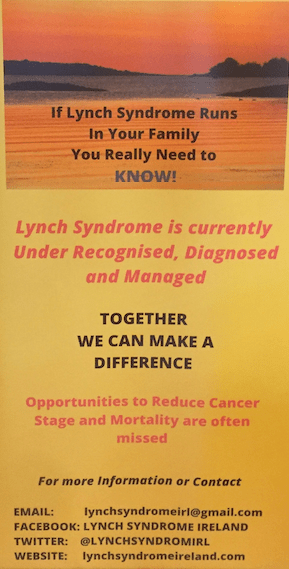
  • A central point to support people who are affected by Lynch Syndrome or other Genetic Cancer defects.
  • An integrated Cancer Genetics service.
  • An increased Genetics workforce.
  • A Genetics Testing center in Ireland.
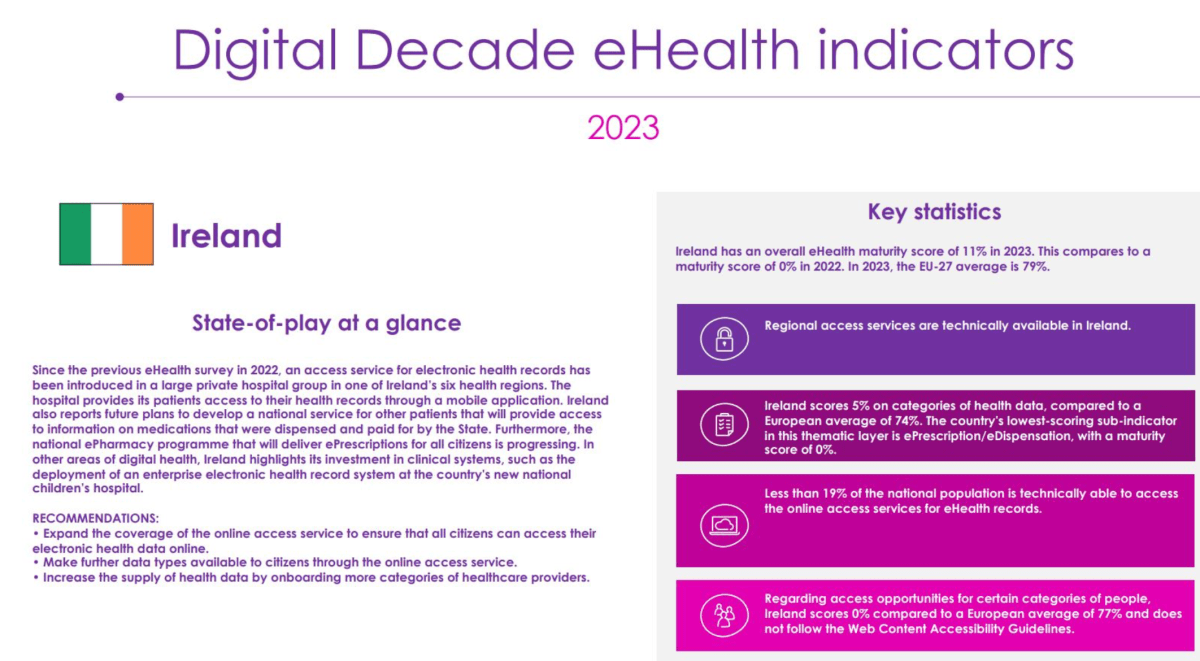
  • A comprehensive IT system to Manage/Track and generally improve the collection/storage of relevant information.
  • Improved awareness by Public and Medics of Genetics.
  • A dedicated Pathway for people with a genetic cancer issue.
  • Improved support available to help in relaying a diagnosis to the wider family.
  • A national BioBank to improve/help research in this area.

Metachronous Colorectal Cancers Risk in Early Onset Patients

This study showed that risk of metachronous(second new cancer that develops at least six months from the first cancer) colorectal cancers in patients with early onset colorectal cancer is comparable to those with advanced age and increases in patients with Lynch syndrome and family history.

More studies on this topic are needed to guide to the best management in these patients.

What is CTDNA?

Short, information webinar addressing how the latest technology is empowering patients and clinicians to make more informed shared decisions along the continuum of colon cancer care. 

  • What is circulating tumor DNA and how is it used to detect molecular residual disease (MRD) in CRC?
  • All ctDNA tests are not the same – understand the differences.
  • Learn how these assays are used to detect early relapse and why serial testing is so important?

https://cdn.jwplayer.com/previews/oCQ2AVGS

“Uninsurable because of a genetic test”: a qualitative study of consumer views about the use of genetic test results in Australian life insurance

Genetic testing can provide valuable information to mitigate personal disease risk, but the use of genetic results in life insurance underwriting is known to deter many consumers from pursuing genetic testing.

Many countries have restricted the use of genetic test results to assess individuals for risk-rated insurance products. Canada adopted the Genetic Non-Discrimination Act (GNA) in 2017, which prohibits the use of genetic information in services including insurance, with no exceptions or financial limits.

Participants stated a strong preference for government regulation to ensure adequate protection against Genetic Discrimination in life insurance and provide certainty to individuals considering genetic testing. The Australian Government is now considering its policy response to its public consultation into the use of genetic results in life insurance underwriting.

Small Study:  Results show low trust in the life insurance industry’s self-regulation, and strong support for legislation from the Australian Government. Even after the introduction of the moratorium, these consumers remained concerned about the implications of their genetic test results on life insurance, and these concerns affected decision-making about genetic testing. Participants also showed little knowledge of the moratorium, or were concerned about others not being informed about it.

“Prevention is better than cure – vaccination for Lynch syndrome”(Dr David Church LS UK 2024 Conference)

Vaccination boosts immune response.

Mutations make abnormal proteins.

Lynch syndrome offers loads of targets for vaccination

Ovarian cancer: identifying and managing familial and genetic risk—summary of new NICE guidance

This article summarises new guidance by the National Institute for Health and Care Excellence (NICE) on identifying and managing familial and genetic risk of ovarian cancer. It covers select recommendations of relevance to those working in primary care and providers who refer to specialist services. Recommendations from this guideline are for anyone who has an increased probability …

What you need to know

  • Men and people born with male reproductive organs have a genetic risk of carrying a pathogenic variant associated with ovarian cancer and other cancers 
  • If a person had a direct-to-consumer genetic test and is reported to have a pathogenic variant for which NHS testing is offered, liaise with a regional NHS genetics service to discuss whether referral is appropriate
  • Refer for genetic counselling and testing people who have a first or second degree relative diagnosed with ovarian cancer, those from high risk groups, anyone identified through cascade testing, or those diagnosed with ovarian cancer linked to pathogenic variants
  • For women, trans men, and non-binary people born with female reproductive organs who are at increased risk of ovarian cancer, risk reducing surgery that is age appropriate for their pathogenic variant or family history is the most effective way to reduce the risk of ovarian cancer

https://www.bmj.com/content/385/bmj.q807