Blog

Support Early Detection, Enhance Quality of Life

A book that sheds light on the alarming spread of early-onset colorectal cancer (eo-CRC) among individuals under the age of 50. At Digestive Cancers Europe (DiCE), our commitment to spreading information about eo-CRC and its prevention has driven us to work intensively on this topic for the past few years.

The Free book’s last chapter reflects on life before and after the disease. The young protagonists, hailing from nine different European countries, lead diverse lives but show us the power of courage and resilience. They exemplify how the support of loved ones is crucial in facing colorectal cancer with determination.

Irish cancer survivors need

Cancer survivors should have legal protection to ensure they are not discriminated against when it comes to financial products such as life insurance, an international conference has heard.

Last December, Insurance Ireland said a new voluntary code of practice would see insurers disregard a cancer diagnosis where treatment ended more than seven years before an application for products such as life, mortgage protection or income protection policies.

Where an applicant was under 18 at the time their cancer treatment stopped, the right to be forgotten will apply after five years.

Cover of up to €500,000 per applicant is to be allowed under the revised code, a ceiling that Insurance Ireland says covers more than 90pc of mortgage protection policies issued in the State.

However, it is still not underpinned by legislation. A spokesperson for the Department of Finance said the right to be forgotten aims to ensure equal access to financial services for individuals who have recovered from a previous illness.

https://www.independent.ie/irish-news/irish-cancer-survivors-need-right-to-be-forgotten-to-fight-discrimination-by-insurers-conference-hears/a2059740992.html#:~:text=Irish%20News-,Irish%20cancer%20survivors%20need%20’right%20to%20be%20forgotten’%20to%20fight,discrimination%20by%20insurers%2C%20conference%20hears&text=Cancer%20survivors%20should%20have%20legal,an%20international%20conference%20has%20heard.

Giving immune system cancer-attacking power back

For a cancerous tumor to grow, it must overpower immune cells known as T cells. TIL((tumor-infiltrating lymphocyte – or TIL therapy) is showing promise in advanced lung cancers through clinical trials underway. Therapy restores the immune system’s natural ability to fight cancer cells.

https://cancer.osu.edu/news/cell-therapy-approach-harnesses-the-immune-system-in-a-different-way-to-stop-cancer

Bowels Basics & Breakthroughs

Scan QR code to download your copy of the new excellent patient guide to #BowelCancer in Ireland. Useful to all as contains important information on symptoms & screening – something everyone needs to be aware of! #BowelCancerAwarenessMonth

It was a project undertaken by University of Sheffield student, Yifeng, who conducted interviews with Lynch Syndrome advocacy organisations (Lynch Syndrome UK and Lynch Syndrome Ireland) to explore what (& how) they communicate on digital media.

Based on this, she created an animation to share with the #lynchsyndrome community.

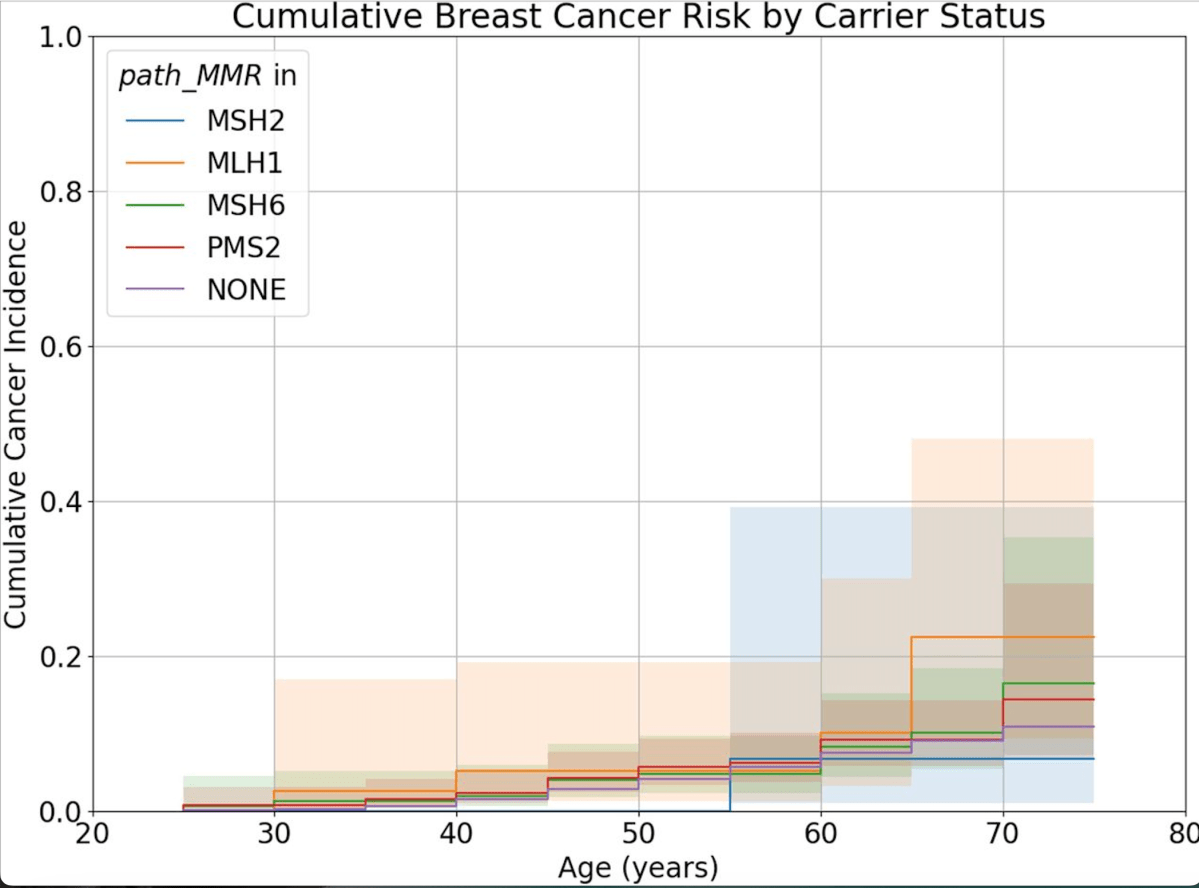
This animation features information on the cancer risk brought by different #lynchsyndrome gene mutations (MLH1, MSH2, MSH6, PMS2, EPCAM).

https://leahhz.github.io/animation0621/?fbclid=IwZXh0bgNhZW0CMTAAAR0vCZGbmcg4G0oi89Jy8q9iZxV81V5WRR8bNl2N650bp_qvOZWJAdzkAx8_aem_ARD43W60vC-jIeCEWHKY9nq6tPgW8TfEQEauwZ3B0ZprkM_bBVNkIx5pUx2KP6qdpTwKHUP4k2Rci8ZPznMgm76g

Lynch syndrome: 10 things to know about this genetic condition

https://www.mdanderson.org/cancerwise/qa-understanding-and-managing-lynch-syndrome.h00-158589789.html

New Lynch syndrome registry ‘game-changing’ for patients

England’s latest Lynch syndrome patient database may transform the disease’s detection and monitoring, becoming a blueprint for other genomic diseases.

Why Lynch syndrome?

The English National Lynch Syndrome Registry holds over 9,000 patient records, but what is it about Lynch syndrome that warrants a national database? It ticked a number of boxes, from researchers knowing a lot about it to there being a strong public health argument to focus on.

Lynch syndrome is a fairly well-understood condition with a high penetrance. This makes cascade testing, which is where the patient’s family members are considered for testing, very likely to pick up new cases before Lynch syndrome-associated cancer develops – which can include colorectal and endometrial cancers. When new cases are found, there are ways in which risk can be reduced for those affected that are relatively cheap, available and simple. Advice on this includes a NICE recommendation to take aspirin and attending colonoscopies.

Time for a balanced conversation about menopause

Check out The Lancet Series…..

Menopause is an inevitable life stage for half the world’s population, but experiences vary hugely. Some women have few or no symptoms over the menopause transition while others have severe symptoms that impair their quality of life and may be persistent.

Many women feel unsupported as they transition menopause. To better prepare and support women, the Lancet Series on menopause argues for an approach that goes beyond specific treatments to empower women with high-quality information, tools to support decision making, empathic clinical care, and workplace adjustments as needed.

https://www.thelancet.com/journals/lancet/article/PIIS0140-6736(24)00462-8/fulltext

Managing menopause after cancer

Prof Donal Brennan, Professor of Gynaecological Oncology in the UCD School of Medicine, University College Dublin, and colleagues have published a new featured review on menopause treatment for cancer patients.

Review aims to implement a more personalised and multidisciplinary approach in treatment of menopause symptoms after cancer.

(What about after surgical menopause?)

The article provides a comprehensive view of the current hormonal and non-hormonal therapy options studied and suggests a framework for more cost-effective and patient-focused models of care to meet the needs of a growing population of cancer survivors.

“Patients have repeatedly highlighted the burden of menopause symptoms after cancer treatment. They feel that these are often minimised or in some cases ignored,” said Prof Brennan. “

Key treatment advice points include:

  • MHT is an effective treatment for vasomotor symptoms and seems to be safe for many patients with cancer, the paper states.
  • Women younger than 45 years without contraindications should be offered an individualised treatment plan including MHT after cancer treatment.
  • If MHT is contraindicated, non-pharmacological and non-hormonal treatments are available for vasomotor symptoms; vaginal oestrogen seems to be safe for most patients with cancer and growing evidence supports safety after breast cancer.
  • Multidisciplinary management of menopause after cancer is essential and should include primary care and, if appropriate, allied health practitioners.