
Ireland’s interpretation of GDPR ‘disgraceful’ – NI digital health expert https://t.co/ZJ3AmErkJO pic.twitter.com/NGnBgNR0Yr
— Pulse+IT (@pulseitnews) September 20, 2024
Blog
Lynch Choices
- Lynch syndrome (‘Lynch’) is an inherited condition that increases the chance of developing certain cancers. The type of cancer depends on the genes involved.
- This website helps people with Lynch to make choices that are right for them. It is designed to be used with support from the genetics service, GPs, healthcare teams in the community, charities and patient groups.
- If you are concerned about Lynch but have not been diagnosed, please speak to your GP or genetics service.
- Each session helps you think about your choices at home, so you are ready to talk through your choices with a GP, genetics or other specialist.
Where do non-invasive colorectal cancer tools ‘FIT’ alongside colonoscopy in the surveillance of high-risk patients?
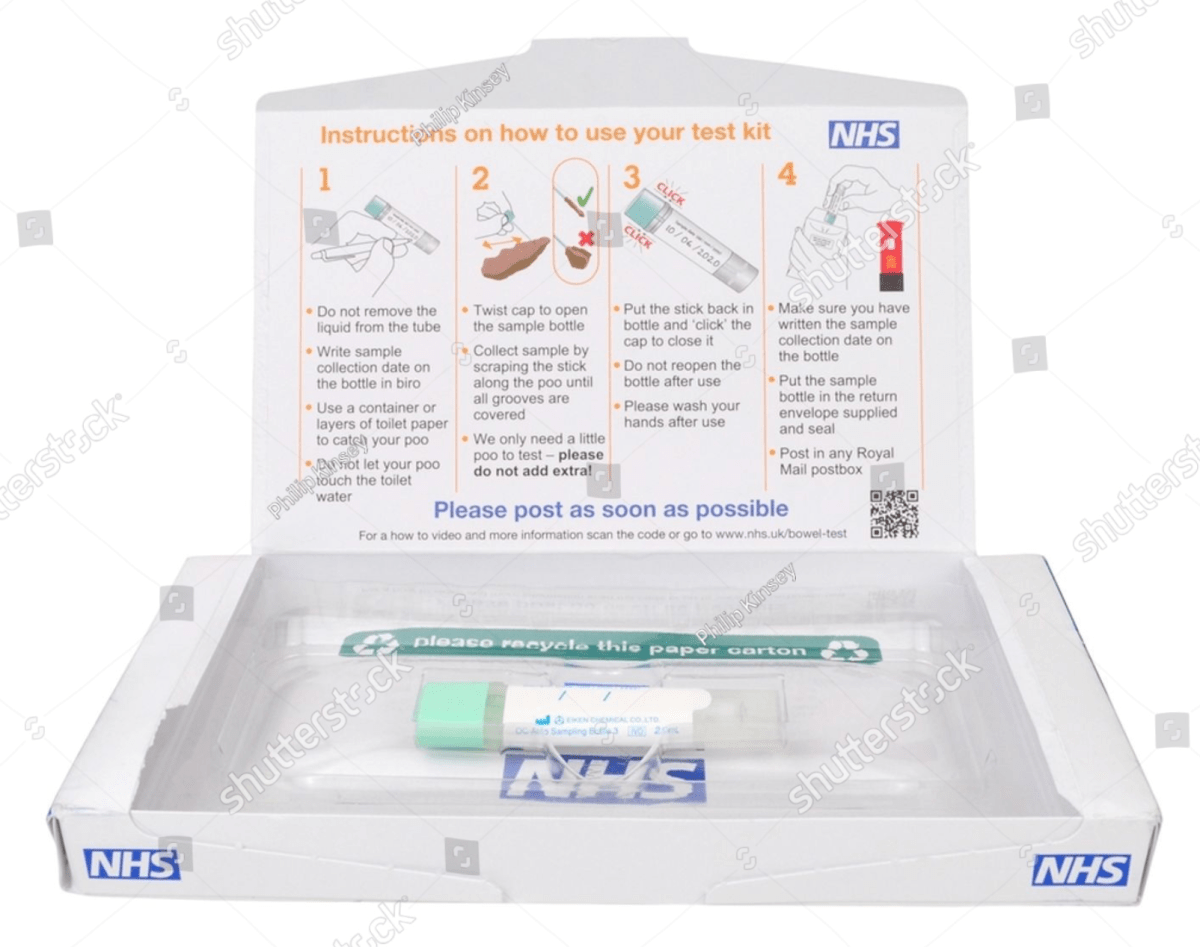
There is increasing interest in the use of less-invasive approaches to investigation of at-risk populations, driven in part by the COVID19 pandemic as resources have been increasingly constrained, alongside expanding evidence of clinical effectiveness.
Fecal hemaglobin immunochemical testing(FIT) has been validated in screening and symptomatic populations, is cost-effective, and acceptable to patients.
As a quantitative assay, lower fHb concentration thresholds increase CRC sensitivity albeit with decreased specificity, however FIT has a lower sensitivity for advanced adenomas of around 40-60%2. Therefore a ‘FIT only’ strategy may theoretically result in fewer prevented CRCs, notwithstanding a limited understanding of the natural history of familial CRC. However the estimated reduction in risk by removal of precursor advanced adenomas at colonoscopy provides an opportunity for a less-invasive combined strategy using FIT.
In conclusion the authors have developed a compelling rationale for a combined FIT:colonoscopy strategy where previous data has indicated that FIT alone would not be sufficient. Although their study did not identify differences according to levels of CRC risk, further refinement of risk estimates and investigative strategies may facilitate risk-stratified mixed-modality surveillance strategies.
https://www.gastrojournal.org/article/S0016-5085(24)05458-1/pdf
Ciara shares how knowledge of her Lynch Syndrome status enabled her to avail of risk-reduction measures that prevented endometrial cancer
We wish to thank Ciara for allowing us to share her story for World Gynaecological Oncology Day. Ciara hopes by sharing her story she can raise awareness of the role genetic risk-factors play in the development of gynea cancers and give hope to others 💜
Over the years, I was aware of Lynch syndrome due to several members of my Mum’s family having it. My great aunt had wrote out a family tree of all family with the inherited gene. That valuable information was then transferred to the genetics clinic.
After a blood sample in 2017, the genetics clinic confirmed that I had Lynch Syndrome with MSH2 gene alteration. It was recommended that I go for a colonoscopy every two years.
Two years ago I was referred to the Gynaecology department for surveillance. Blood tests, ultrasound tests and endometrial biopsies were offered. It was then I started to research the lifetime risk of endometrial cancer associated to MSH2 (40-60%) and understand the importance of surveillance. My endometrial biopsy confirmed I had atypical endometrial hyperplasia which is a pre-cancerous condition of the uterus. Having risk reducing surgery at 44 was the only and logical thing to do my situation. It has been a lot to process emotionally at times, but I am fortunate to have a loving partner, friends, family and other outlets for support. Under the exceptional care of Dr Astbury and her team at UHG, I had a full abdominal hysterectomy in February this year and have recovered well. I am very lucky the endometrial biopsy surveillance was done when it was. The early detection prevented me from needing further treatment after my surgery. I will be forever grateful for everything Dr Astbury and her team have done in order to protect my health.
Ciara Donoghue
#WorldGODay2024 #GynaeCancers #riskfactors #earlydetection #HereditaryCancers #CancerGenetics
End the Stigma surrounding gynaecological cancers on this World Gynaecologic Oncology Day
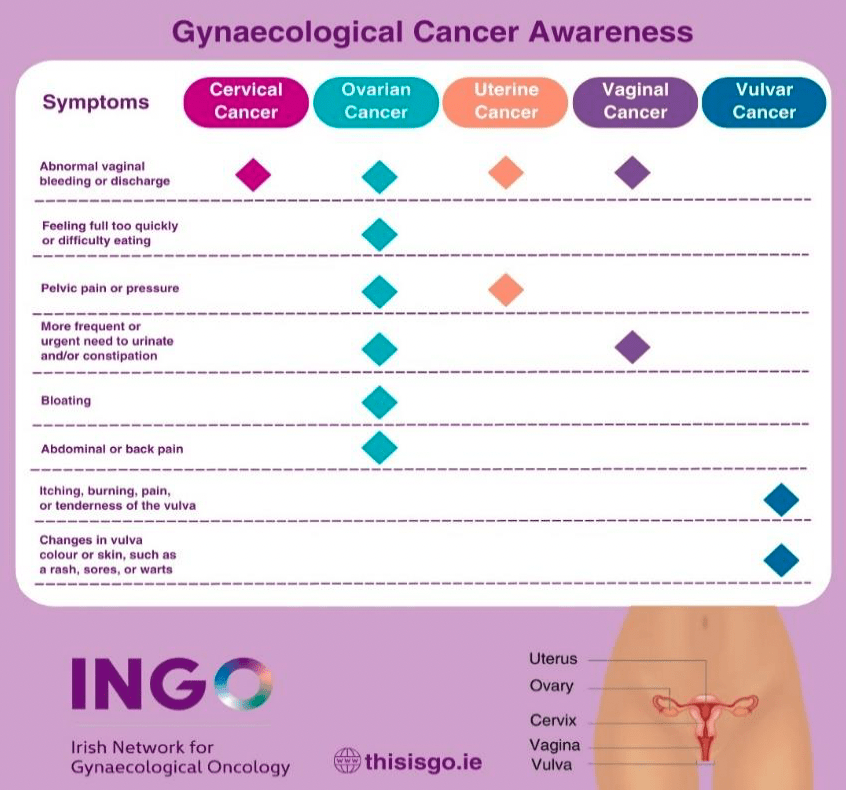
One in Seven Women in Ireland Avoid GP Visits Due to Embarrassment Discussing Symptoms.
- Almost 2,000 Women Diagnosed with Gynaecological Cancers Across Ireland Annually
- Only two in five recognise abnormal bleeding or discharge as symptom of uterine cancer
- Only a quarter of women identify changes in urinary habits as symptom of vaginal cancer
Today is World GO Day or World Gynaecologic Oncology Day where patients and advocates around the globe unite to raise awareness about all five gynaecological cancers (vulval, vaginal, cervical, uterine and ovarian) and their risk factors and to combat the stigma associated with gynaecological cancer.
The Irish Network for Gynaecological Oncology (INGO), a voluntary coordination body consisting of over 30 of Ireland’s foremost gynecological cancer campaigners, researchers and patient advocates aim to educate people about the importance of sharing information in relation to prevention, symptoms, early diagnosis and treatment.
Research commissioned by INGO shows that stigma surrounding gynaecological cancers and their symptoms can prevent some women from attending their doctor with warning signs.
One in seven women in Ireland said they would not attend a doctor with cancer warning signs as they find it embarrassing to discuss symptoms, and one in five would not go to the doctor as they do not want to talk to the GP receptionist about symptoms. Furthermore, one in three would not attend if they found it difficult to get an appointment with a particular doctor.
This World GO Day, Fri 20th September, INGO are hosting a free webinar at 1pm for anyone who would like to learn more about the five gynaecological cancers and their symptoms, with insights from cancer patients and medical professionals.
Register for the webinar at http://www.bit.ly/GO_symptoms
http://www.isgo.ie/irish-network-for-gynaecological-oncology/
#WorldGODay2024
Knowing your family history

Knowing your family history of cancer is a critical aspect of cancer prevention and early detection.
Many types of cancer, including Lynch syndrome-related cancers, have a hereditary component. This means that individuals with a family history of cancer may be at increased risk for developing the same or related types of cancer.
The more you know about your family’s cancer history, the better equipped you will be to make informed decisions about your own health and to take proactive steps to reduce your risk of cancer.
Womb Cancer: Risk Factors and Prevention

Lynch syndrome may affect up to 175,000 people in the UK and is linked to 3% of cases of womb cancer. To develop Lynch syndrome, you need to have one parent that carries the gene. Someone diagnosed with Lynch syndrome has up to 60% chance of developing womb cancer in their lifetime. Lynch syndrome is also associated with an increased risk of bowel cancer. Those diagnosed with Lynch syndrome undergo regular tests to check for bowel cancer and womb cancer, many will be offered a hysterectomy (operation to remove the womb) to prevent womb cancer once they feel their family is complete.
Lynch syndrome is often diagnosed when a strong family history of bowel or womb cancer is noted. If you feel this may apply to you, please speak to your doctor about being referred to a genetics service. More information on Lynch syndrome can be found here.
https://peachestrust.org/womb-cancer/risk-factors-prevention/
Neoadjuvant Immunotherapy in Locally Advanced Mismatch Repair–Deficient Colon Cancer

Mismatch repair–deficient (dMMR) tumors can be found in 10 to 15% of patients with nonmetastatic colon cancer {(dMMR) is a characteristic feature of cancers linked to Lynch syndrome}. In these patients, the efficacy of chemotherapy is limited. The use of neoadjuvant immunotherapy has shown promising results, but data from studies of this approach are limited.
In patients with locally advanced dMMR colon cancer, neoadjuvant nivolumab plus ipilimumab had an acceptable safety profile and led to a pathological response in a high proportion of patients. (Funded by Bristol Myers Squibb; NICHE-2 ClinicalTrials.gov number, NCT03026140.)
Understanding Immunotherapy Side Effects
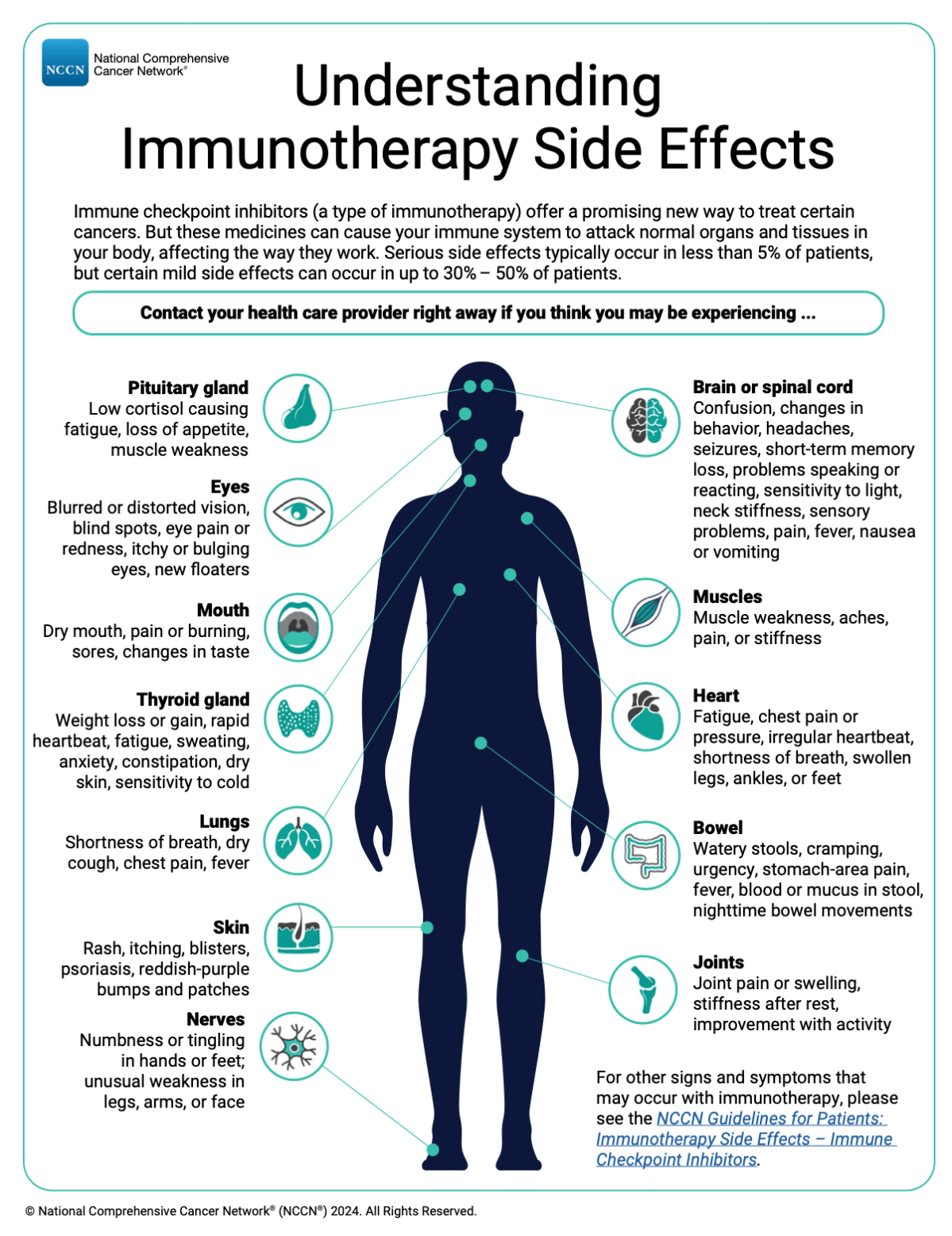
Immune checkpoint inhibitors (a type of immunotherapy) offer a promising new way to treat cancer for some patients. But these medicines can cause your immune system to attack normal organs and tissues in your body, affecting the way they work.
Preventing Lynch Syndrome Cancers: Study Suggests Immunotherapy Could Work….https://www.mskcc.org/news/preventing-lynch-syndrome-cancers-new-study-suggests-immunotherapy-could-work
No matter where your cancer began, side effects from immunotherapy can affect your whole body.
Cancer-Related Fatigue

Fatigue is a common side effect that may linger for years following cancer treatment. Experts and survivors talk about ways to help find a balance between life and fatigue.
The best way to describe it is the fatigue someone feels when they have the flu..
Cancer-related fatigue is a common side effect, especially because it can be caused by both the cancer and its treatment, according to guidelines from the National Comprehensive Cancer Network. This type of fatigue may last months to years after the end of treatment and “does not improve with normal amounts of rest or sleep and disrupts daily life,” the guidelines state.
A significant intervention that has been shown to help with managing cancer-related fatigue is exercise or a type of physical activity.
If people have cancer-related fatigue, energy conservation is something we talk about a lot, try to conserve your energy to do the things you would like to do…..
https://www.curetoday.com/view/focusing-energy-on-cancer-related-fatigue

