
Blog

Basic Movement….

Question… What barriers do we still overlook for people living with cancer?
Detection rates in Lynch Syndrome, huge variation in reporting

Conclusion
This study characterised neoplasia(unregulated process of cell proliferation that results in a tumour) detection in Lynch syndrome and confirmed higher detection rates with high-quality procedures, supporting the need to benchmark quality standards and neoplasia detection outcomes.
https://www.thieme-connect.de/products/ejournals/abstract/10.1055/a-2888-6567
Aspirin for cancer prevention in individuals with Lynch syndrome: first results from the CaPP3 multicentre,randomised, double-blind, non-inferiority trial
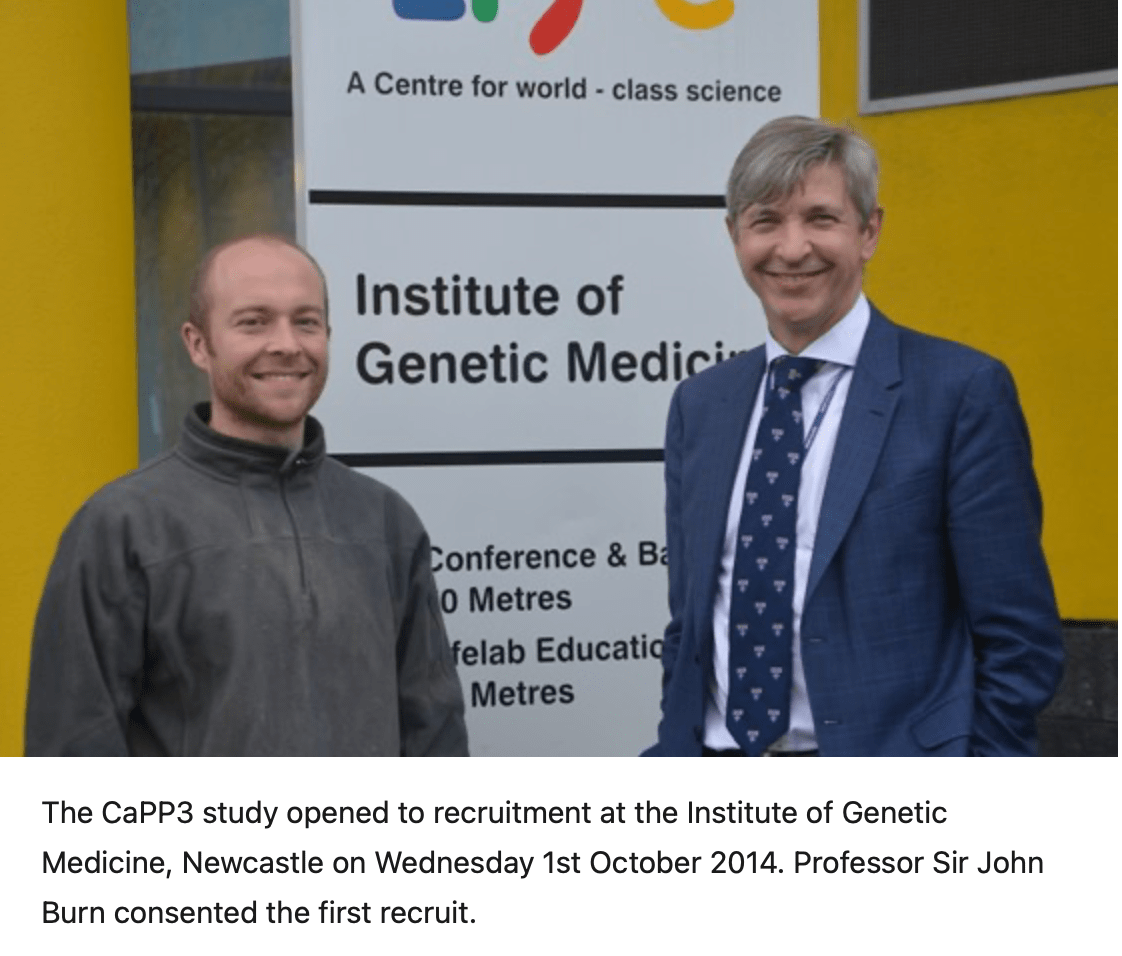
https://www.thelancet.com/action/showPdf?pii=S2468-1253%2826%2900114-7
Bottom line
This is one of the largest and most important aspirin prevention studies ever conducted in people with Lynch syndrome.
It suggests:
- ✅ Daily aspirin can help reduce the risk of Lynch syndrome–related cancers.
- ✅ 100 mg daily appears to provide similar protection to 600 mg for many people.
- ✅ 100 mg causes fewer side effects and much less serious bleeding.
- ⏳ The researchers will continue following participants for another five years, and those longer-term results should provide even stronger evidence about the best aspirin dose.
The National Cancer Strategy 2017-2026 expires this year — and there is currently no announced successor.

UCAN Ireland led a broad coalition to call on Minister for Health Jennifer Carroll MacNeill to act now, before Ireland is left with a gap in strategic direction for cancer care.
Cancer cases in Ireland are projected to grow by 47% by 2040, the second-highest projected growth rate in the EU. We cannot afford any gap in strategy or funding.
Our ask is simple:
✅ Commission a formal evaluation of the current strategy immediately
✅ Announce a cancer strategy steering group with meaningful patient involvement
✅ Publish a clear development timeline, with a target publication date no later than end of 2027
✅ Confirm there will be no gap in strategic direction or funding
The public are not recipients of digital healthcare, but equal stakeholders….
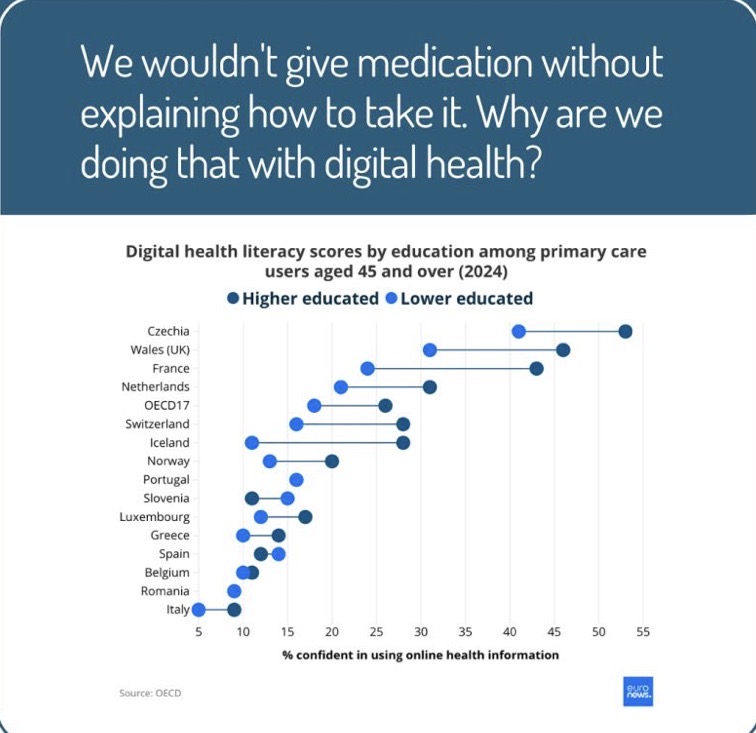
If we focus on merely information sharing or a technology sales pitch, we’ll miss an opportunity to build lasting engagement at the volume required to ensure we can meet everyone’s needs as part of change.
Digital healthcare will succeed if it is built directly with the people it is intended to serve
The symptoms nobody warns you about❗️

When people think about cancer treatment, they often think about #chemotherapy.
But far fewer people talk about digestive issues, unexpected weight loss, food anxiety, pancreatic enzyme replacement (PERT) or the embarrassment that can come with symptoms many patients feel they have to hide.
These are the realities that can have just as much impact on quality of life, yet they’re often left out of the conversation.
If you’ve been affected by a cancer diagnosis – as a patient, carer, or healthcare professional –what symptom do you think deserves more attention❓
Let’s start the conversations that help others feel less alone.
Pamela Deasy(LinkedIn)-Patient Advocacy Pancreatic Cancer Patient Advocate | MA Sociology Student | Turning lived experience into research, awareness, and change
The Unrealised Potential of Cascade Testing
https://jamanetwork.com/journals/jamanetworkopen/fullarticle/2850967
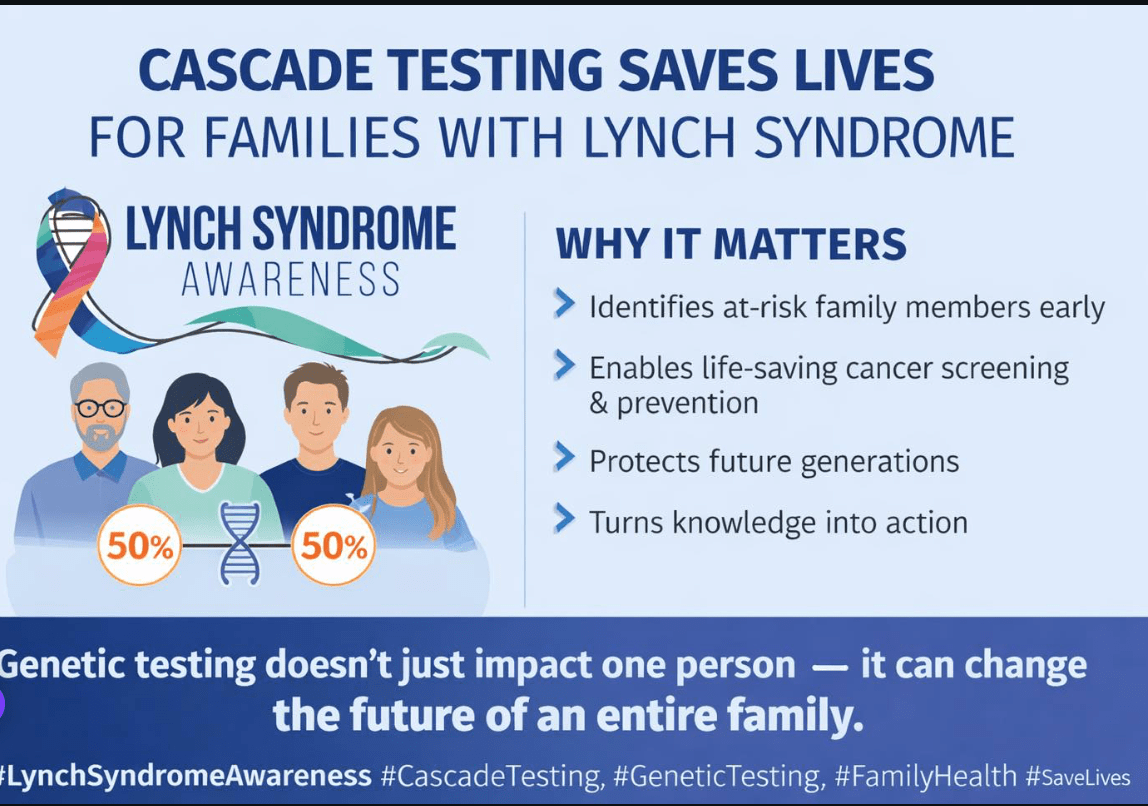
The article discusses cascade genetic testing, which means offering genetic testing to close relatives of someone who has already been found to carry an inherited disease-causing gene mutation. e.g. Lynch Syndrome
The idea is simple: if one person has a harmful inherited gene linked to cancer, their parents, siblings, and children may also have it. Finding these relatives early allows them to take steps to prevent cancer or detect it at an early, more treatable stage.
What did the study find?
The researchers looked at nearly 23,000 people who were found to have an inherited cancer-related gene mutation.
The disappointing finding was:
- Only about 24% (roughly 1 in 4) had even one family member go on to have genetic testing.
- That means more than 3 out of 4 people had no relatives tested, despite relatives potentially being at high risk.
The real number may be slightly higher because the study only counted relatives tested through the same laboratory.
The study shows that cascade genetic testing is not reaching enough families. Even when testing is free, most at-risk relatives are never tested. Improving communication, reducing social and cultural barriers, and developing better systems for notifying families could help identify more people at risk and ultimately save lives through earlier detection and prevention of inherited cancers.
‘Less is More’ vs ‘More is More’
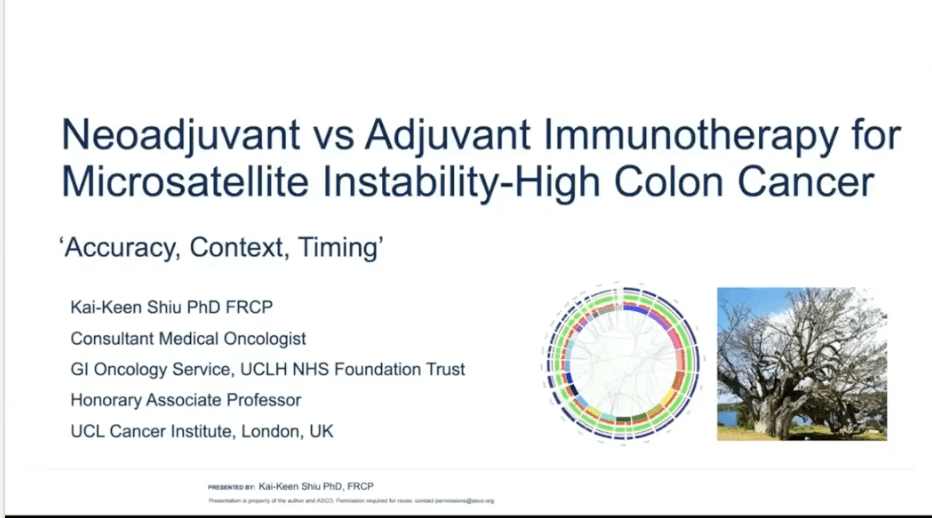
Patients Surgical Journey: strategies for patients living with dMMR/MSI CRC. To benefit patients, advance scientific understanding and aid next trial designs, a Multidisciplinary Team approach is essential.
🔍 Key insights discussed include:
• Early-stage dMMR/MSI-H colon cancers are highly immunogenic, making them particularly responsive to checkpoint inhibitor therapy
• The NICHE-2 trial reported remarkable outcomes with neoadjuvant nivolumab plus ipilimumab, including 97% major pathologic response and 67% pathologic complete response rates
• New phase III studies, including AZUR-2 and NeoShot III, are evaluating whether perioperative immunotherapy can improve long-term outcomes compared with current standards
• ctDNA is emerging as a promising biomarker to identify molecular response, guide treatment duration, and potentially support de-escalation of therapy
• Accurate MMR/MSI testing and high-quality radiologic staging are essential when selecting patients for neoadjuvant immunotherapy
• As outcomes continue to improve, future strategies may allow less treatment, fewer surgeries, and more personalized care for selected patients
These data highlight a rapidly evolving treatment paradigm, where biomarker-driven neoadjuvant immunotherapy may transform the management of localised MSI-H colon cancer.
Genitourinary Syndrome of Menopause (GSM)
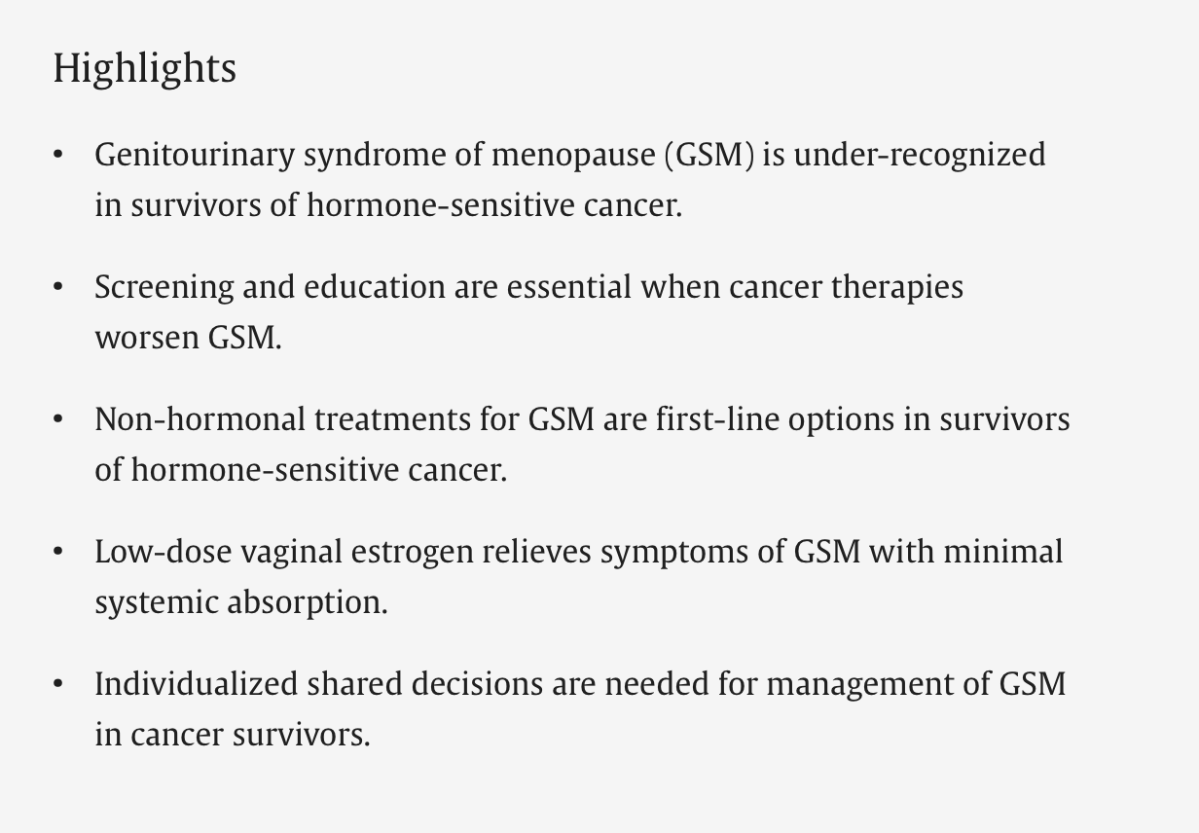
Genitourinary Syndrome of Menopause (GSM) is a common, progressive condition caused by dropping estrogen levels during and after menopause. It affects the tissues of the vulva, vagina, and lower urinary tract, leading to symptoms like vaginal dryness, painful intercourse, urinary urgency, and recurrent urinary tract infections (UTIs).
“Recently published this paper outline the evidence supporting the use of vaginal estrogen to treat (GSM) in women living with or after cancer.
Unfortunately this is an area that is often neglected by clinicians and patients can find it difficult to raise their symptoms or worries during a consultation.
Ultimately low dose vaginal estrogen is likely to be safe and effective in most women with recurrent UTIs or vulvo vaginal atrophy and a history of cancer, however longer term studies would be very helpful.
In the meantime please don’t be afraid to ask your doctor about symptoms such recurrent cystitis, vaginal pain or dryness or painful intercourse there are treatments available”
Donal Brennan-UCD Professor of Gynaecological Oncology at University- College Dublin. LinkedIn.
https://www.sciencedirect.com/science/article/pii/S0378512226001817

