Blog

PPI Hub

We believe patient involvement is not only “the right thing to do”, but it is ‘the smart thing to do’. There is growing evidence that involvement contributes to increased patient satisfaction, better outcomes, and lower healthcare costs.

You are the Real Product….

Let’s be clear: DNA companies offer you cheap DNA analysis not because they want to help you find your ancestors and living relatives, or your precise ethnicity, or your possible risk for developing various medical conditions, but for the same reasons Google offers you free searches, or Facebook a free social media universe. Once you opt in to sharing your data, you are the product.  

https://www.irishtimes.com/business/technology/don-t-buy-online-dna-ancestry-tests-you-are-the-real-product-1.3713619

Realising the potential of genomic technologies in cancer care: Implementing the ‘Cancer Diagnostic and Treatment for All’

The EU-wide approach should be applied beyond COVID-19. Cancer is a pandemic of its own, representing a real threat to European citizens and societies. Its already high prevalence is projected to continue to increase. 

Personalised medicine, through wide and timely access to biomarker testing, has the potential to transform cancer care and provide significant benefits to people living with cancer, healthcare systems and societies in general. It can fundamentally change what it means to receive a cancer diagnosis and live with cancer. Yet throughout the EU, uptake of genomic technologies for biomarker testing remains sub-optimal owing to a range of factors, including low awareness, inadequate infrastructure and lack of EU guidance on the value of testing.

A working group of leading experts and stakeholders from the EU oncology community was convened to create a report with actionable policy recommendations to address barriers to the delivery of personalised medicine – and specifically to support the implementation of one flagship in Europe’s Beating Cancer Plan, ‘Cancer Diagnostic and Treatment for All’ initiative. The recommendations call on the European Commission to:

  1. Lead awareness campaigns to increase understanding of the benefits of biomarker testing
  2. Develop EU-wide guidance on personalised medicine, including recommendations on biomarker testing as an indicator of quality in cancer care
  3. Build the infrastructure required for optimal uptake of biomarker testing
  4. Facilitate the development of specialised knowledge, including undergraduate, post-graduate and ongoing professional training in personalised medicine
  5. Mobilise resources to promote equal access to personalised medicine

Control:

Much of what upsets us is outside the control of those doing the upsetting. Remembering that can reduce a lot of the frustration we feel over late deliveries, call centres, over-stretched health services and more. We still won’t like these experiences but we can hope to keep our stress and frustration levels to a minimum.
Try: Thinking of annoying experiences you expect to have today, decide in advance to maintain a background awareness of your breathing – to keep presence of mind – while going through them.(Padraig O’Morain)

Guidelines for the management of hereditary colorectal cancer from the British Society of Gastroenterology (BSG)/ Association of Coloproctologists of Great Britain and Ireland (ACPGBI)/ United Kingdom Cancer Genetics Group (UKCGG)

These guidelines are primarily aimed at healthcare professionals and address:

  • Who should have surveillance?
  • When should surveillance take place?
  • What else can we do to prevent cancer?
  • What kind of surgery should we perform in people with hereditary cancer risk?
  • Who is eligible for gene testing, and what kind of testing should we perform?

The St Mark’s Centre for Familial Intestinal Cancer (incorporating the Polyposis Registry and Family Cancer Clinic) 

The St Mark’s Centre for Familial Intestinal Cancer (incorporating the Polyposis Registry and Family Cancer Clinic) is run by a team of specialists consisting of Colorectal Surgeons, Gastroenterologists, Nurse Practitioners, Nurse Specialists and Administrators. The team works together to ensure prompt diagnosis and surveillance of patients with a genetic condition associated with bowel cancer or from a family at high risk of bowel and other cancers.

Breast Cancer Treatment’s Collateral Damage – Let’s Talk about it….

Citizenship rights and obligations

In my view as a citizen of Ireland I have certain rights and obligations.

One of my obligations is to do my best to protect myself and society.

I want people to have access to proper care in our Health system.

Nobody wants a situation where you can not get access to an intensive care bed.

The result of people not receiving a covid vaccination and contracting Covid -will ensure an intensive care bed usage way in excess of what the requirement should be.

Everyone suffers…

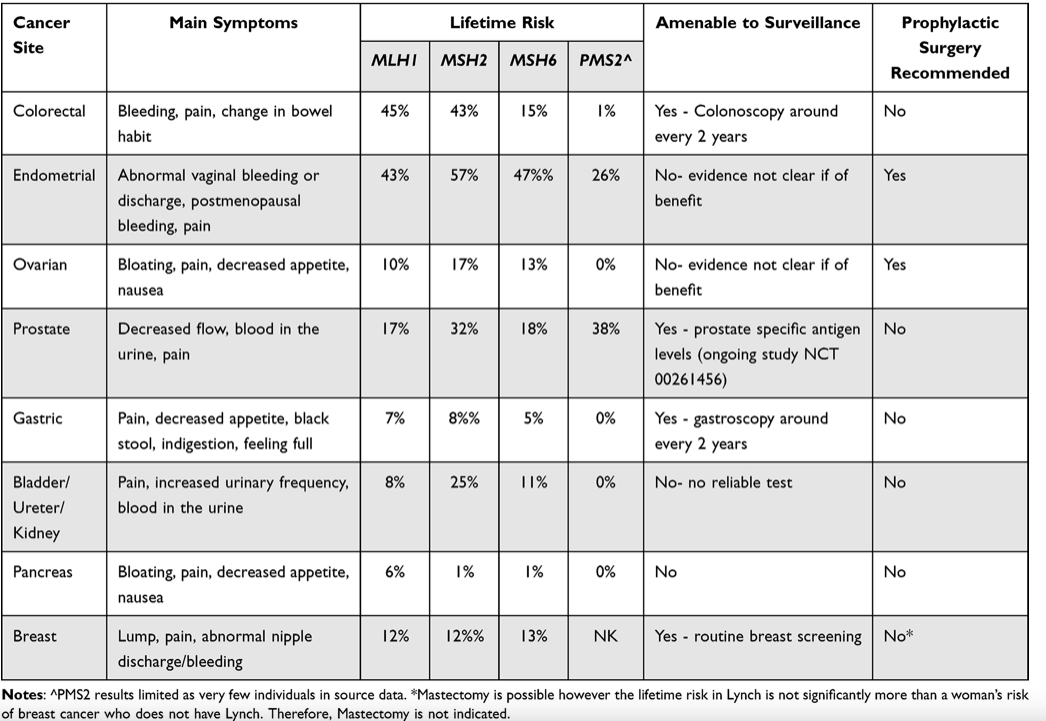
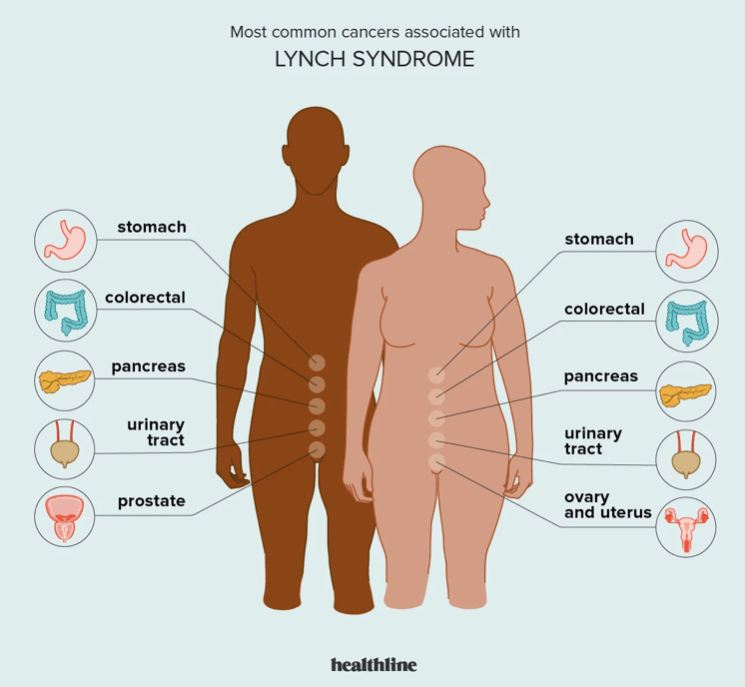
Implementing Lynch syndrome testing and surveillance pathways

Lynch Syndrome is the most common form of hereditary colorectal cancer.

By implementing Lynch syndrome pathways nationally for both colorectal and endometrial cancer there is the opportunity to detect many of these at an earlier stage and also prevent cancers through risk reduction treatments and appropriate surveillance routes.

Guidance on management of Lynch syndrome published by NHS UK (July 2021).

Click to access B0622-implementing-lynch-syndrome-testing-and-surveillance-pathways.pdf