VARIANT OF UNCERTAIN SIGNIFICANCE (VUS)

When analysis of a patient’s genome identifies a variant, but it is unclear whether that variant is actually connected to a health condition, the finding is called a variant of uncertain significance (abbreviated VUS).

In many cases, these variants are so rare in the population that little information is available about them. Typically, more information is required to determine if the variant is disease related. Such information may include more extensive population data, functional studies, and tracing the variant in other family members who have or do not have the same health condition.

AI and Machine Learning are poised to play a significant role in advancing Genetic Testing practices.

These study findings offer hope that further acceleration of VUS reduction is possible through advances in these rapidly evolving technologies. 

Conclusions and Relevance  In this cohort study of individuals undergoing genetic testing, the empirically estimated accuracy of pathogenic, likely pathogenic, benign, and likely benign classifications exceeded the certainty thresholds set by current VC guidelines, suggesting the need to reevaluate definitions of these classifications. The relative contribution of various strategies to resolve VUS, including emerging machine learning–based computational methods, RNA analysis, and cascade family testing, provides useful insights that can be applied toward further improving VC methods, reducing the rate of VUS, and generating more definitive results for patients.

https://jamanetwork.com/journals/jamanetworkopen/fullarticle/2825808

Dismantling the fallacies of the illness blame-game

A person’s likelihood of succumbing to a particular illness has very little, statistically, to do with how much broccoli they ate in their teens or how many press-ups they do every morning. The concept of the social determinants of health has become more mainstream in recent years, but I think we are still slow to accept how limited conventional medical treatment is when it comes to really making a bottom-line difference to people’s wellbeing.

Let’s Talk About…Genomic Testing

Communication is crucial, and genomics can be a difficult topic to get across – especially when talking to patients. If you want to skill up, our ‘Let’s Talk About… Genomic Testing’ film series is a good place to start: https://buff.ly/4405Ozk

Featuring experts with many years’ experience, this series of films provides a helpful introduction for anyone communicating with patients about genomic testing and the possible results.

Let’s talk about… Possible results

Let’s talk about… Variants of uncert

Let’s talk about… Uncertainty

Let’s talk about… Incidental finding

Let’s talk about… The impact on fa

Let’s talk about… Communication 

Impact of population screening for Lynch syndrome insights from the All of Us data

Data used from the All of Us (AOU) Research Initiative to assess the prevalence of LS in the general U.S. population, and analyzed demographic, personal, and family cancer history, stratified by LS genotype to compare LS and non-LS carriers. 

The results suggest that population-based germline testing for LS may identify up to 63.2% of carriers who might remain undetected due to lack of personal or family cancer history.

Their analysis on family history of cancer indicates that cancer risk further escalates for LS carriers who also have a family history of cancer.

LS affects about 1 in 354 individuals in this U.S. cohort, where pathogenic variants in the genes MSH6 and PMS2 account for the majority of cases.

https://www.nature.com/articles/s41467-024-52562-5?fbclid=IwY2xjawH29mVleHRuA2FlbQIxMQABHczHv3SqDUHGSxdh4H1ZTHvIdPioVO4Um3gsaRLm6ukCAeL1it6PBYGPrQ_aem_TV1obtvA3TEZmXYAV3j5uw

Becoming agents for genomic change: genetic counsellors’ views of patient care and implementation influences when genomics is mainstreamed

Genetic counsellors are increasingly transitioning beyond clinical genetics services to meet the growing demands for genomic healthcare.

Challenges included hesitancy of some medical specialists regarding the value of genomics in healthcare and potential tension arising from distinct perspectives and practice between genetic and non-genetic professionals.

https://www.nature.com/articles/s41431-024-01686-9

Cancer Genetic Appointments

During your appointment, a member of the team will confirm your family history/ family tree details with you and may ask about other medical conditions in your family (where known).

If a cancer genetic alteration (gene fault) exists in your family, or there is a possibility of an inherited genetic alteration, our team will discuss the condition and outline the choices and options available to you.

What is ‘Diagnostic Cancer Genetic Testing’?

Diagnostic cancer genetic testing is helpful when an individual with cancer is unaware of whether a gene alteration is present within their family. A blood test can be taken either from you or an eligible family member (i.e. the blood test must be taken from someone with cancer), to identify any alteration (gene fault) in your DNA. If a cancer gene alteration exists, it may be responsible for causing cancer in you, and/ or in other family members.

What is ‘Predictive Cancer Genetic Testing’?

If a cancer gene alteration is identified in your family, you may opt to undergo a predictive cancer genetic test to determine if you carry your family’s alteration, using a blood sample taken from you.

https://www.stjames.ie/cancer/yourtreatmentandcare/servicesandtreatments/cancergeneticappointments/

Cancer and Fatigue Go Together

Every cancer has different side effects depending on the type, which stage it is in, and the treatments given. But when 80/100% of the people report fatigue, we know this is an ongoing problem.

I hope I continue to find new research and training on this often overlooked and important side effect – perhaps the most devastating of all!

https://www.curetoday.com/view/cancer-and-fatigue-go-together

How I Truly Learned to Live With Stage 4 Colon Cancer

How do you live when you are constantly trying to figure out how not to die?

In the face of cancer, those who come before me have shown me how to live each day knowing it could very well be their last. It’s cliche, but it’s true.

None of us are given a timeline or know when we will no longer be a citizen of this world.

https://www.curetoday.com/view/how-i-truly-learned-to-live-with-stage-4-colon-cancer

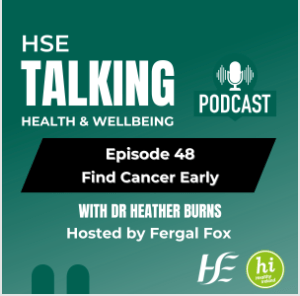
Find Cancer Early

HSE’s Talking Health and Wellbeing podcast, Dr. Heather Burns discusses the importance of symptom awareness and early detection of cancer. Dr. Burns is a Consultant in Public Health Medicine and Public Health Lead for Early Detection of Cancer with the HSE National Cancer Control Programme. She notes that cancer is common in Ireland, with 1 in 2 people having a cancer diagnosis in their lifetime.

https://www.podbean.com/ew/pb-s2r93-15a9de0

Early treatment discontinuation in patients with deficient mismatch repair or microsatellite instability high metastatic colorectal cancer receiving immune checkpoint inhibitors

Background Immune checkpoint inhibitors (ICIs) are recommended to treat patients with deficient mismatch repair/microsatellite instability high (dMMR/MSI-H) metastatic colorectal cancer (mCRC). Pivotal trials have fixed a maximum ICI duration of 2 years, without a compelling rationale. 

Conclusions In our international series of dMMR/MSI-H mCRC, early treatment discontinuation of ICIs in the absence of progressive disease can lead to similar long-term disease control compared with a longer treatment duration did not seem detrimental in terms of progression-free survival  and overall survival  compared with continuing treatment beyond 1 year. Randomized clinical trials to compare short and long treatment duration are now warranted.

https://jitc.bmj.com/content/13/1/e010424