Mainstreaming cancer genetics: feasibility of an advanced nurse practitioner-led service diagnosing Lynch syndrome from colorectal cancer in Ireland

https://link.springer.com/epdf/10.1007/s10689-024-00427-7?sharing_token=vcZ4EunQc5ITtewhq4GRV_e4RwlQNchNByi7wbcMAY5LEtPAgAgZTSbin5mUumNCFiB1qx9wTaz4jrQEKpjM0RmHU8LXULyUeLp18KKlkM4J6QaWK0NN9Y0ti8jkfM8NanE_4j6sCuve_66FVrquRuZADCeNjpz0Dj6PlMYN0dE%3D

Conclusion: Access to and timely delivery of specialist cancer genetics services represents a substantial unmet need in Ireland, the requirement for which is projected to increase significantly over the coming years. Our institutional experience confirms the feasibility, efficiency and efficacy of an ANP-led mainstreamed model of care for hereditary colorectal cancer. The development of this service aligns with national healthcare priorities to deliver timely and appropriate cancer genetics services in a coordinated way integrated with the patient’s cancer care pathway. Development and expansion of similar services would facilitate enhanced delivery of cancer genetics services into routine clinical practice, ensuring uniformity, safety, high quality, and cost-effective care. However, this will necessarily require appropriate resourcing and investment.

Steering the Treatment of Gynecologic Cancers With Biomarkers

Over the past 10 years, PARP inhibitors, immunotherapy and antibody drug conjugates have changed the treatment landscape of gynaecologic cancers, providing options for patients beyond chemotherapy.

Most of the recent FDA approvals for treating patients with gynaecologic malignancies are based on biomarkers. In ovarian cancer, germline genetic testing (patient’s blood or saliva) or somatic profiling (next-generation sequencing of a patient’s tumor) can focus on several biomarkers. For example, it can identify BRCA and homologous recombination deficiency — which occurs in approximately 50% of patients with ovarian cancers and can be treated with PARP inhibitors — and Lynch syndrome, which is a mismatch repair deficiency.

https://www.curetoday.com/view/steering-the-treatment-of-gynecologic-cancers-with-biomarkers

Understanding Molecular Classifications of Gynecologic Cancers

Endometrial Cancer

Similar to ovarian cancer, there can be genetic causes at the root of an endometrial cancer diagnosis. It is most commonly a condition called Lynch syndrome, which, according to the Centers for Disease Control and Prevention(USA), is a hereditary condition that predisposes people to colon, endometrial and other cancers.

Lynch syndrome-related cancer may have DNA mismatch repair deficiency (dMMR) and microsatellite instability (MSI or MSI-H). dMMR occurs when DNA strands cannot be properly replicated, leading to mutations. These mutations result in MSI-H cancers.

https://www.curetoday.com/view/understanding-molecular-classifications-of-gynecologic-cancers

A patient- led survey on information and communication needs of patients with metastatic breast cancer in Ireland and Northern Ireland

https://www.sciencedirect.com/science/article/pii/S0960977624001681

Conclusion

Currently the needs of MBC patients in Ireland and Northern Ireland have many unmet needs. The routine early provision of palliative care, psycho-oncology, medical social worker and dedicated liaison nurse supports guided by national guidelines and education for healthcare professionals, integrated with living well with cancer clinics and a dedicated medically verified website would provide an ecosystem where MBC care could be optimised for patients and their families.

NATIONAL MEN’S HEALTH ACTION PLAN HEALTHY IRELAND – MEN (HI-M) 2024-2028

WORKING WITH MEN IN IRELAND TO ACHIEVE OPTIMUM HEALTH AND WELLBEING

There continues to be significant differences in health outcomes; not only between men and women, but between different population groups of men.

It’s time to Deliver the Cancer Care Ireland Deserves

https://twitter.com/IrishCancerSoc/status/1858645024570802553

@mccarthymt7 With the General Election in Ireland approaching, I had a look through the @FineGael, @fiannafailparty and @labour party manifestos this evening as they relate to cancer services – so that you don’t have to (although feel free to look)!

https://twitter.com/mccarthymt7/status/1858282148069003642

The Cancer Trials Ireland Hustings

Watch this dynamic roundtable discussion, hosted by Cancer Trials Ireland. Leaders in cancer research, patient advocacy, and politics come together to address critical issues in cancer trials and patient care.

Uptake of Aspirin Chemoprevention in Patients With Lynch Syndrome

Two hundred and ninety-six participants completed the survey.

Uptake of regular ASA or NSAIDs was modest at 34.8% and was even lower (25.7%) when focusing on individuals taking ASA or NSAIDs solely for chemoprevention of LS. More than half (55%) were taking <100 mg ASA daily.

Conclusion: Patient perceptions of the pros and cons of ASA, more so than demographic and disease-related factors, were associated with chemoprevention uptake.

https://ascopubs.org/doi/10.1200/PO-24-00562

Cancer Genetic Counsellors in Ireland

Inaugural Event held this week.

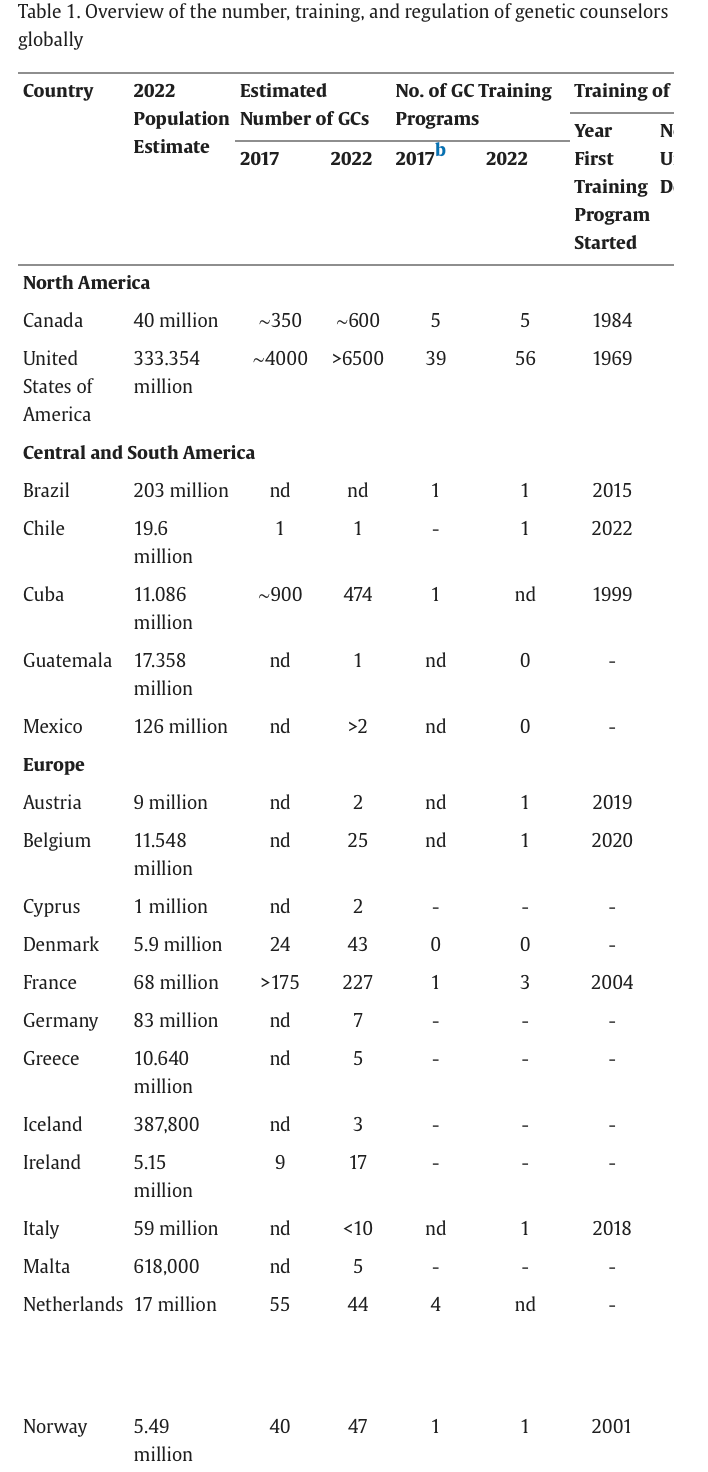
The global status of genetic counsellors in 2023: What has changed in the past 5 years? https://www.sciencedirect.com/science/article/pii/S2949774424010331

Ireland is poorly served by the HSE in relation to the number of clinical geneticists and genetic counsellors.

In fact the HSE does not even recognise Genetic Counsellors. Are they not aware that Genetics and Genomics is the future and requires to be funded accordingly.

It is now possible to prevent cancer occurring rather than waiting for it to occur. From a cost perspective it is a “no brainer” to ensure that genomic integration in routine health care happens now.