
The Macmillan Genomics Toolkit is designed to guide healthcare professionals to multiple education resources, pathway guidelines, clinical documents, patient support information and case studies to demonstrate the ‘Gold Standard’ of care once genomics has been embedded into practice. It has been developed in collaboration with expert healthcare professionals and the NHS England National Genomics Education team.
Author: Lynch Syndrome Ireland
Preventing Lynch Syndrome Cancers: Study Suggests Immunotherapy Could Work

Lynch syndrome is linked to cancers of the gastrointestinal tract, including colon cancer, rectal cancer, and stomach (gastric) cancer, and cancers of the small intestine.
It also increases the risk of uterine (endometrial) cancer, ovarian cancer, and some cancers of the upper urinary tract.
People with Lynch syndrome have such a high risk of developing cancer because they carry a gene mutation that prevents their cells from being able to repair genetic damage. This leads to a condition called DNA mismatch repair deficiency (MMRd).
These MMRd cancers have a lot of mutations, which makes them visible to the immune system. Therefore, drugs that enlist the immune system to fight cancer cells are particularly effective. Past research from Dr. Diaz and others found that tumors with MMRd are more likely to respond to checkpoint inhibitors. Thanks to that discovery, these drugs are now widely used to treat patients whose tumors have MMRd, including those whose cancers are due to Lynch syndrome.
In Lynch syndrome, high-quality colonoscopy surveillance is of utmost importance for Colorectal Cancer prevention

Background & aims: Colonoscopy reduces colorectal cancer incidence and mortality in Lynch syndrome carriers. However, a high incidence of postcolonoscopy CRC(PCCRC) has been reported. Colonoscopy is highly dependent on endoscopist skill and is subject to quality variability. We aimed to evaluate the impact of key colonoscopy quality indicators on adenoma detection and prevention of PCCRC in LS.
Conclusions: Complete colonoscopies with adequate bowel preparation and chromoendoscopy use are associated with improved adenoma detection, while surveillance intervals of less than 3 years are associated with a reduction of PCCRC incidence. In LS, high-quality colonoscopy surveillance is of utmost importance for CRC prevention.
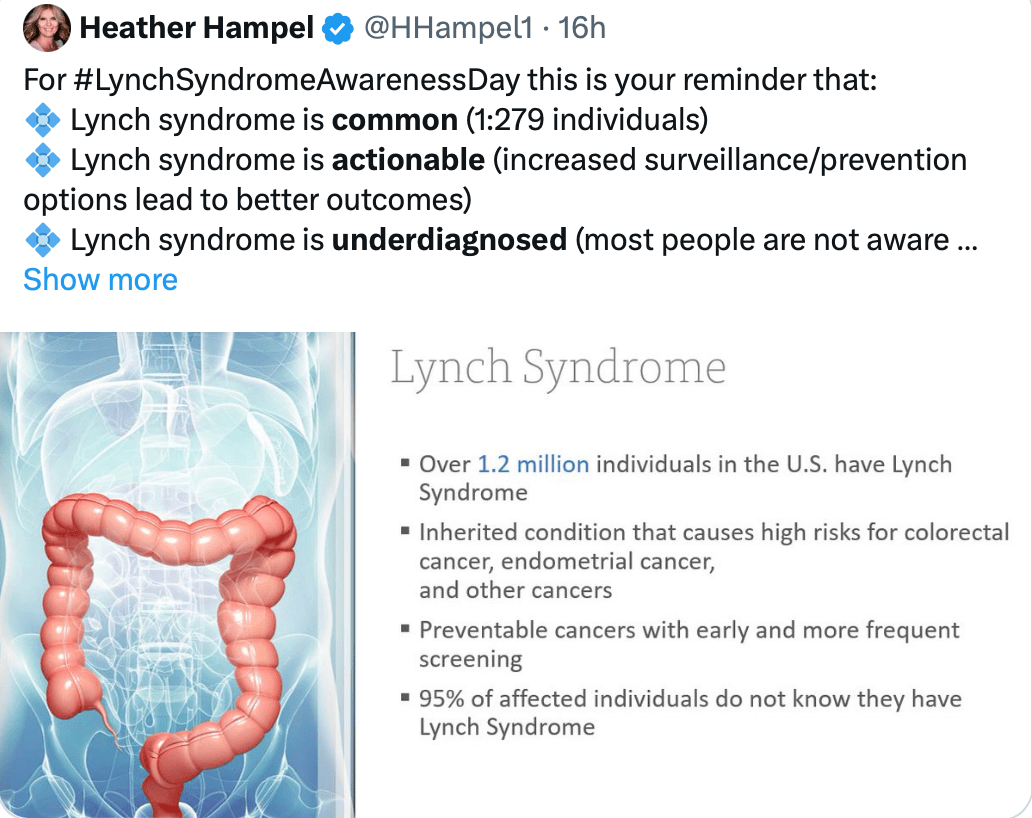
Lynch syndrome is Common, Actionable and Underdiagnosed
Family matter
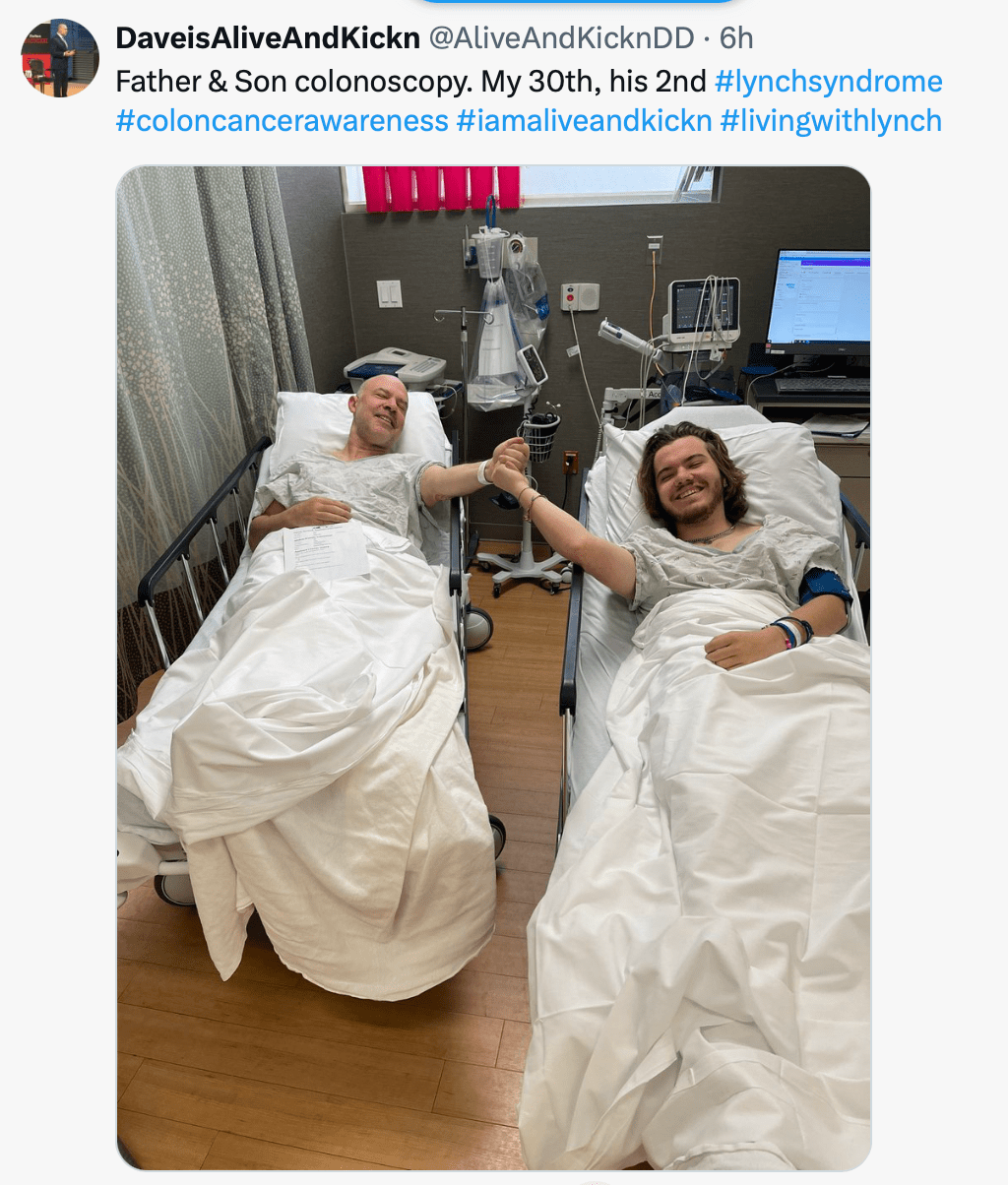
One Stop Colon and Endometrial Screening (OnCE): A prospective study of combined cancer screening for Lynch Syndrome

FRIGE scientists initiate study on hereditary cancer
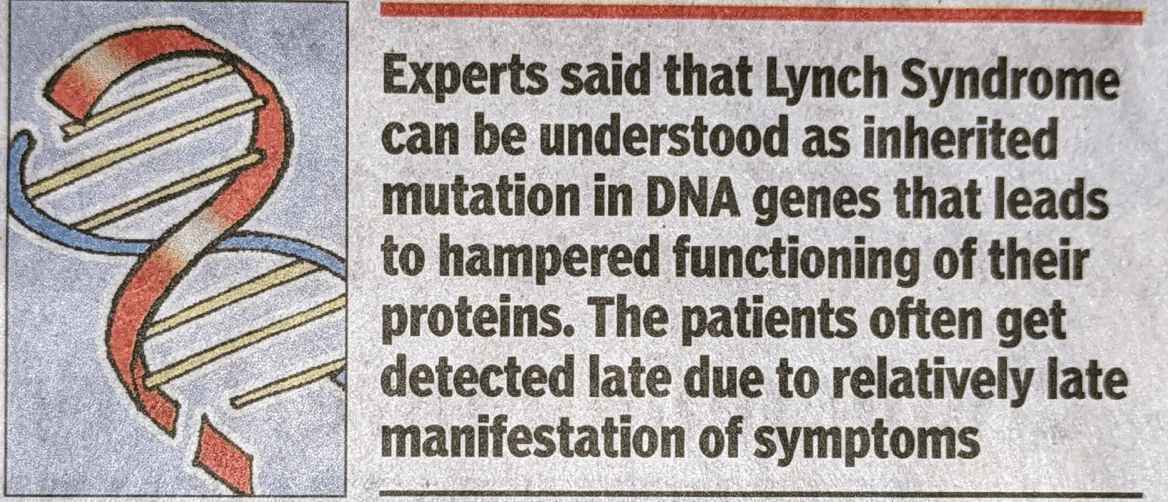
Identifying Lynch syndrome patients early on can be beneficial since there are several cancer screening and prevention strategies which can be used to reduce risk of developing cancer by half.
Considering the significant burden of this disease and opportunities to prevent cancers in these patients, the team at FRIGE lead by Dr. Harsh Sheth attracted funding to systematically study the prevalence of Lynch syndrome in cancers of oesophagous, stomach, liver, pancreas, small intestine and endometrium.
At this moment, we know very little about pan-cancer prevalence of Lynch syndrome and age-specific risk of cancers in the Indian population. It is astounding that Lynch syndrome can affect risk of cancers of oesophagous, stomach, liver, pancreas, small intestine and endometrium- which collectively is found in approximately 1 in every 8 patients seen in cancer clinics across India. Furthermore, it is remarkable considering that according to the WHO, nearly 1 in 300 people are estimated be Lynch syndrome carriers.
The study through its unique design will also collect data on patient’s lifestyle, diet and exercise, and will subsequently follow the patients for three years to see which factors contribute to the risk of cancer.
This would provide a tremendous opportunity to clinicians and genetic counsellors to offer personalised cancer surveillance and cancer risk reducing interventions to Lynch syndrome carriers of Indian origin.
The investigators through this study will provide the most comprehensive insight into the epidemiology and risk factors that contribute to cancer development in Lynch syndrome patients from India.
https://geneticcentre.org/news/frige-scientists-initiate-study-on-hereditary-cancer
Lynch Syndrome awareness week

Lynch syndrome is an inherited disease.
This means it is passed down from generation to generation, from parent to child. If one parent has Lynch syndrome and the other does not, there is a 50% chance that their child will have it.
It is among the most common hereditary cancer syndromes. It is estimated that 1 in 300 people have Lynch syndrome.
However, most people do not know they have it.
Indications that a family might have the disease is that on the same side of a family, there has been a diagnosis of cancer in multiple relatives. Besides, these cancers tend to appear at a young age.
This syndrome happens because of alterations passed down in genes that impact DNA repair, which is responsible for correcting cell DNA errors when copied. There are five genes implied in this, which are called:
- MLH1, MSH2, MSH6, PMS2 and EPCAM.
Having Lynch Syndrome doesn’t mean you will definitely get cancer, but it does significantly increase your risk. Those with Lynch Syndrome who do get cancer, often do so before the age of 50.
Life after cancer diagnosis
“I do not, however, consider myself to be a cancer survivor, and I do not hesitate to politely point this out to anyone who refers to me as one. ….. Generally, we prefer to be described as people who are living post-cancer (and indeed in some cases with cancer) and this subtle difference is very important, not just for us but for the all too many cancer patients who did not live to get the chance that we have.”
Finding a key word or phrase to replace survivor in the context of cancer is a regular discussion topic among healthcare professionals, patient representatives, researchers, counsellors and of course cancer patients. We are still searching.
Any ideas?
https://www.irishtimes.com/opinion/letters/2024/03/13/life-after-cancer-diagnosis
Germline Cancer Susceptibility Gene Testing in Unselected Patients With Colorectal Adenocarcinoma: A Multicenter Prospective Study
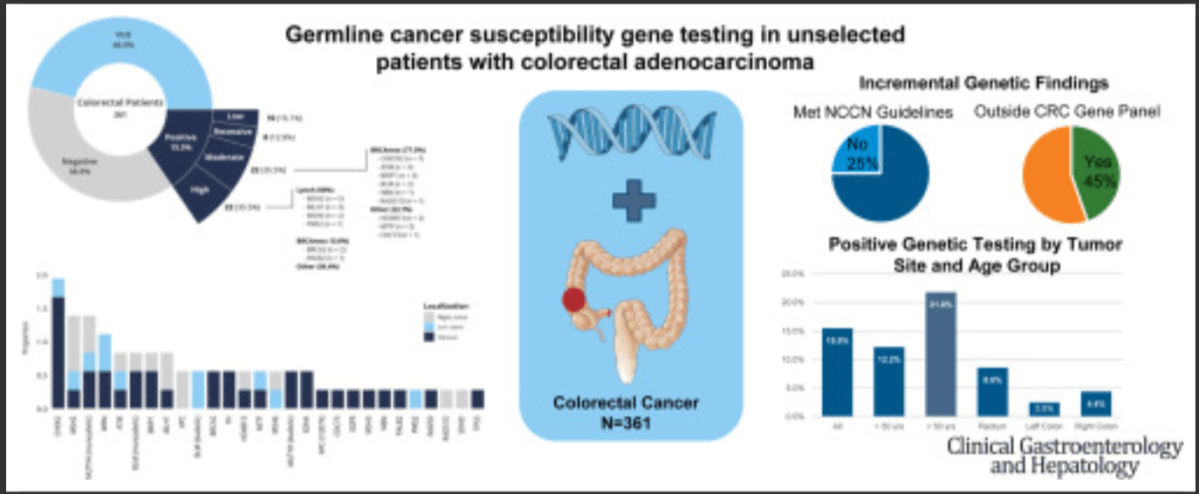
Hereditary factors play a role in the development of colorectal cancer (CRC). Identification of germline predisposition can have implications on treatment and cancer prevention.
Conclusions:
Universal multigene panel testing in CRC was associated with a modest, but significant, detection of heritable mutations over guideline-based testing. One in 10 patients had changes in their management based on test results. Uptake of cascade family testing was low, which is a concerning observation that warrants further study.
https://www.cghjournal.org/article/S1542-3565(21)00447-X/fulltext

