Very powerful sharing from Roberta.I think Genetic Counsellors everywhere will feel humbled that your experience was empowering & led to the correct diagnosis.
Highlights how important their role is, how families should know their cancer history & have the correct screening.
My experience with the genetic counselor was extremely empowering. Getting to explore the cancers in my family and my own personal health led to enlightenment, genetic testing, a diagnosis of polyposis syndrome and an opportunity to stop history repeating itself. 9/
— Roberta Horgan 🇮🇪 🇺🇦 (@HorganRoberta) April 5, 2023
Most people diagnosed with colorectal cancer are at least 65 years old, but I was only 45 when doctors discovered my cancer, which they believed had been growing inside me for at least a decade. As someone who exercises regularly and maintains a healthy diet, I was shocked by my diagnosis.My doctors and I assumed that it was simply a case of bad luck.
“as many as 10% of colorectal cancer patients have an inherited gene mutation that caused their illness. I should know, because I was one of them.”
“I’ve heard people say that they don’t want to get genetic testing because there’s no way to prevent hereditary cancer, therefore it’s better not to know. But that couldn’t be further from the truth.”
The BowelScreen programme will send an invitation to men and women aged 60 to 69 years to take part in the programme.
If you are aged between 60 to 69 years and living in Ireland, you can ring BowelScreen on Freephone 1800 45 45 55 to check your details are on the register.
A BowelScreen home test kit will be sent to you in the post with instructions about how to do the test.
If you have any concerns about your bowel health or symptoms you should contact your GP immediately.
Symptoms of bowel cancer
The symptoms of bowel cancer can include:
Bleeding from the back passage or blood in your poo;
A change in normal bowel habits;
A lump that your doctor can feel in your back passage or abdomen (more commonly on the right side);
A feeling of needing to strain in your back passage (as if you need to pass a bowel motion), even after opening your bowels;
Losing weight;
Pain in your abdomen or back passage; or
A lower than normal level of red blood cells (anaemia).
The four primary care (PC) core functions (the ‘4Cs’, ie, first contact, comprehensiveness, coordination and continuity) are essential for good quality primary healthcare and their achievement leads to lower costs, less inequality and better population health. However, their broad definitions have led to variations in their assessment, in the innovations implemented to improve these functions and ultimately in their performance.
Conclusion:
Providing clear, well-defined operational elements for these 4Cs to measure their achievement and improve the way they function, and identifying the complex network of interactions among them, should contribute to the field in a way that supports efforts at practice innovation to optimise the processes and outcomes in PC.
Individuals with Lynch syndrome are at increased risk for multiple cancer types (common ones shown here). Note: MLH1 has the highest pancreatic cancer risk, MSH2 has the highest urothelial & prostate cancer risk, & PMS2 risks are mainly CRC & EC.
Dana-Farber’s Matt Yurgelun, MD, discusses Lynch Syndrome research and the challenges of a Lynch Syndrome diagnosis. Dana-Farber’s Lynch Syndrome Center offers genetic testing to help identify Lynch Syndrome carriers who may be at increased risk for a variety of cancers.
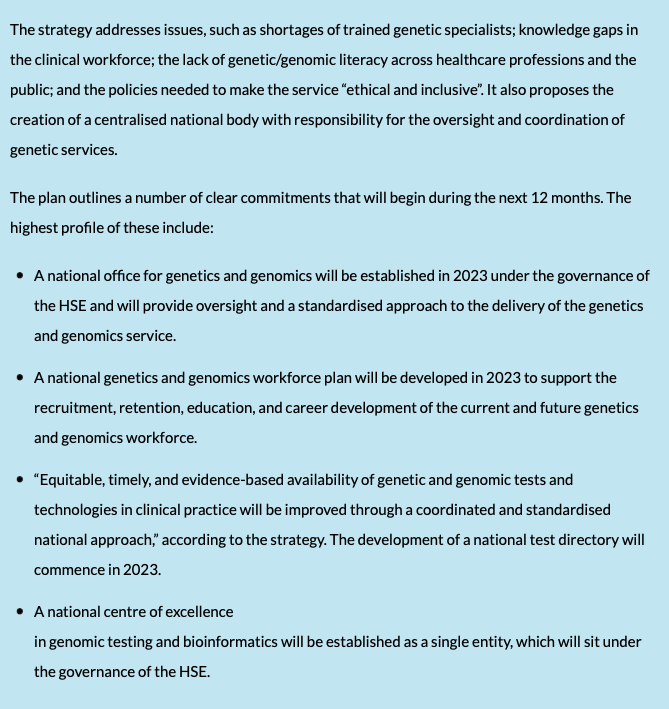
According to the HSE’s website, there is “room for improvement” in the medical genetics and genomics services offered in Ireland when compared to other European countries. (perhaps an understatement???)
The strategy states: “To date, Ireland has made some progress in developing its genetic and genomic services, with pockets of excellence evident throughout the country. However, to fully realise the benefits of genetics and genomics, there is an urgent need to mainstream them so that they can become an integral part of our routine care delivery.”
Strategies are very helpful in healthcare because a strategy gives you a sense of direction….
Provided for under this strategy is:
the creation of a new national office for genetics and genomics
the transition of genetics and genomics into routine care delivery
targeted workforce planning and development
ensuring Public and Patient Involvement (PPI) and partnership
the strengthening of Ireland’s infrastructure to drive advances in this area.
On the impact of the national office, Dr Henry predicted there will be a high level of activity “in year one, and the office will drive it”. He said it will “become the engine of what happens in year two, three, four, and later”.
Also, the office will “advocate” and “compete for funding each year”.
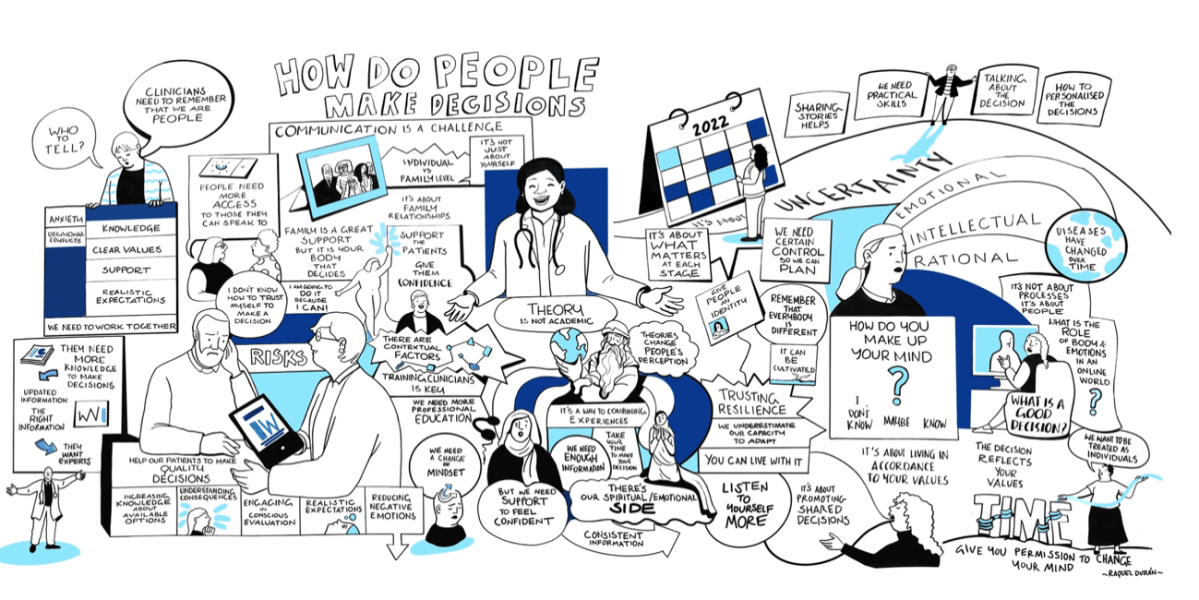
As our understanding of disease evolves, it is very clear that genomics will inform much of the decision-making