

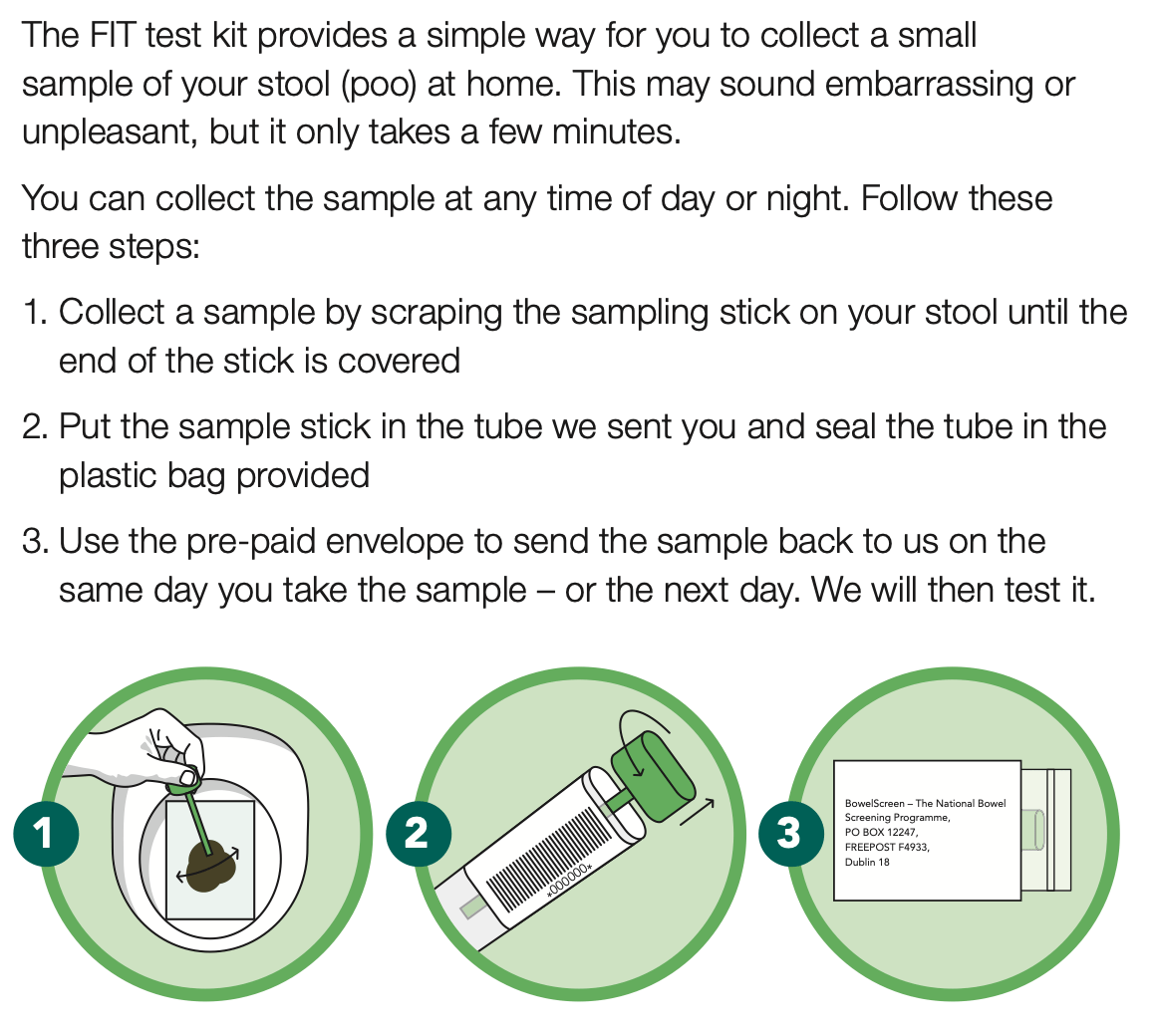
According to the 2023 National Cancer Registry of Ireland (NCRI) report, around 2,500 men and women are diagnosed with bowel cancer in Ireland every year 1,452 men and 1,047 women. To learn more about the condition and some helpful advice to support you at every step of your bowel cancer journey, click below.
Category: Colon
National Screening Service
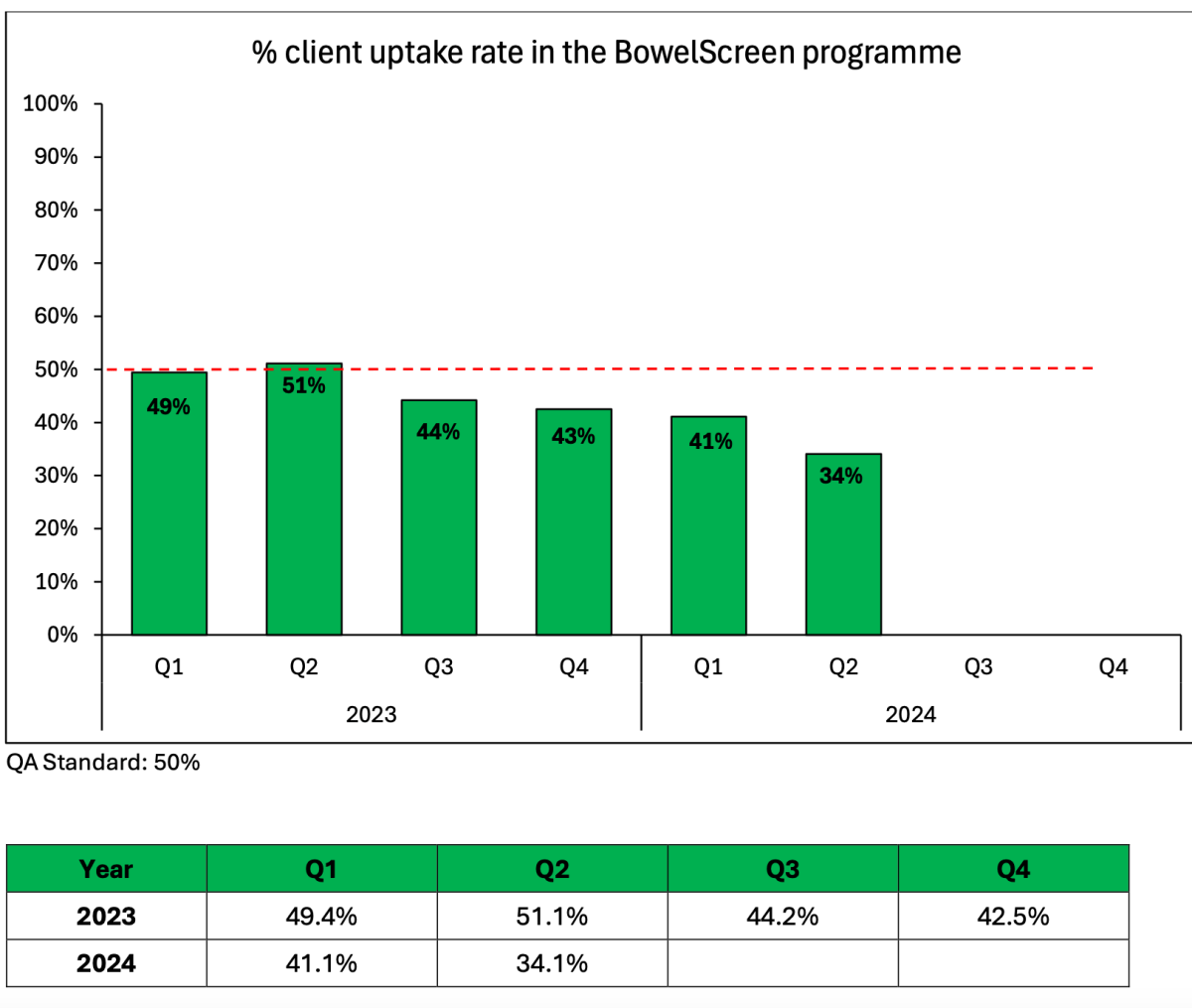
Annual report available at…
Lots of lovely words and Pics…unfortunately uptake of Free Bowel screen is still very low…why?
Lynch Choices

- Lynch syndrome is an inherited condition that increases the chance of developing certain cancers. The type of cancer depends on the genes involved.
- This website helps people with Lynch to make choices that are right for them. It is designed to be used with support from the genetics service, GPs, healthcare teams in the community, charities and patient groups.
- If you are concerned about Lynch but have not been diagnosed, please speak to your GP or genetics service.
- You’ll find two sections which help you think about your choices at home, so you are ready to talk through these choices with a GP, genetics or other specialist.
- There are also another six sections providing support and information for people with Lynch. These sections may also be useful to family members and healthcare professionals of people with Lynch.
https://lynchsyndromeireland.wordpress.com/wp-admin/post-new.php
Lynch Syndrome News

March is Colorectal Cancer Awareness Month, a time when healthcare professionals emphasize the importance of regular screenings for early detection and prevention of colorectal cancer. Recent studies have shown an increase in colorectal cancer cases among individuals under 50, making awareness and early detection even more critical.
Changes in faecal haemoglobin values over sequential rounds of faecal immunochemical tests (FIT) in a surveillance population
Objective: Colorectal cancer (CRC) screening enables resection of polyp precursor lesions, preventing cancer or detecting it earlier. Post-polypectomy, people can remain at increased CRC risk, prompting surveillance colonoscopy. Less invasive faecal immunochemical tests (FIT) could reduce the burden of surveillance colonoscopy. We investigated whether changes in FIT values over multiple rounds were associated with advanced colorectal neoplasia (ACN) detection.
Conclusion: No change in FIT result across multiple rounds was associated with a low ACN detection rate, while a serial increase was associated with higher ACN detection rates. Further research should consider if sequential rounds of FIT could be used for stratifying individual risk.
New report highlights UK-wide picture for people affected by Lynch syndrome

Identifying people with Lynch syndrome has important implications for the person affected, and their family members. It is also a crucial part of the puzzle to improve survival of bowel cancer, through increasing early detection in people with a high risk of developing the disease.
Since 2018, considerable progress has been made, with 90% of UK bowel cancer
patients being tested for Lynch syndrome in 2022/23. However, significant challenges with testing family members and offering routine surveillance colonoscopies still require urgent attention.
Testing all newly diagnosed bowel cancer patients for Lynch syndrome (also called universal testing) and routine surveillance are vital to meeting the early diagnosis ambitions set out by governments and health services across the UK.
Colonoscopies – Why bother?

It just might save your life.
During my third colonoscopy colon cancer was discovered and it had advanced to my Lymph Nodes. I had no symptoms.
Why was I having colonoscopies? I had a family history of colon cancer and my sibling had tested positive for Lynch syndrome (an inherited predisposition to certain types of cancers including colon and endometrial.
I can understand why many people are nervous about getting colonoscopies. Some wonder how long a colonoscopy will take, how best to prepare for the procedure, how much time you’ll need to take off from work and how embarrassing or disruptive this important cancer screening procedure will be.
Why should people get colon cancer screenings?
The answer is simple: colon cancer screenings can detect colorectal cancer early and prevent unnecessary deaths. Colorectal cancers also are highly preventable and treatable if detected early. In fact, if doctors detect pre-cancerous polyps during a colonoscopy, they can remove the polyps during the procedure.
Prior to Colonoscopy:
Some may think…it’s not pleasant(although having had more than 15 to date I can say I do not find it so, but including the preparation, in most cases you’re spending less than 24 hours to help prevent cancer.
Typically, people prepare for a colonoscopy in their homes the day or the night before along with amending their diet for a few days prior to the procedure. The Bowel preparation prescribed — which involves drinking a lot of water along with prep – can take a number of hours . That’s because you’ll be peeing and pooping out all the waste from your body, so you’ll have a clean, empty colon.
Colonoscopy Procedure:
The actual procedure is quick – usually less than 30 minutes. The doctor inserts a scope into your rectum. You are fully sedated prior to the start of the procedure and you wake up after it is over and you usually don’t remember any of the procedure. For nearly everyone, the actual colonoscopy is painless and relatively quick. You wake up, and you’re done. Aside from not being able to drive themselves home from the procedure, most people feel well and are able to eat and drink normally after a colonoscopy.
What are polyps and how common are they?
Polyps are like skin tags that form on the lining of the colon. Some of them are pre-cancerous, which means that over a period of time, they could become cancerous. So, when polyps are found during a colonoscopy, they can easily remove the vast majority of them. That’s how colon cancer is prevented through colonoscopy.”
https://www2.hse.ie/conditions/bowel-screening/colonoscopy-after-bowel-screening/
Neoadjuvant immunotherapy for locally advanced/metastatic mismatch repair deficient colorectal cancer: a two-year institutional experience.

Loss of MMR functioning, termed MMR deficiency (MMRd), leads to microsatellite instability (MSI),2 a hypermutated phenotype, and increased cancer susceptibility. Lynch syndrome patients are at an increased risk for a number of different malignancies, but most commonly develop colorectal and endometrial cancer.
Findings add to the growing body of evidence in support of neoadjuvant immune checkpoint inhibitors for MMRd CRC, and highlight the importance of screening all CRC for MSI-H/ MMRd.
Influence of preoperative Lynch syndrome diagnosis on surgery in patients with colorectal cancer.
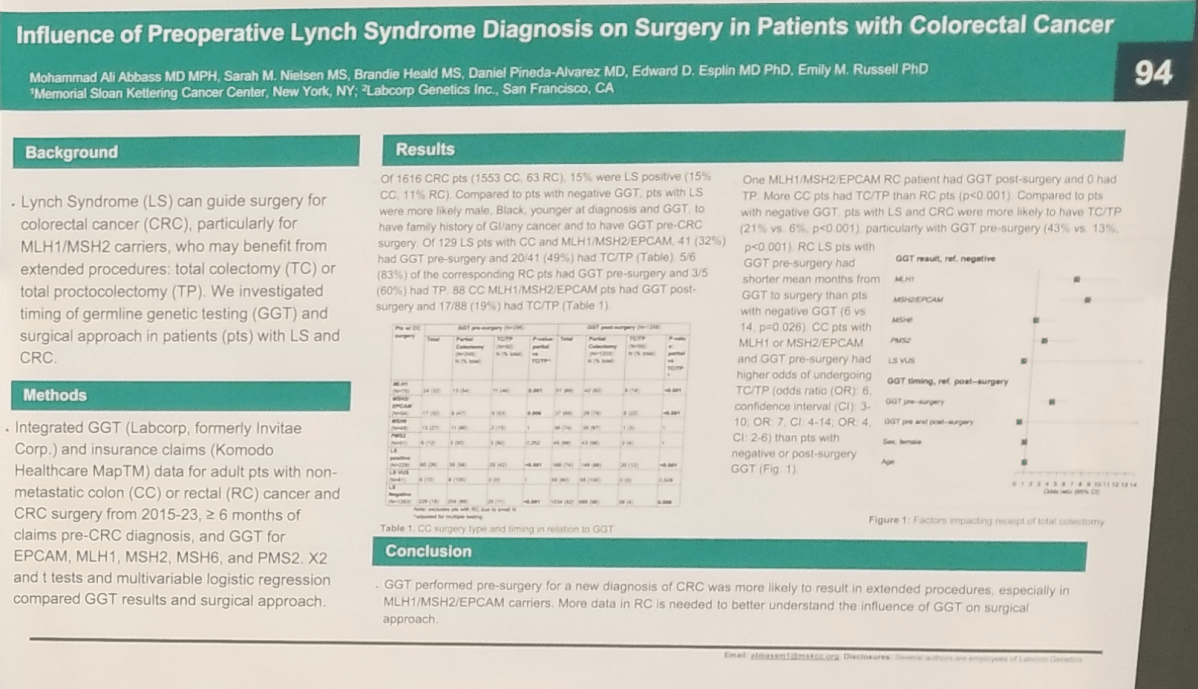
Lynch Syndrome (LS) can guide surgery for colorectal cancer (CRC), particularly for MLH1/MSH2 carriers, who may benefit from extended procedures: total colectomy (TC) or total proctocolectomy (TP).Investigated timing of germline genetic testing (GGT) and surgical approach in patients (pts) with LS and CRC.
Conclusions: GGT performed pre-surgery for a new diagnosis of CRC was more likely to result in extended procedures, especially in MLH1/MSH2/EPCAM carriers. More data in RC is needed to better understand the influence of GGT on surgical approach.
Young Onset Gastrointestinal Cancers: A needs analysis

The global incidence of Young Onset ( YO) cancers diagnosed in adults under 50 years, is increasing for unknown reasons.
This study(88 participants) assessed the holistic needs of these patients through a mixed methods approach.
Conclusions: This needs analysis highlights the importance of specialised clinical pathways for young onset GI cancer patients focusing on these unique and complex needs. Financial supports, conversations regarding sexual health/function, fertility preservation and psychosocial support are critical areas requiring structured intervention.
 Lynch Syndrome Ireland