Lynch Choices

  • Lynch syndrome is an inherited condition that increases the chance of developing certain cancers. The type of cancer depends on the genes involved.
  • This website helps people with Lynch to make choices that are right for them. It is designed to be used with support from the genetics service, GPs, healthcare teams in the community, charities and patient groups.
  • If you are concerned about Lynch but have not been diagnosed, please speak to your GP or genetics service.
  • You’ll find two sections which help you think about your choices at home, so you are ready to talk through these choices with a GP, genetics or other specialist.
  • There are also another six sections providing support and information for people with Lynch. These sections may also be useful to family members and healthcare professionals of people with Lynch.

https://lynchsyndromeireland.wordpress.com/wp-admin/post-new.php

If I have Lynch syndrome, will I get cancer?

Not everyone with Lynch syndrome will develop cancer, but you have an increased risk compared to the general population. People with Lynch syndrome have an increased risk of developing some types of cancer, such as:

• bowel (colorectal)

• endometrial or uterine

• ovarian cancer.

Lynch syndrome causes 1 in every 35 cases of bowel cancer, 1 in every 50 cases of endometrial cancer.

Your risk of developing cancer depends on which gene is affected, your age and being male or female.

Check out http://www.plsd.eu

Irish Network of Gynaecological Oncology(INGO)

Congratulations to INGO who was selected as the winner of the Patient Project of the Year Award at the Irish Healthcare Awards 2024 for it’s commitment to raising awareness of gynaecological cancer.

INGO comprises over 30 of Ireland’s foremost gynaecological cancer campaigners, researchers and patient advocates(including Lynch Syndrome Ireland).

Check out http://www.thisisGO.ie an online personalised resource for you and yours who have been impacted by a gynaecological cancer.

Understanding Molecular Classifications of Gynecologic Cancers

Endometrial Cancer

Similar to ovarian cancer, there can be genetic causes at the root of an endometrial cancer diagnosis. It is most commonly a condition called Lynch syndrome, which, according to the Centers for Disease Control and Prevention(USA), is a hereditary condition that predisposes people to colon, endometrial and other cancers.

Lynch syndrome-related cancer may have DNA mismatch repair deficiency (dMMR) and microsatellite instability (MSI or MSI-H). dMMR occurs when DNA strands cannot be properly replicated, leading to mutations. These mutations result in MSI-H cancers.

https://www.curetoday.com/view/understanding-molecular-classifications-of-gynecologic-cancers

Treating advanced dMMR Endometrial cancer.

Lynch syndrome  is a dominantly inherited cancer syndrome caused by germline pathogenic variants of mismatch repair (MMR) genes. In women with LS, gynaecological cancers are as common as gastrointestinal cancers.

Gynaecological cancer is often the first cancer diagnosis in women with Lynch syndrome.

Reimbursement of new cancer meds is an area where Ireland is increasingly falling behind. Are they expensive? Yes. Is every new ‘innovative’ drug worth its price tag in terms of real world outcomes? No. It’s complex. But now there’s a growing public vs private access divide. @PriscellaLynch

Very informative thread…. https://x.com/mccarthymt7/status/1853202348484747502

List of anti-cancer drugs that are approved by the HSE for the treatment of endometrial cancer in Ireland. Except for dostarlimab. The protocol was included here on the basis of EMA approval and to offer guidance to private hospitals, where the drug is available for this indication. Probably.”

“Summary: Dostarlimab is very effective in treating advanced dMMR endometrial cancer. The public healthcare system in Ireland cannot afford this drug for public cancer patients (it has been fully assessed by the HSE reimbursement process and declined). Private cancer patients can access this treatment. In public hospitals we instead will continue to use less effective therapies, that are not EMA approved.”

LS-related tumours are characterised by a highly immunogenic tumour-environment that can be targeted by specific immune checkpoint inhibitors.


Lynch syndrome diagnostic testing pathways in endometrial cancers: a nationwide English registry-based study

Background: For female patients with Lynch syndrome (LS), endometrial cancer (EC) is often their first cancer diagnosis. A testing pathway of somatic tumour testing triage followed by germline mismatch repair (MMR) gene testing is an effective way of identifying the estimated 3% of EC caused by LS.

Conclusion: This analysis highlights the regional variation in recorded testing, patient attrition, delays and missed opportunities to diagnose LS, providing an informative baseline for measuring the impact of the national guidance from the National Institute for Health and Care Excellence on universal reflex LS testing in EC, implemented in 2020.

https://jmg.bmj.com/content/early/2024/10/21/jmg-2024-110231

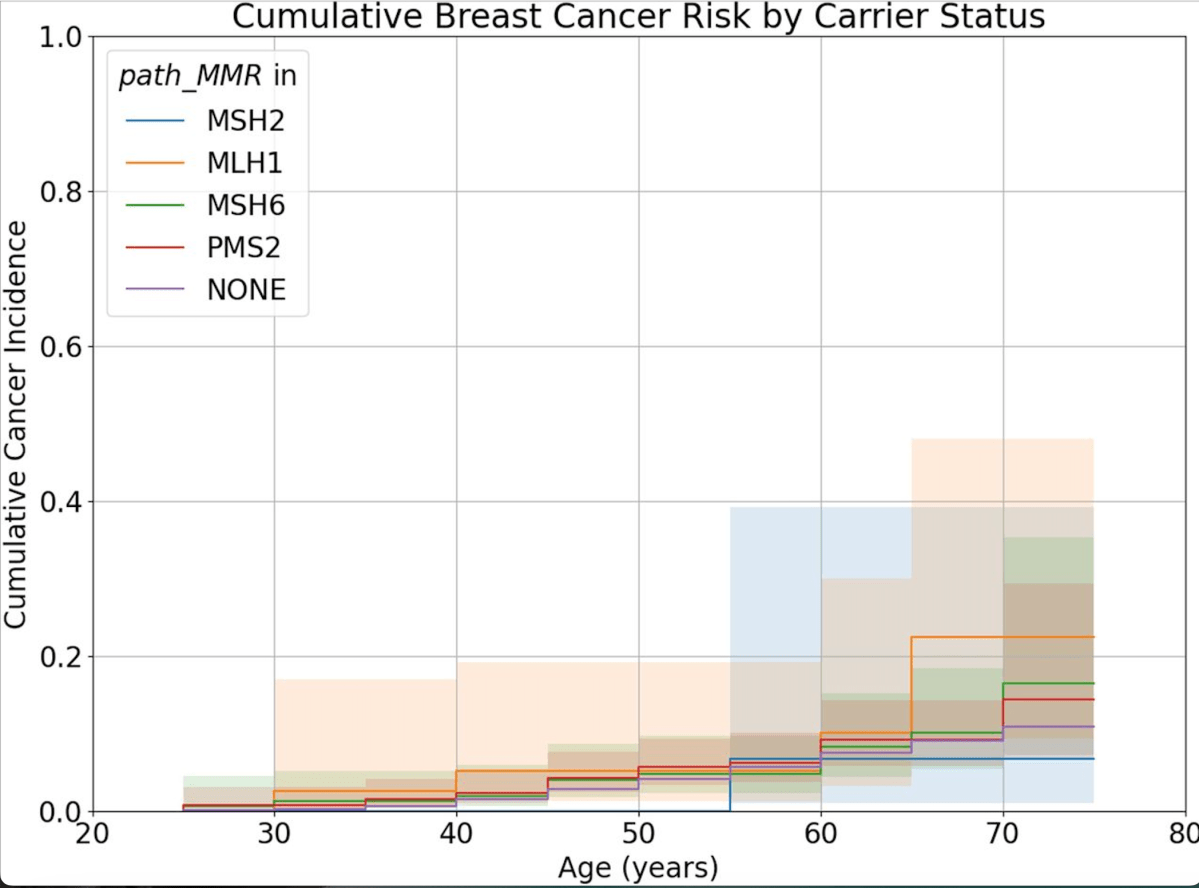
Estimating cancer risk in carriers of Lynch syndrome variants in UK Biobank

Conclusion:

 These results support offering incidentally identified carriers of any path_MMR surveillance to manage colorectal cancer risk.

Incidentally identified carriers of pathogenic variants in MLH1MSH2 and MSH6 would also benefit from interventions to reduce EC risk. The results suggest that Breast Cancer is not an LS-related cancer.

https://jmg.bmj.com/content/61/9/861

What increases my risk of uterine (womb) cancer?

The cause of uterine (womb) cancer is unknown. But there are certain things called risk factors that can increase your chance of developing the disease. These include:

  • Age: It is more common in women after the menopause between the ages of 50 and 64.
  • Being overweight: If you are overweight, your risk of uterine cancer is increased.
  • Hormone replacement therapy (HRT): If you are taking oestrogen-only HRT for a long time after the menopause, your risk of uterine cancer is slightly increased.
  • Family history: Family history of uterine cancer in a first degree relative (mother, sister, daughter). If you have an inherited faulty gene, it raises your risk of developing uterine or bowel cancer. In a small number of families, this faulty gene can cause a condition called Lynch Syndrome .
  • No pregnancies: If you have not had children or never been pregnant, your risk of uterine cancer is increased.
  • Polycystic ovaries: If you have polycystic ovaries, your risk is increased. This is a condition where cysts grow in the ovaries.
  • Menstrual history: If your started your periods early in life and / or started your menopause later, your risk is higher. 

https://www.cancer.ie/cancer-information-and-support/cancer-types/uterine-womb-cancer/what-increases-my-risk-of-uterine-womb-cancer

Lynch Choices

  • Lynch syndrome (‘Lynch’) is an inherited condition that increases the chance of developing certain cancers. The type of cancer depends on the genes involved.
  • This website helps people with Lynch to make choices that are right for them. It is designed to be used with support from the genetics service, GPs, healthcare teams in the community, charities and patient groups.
  • If you are concerned about Lynch but have not been diagnosed, please speak to your GP or genetics service.
  • Each session helps you think about your choices at home, so you are ready to talk through your choices with a GP, genetics or other specialist.

https://canchoose.org.uk

 End the Stigma surrounding gynaecological cancers on this World Gynaecologic Oncology Day 

 One in Seven Women in Ireland Avoid GP Visits Due to Embarrassment Discussing Symptoms.

  • Almost 2,000 Women Diagnosed with Gynaecological Cancers Across Ireland Annually 
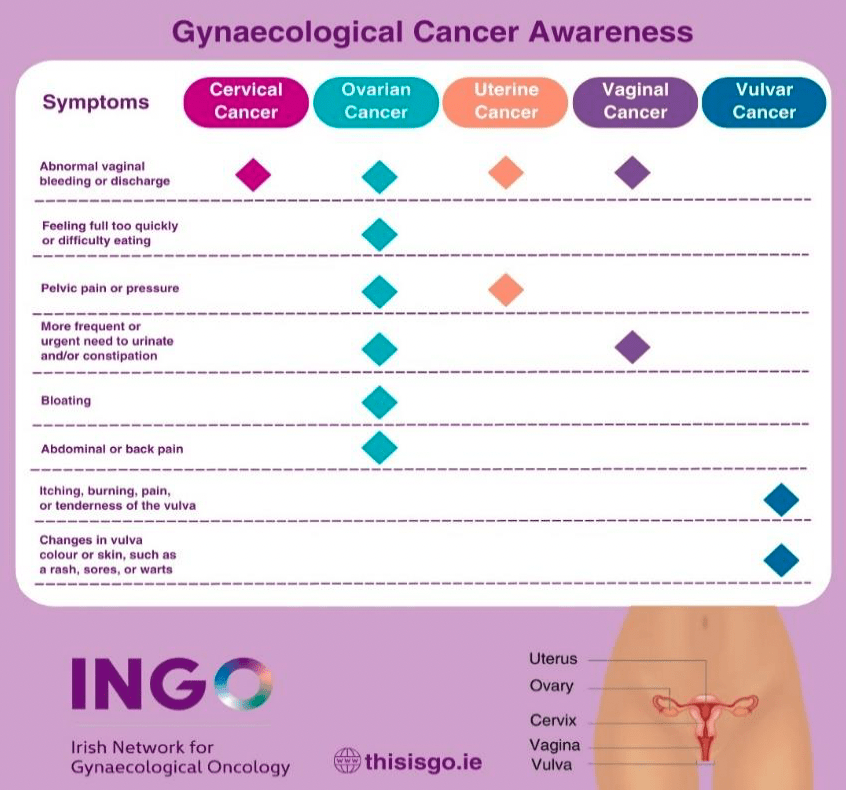
  • Only two in five recognise abnormal bleeding or discharge as symptom of uterine cancer 
  • Only a quarter of women identify changes in urinary habits as symptom of vaginal cancer 

Today is World GO Day or World Gynaecologic Oncology Day where patients and advocates around the globe unite to raise awareness about all five gynaecological cancers (vulval, vaginal, cervical, uterine and ovarian) and their risk factors and to combat the stigma associated with gynaecological cancer.

The Irish Network for Gynaecological Oncology (INGO), a voluntary coordination body consisting of over 30 of Ireland’s foremost gynecological cancer campaigners, researchers and patient advocates aim to educate people about the importance of sharing information in relation to prevention, symptoms, early diagnosis and treatment. 

Research commissioned by INGO shows that stigma surrounding gynaecological cancers and their symptoms can prevent some women from attending their doctor with warning signs. 

One in seven women in Ireland said they would not attend a doctor with cancer warning signs as they find it embarrassing to discuss symptoms, and one in five would not go to the doctor as they do not want to talk to the GP receptionist about symptoms. Furthermore, one in three would not attend if they found it difficult to get an appointment with a particular doctor.

This World GO Day, Fri 20th September, INGO are hosting a free webinar at 1pm for anyone who would like to learn more about the five gynaecological cancers and their symptoms, with insights from cancer patients and medical professionals.

Register for the webinar at http://www.bit.ly/GO_symptoms 

http://www.isgo.ie/irish-network-for-gynaecological-oncology/ 

#WorldGODay2024