The increasing role of cancer genetic counsellors

November 14 was Genetic Counsellor Awareness Day in Ireland and around the world. It’s important to note that it is an ‘awareness’ day rather than an ‘appreciation’ day because genetic counselling is still an under-recognised field. Genetic counsellors are healthcare professionals who provide information and support to families and individuals who are at risk for or affected by a genetic condition.

We have 17 cancer genetic counsellors and two genetic counselling assistants at City of Hope to handle this volume. In contrast, there are five cancer genetic counsellors at St James’s Hospital in Dublin.

Dr O’Shea said the St James’s cancer genetic service welcomed Minister for Health Stephen Donnelly’s announcement of funding to implement the Hereditary Cancer Model of Care in 2025. Genetic counsellors are a key part of delivering optimal oncology care. To respond to the demand for access to cancer genetic testing and counselling, permanent funding for 20 cancer genetic counsellors in oncology care is required nationally to serve a population of 5.3 million people. Additionally, a step forward to increase the capacity of genetic counsellors in the Irish health system is a HSE-funded training pathway.
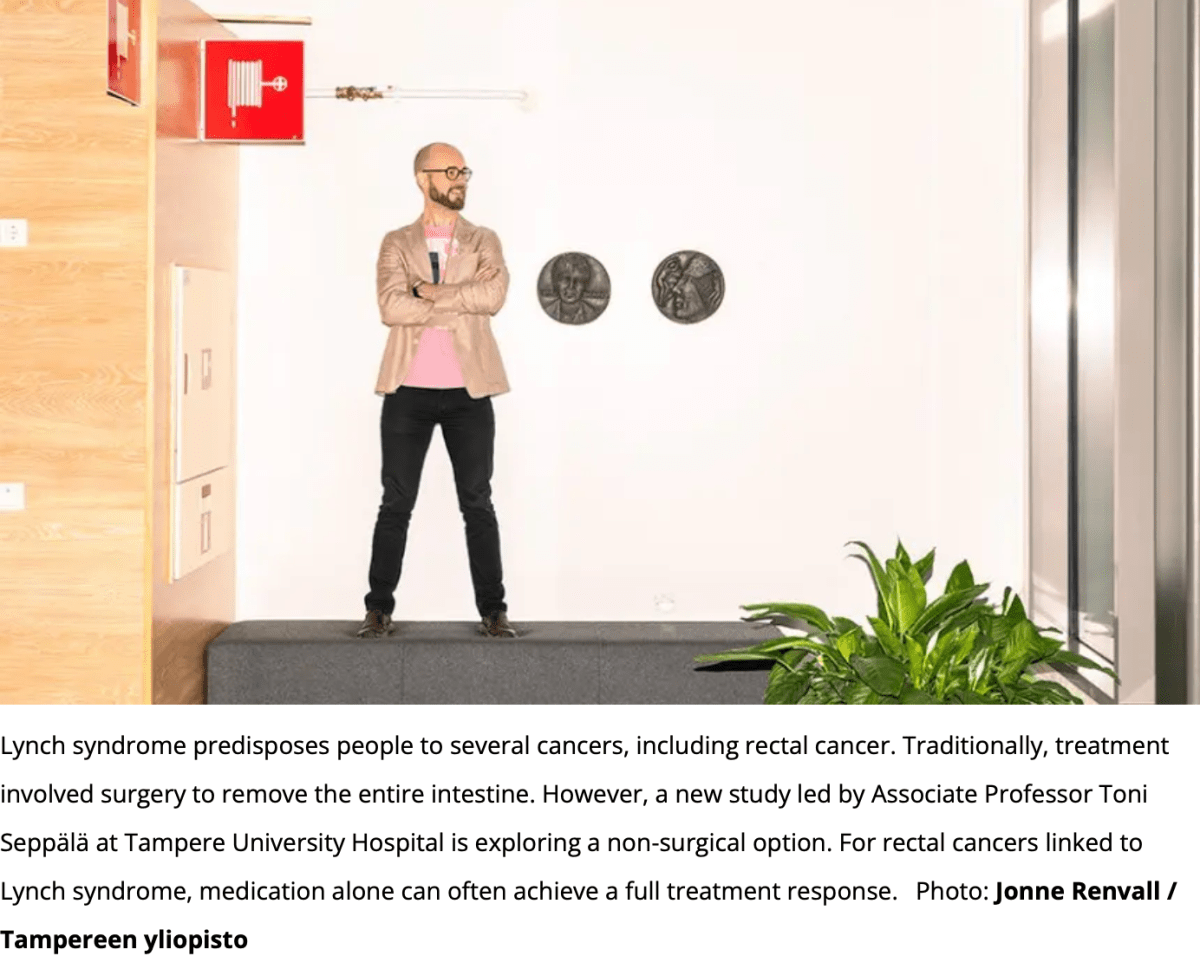

A genetic mutation can save lives – Lynch syndrome paves the way for cancer vaccines and personalised treatments

While Lynch syndrome increases the risk of cancer for its carriers, it also provides a unique opportunity to understand disease mechanisms. It is likely that the first preventive cancer vaccine will be specifically developed against cancers caused by Lynch syndrome.

From the individual’s perspective, Lynch syndrome and its prevalence in the population is not a positive thing, but from the research standpoint it is, meaning that the disease can also benefit patients.

“Currently, there is intense development work on cancer-preventive vaccines, which will soon be tested in large patient groups. The most progress has been made with cancers linked to Lynch syndrome. It will be a major breakthrough when we can prevent cancers that we know are likely to develop,” Seppälä says.

In Lynch syndrome, identifying carriers of the genetic mutation is vital because healthcare interventions can greatly benefit these patients. Generally, there needs to be greater awareness in society about the importance of molecular profiling. 

https://www.tuni.fi/en/news/genetic-mutation-can-save-lives-lynch-syndrome-paves-way-cancer-vaccines-and-personalised

The Cancer Gene More Men Should Test For

BRCA mutations are inextricably linked with breasts, but they can also lead to cancer in the pancreas, the prostate, and maybe more parts of the body.

As many as 60 percent of men with changes in BRCA2 develop prostate cancer, yet men are generally far less aware than women that BRCA mutations can affect them at all.

Roughly one in 400 people carry a harmful mutation in BRCA1 or BRCA2, and half of them are men. But women are far more likely to have been tested for the mutations—up to 10 times as likely, according to one study.

Mainstreaming cancer genetics: feasibility of an advanced nurse practitioner-led service diagnosing Lynch syndrome from colorectal cancer in Ireland

https://link.springer.com/epdf/10.1007/s10689-024-00427-7?sharing_token=vcZ4EunQc5ITtewhq4GRV_e4RwlQNchNByi7wbcMAY5LEtPAgAgZTSbin5mUumNCFiB1qx9wTaz4jrQEKpjM0RmHU8LXULyUeLp18KKlkM4J6QaWK0NN9Y0ti8jkfM8NanE_4j6sCuve_66FVrquRuZADCeNjpz0Dj6PlMYN0dE%3D

Conclusion: Access to and timely delivery of specialist cancer genetics services represents a substantial unmet need in Ireland, the requirement for which is projected to increase significantly over the coming years. Our institutional experience confirms the feasibility, efficiency and efficacy of an ANP-led mainstreamed model of care for hereditary colorectal cancer. The development of this service aligns with national healthcare priorities to deliver timely and appropriate cancer genetics services in a coordinated way integrated with the patient’s cancer care pathway. Development and expansion of similar services would facilitate enhanced delivery of cancer genetics services into routine clinical practice, ensuring uniformity, safety, high quality, and cost-effective care. However, this will necessarily require appropriate resourcing and investment.

In an Ideal World: We would have….

  • A central point to support people who are affected by Lynch Syndrome or other Genetic Cancer defects.
  • An integrated Cancer Genetics service.
  • An increased Genetics workforce.
  • A Genetics Testing center in Ireland.
  • A comprehensive IT system to Manage/Track and generally improve the collection/storage of relevant information.
  • Improved awareness by Public and Medics of Genetics.
  • A dedicated Pathway for people with a genetic cancer issue.
  • Improved support available to help in relaying a diagnosis to the wider family.
  • A national BioBank to improve/help research in this area.

MyLynch: A Patient-Facing Clinical Decision Support Tool for Genetically-Guided Personalized Medicine in Lynch Syndrome (USA)

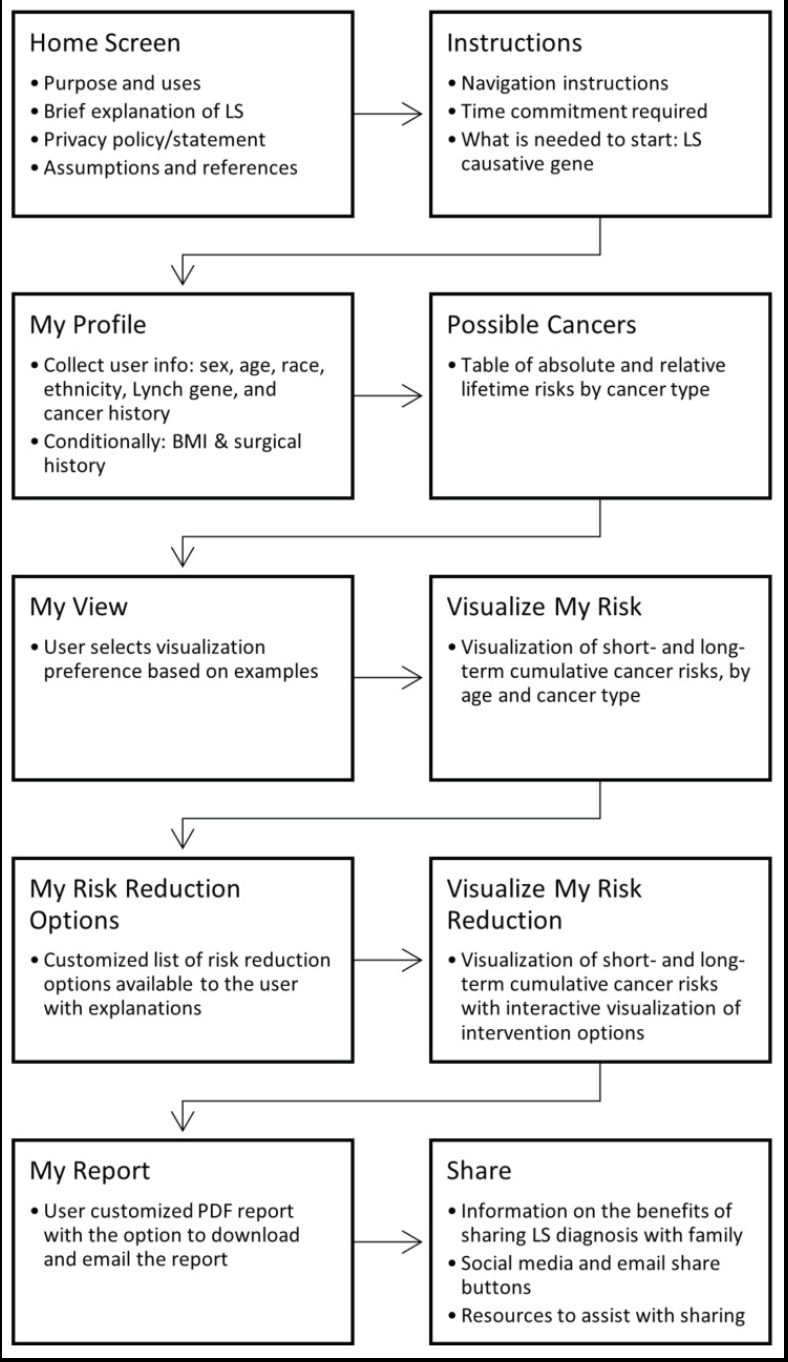
MyLynch, a patient-facing clinical decision support(CDS) web application that applies genetically-guided personalised medicine(GPM) for individuals with Lynch syndrome. 

As genetic panel testing becomes more widely available, GPM will play an increasingly important role in patient care, and CDS tools offer patients and providers tailored information to inform decision-making.

MyLynch provides personalised cancer risk estimates and interventions to lower these risks for patients with LS.

https://pubmed.ncbi.nlm.nih.gov/36672340/

A mainstreaming oncogenomics model: improving the identification of Lynch syndrome

“Mainstreaming” is a proposed strategy to integrate genomic testing into oncology. The aim of this paper is to develop a mainstreaming oncogenomics model by identifying health system interventions and implementation strategies for mainstreaming Lynch syndrome genomic testing.

https://pubmed.ncbi.nlm.nih.gov/37305562/

The English National Lynch Syndrome Transformation Project(UK)

Lynch syndrome affects approximately 1 in 400 individuals and predisposes to multiple cancers including colorectal, endometrial, gastric, small bowel and other tumours. Although a common condition, it is estimated that only 5% of patients with LS are known in the UK.

Lifelong care of people diagnosed with this condition depends on awareness of who this population is.

There is consistent evidence of the cost-effectiveness and clinical benefit of a structured diagnostic pathway in patients with LS following a diagnosis of cancer linked to cascade testing in families. 

Barriers to diagnosis and a manifest deficiency in care for those with LS has been described in the literature as a ‘diffusion of responsibility’. 

An approach to deliver effective diagnosis is to develop ‘mainstreaming’ models whereby patients are offered constitutional genetic testing by their cancer treating teams locally, rather than relying on referral of eligible patients to tertiary services such as clinical genetics.

This has many possible advantages including shorter timescale to diagnosis, effective communication provided through an existing relationship between patients and their clinical teams, and ensuring that eligible patents access testing. This model is associated with high levels of acceptability for patients and clinicians, however relies on the development or new skills by cancer teams.

https://www.bsg.org.uk/clinical-resource/(sss)-english-lynch-syndrome-project

Multigene Panel Testing Yields High Rates of Clinically Actionable Variants Among Patients With Colorectal Cancer

Purpose:

Whether germline multigene panel testing (MGPT) should be performed in all individuals with colorectal cancer (CRC) remains uncertain. Therefore, we aimed to determine the yield and potential clinical impact of MGPT across a large, diverse CRC cohort.

Conclusion

To our knowledge, this is the largest study(34,244) to date examining MGPT in CRC, demonstrating high rates of clinically actionable variants detected across all age groups, panel sizes, and racial/ethnic groups. This work supports consideration of broadening germline genetic testing criteria for individuals with CRC.

https://ascopubs.org/doi/10.1200/PO.22.00517

Why biomarkers matter

Your biomarker profile can help you and your doctor personalise your treatment.

Biomarkers for colorectal cancer are used for diagnosis, progression, prognosis, and for treatment planning.

MSI-H and MSS biomarkers indicate the stability of the DNA in a tumour.

Colorectal cancer tumours are often referred to as having an “MSI status,” meaning they are described as either MSI (microsatellite instable) or MSS (microsatellite stable). They cannot be both.

What does an abnormal MSI-H level mean?

Approximately 15% of colorectal tumours are MSI-H and dMMR.

In most of these cases, the mutation was caused by a non-hereditary(somatic) gene abnormality in one of the MMR genes (MLH1, MSH2, MSH6, or PMS2) in a cancer cell.

In 3-5% of colorectal patients, dMMR and MSI-H are caused by Lynch syndrome. In these patients, a hereditary mutation (germline mutation) in one of the four main MMR genes is passed from one generation to another. Individuals with Lynch syndrome are at higher risk of developing colorectal, endometrial (uterine), gastric, ovarian, and other cancers.

https://colorectalcancer.org/treatment/types-treatment/why-biomarkers-matter?fbclid=IwY2xjawGS4ZdleHRuA2FlbQIxMAABHbYOX7PocmBtDNPHc2xa9sZkA9PksceERIsPMZvOxLKfG4JN-vr7soOjmw_aem_irNH19G4iH7a4SZxGpm4Wg