

According to the 2023 National Cancer Registry of Ireland (NCRI) report, around 2,500 men and women are diagnosed with bowel cancer in Ireland every year 1,452 men and 1,047 women. To learn more about the condition and some helpful advice to support you at every step of your bowel cancer journey, click below.
Category: Monitoring
New report : How can we improve the experience for people who need to be screened for Lynch syndrome?-NHS
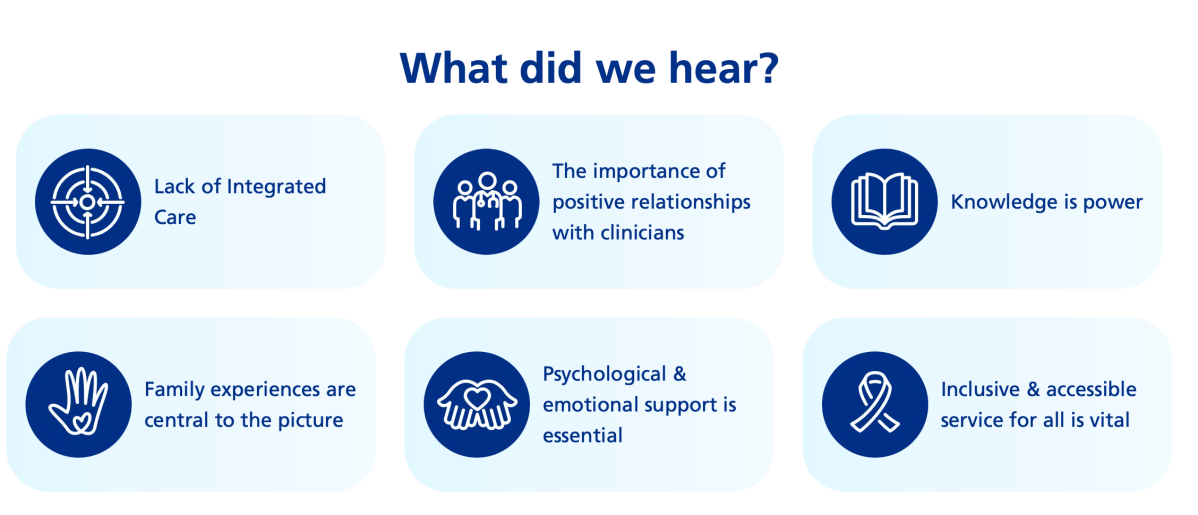
Recommendations:
Training for GPs & oncologists in Lynch syndrome needs to be a priority.
Improved communication between services about the Lynch syndrome pathway
Taking a person-centred approach to Lynch syndrome
Every patient should have a named contact in a mainstreamed clinic
All clinicians providing mainstreamed clinics should have access to appropriate guidance. This knowledge can then be shared with patients at the point of care
Reduce pathway variation and ensure geographical equity of care.
Dedicated, specialist clinicians trained in Lynch syndrome mainstreaming should be provided for all patients
Standardised patient information should be created and utilised across all regions and NHS providers
Lynch Syndrome App should be widely promoted among healthcare providers to help increase awareness of the condition.
Everyone diagnosed with Lynch Syndrome should be given information about Lynch Syndrome UK
Standardised information about ‘Living with Lynch’, talking to relatives, family planning, and mental health support should be created.
New processes around cascade testing should be considered to improve support and information provided for the patient and their families.
Consider concerns of/about family members
Regular, clear and consistent communication for patients whilst awaiting appointments or results is necessary.
Increased psychological support
Training given to all clinicians (not just those working with Lynch) about gender inclusivity and how to ensure that patients feel welcomed and respected within any NHS service.
Lynch Choices

- Lynch syndrome is an inherited condition that increases the chance of developing certain cancers. The type of cancer depends on the genes involved.
- This website helps people with Lynch to make choices that are right for them. It is designed to be used with support from the genetics service, GPs, healthcare teams in the community, charities and patient groups.
- If you are concerned about Lynch but have not been diagnosed, please speak to your GP or genetics service.
- You’ll find two sections which help you think about your choices at home, so you are ready to talk through these choices with a GP, genetics or other specialist.
- There are also another six sections providing support and information for people with Lynch. These sections may also be useful to family members and healthcare professionals of people with Lynch.
https://lynchsyndromeireland.wordpress.com/wp-admin/post-new.php
Lynch Syndrome News

March is Colorectal Cancer Awareness Month, a time when healthcare professionals emphasize the importance of regular screenings for early detection and prevention of colorectal cancer. Recent studies have shown an increase in colorectal cancer cases among individuals under 50, making awareness and early detection even more critical.
CANCER TEST DESIGNED BY NEWCASTLE SCIENTISTS COULD IMPROVE SURVIVAL RATES
Lynch syndrome significantly increases a person’s risk of developing certain types of cancer, in particular colorectal which is the fourth most common cancer in the UK.
Screening for Lynch syndrome means that if a person tests positive, a DNA test can then be offered to their relatives to see who else has the condition, so that they can then be put on a regular programme of checks.
The test can also guide the best treatment to provide, as it can indicate whether a person will respond to immunotherapy, a new and effective approach to cancer treatment with increased accuracy.
Newcastle upon Tyne Hospitals NHS Foundation Trust is leading the rollout of the project and the test is being evaluated for patients at the Royal Marsden Hospital, Manchester University NHS Foundation Trust, Birmingham NHS Foundation Trust and Bristol NHS Foundation Trust.
Lynch Syndrome: A Single Hereditary Cancer Syndrome or Multiple Syndromes Defined by Different Mismatch Repair Genes?
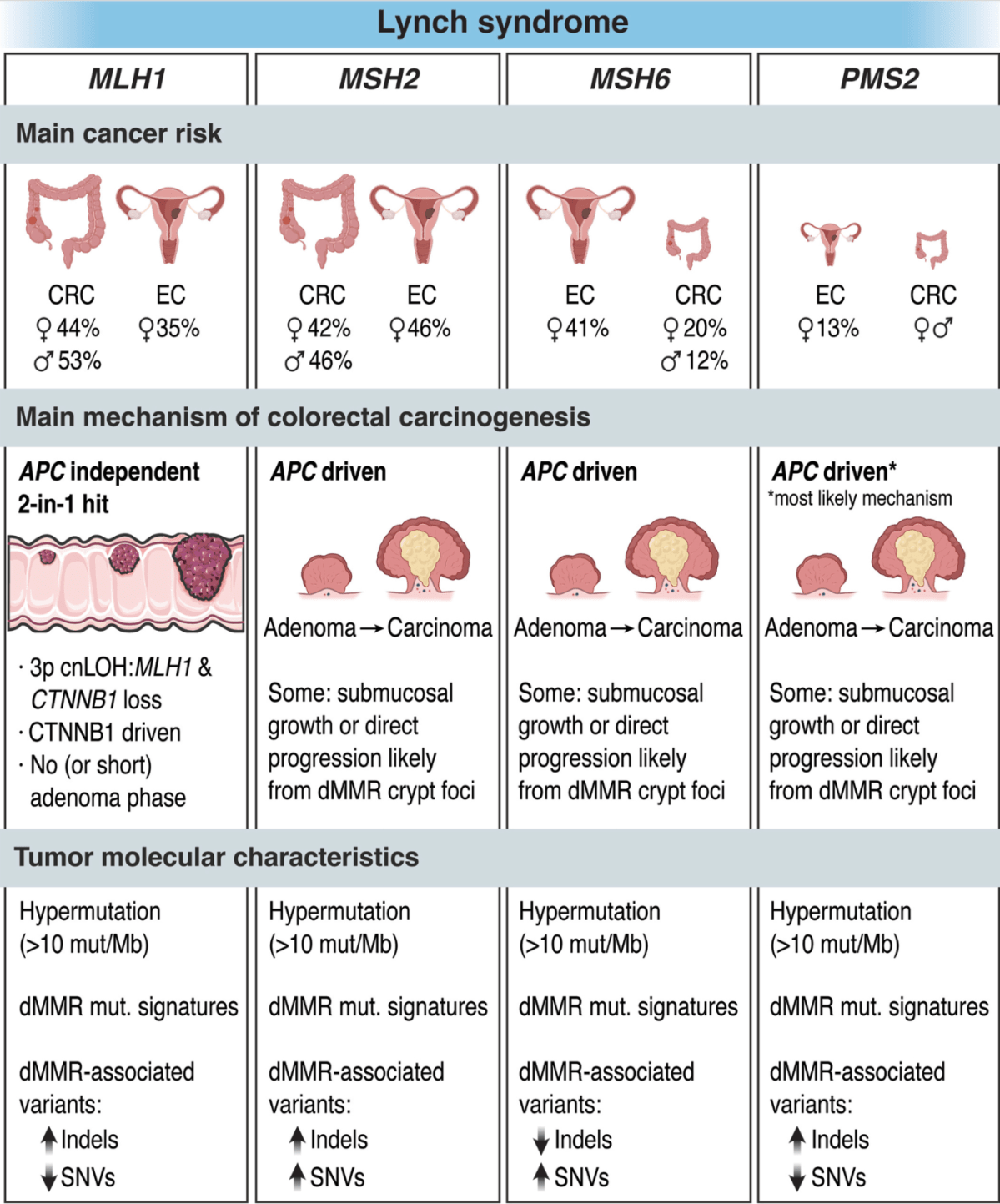
Lynch syndrome is the most common type of hereditary cancer syndrome, affecting 1 in 280–400 individuals. This predisposition to cancer is caused by inherited or germline pathogenic changes in the DNA mismatch repair (MMR) genes MLH1, MSH2, MSH6, and PMS2. In some cases, constitutional promoter methylation of MLH1 or MSH2 (secondary to an EPCAM5′ deletion) is also identified.
Conclusion: it may be appropriate to consider categorising Lynch syndrome as 4 distinct syndromes based on the specific altered MMR gene.
The varying carcinogenic mechanisms and associated cancer risks indicate the need for gene-specific surveillance recommendations in Lynch syndrome. Moreover, the growing understanding of gene-specific differences will likely affect treatment options and efficacy of Lynch syndrome vaccines.
https://www.gastrojournal.org/article/S0016-5085(23)00696-0/fulltext
Changes in faecal haemoglobin values over sequential rounds of faecal immunochemical tests (FIT) in a surveillance population
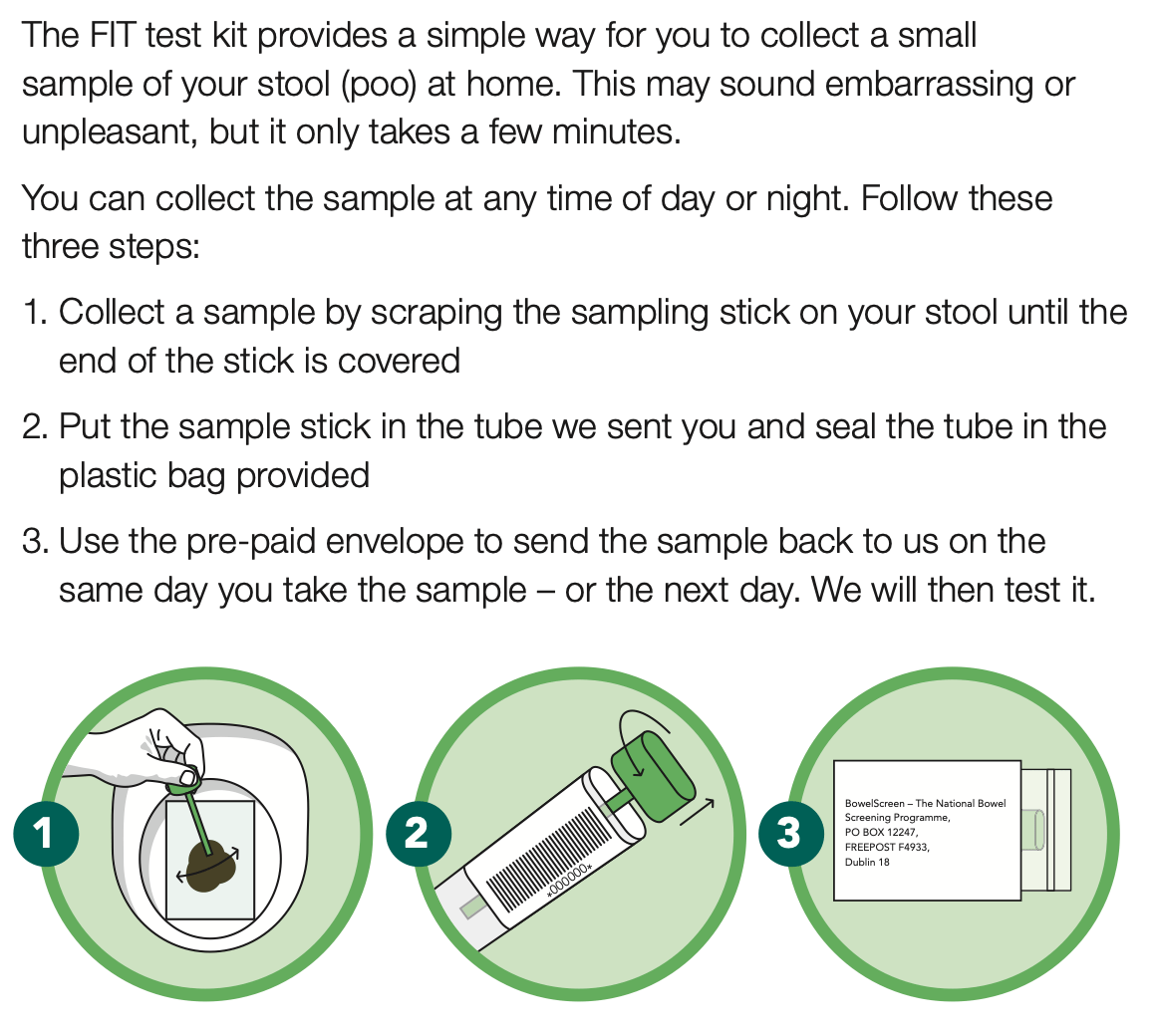
Objective: Colorectal cancer (CRC) screening enables resection of polyp precursor lesions, preventing cancer or detecting it earlier. Post-polypectomy, people can remain at increased CRC risk, prompting surveillance colonoscopy. Less invasive faecal immunochemical tests (FIT) could reduce the burden of surveillance colonoscopy. We investigated whether changes in FIT values over multiple rounds were associated with advanced colorectal neoplasia (ACN) detection.
Conclusion: No change in FIT result across multiple rounds was associated with a low ACN detection rate, while a serial increase was associated with higher ACN detection rates. Further research should consider if sequential rounds of FIT could be used for stratifying individual risk.
Colonoscopies – Why bother?

It just might save your life.
During my third colonoscopy colon cancer was discovered and it had advanced to my Lymph Nodes. I had no symptoms.
Why was I having colonoscopies? I had a family history of colon cancer and my sibling had tested positive for Lynch syndrome (an inherited predisposition to certain types of cancers including colon and endometrial.
I can understand why many people are nervous about getting colonoscopies. Some wonder how long a colonoscopy will take, how best to prepare for the procedure, how much time you’ll need to take off from work and how embarrassing or disruptive this important cancer screening procedure will be.
Why should people get colon cancer screenings?
The answer is simple: colon cancer screenings can detect colorectal cancer early and prevent unnecessary deaths. Colorectal cancers also are highly preventable and treatable if detected early. In fact, if doctors detect pre-cancerous polyps during a colonoscopy, they can remove the polyps during the procedure.
Prior to Colonoscopy:
Some may think…it’s not pleasant(although having had more than 15 to date I can say I do not find it so, but including the preparation, in most cases you’re spending less than 24 hours to help prevent cancer.
Typically, people prepare for a colonoscopy in their homes the day or the night before along with amending their diet for a few days prior to the procedure. The Bowel preparation prescribed — which involves drinking a lot of water along with prep – can take a number of hours . That’s because you’ll be peeing and pooping out all the waste from your body, so you’ll have a clean, empty colon.
Colonoscopy Procedure:
The actual procedure is quick – usually less than 30 minutes. The doctor inserts a scope into your rectum. You are fully sedated prior to the start of the procedure and you wake up after it is over and you usually don’t remember any of the procedure. For nearly everyone, the actual colonoscopy is painless and relatively quick. You wake up, and you’re done. Aside from not being able to drive themselves home from the procedure, most people feel well and are able to eat and drink normally after a colonoscopy.
What are polyps and how common are they?
Polyps are like skin tags that form on the lining of the colon. Some of them are pre-cancerous, which means that over a period of time, they could become cancerous. So, when polyps are found during a colonoscopy, they can easily remove the vast majority of them. That’s how colon cancer is prevented through colonoscopy.”
https://www2.hse.ie/conditions/bowel-screening/colonoscopy-after-bowel-screening/
New prostate cancer test means some men could avoid unnecessary treatment

30% of patients have an aggressive type of this cancer needing urgent treatment, about 70% have slow-growing cancer and can be monitored without immediate treatment.
This new test was developed out of concerns over-treatment was becoming an issue for men with this type of cancer who may not need treatment.
Conclusion: https://bjui-journals.onlinelibrary.wiley.com/doi/10.1002/bco2.474?fbclid=IwY2xjawIJbD1leHRuA2FlbQIxMAABHUSnhz-ugdbis31f1RIiZ29Pfrmoz_JXAWilNVme-L3aFsCA35khswqsMA_aem_30sxxBEWlboKs6aqWleGgA
Biopsy-based MCRS improves risk stratification over standard clinical and pathological information and optimises patient management after diagnosis of prostate cancer.
Should HSE hire a team of engineers?
Absolutely.
@mccarthymt7 “If the HSE wants to improve efficiency in the healthcare system, they should hire a team of engineers with medical experience to examine the processes in place in service delivery, and give them the authority to effect changes in service provision that would maximise patient flow. Otherwise, more nurses, more HSCPs, more doctors, and more space to work in would help, and is needed across the board. The imbalance between capacity and demand at the point of provision of care seems glaring to me.”
The very obvious shortages of hospital beds, theatres, diagnostic, and other facilities across the country need to be addressed, together with filling the hundreds of consultant posts that are vacant or filled on a temporary basis.
 Lynch Syndrome Ireland