The Role of Colonoscopy in the Management of Individuals with Lynch Syndrome: A Narrative Review

Rather than continuing to shorten the timing of endoscopic surveillance, other early diagnostic techniques and subsequent prevention strategies should be forecasted in order to allow a more effective and customised endoscopic surveillance of individuals with Lynch Syndome.

Subjects with LS need clear and repeated explanations about the value of endoscopic surveillance. Often, they also require psychosocial support. The usefulness of specialised programs aiming to remind patients of the dates of both exams and clinical follow-ups has been demonstrated 

Open Questions 

These hypotheses raise several questions: assuming that there is more than one pathway to CRC, what is the relative contribution of each? Are there different genetic backgrounds? Which are they?

https://pmc.ncbi.nlm.nih.gov/articles/PMC10417258/

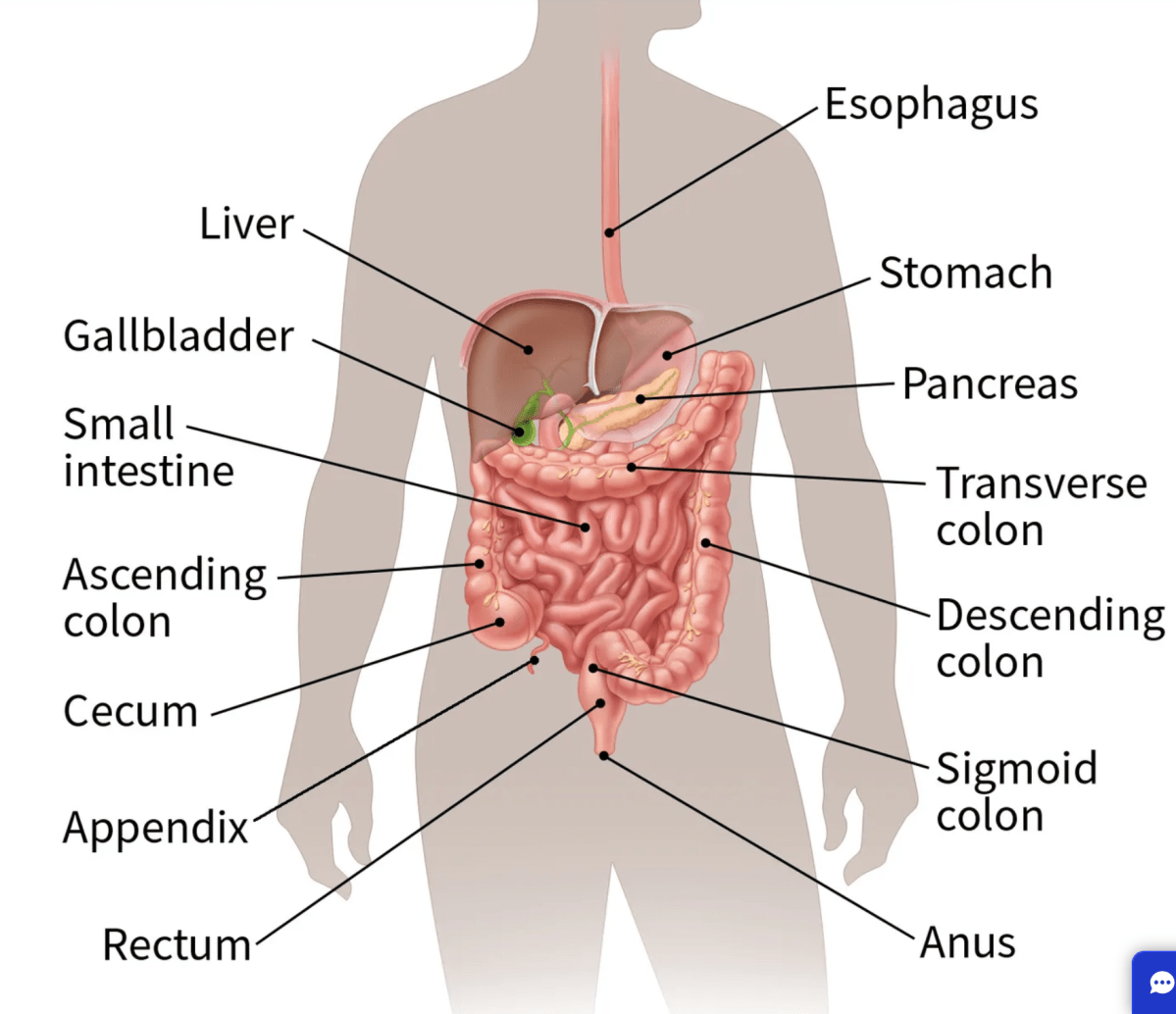
Colorectal cancer starts in the colon or the rectum. These cancers can also be called colon cancer or rectal cancer, depending on where they start. Colon cancer and rectal cancer are often grouped together because they have many features in common.

This article covers:

How do the colon and rectum work?

How does colorectal cancer start?

Polyps in the colon or rectum

How colorectal cancer spreads

Types of cancer in the colon and rectum

Be aware of signs and symptoms

It’s important for everyone to be aware of any changes in your body that are not normal for you, especially if you have an increased risk due to Lynch syndrome. Always get any changes checked by your GP, even if you have had a screening test or are due one soon.

https://www.cancer.org/cancer/types/colon-rectal-cancer/about/what-is-colorectal-cancer.html

https://www.cancer.ie/cancer-information-and-support/cancer-information/about-cancer/causes-of-cancer/cancer-and-genes/lynch-syndrome

THE UNMET NEED IN CANCER GENETIC SERVICES(2021)

This one of the recommendations of this report:

Implement a hub and spoke model with genetics expertise within the dispersed oncology system.

Genetics needs to be formally integrated into the cancer treatment pathway with uniform access to genetic testing, molecular tumour boards and access to genetics expertise and support at the point of care for both patients and their clinicians.

Where are we at now?

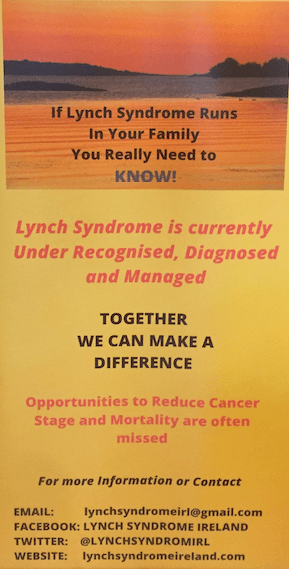
Lynch syndrome – Will I develop cancer?

Unfortunately, cancer is common, and in the majority of cases is not inherited. As many as 1 in 2 people will develop cancer in their lifetime. That is 50% of the world’s population.

Most cancers are not inherited and occur out sporadically or ‘out of the blue’.

Lynch syndrome makes certain (not all) cancer types more likely to develop. This is due having less protection from the cancer mismatch repair genes. This doesn’t mean that you will definitely develop cancer, but having less protection makes it more likely.

The way Lynch syndrome behaves in you and your family can be very different as the affected Lynch syndrome genes interact with other genes as well. Family history should be taken into consideration, but each family member will be affected differently.

Estimating cancer risk in carriers of Lynch syndrome variants in UK Biobank

Conclusion:

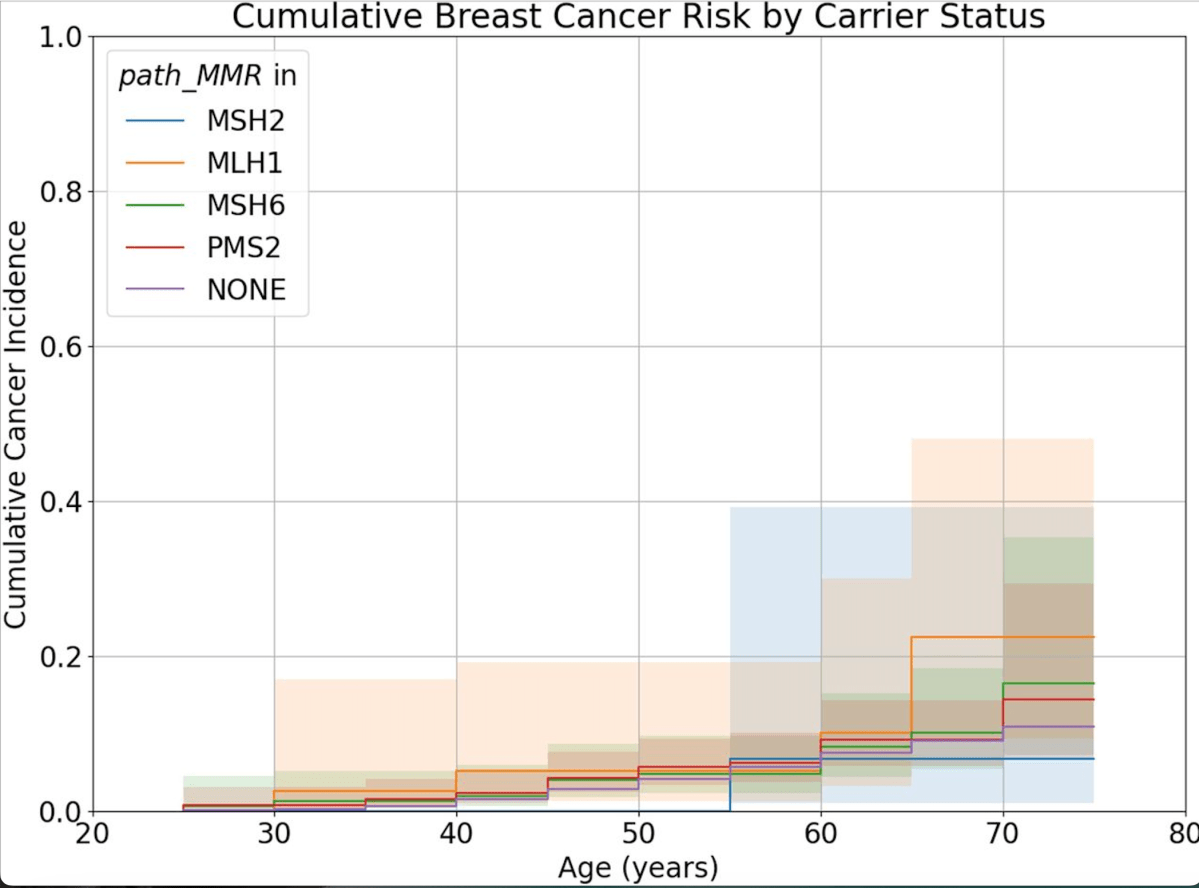
 These results support offering incidentally identified carriers of any path_MMR surveillance to manage colorectal cancer risk.

Incidentally identified carriers of pathogenic variants in MLH1MSH2 and MSH6 would also benefit from interventions to reduce EC risk. The results suggest that Breast Cancer is not an LS-related cancer.

https://jmg.bmj.com/content/61/9/861

Lynch Choices

  • Lynch syndrome (‘Lynch’) is an inherited condition that increases the chance of developing certain cancers. The type of cancer depends on the genes involved.
  • This website helps people with Lynch to make choices that are right for them. It is designed to be used with support from the genetics service, GPs, healthcare teams in the community, charities and patient groups.
  • If you are concerned about Lynch but have not been diagnosed, please speak to your GP or genetics service.
  • Each session helps you think about your choices at home, so you are ready to talk through your choices with a GP, genetics or other specialist.

https://canchoose.org.uk

Gastric and duodenal cancer in individuals with Lynch syndrome: a nationwide cohort study

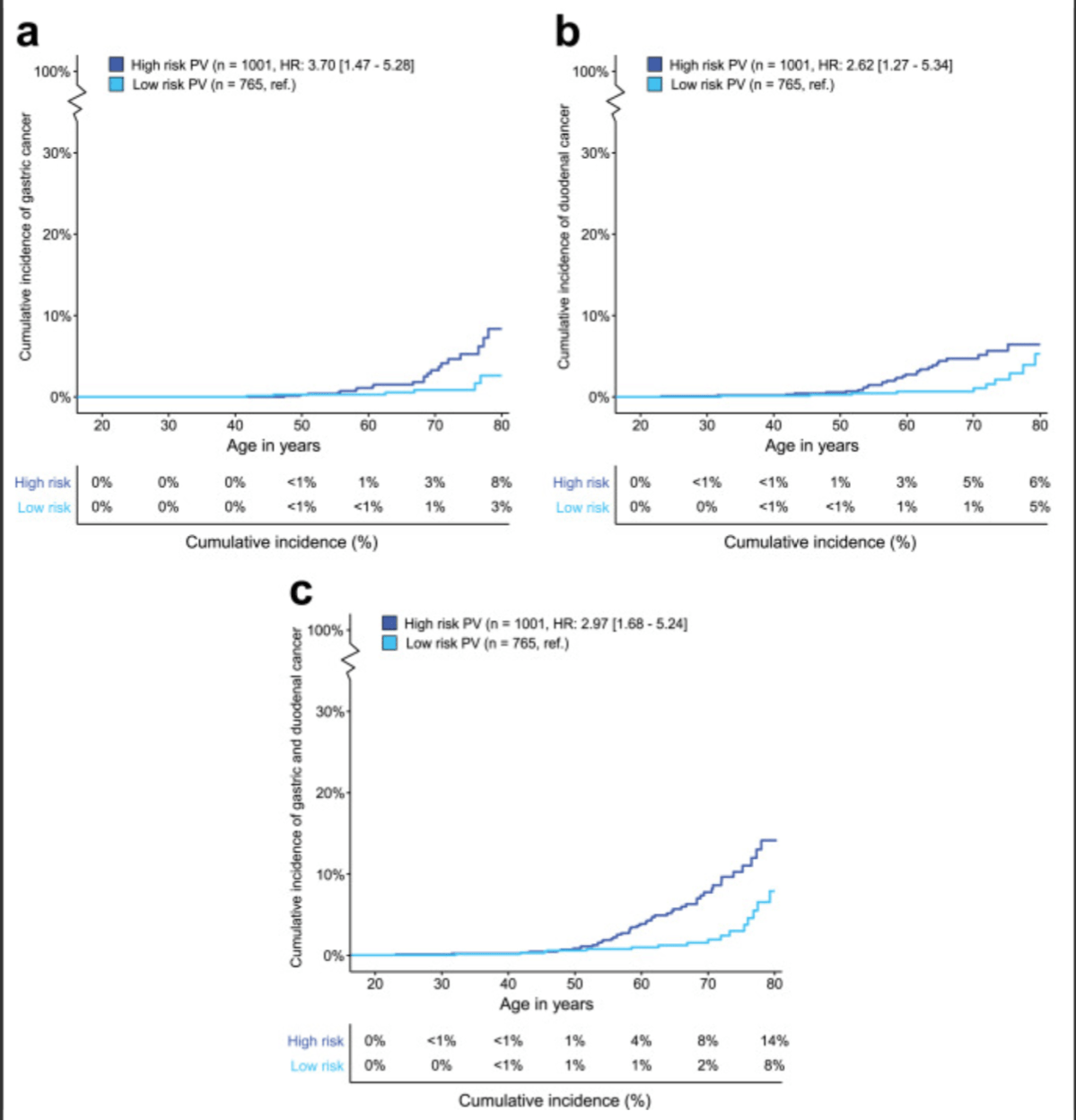
The benefit of EGD surveillance in individuals with Lynch syndrome is still a topic of debate.

Considering the invasive nature of the procedure, the patients’ burden, and—albeit small–the risks associated with conscious sedation and the procedure itself, it is essential to provide EGD surveillance only to individuals at high risk of developing GC and DC who could benefit from this procedure. 

https://www.thelancet.com/journals/eclinm/article/PIIS2589-5370(24)00073-7/fulltext#secsectitle0095

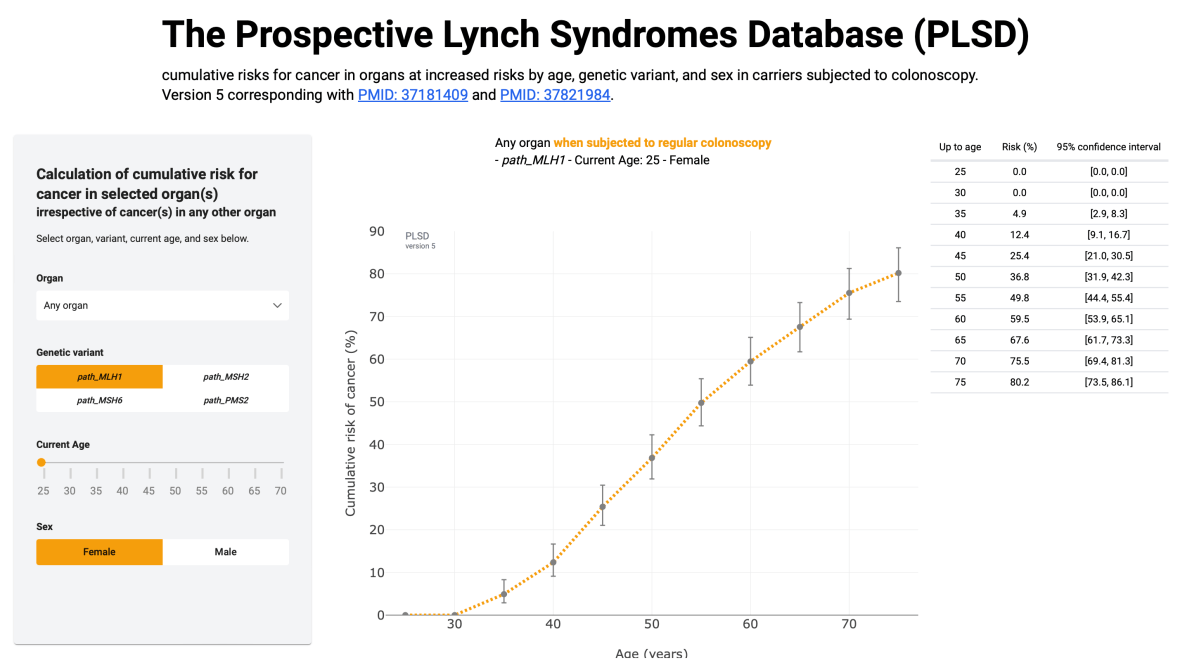
Prospective Lynch Syndrome Database

Aims of PLSD

Based on the observation that removal of adenomas with colonoscopy did not reduce CRC incidence as assumed, in 2012 the European Hereditary Tumor Group (EHTG), at that time denoted the Mallorca Group, decided to compile information on follow-up of path_MMR carriers across multiple specialist centres to answer three questions:

  • To what degree does colonoscopy surveillance reduce CRC incidence in path_MMR carriers?
  • What is the penetrance and expressivity of pathogenic variants in each of the four Lynch syndrome-associated genes?
  • What is the survival of carriers when followed-up as recommended, to facilitate early diagnosis and treatment?

path_MMR carriers: Inherited predisposition to colorectal, gynaecological, urinary tract, upper gastrointestinal and other cancers may be caused by pathogenic variants of mismatch repair (path_MMR) genes and commonly referred to as Lynch syndrome.

http://www.plsd.eu

Talking to Loved Ones About Increased Cancer Risk

After learning you inherited a higher risk of cancer, you may want to share your news and feelings with friends and family. Ask your loved ones to listen and support you. Let them know this information gives you the opportunity to take proactive control over your health.

https://www.everydayhealth.com/breast-cancer/how-to-talk-to-family-and-friends-about-hereditary-breast-cancer-risk/