One test to detect multiple cancers – where are we now?

Most cancers diagnosed at an earlier stage have a better prognosis. Detecting and diagnosing cancer earlier can mean there are more treatment options for patients and, ultimately, can help people survive cancer and lead longer, better lives.  

What are multi-cancer tests?

As described above, an MCT is a tool that searches for multiple cancers in one sample, typically blood, urine, breath, or stool. All MCTs share some similarities, but the ways they identify cancers can be slightly different.  

MCEDs(multi-cancer earlier detection tests) could completely change what cancer screening looks like by making it possible to screen for multiple cancers with one test. MCEDs could also allow us to screen for cancers that aren’t covered by individual screening programmes, including less common cancers. That means MCEDs could be a more efficient way to find more types of cancer earlier, when they are more curable, helping people live longer, better lives. 

https://news.cancerresearchuk.org/2024/06/12/multi-cancer-tests-mced-tests-where-are-we-now/

Cork doctor with bowel cancer: ‘More people are getting it under age 50’

She talks with humour about her cancer journey. “I try not to take anything too seriously. With cancer and advanced cancer — and what might be called terminal cancer — people can be unsure how to talk about it. I’m very open about serious illness and humour’s important in helping have these conversations.”

She started her blog, Adventures of a Sick Doctor, after her first diagnosis, to let scattered-around-the-globe family and friends know how she was doing. She never expected its broad public appeal.

“Changes in bowel habits, losing weight, blood in poo; any of these, it’s very important to visit the GP. If you’re between 59 and 70, sign up for bowel screening.

“It’s one of the best ways of avoiding the bowel cancer journey I’ve been on.”

https://www.irishexaminer.com/lifestyle/healthandwellbeing/arid-41479222.html?fbclid=IwY2xjawFeCMNleHRuA2FlbQIxMQABHfiyLhYeqZ-3wXip9srbTmFVtYCGyElDA2XikxDvGWbvY_zDOa3nz1pVSw_aem_AmQPPxy0WF2Du1QNTqoxSQ

Lynch Choices

  • Lynch syndrome (‘Lynch’) is an inherited condition that increases the chance of developing certain cancers. The type of cancer depends on the genes involved.
  • This website helps people with Lynch to make choices that are right for them. It is designed to be used with support from the genetics service, GPs, healthcare teams in the community, charities and patient groups.
  • If you are concerned about Lynch but have not been diagnosed, please speak to your GP or genetics service.
  • Each session helps you think about your choices at home, so you are ready to talk through your choices with a GP, genetics or other specialist.

https://canchoose.org.uk

 End the Stigma surrounding gynaecological cancers on this World Gynaecologic Oncology Day 

 One in Seven Women in Ireland Avoid GP Visits Due to Embarrassment Discussing Symptoms.

  • Almost 2,000 Women Diagnosed with Gynaecological Cancers Across Ireland Annually 
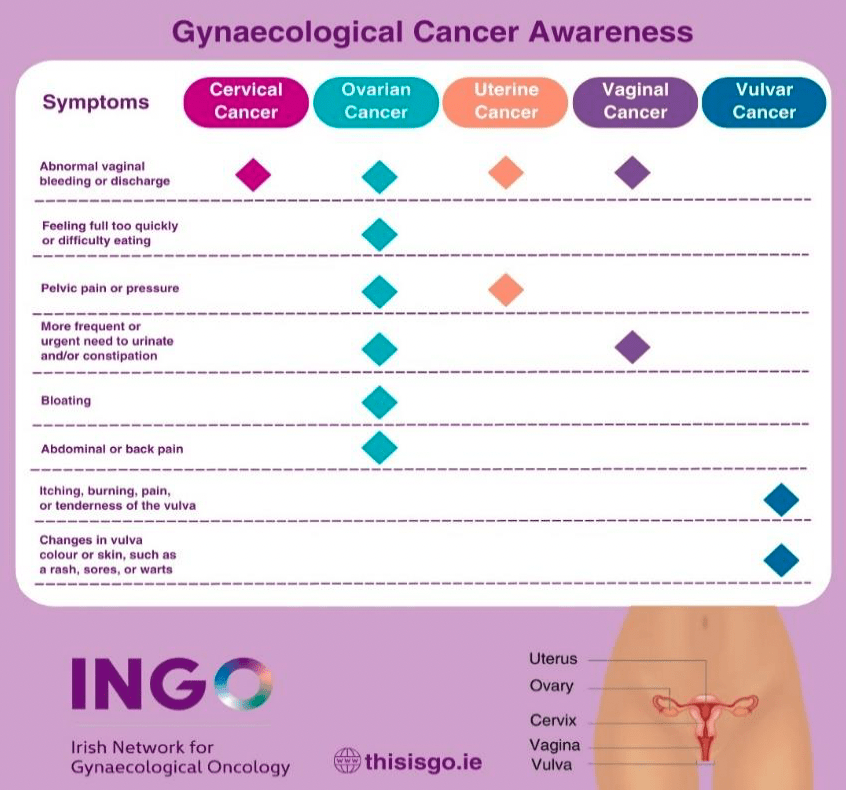
  • Only two in five recognise abnormal bleeding or discharge as symptom of uterine cancer 
  • Only a quarter of women identify changes in urinary habits as symptom of vaginal cancer 

Today is World GO Day or World Gynaecologic Oncology Day where patients and advocates around the globe unite to raise awareness about all five gynaecological cancers (vulval, vaginal, cervical, uterine and ovarian) and their risk factors and to combat the stigma associated with gynaecological cancer.

The Irish Network for Gynaecological Oncology (INGO), a voluntary coordination body consisting of over 30 of Ireland’s foremost gynecological cancer campaigners, researchers and patient advocates aim to educate people about the importance of sharing information in relation to prevention, symptoms, early diagnosis and treatment. 

Research commissioned by INGO shows that stigma surrounding gynaecological cancers and their symptoms can prevent some women from attending their doctor with warning signs. 

One in seven women in Ireland said they would not attend a doctor with cancer warning signs as they find it embarrassing to discuss symptoms, and one in five would not go to the doctor as they do not want to talk to the GP receptionist about symptoms. Furthermore, one in three would not attend if they found it difficult to get an appointment with a particular doctor.

This World GO Day, Fri 20th September, INGO are hosting a free webinar at 1pm for anyone who would like to learn more about the five gynaecological cancers and their symptoms, with insights from cancer patients and medical professionals.

Register for the webinar at http://www.bit.ly/GO_symptoms 

http://www.isgo.ie/irish-network-for-gynaecological-oncology/ 

#WorldGODay2024

Inaugural Cancer Genetic Counselling Conference: Connecting Research and Practice

Date and time: Thu, 14 Nov 2024 09:00 – 16:00 GMT
Location: Guinness Enterprise CentreTaylor’s Lane Level 4, Conference room 1-2 Dublin 8

Join us for a day filled with insightful discussions, networking opportunities, and the latest advancements in cancer genetic counselling.

Don’t miss this chance to connect with experts in the field and learn about cutting-edge research that can enhance your practice.

Secure your in person or online attendance now!

https://www.eventbrite.ie/e/inaugural-cancer-genetic-counselling-conference-connecting-research-and-practice-tickets-959444734027?aff=oddtdtcreator

2024 IGCS-IGCAN Gynecologic Cancer Survivor-Caregiver Summit – Dublin

Initiatives Promoting Equity, Diversity, and Inclusion in Patient Outreach Projects (IGCS Grant Recipients)

  • HER REASON FOR BEING: A Multifaceted Community-Based Project to Advance Cervical Cancer Prevention and Awareness
  • Nan men gran m’et la: Pilot Palliative Care Intervention for Vulnerable Women with Advanced Cervical Cancer in Haiti
  • Acceptability of Self-Sampling for Cervical Screening in the LGBTQIA+ Population – The Alternative Cervical Screening (ACES) LGBTQIA+ 2 Study

Empowered by Experience: Insights on Cancer Survivorship

  • The Public Narrative: Using your Lived Experiences to Call for Action
  • Key Findings from the IGCAN Survivorship + Caregiver Survey
  • Voices of Resilience: Survivorship Panel Discussion

Agents of Change: Patient Advocacy Organizations in Action

  • Every Woman Study™ LMIC Edition: World Ovarian Cancer Coalition
  • Ovarian Cancer Australia

A Clinical Perspective: Genetics & Clinical Trial Updates

  • Genetics in Gynecologic Cancer: Enhancing Understanding and Treatment
  • Recent Discoveries in Gynecologic Cancer Clinical Trials

Talking to Loved Ones About Increased Cancer Risk

After learning you inherited a higher risk of cancer, you may want to share your news and feelings with friends and family. Ask your loved ones to listen and support you. Let them know this information gives you the opportunity to take proactive control over your health.

https://www.everydayhealth.com/breast-cancer/how-to-talk-to-family-and-friends-about-hereditary-breast-cancer-risk/

Risk of Gastric and Small Intestinal Cancer in Patients With Lynch syndrome – Data From a Large, Community-Based U.S. Population

This retrospective cohort study included all patients diagnosed with LS between 1/1/1997-12/31/2020 at Kaiser Permanente Northern California. Cumulative incidence of gastric cancer and small intestinal cancer was calculated using competing risk methodology.

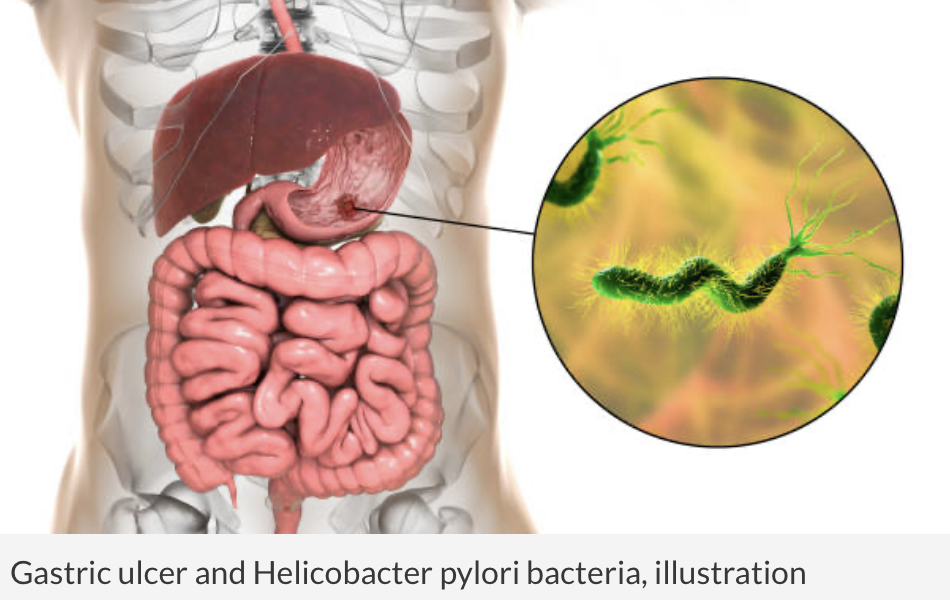
Discussion: Patients with LS, particularly MSH2 and MLH1 PV carriers, had significantly increased lifetime risk of gastric and small intestinal cancer. Testing and treatment of H. pylori should be considered for all patients with LS.

Helicobacter pylori (H. pylori) infection occurs when Helicobacter pylori (H. pylori) bacteria infect your stomach. This usually happens during childhood. A common cause of stomach ulcers (peptic ulcers), H. pyloriinfection may be present in more than half the people in the world.

Most people don’t realize they have H. pylori infection because they never get sick from it. H. pylori infection is treated with antibiotics.

https://pubmed.ncbi.nlm.nih.gov/38920292/

Lynch syndrome is the most common cause of inherited colorectal cancer

How Is Lynch Syndrome Diagnosed?

Lynch syndrome is diagnosed by genetic testing of a blood sample and often involves testing for multiple gene variants.

Prior to genetic testing for Lynch syndrome, individuals should be counseled about screening benefits (early initiation of cancer screening if Lynch syndrome is diagnosed or reassurance if Lynch syndrome is ruled out) and risks (potential difficulty with insurability and psychological consequences of being diagnosed with a genetic disease).

How Is Lynch Syndrome Diagnosed?

Lynch Syndrome

Lynch syndrome is an autosomal dominant hereditary cancer syndrome, associated with a 40%–80% lifetime risk of developing colorectal, endometrial and other cancers.

Lynch syndrome may be suspected from a family history of bowel cancer and other Lynch syndrome-related cancers, triggering genomic testing in the family.

Lynch syndrome is an autosomal dominant condition, so that each child (son or daughter) and each sibling (brother or sister) of an affected individual has a 50% (1-in-2) chance of inheriting the condition.

It is important to remember that chance has no memory, and the 1-in-2, or 50%, chance of inheriting the altered gene for the condition applies to each child, irrespective of whether or not the parents have already had children with, or without, the condition.

https://www.genomicseducation.hee.nhs.uk/genotes/