I am not actually getting chemo. I am getting cetuximab, which is a monoclonal antibody and therefore known as a targeted therapy, rather than a chemotherapy.
Collectively, the various gunks that they administer to knobble cancer are called Systemic Anti-Cancer Treatment, or SACT.
Many men with cancer in the family worry that they are at greater risk of getting it themselves. But this isn’t the case for most people. Cancer is a common disease among older people, so most families will include at least one person who has had cancer.
The more relatives who have had cancer, and the younger they were at diagnosis, the stronger your family history. You may have a strong family history if any of these situations apply to you:
More than two close relatives on the same side of your family have had cancer.
The cancers developed when they were young (under the age of 50).
One of your relatives has had a gene fault found by genetic tests.
5 – 10% of cancers are linked to an inherited gene fault.
What should I do if I have a family history of cancer?
Talk to your doctor who can help you find out if your family history of cancer is of concern. Your doctor may suggest that you visit regularly for screening. In this way, you can pick up problems early.
Written by Clodagh Downing: Upon discharge from hospital, I was told that I would be included in Palliative Care in the community which means that I attend the local hospice.
Not everyone who attends their hospice as a patient dies from their disease but many do. Life is part of death and death is part of life. Isn’t it peculiar how we can spend our entire lives running away from the grief and sadness of death?
Clodagh passed away a few days ago surrounded by her family in St. Francis Hospice, Raheny .
She will be sadly missed by all who knew her but she left behind a wonderful legacy.
“While I am thankful and a bit excited to try out the new hardware in my body, there were some hiccups with the process that made it needlessly stressful.”
“I wish I could say otherwise, but I am starting to believe that we patients and our trust and comfort will never be true priorities.”
What I really didn’t expect was some good friends of many years who I had spent a lot of time with simply disappeared out of my life. Some people said, “they obviously weren’t real friends” and initially I agreed, but I now try and be a bit more charitable. I think they probably couldn’t deal with the thought of someone they knew so well having a life-threatening disease or didn’t know what to say.
Tony, 63 was diagnosed with stage 3 colon cancer following a colonoscopy in late 2021, and had surgery and six months of chemotherapy.
He is aiming for a 50-mile run/walk competition in the Lake District in July 2024.
It is so important to be vigilant for changes in your body that might be signs of cancer, BUT – it is not your fault if you get cancer, and feeling guilty about not “doing everything right” to prevent it can break people’s souls. @SarahFitzWiMIN
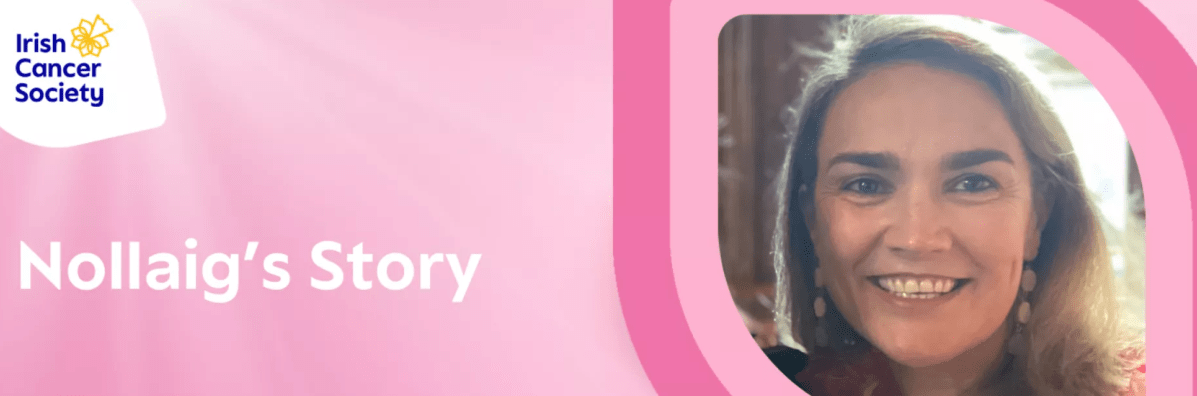
In addition to supports from the Irish Cancer Society and the support of her medical team, Nollaig has found great support through social media. “I came across a Facebook group of women at all different stages of triple negative breast cancer. Rather than reading up on it via Google, you are hearing directly from women who have gone through what you are about to go through. You learn to see that everyone’s experience is different.
Nollaig is sharing her story to raise awareness of breast cancer, but also to call for screening to start at an earlier age.
Whether it’s the metaphor of ‘battling cancer’ or the image of ‘frontline workers’ during the pandemic, the author contended that metaphors distort our way of thinking since neither cancer nor Covid are stages of war.
“I have a predisposition to cancer as I carry a gene which is called Lynch Family Syndrome.
“Basically my body cannot detect that cancer is growing in the first place so it very quickly escalates to a grade 4 and because it cannot recognise the disease, it also can’t repair it without help.
“I’m lucky that I know my body well and that I can present myself in time to doctors who have the expertise and modern medicines to reverse the tumour growing.”
“Participating made me look at the psychological effect years after diagnosis. Themes of loneliness, isolation, fear, self-blame, anger and disassociation were explored.
Sarah Fitzgibbon: 47 year old GP, mother of three gorgeous children, wife of superhero husband, wrestler of metastatic bowel cancer.
Diagnosed with liver mets November 2014, bowel cancer diagnosed the next day. Folfox x 5, SIRT x 2, Anterior resection Oct 2015, Folfiri+panitumimab x 5 Extended hemihepatectomy April 2016. Folfiri+panitumimab again July 2016. Stereotactic radiotherapy in February 2017 Scans May 2017 – no evidence of active disease May 2018: some small lung lesions requiring more radiotherapy SBRT again June 2018 No active treatment since 2018 Until June 2024 – back on Folfiri for liver recurrence
Throughout my life, I remember hearing about Palliative Care in hushed tones…..
When the lovely registrar arrived at my hospital bed to declare they were moving me to Palliative Care, I practically jumped and vomited from the fear and shock.
Not everyone who attends their hospice as a patient dies from their disease but many do.
Palliative Care is not just for end of life it can also bring quality of life, pain relief and research shows that engaging in it sooner rather than later can extend life. I am doing all that I can do to lengthen mine.






 Lynch Syndrome Ireland