Universal Germline Genetic Testing for Hereditary Cancer Syndromes in Patients With Solid Tumour Cancer(2022)

Historically, professional society guidelines have recommended limited genetic testing for hereditary cancer syndromes (HCS) to patients with cancer thought to be at highest risk for carrying pathogenic/likely pathogenic germline variants (PGVs) in a few selected genes.

Reasons for this approach were largely based on the high costs of testing, perceptions that HCS were rare in the general population, and a paucity of clinical utility.

Discussion of the current evidence that challenges these assumptions and supports the implementation of universal HCS testing among patients with solid tumours.

https://ascopubs.org/doi/10.1200/PO.21.00516

AI Allies: How Artificial Intelligence Can Support Patients To Cope with Cancer

A cancer diagnosis can be both physically and emotionally challenging.

As cancer patients learn how to cope with the disease and manage side effects, artificial intelligence (AI) tools like ChatGPT are emerging as valuable allies. This article explores ten ways ChatGPT can help you manage your cancer journey more effectively.

Understanding the treatment experiences of adults diagnosed with early-onset colorectal cancer: A qualitative study

Results

Results identified four key themes:

(1) early-onset CRC treatment results in sudden physical, psychological and social impacts in all aspects of life;

(2) early-onset CRC patients have unique supportive care needs which are not recognised in current practice;

(3) there is a need for tailored information;

(4) a lack of support was identified in the areas of mental health, sexual health and fertility.

Conclusions

Study highlights numerous unique issues experienced by the early-onset CRC patient group during treatment. There is a need for change in clinical practice, along with the development of international guidelines and tailored resources for both patients and healthcare professionals, in order to improve care.

https://onlinelibrary.wiley.com/doi/10.1002/pon.6367

‘Gamechanger’ drug that ‘melts away’ tumours could replace surgery for bowel cancer

A “gamechanger” immunotherapy drug that “melts away” tumours dramatically increases the chances of curing bowel cancer and may even replace the need for surgery, doctors have said.

Pembrolizumab targets and blocks a specific protein on the surface of immune cells that then seek out and destroy cancer cells.

In the trial, funded by Merck Sharp and Dohme and sponsored by University College London, researchers recruited 32 patients with stage two or three bowel cancer and a certain genetic profile (MMR deficient/MSI-High bowel cancer) from five hospitals in the UK.

About 15 percent of patients with stage two or three bowel cancer have this particular genetic makeup.

Patients were given nine weeks of pembrolizumab, also known as Keytruda, before surgery instead of the usual treatment of chemotherapy and surgery, then monitored over time.

Results show 59 percent of patients had no signs of cancer after treatment with pembrolizumab, with any cancer in the remaining 41 percent of patients removed during surgery.

Dr Marnix Jansen, a clinician scientist at the UCL Cancer Institute, said more work needed to be done to assess pembrolizumab before it could be considered standard treatment.

https://www.irishtimes.com/health/2024/06/02/gamechanger-drug-that-melts-away-tumours-could-replace-surgery-for-bowel-cancer-say-doctors/

Let’s learn about how to prevent endometrial cancer!

https://engage.esgo.org/…/endometrial-cancer…/

In this webinar aimed at patients and patient advocates, we’ll discuss:

The psychological burden of a diagnosis (M Papageorgiou 🇬🇷)

Medical risk factors (Dr A Stepanyan 🇦🇲)

Genetic risks & prevention (Dr H El Hajj 🇫🇷)

with our co-chairs as moderators: Prof P Morice 🇫🇷 & K Hulscher

Note time is CEST

Discover Available Cancer Support Options in Your Local Community

This directory is designed to help Healthcare Professionals guide cancer patients, their families, and friends to local cancer support services.

It also serves as a valuable resource for individuals living with and beyond a cancer diagnosis, and their loved ones, to discover the available cancer support options.

To access the Directory of Community Cancer Support Centres and Services click https://www.hse.ie/eng/services/list/5/cancer/profinfo/survivorship-programme/nccp-directory-of-community-cancer-support-centres-and-services.pdf

Ovarian cancer: identifying and managing familial and genetic risk—summary of new NICE guidance

This article summarises new guidance by the National Institute for Health and Care Excellence (NICE) on identifying and managing familial and genetic risk of ovarian cancer. It covers select recommendations of relevance to those working in primary care and providers who refer to specialist services. Recommendations from this guideline are for anyone who has an increased probability …

What you need to know

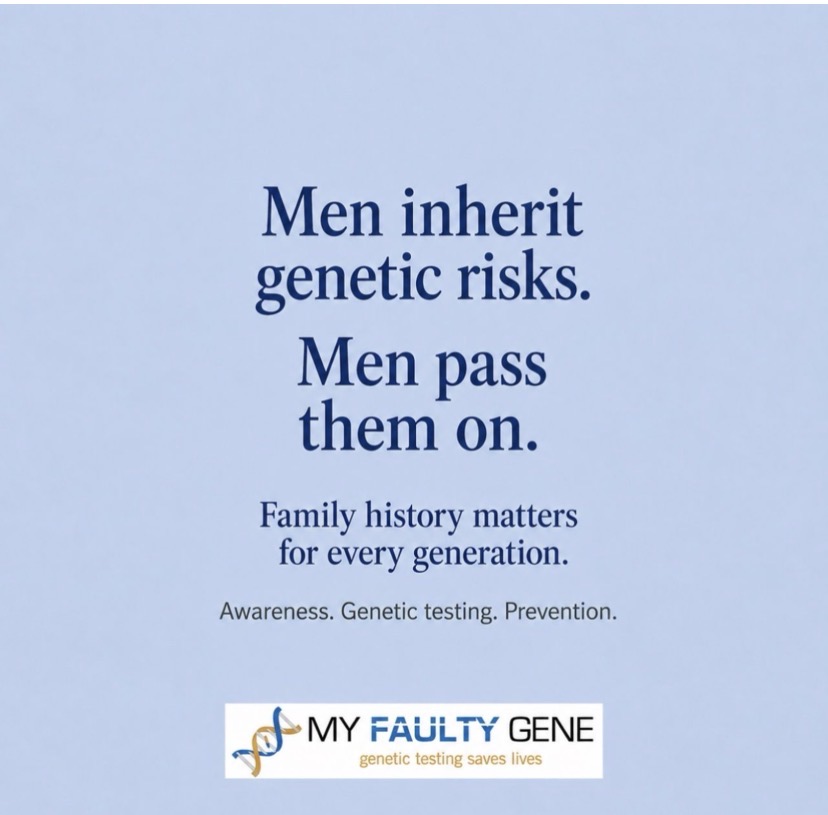
  • Men and people born with male reproductive organs have a genetic risk of carrying a pathogenic variant associated with ovarian cancer and other cancers 
  • If a person had a direct-to-consumer genetic test and is reported to have a pathogenic variant for which NHS testing is offered, liaise with a regional NHS genetics service to discuss whether referral is appropriate
  • Refer for genetic counselling and testing people who have a first or second degree relative diagnosed with ovarian cancer, those from high risk groups, anyone identified through cascade testing, or those diagnosed with ovarian cancer linked to pathogenic variants
  • For women, trans men, and non-binary people born with female reproductive organs who are at increased risk of ovarian cancer, risk reducing surgery that is age appropriate for their pathogenic variant or family history is the most effective way to reduce the risk of ovarian cancer

https://www.bmj.com/content/385/bmj.q807

It was a project undertaken by University of Sheffield student, Yifeng, who conducted interviews with Lynch Syndrome advocacy organisations (Lynch Syndrome UK and Lynch Syndrome Ireland) to explore what (& how) they communicate on digital media.

Based on this, she created an animation to share with the #lynchsyndrome community.

This animation features information on the cancer risk brought by different #lynchsyndrome gene mutations (MLH1, MSH2, MSH6, PMS2, EPCAM).

https://leahhz.github.io/animation0621/?fbclid=IwZXh0bgNhZW0CMTAAAR0vCZGbmcg4G0oi89Jy8q9iZxV81V5WRR8bNl2N650bp_qvOZWJAdzkAx8_aem_ARD43W60vC-jIeCEWHKY9nq6tPgW8TfEQEauwZ3B0ZprkM_bBVNkIx5pUx2KP6qdpTwKHUP4k2Rci8ZPznMgm76g

Lynch syndrome: 10 things to know about this genetic condition

https://www.mdanderson.org/cancerwise/qa-understanding-and-managing-lynch-syndrome.h00-158589789.html