Finding the missing 95%: Unlocking the potential of Lynch syndrome services

In recent years, breakthroughs in genetics and DNA testing have revolutionised healthcare, especially in cancer diagnosis, treatment, and care. By examining a person’s genes, we can now identify people at higher risk of developing certain cancers.

This allows healthcare providers to detect cancers at an earlier stage and make informed decisions about cancer management and surveillance. Crucially, they can also offer more effective personalised treatments and prevention strategies based on the patient’s genetic profile.

Report found:

  • There have been significant improvements in genetic testing for bowel cancer patients, with an average of 9 in 10 newly diagnosed bowel cancer patients being tested over the last financial year, but workforce and capacity issues are still barriers. 
  • Half of health authorities who responded, reported that family members of people with Lynch syndrome aren’t offered letters they can take to their GP, which is one route to accessing genetic counselling and testing. 
  • A postcode lottery for life-saving routine surveillance colonoscopies exists. Although surveillance is offered to all Lynch syndrome patients in England through the Bowel Cancer Screening Programme, only 6 in 10 health authorities across Scotland, Wales and Northern Ireland offer surveillance colonoscopies in line with clinical guidance. 
  • Major gaps in data collection and reporting on Lynch guidance and services are holding back Lynch syndrome care. 

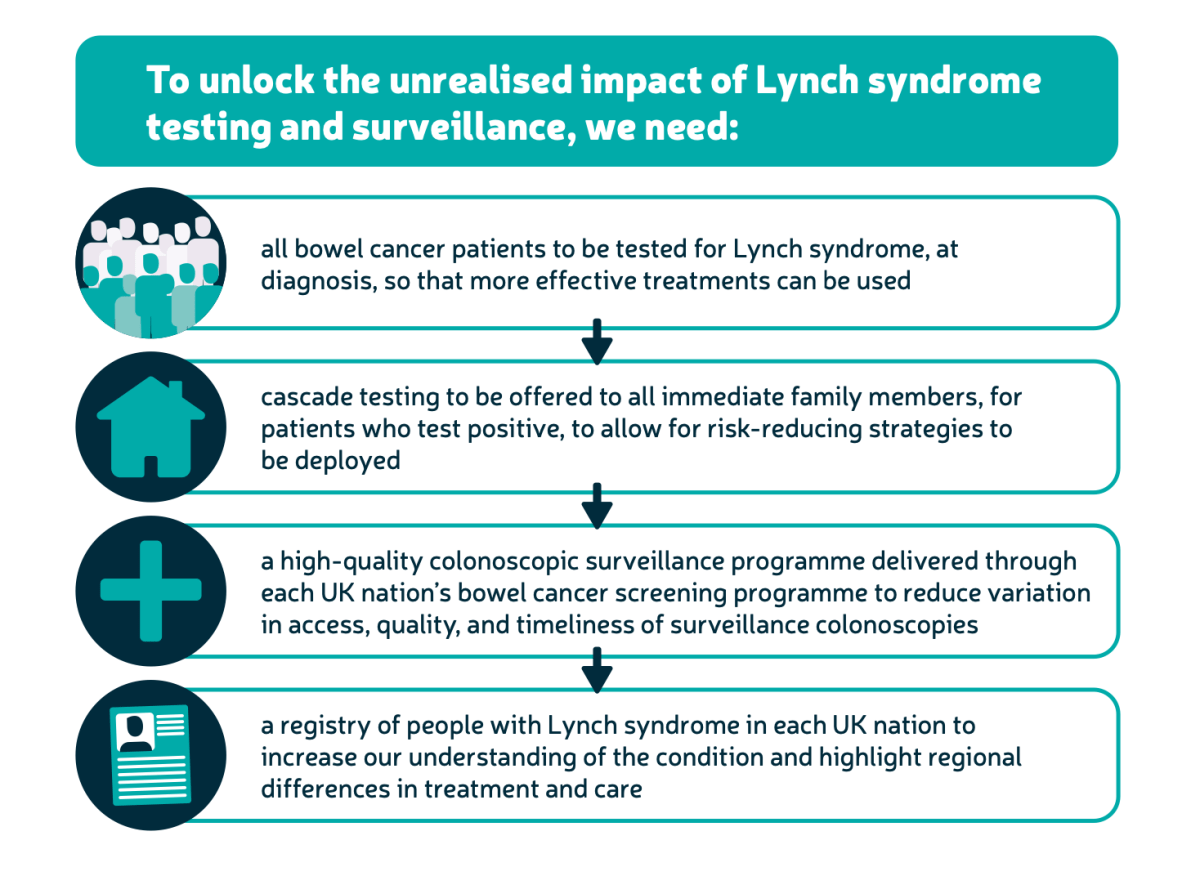
Testing all newly diagnosed bowel cancer patients for Lynch syndrome and implementing routine colonoscopic surveillance are crucial steps in meeting the early diagnosis goals set by governments and health services nationwide.

Study Finds New Role For Vitamin D In Cancer Treatment

“These results suggest that vitamin D supplementation in patients with lower levels of vitamin D may reduce peripheral neuropathy, and particularly high-grade peripheral neuropathy, which would improve these patients’ long-term quality of life,” said senior researcher Daniel L. Hertz, PharmD, PhD, of the University of Michigan College of Pharmacy.

Hereditary Cancer Rounds – Describing the Real World Experience of Implementing a Pre-test GC Portal

Similar Population to Ireland

Had similar issues to Ireland…long waiting list for Genetic Counselling etc. Using technology they have improved their situation.

The Hereditary Cancer Program provides genetic counselling and genetic testing for BC/Yukon residents who may have inherited an increased risk for certain types of cancer.

PROTECTOR study (UK)

Current research points towards ovarian cancer beginning in the fallopian tube and not in the ovary itself.

This is where PROTECTOR comes in, with the theory being that removing the tube alone will help prevent cancer while being able to preserve fertility and avoid early menopause which comes with symptoms and long term health issues like hot flushes, sweats, mood changes, thinning of the bones, memory problems, higher risk of heart disease, and reduced libido.

Lynch Syndrome as a Family Diagnosis

It’s a Family diagnosis.

Open communication is important.

Knowledge is power.

Why would you not want to know???

Serendipity Strikes: How Pursuing Novel Hypotheses Shifted the Paradigm Regarding the Genetic Basis of Colorectal Cancer and Changed Cancer Therapy

Discoveries enabled better understanding of how the DNA mismatch repair (MMR) system not only recognises DNA damage but also responds to damage by DNA repair or by triggering apoptosis(cell death) in the injured cell. 

What has happened over the past 37 years was not predictable when this journey began, but it does speak to the power of careful scientific experimentation, following the facts, perseverance in the face of opposition, and the willingness to think outside of established paradigms.

The conclusion that CRCs with MSI responded differently to classical cytotoxic chemotherapy than did non-MSI CRCs and eventually, the key clinical paradigm shift was the discovery of ICT(Immune checkpoint therapy and its unique effect on tumours with MSI.

Some of these concepts required brilliant thinking and interpretation and others seemingly announced themselves after the correct understanding of an unexpected observation. Since this astonishing series of events unfolded over about four decades, there is hope that this remarkable progress will continue into the future.

https://link.springer.com/article/10.1007/s10620-023-08006-z#Sec18

Improving Doctor, Patient, and Caregiver Communication

There is a great deal to be gained by improving communication between patients, family caregivers, and healthcare professionals — especially physicians. Better care for patients, less stress for caregivers, more efficient use of doctors’ time, and improved satisfaction for all concerned can be achieved when caregivers and patients communicate effectively with their care team.

Doctors at MSK are learning how to talk to patients, caregivers, and peers through their Communication Skills Research & Training (COMSKIL) program.

In this webchat, MSK experts will discuss how patients and caregivers benefit from this training, as well as how you can use communication techniques, research, and information from the program when talking to your doctors and loved ones.

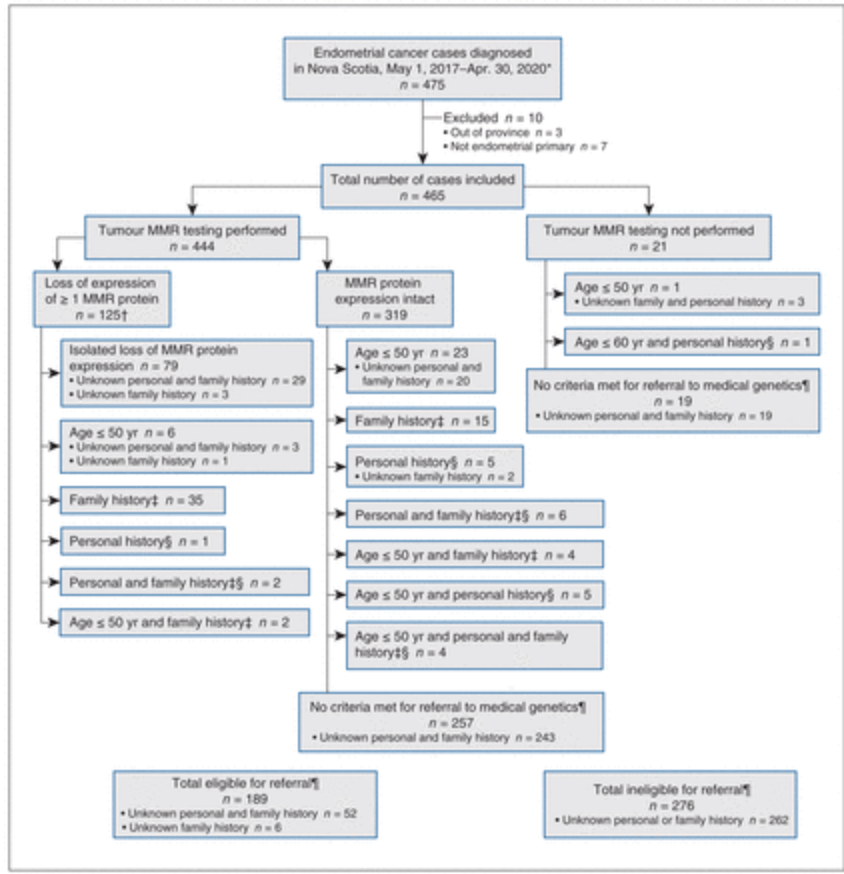
Screening and testing practices for Lynch syndrome in Nova Scotians with endometrial cancer: a descriptive study

Identifying affected people is crucial to cancer management and in providing risk-reducing strategies for them and their affected relatives.

Results: They identified 465 people diagosed with endometrial cancer during the study period. Most were aged 51 years or older, and had obesity and low-grade early-stage endometrioid tumours. Tumour immunohistochemistry testing was performed in 444 cases (95.5%). Based on local criteria, 189 patients were eligible for genetic counselling, of whom 156 (82.5%) were referred to medical genetics. Of the 98 patients who underwent germline testing, 9 (9.2%) were diagnosed with Lynch syndrome.