Defining precancer: a grand challenge for the cancer community

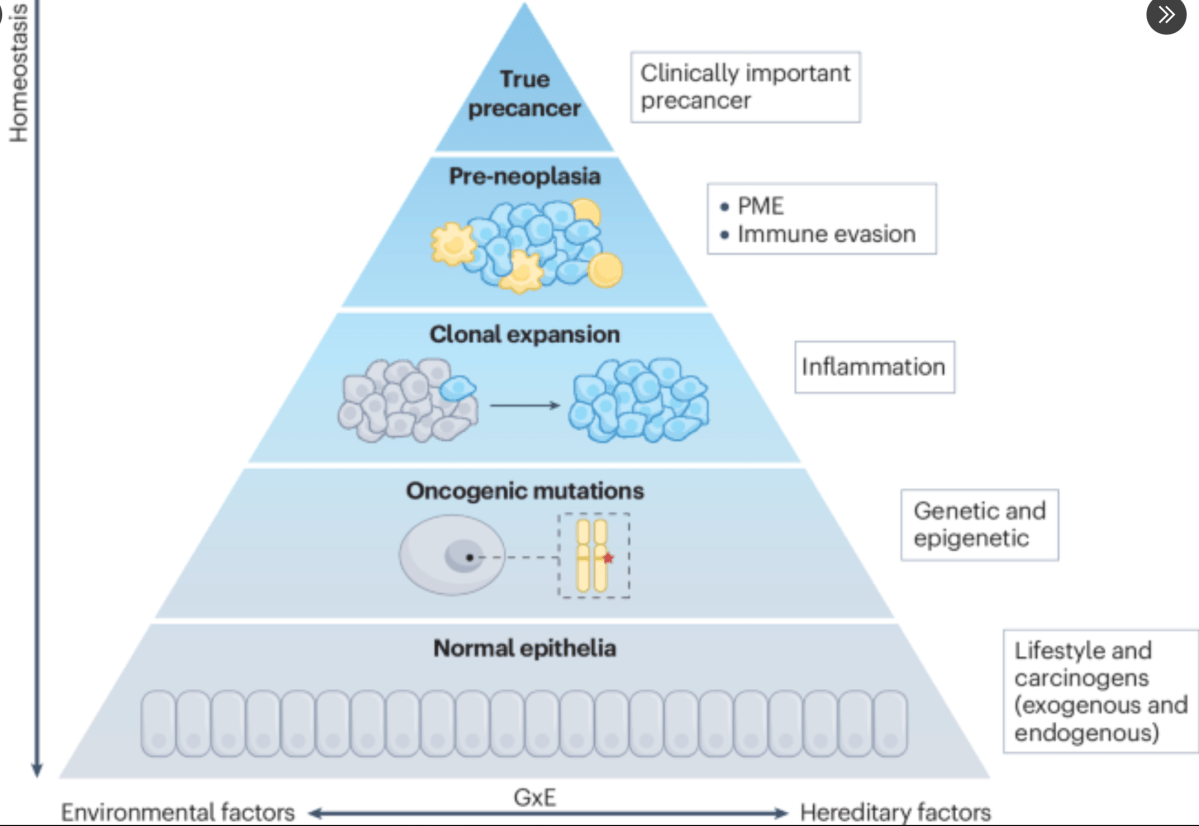
The term ‘precancer’ typically refers to an early stage of neoplastic(abnormal growth of cells) development that is distinguishable from normal tissue owing to molecular and phenotypic alterations, resulting in abnormal cells that are at least partially self-sustaining and function outside of normal cellular cues that constrain cell proliferation and survival.

Provides a starting point for a conceptual framework for defining precancer, which is based on molecular, pathological, clinical and epidemiological criteria, with the goal of advancing our understanding of the initial changes that occur and opportunities to intervene at the earliest possible time point.

Prevalence and Clinical Implications of Mismatch Repair-Proficient Colorectal Cancer in Patients With Lynch Syndrome

Conclusion:

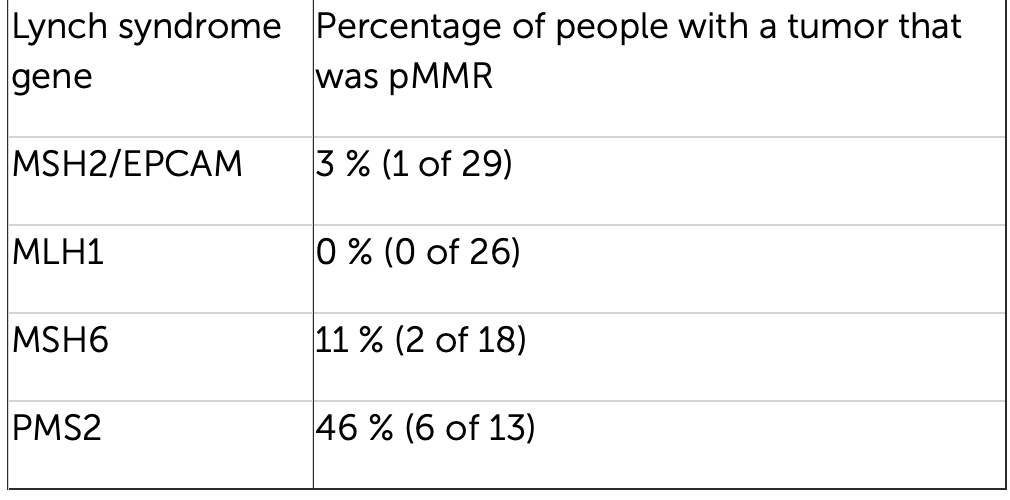
Patients with LS remained at risk for MMR-P(proficient) CRC, which was more prevalent among patients with MSH6 and PMS2 variants. MMR-P CRC was later onset and more commonly metastatic compared with MMR-D(deficient) CRC. Confirmation of tumour MMR/MSI status is critical for patient management and familial risk estimation.

When people with Lynch syndrome develop cancer, their tumours typically have a related set of features or biomarkers known as deficient mismatch repair (dMMR) and high microsatellite instability (MSI-High). However, occasionally people with Lynch syndrome have cancers that are proficient in mismatch repair (pMMR or MMR-P) and have microsatellite stability (MSS or MSI-Low) –more like the colorectal cancers found in people without Lynch syndrome. This study shows that 10 percent of people with Lynch syndrome may have these types of cancers.

https://ascopubs.org/doi/abs/10.1200/PO.22.00675

Findings of the National Engagement on Digital Health and Social Care

Digital improvements will lead to greater availability of health information,
improvements in decision-making, and ultimately safer care and better outcomes for patients.

International experience highlights that engagement is crucial in order to learn what is acceptable to people and to help develop person centred digital systems.

The public overall are positive about the move to digital health and social care
services, and want to be consulted on the format and delivery of digital care.

Professionals think that an online health record will empower people to be more in control of their health.

https://www.hiqa.ie/reports-and-publications/health-information/findings-national-engagement-digital-health-and-social

Estimating cancer risk in carriers of Lynch syndrome variants in UK Biobank

Conclusion:

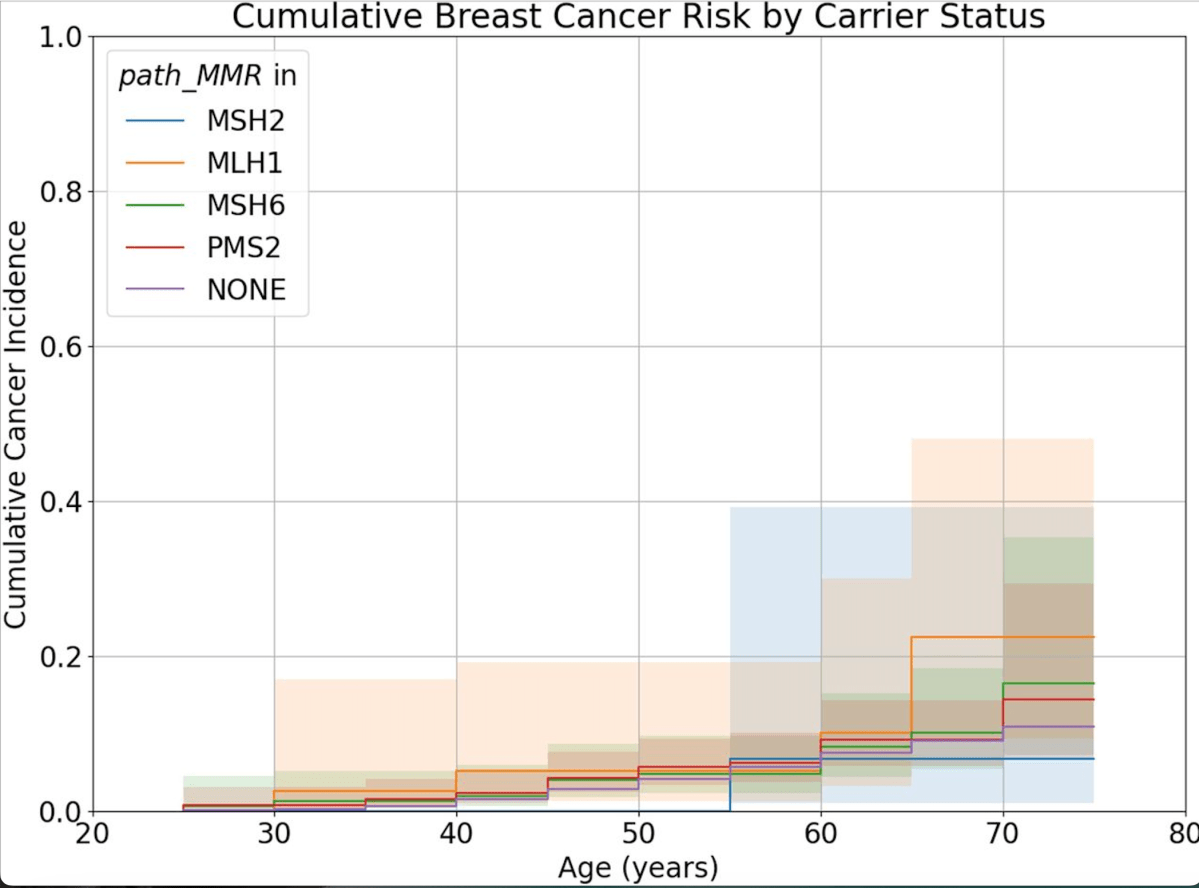
 These results support offering incidentally identified carriers of any path_MMR surveillance to manage colorectal cancer risk.

Incidentally identified carriers of pathogenic variants in MLH1MSH2 and MSH6 would also benefit from interventions to reduce EC risk. The results suggest that Breast Cancer is not an LS-related cancer.

https://jmg.bmj.com/content/61/9/861

When patients worry about being judged

Just because people see me out in public, they shouldn’t assume that I’m back to normal or ‘feeling great.

She sure doesn’t look sick.  She’s a complainer.  She’s STILL off work?! 

“Some clinicians express frustration with patients who have invisible illnesses – blaming them, resenting symptoms without the privilege of certain expression, accusing them of exaggerating or being ‘difficult’, pathologising them as malingering or psychosomatic, or labeling them in ways that are dismissive of their deep knowledge and understanding of their own bodies and lived experiences.”

It’s not only spoken words that can make us feel  judged. In a study published in the Journal of General Internal Medicine,  for example, Dr. Leonor Fernández – an assistant professor of medicine at Harvard – reported that one in 10 patients she studied “felt judged and/or offended”  by comments written about them in their patient portal chart notes2  – especially among patients reporting poor health, unemployment or inability to work.

Living Beyond the Diagnosis: Lynch Syndrome Awareness

My paternal family medical history is marked with early-onset colorectal cancer. Learning about my genetic status was a life-changing experience. The discovery that my condition was hereditary meant that my family members, including my son, could also be at risk. Certified genetic counseling played a crucial role in my journey, helping me comprehend the significance of genetic testing and how to manage my health moving forward. 

If you meet one or more of the red flags below, I urge you to consult with your doctor and a certified genetic counsellor: 

  • Family member with a confirmed diagnosis of Lynch syndrome 
  • Colorectal and endometrial cancer diagnosis at any age, particularly after pathology testing shows alterations related to Lynch syndrome
  • Multiple primary cancer diagnoses
  • Several family members have had cancers related to Lynch syndrome.

Despite the challenges, living with Lynch syndrome has empowered me to make informed health choices, advocate for better healthcare, and support others, striving for a healthy, fulfilling life.

https://www.ihadcancer.com/living-beyond-the-diagnosis-lynch-syndrome-awareness

One test to detect multiple cancers – where are we now?

Most cancers diagnosed at an earlier stage have a better prognosis. Detecting and diagnosing cancer earlier can mean there are more treatment options for patients and, ultimately, can help people survive cancer and lead longer, better lives.  

What are multi-cancer tests?

As described above, an MCT is a tool that searches for multiple cancers in one sample, typically blood, urine, breath, or stool. All MCTs share some similarities, but the ways they identify cancers can be slightly different.  

MCEDs(multi-cancer earlier detection tests) could completely change what cancer screening looks like by making it possible to screen for multiple cancers with one test. MCEDs could also allow us to screen for cancers that aren’t covered by individual screening programmes, including less common cancers. That means MCEDs could be a more efficient way to find more types of cancer earlier, when they are more curable, helping people live longer, better lives. 

https://news.cancerresearchuk.org/2024/06/12/multi-cancer-tests-mced-tests-where-are-we-now/

Individual Health Identifier (IHI)

Did you know….

The Health Identifiers Act 2014 was enacted by the government to allow two new national data collections–called the National Register of Individual Health Identifiers and the National Register of Health Service Provider Identifiers to be created and operated.

An Individual Health Identifier (IHI) has the following benefits for you:

Improved accuracy in identifying you and your medical records will
lead to safer and better care being provided to you.

Improved accuracy in identifying and associating your records in
different healthcare organisations.
Your health information can be shared safely and seamlessly
between health service providers, for example on referral letters
sent from a private GP to a public hospital.

The use of an Individual Health identifier also enables the
electronic transfer of your health information, which results in faster
care for you.

Medical or clinical information will NEVER be stored on your IHI record. Health
service providers may however use your IHI, to uniquely identify you, when
communicating with other health service providers about your care for example
when a medical consultant is corresponding with your GP or visa versa.

What increases my risk of uterine (womb) cancer?

The cause of uterine (womb) cancer is unknown. But there are certain things called risk factors that can increase your chance of developing the disease. These include:

  • Age: It is more common in women after the menopause between the ages of 50 and 64.
  • Being overweight: If you are overweight, your risk of uterine cancer is increased.
  • Hormone replacement therapy (HRT): If you are taking oestrogen-only HRT for a long time after the menopause, your risk of uterine cancer is slightly increased.
  • Family history: Family history of uterine cancer in a first degree relative (mother, sister, daughter). If you have an inherited faulty gene, it raises your risk of developing uterine or bowel cancer. In a small number of families, this faulty gene can cause a condition called Lynch Syndrome .
  • No pregnancies: If you have not had children or never been pregnant, your risk of uterine cancer is increased.
  • Polycystic ovaries: If you have polycystic ovaries, your risk is increased. This is a condition where cysts grow in the ovaries.
  • Menstrual history: If your started your periods early in life and / or started your menopause later, your risk is higher. 

https://www.cancer.ie/cancer-information-and-support/cancer-types/uterine-womb-cancer/what-increases-my-risk-of-uterine-womb-cancer

Incidences of colorectal adenomas and cancers under colonoscopy surveillance suggest an accelerated “Big Bang” pathway to CRC in three of the four Lynch syndromes

Conclusions: Colonoscopy prevented CRC in path_PMS2 carriers but not in the others. Our findings are consistent with colonoscopy surveillance blocking the adenoma-carcinoma pathway by removing identified adenomas which might otherwise become CRCs. However, in the other carriers most CRCs likely arised from dMMR cells in the crypts that have an increased mutation rate with increased stochastic chaotic probabilities for mutations. Therefore, this mechanism, that may be associated with no or only a short sojourn time of MSI tumours as adenomas, could explain the findings in our previous and current reports.

path_MMR:Pathogenic or likely pathogenic variant in one of the MMR genes (MLH1, MSH2, MSH6, or PMS2)

https://pubmed.ncbi.nlm.nih.gov/38741120/

Overall….colonoscopy works either by preventing some cancer, or where this is not biologically possible- by diagnosing cancer early.