Reforms needed to get quicker access to new medicines, says IPHA

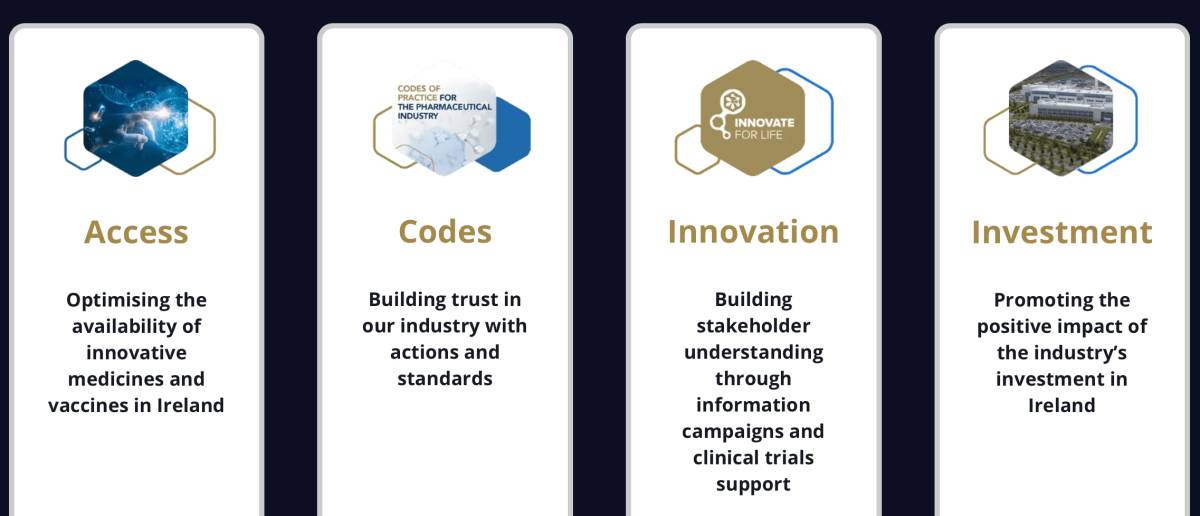
The Irish Pharmaceutical Healthcare Association (IPHA) has said that patients in Ireland could get access to new medicines a year earlier, if there were reforms here.

The new Programme for Government said the coalition is committed to ensuring that patients have access to news medicines as quickly as possible.

The IPHA has said it is clear that the system for covering new medicines needs to be funded, governed and designed to operate within the legal 180-days timeline set by the Oireachtas.

Meanwhile, a new four-year Framework Agreement on the pricing and supply of medicines between the State and IPHA is due to be negotiated this year.

https://www.rte.ie/news/2025/0226/1498941-ipha-medicines/

Interesting discussion on the “human cost” of delayed approval….

“System not very transparent”

“Strategically a commercial process”

“Difficult conversations on a daily basis”

https://www.rte.ie/radio/radio1/today-with-claire-byrne/2025/0226/1499089-today-with-claire-byrne-wednesday-26-february-2025//

CANCER TEST DESIGNED BY NEWCASTLE SCIENTISTS COULD IMPROVE SURVIVAL RATES

Lynch syndrome significantly increases a person’s risk of developing certain types of cancer, in particular colorectal which is the fourth most common cancer in the UK.

Screening for Lynch syndrome means that if a person tests positive, a DNA test can then be offered to their relatives to see who else has the condition, so that they can then be put on a regular programme of checks.

The test can also guide the best treatment to provide, as it can indicate whether a person will respond to immunotherapy, a new and effective approach to cancer treatment with increased accuracy.

Newcastle upon Tyne Hospitals NHS Foundation Trust is leading the rollout of the project and the test is being evaluated for patients at the Royal Marsden Hospital, Manchester University NHS Foundation Trust, Birmingham NHS Foundation Trust and Bristol NHS Foundation Trust.

Creation of a future European Network of National Cancer Mission Hubs (NCMHs)

ECHoS is an European project, funded by Horizon Europe Programme, that aims to support the implementation of the Cancer Mission activities in all Member State and Associated Country (MS/AC) through the establishment and development of National Cancer Mission Hubs (NCMHs) operating at national, regional, and local levels. By establishing NCMHs in each MS/AC, European citizens and organisations in health, research, and beyond, will be voiced and their voices will echo together.

ECHoS broad scope seeks to take cancer-policy dialogues beyond research and innovation, and health systems, covering also other relevant areas in cancer control and support, such as employment, education, and socioeconomic aspects.

To guarantee alignment and progress in the field of cancer, ECHoS will be guided by impacting subareas of Cancer Mission – namely prevention, early detection and treatment, quality of Life and survivorship – as well as equity, sustainability, and cross-cutting EU priorities such as social engagement and digital health.

http://www.cancermissionhubs.eu

Primary Care Research into Cancer(PRICAN)

What is PRICAN?

Cancer represents a significant public health challenge in Ireland. Forecasts also indicate a potential doubling of cancer diagnoses between 2010 and 2040, primarily due to an ageing population. 

In recent years, there has been a shift in cancer control strategies towards prioritising prevention and early diagnosis, as the most cost-effective long-term approach to cancer control.

The National Cancer Strategy explicitly calls for an expanded role for general practitioners (GPs) in managing the entire cancer continuum, from prevention and early diagnosis to treatment and ongoing survivor support.

Despite its increasing importance in cancer control, primary care research has historically received less funding compared to laboratory and hospital-based research.

Whilst screening enables early detection of some presymptomatic cancer, approximately 85% of cancers are diagnosed after the onset of symptoms . This fact underscores the importance of equipping primary care with robust clinical guidelines and efficient referral pathways. 

The anticipated rise in cancer incidence demands proactive measures to strengthen the Irish healthcare system. By recognising the critical role of primary care across the cancer care continuum, and adopting a strategic approach to investment in research, Ireland can develop and implement evidence-based policies and strategies. This approach will not only mitigate the impacts of increasing cancer incidence but also position Ireland at the forefront of innovative and effective cancer care.

https://prican.eu

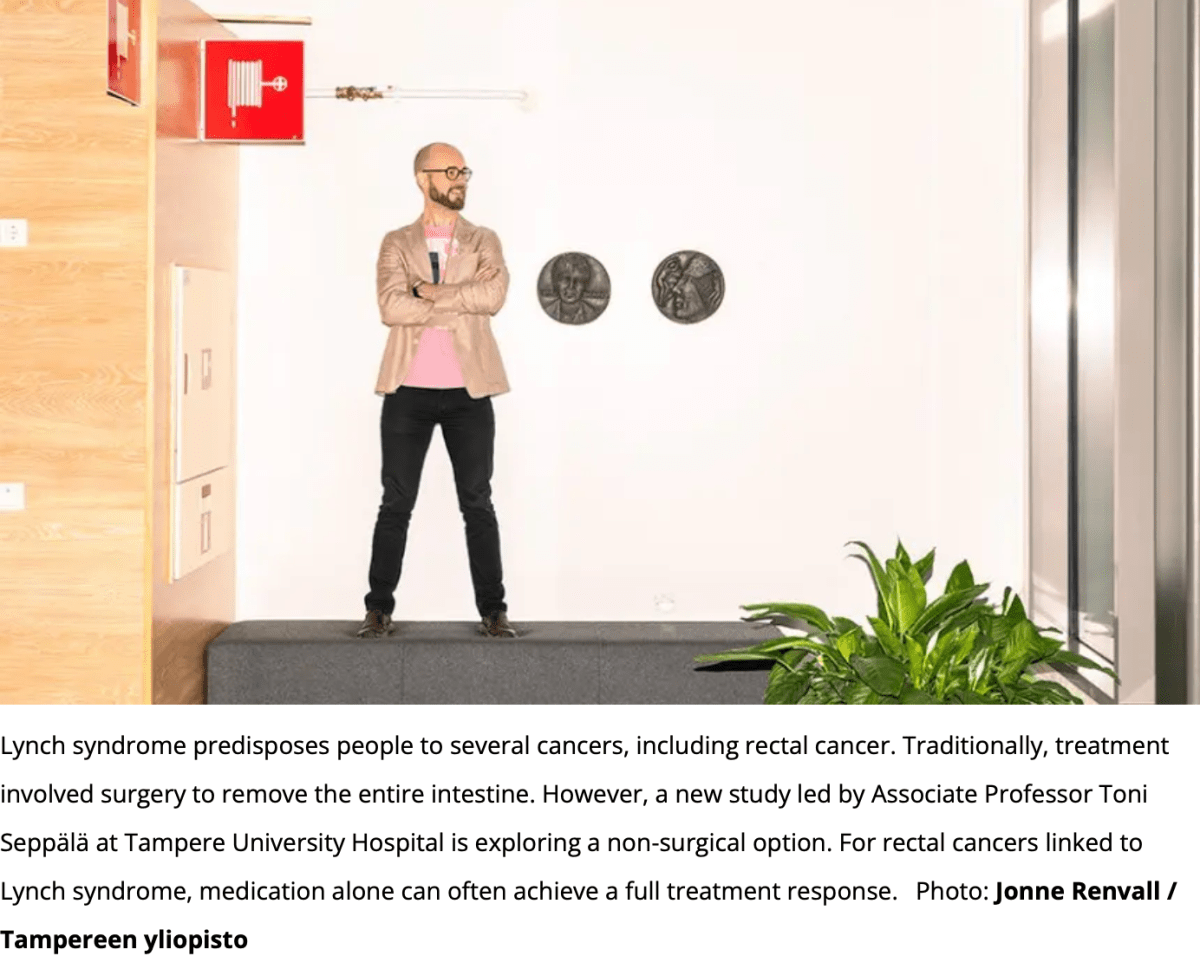
A genetic mutation can save lives – Lynch syndrome paves the way for cancer vaccines and personalised treatments

While Lynch syndrome increases the risk of cancer for its carriers, it also provides a unique opportunity to understand disease mechanisms. It is likely that the first preventive cancer vaccine will be specifically developed against cancers caused by Lynch syndrome.

From the individual’s perspective, Lynch syndrome and its prevalence in the population is not a positive thing, but from the research standpoint it is, meaning that the disease can also benefit patients.

“Currently, there is intense development work on cancer-preventive vaccines, which will soon be tested in large patient groups. The most progress has been made with cancers linked to Lynch syndrome. It will be a major breakthrough when we can prevent cancers that we know are likely to develop,” Seppälä says.

In Lynch syndrome, identifying carriers of the genetic mutation is vital because healthcare interventions can greatly benefit these patients. Generally, there needs to be greater awareness in society about the importance of molecular profiling. 

https://www.tuni.fi/en/news/genetic-mutation-can-save-lives-lynch-syndrome-paves-way-cancer-vaccines-and-personalised

The Cancer Trials Ireland Hustings

Watch this dynamic roundtable discussion, hosted by Cancer Trials Ireland. Leaders in cancer research, patient advocacy, and politics come together to address critical issues in cancer trials and patient care.

In an Ideal World: We would have….

  • A central point to support people who are affected by Lynch Syndrome or other Genetic Cancer defects.
  • An integrated Cancer Genetics service.
  • An increased Genetics workforce.
  • A Genetics Testing center in Ireland.
  • A comprehensive IT system to Manage/Track and generally improve the collection/storage of relevant information.
  • Improved awareness by Public and Medics of Genetics.
  • A dedicated Pathway for people with a genetic cancer issue.
  • Improved support available to help in relaying a diagnosis to the wider family.
  • A national BioBank to improve/help research in this area.

Neoadjuvant Immunotherapy in Locally Advanced Mismatch Repair–Deficient Colon Cancer

Mismatch repair–deficient (dMMR) tumors can be found in 10 to 15% of patients with nonmetastatic colon cancer {(dMMR) is a characteristic feature of cancers linked to Lynch syndrome}. In these patients, the efficacy of chemotherapy is limited. The use of neoadjuvant immunotherapy has shown promising results, but data from studies of this approach are limited.

In patients with locally advanced dMMR colon cancer, neoadjuvant nivolumab plus ipilimumab had an acceptable safety profile and led to a pathological response in a high proportion of patients. (Funded by Bristol Myers Squibb; NICHE-2 ClinicalTrials.gov number, NCT03026140.)

https://www.nejm.org/doi/abs/10.1056/NEJMoa2400634?fbclid=IwY2xjawFHmDxleHRuA2FlbQIxMAABHUNVI8L9tFqyfOf8VgXnMe_FQD66QeQWgeuBcx6KbHEhc5aNVAnwqeltcA_aem_N86c6H8pvNxiA7eu28_H-Q

ThisisGo.ie

thisisGO.ie is an online personalised resource for you and yours who have been impacted by a gynaecological cancer.

Also contains: genetic pathway for those impacted by BRCA and Lynch Syndrome. 

Did you know that all national clinical and non clinical trials can be found on the homepage. If your trial is not up there email contact@thisisgo.ie

Cancer prevention vaccine (Nous-209) for people with Lynch syndrome

This US study is testing a vaccine, known as the Nous-209 vaccine, which is intended to decrease the chances that people with Lynch syndrome will develop polyps that can turn into cancer. 

People with Lynch syndrome who enroll in the study will participate for one year. It evaluates the safety and effectiveness of the Nous-209 vaccine in people affected with Lynch syndrome.

https://www.facingourrisk.org/research-clinical-trials/study/278/cancer-prevention-vaccine-nous-209-for-people-with-lynch-syndrome