Guidelines for the management of hereditary colorectal cancer from the British Society of Gastroenterology (BSG)/Association of Coloproctology of Great Britain and Ireland (ACPGBI)/United Kingdom Cancer Genetics Group (UKCGG)

2019: A systematic review of 10 189 publications was undertaken to develop 67 evidence and expert opinion-based recommendations for the management of hereditary CRC risk. Ten research recommendations are also prioritised to inform clinical management of people at hereditary CRC risk.

Objective:

To provide a clear strategy for the management of people at hereditary risk of colorectal cancer (CRC), which includes diagnosis, endoscopic management, prevention and surgical care.

Lynch syndrome (LS)

  • We recommend that for all people when first diagnosed with CRC, testing using immunohistochemistry (IHC) for MMR proteins or microsatellite instability is used to identify tumours with deficient DNA MMR, and to guide further sequential testing for LS. (GRADE of evidence: moderate; Strength of recommendation: strong)
  • We recommend that colonoscopic surveillance should be performed at a 2 yearly interval for all LS patients. (GRADE of evidence: moderate; Strength of recommendation: strong)
  • We recommend that age of onset of surveillance colonoscopy should be stratified according to the LS-associated gene. We recommend colonoscopy from age 25 years for MLH1 and MSH2 mutation carriers and 35 years for MSH6 and PMS2mutation carriers. There are insufficient data to support stratifying age of onset of surveillance by gender. (GRADE of evidence: moderate; Strength of recommendation: strong)
  • We suggest that for LS patients with MLH1 or MSH2 mutations who develop colon cancer or colonic neoplasia not amenable to endoscopic control, the decision to perform segmental versus total/near total colectomy should balance the risks of metachronous cancer, the functional consequences of surgery, the patient’s age and patient’s wishes. (GRADE of evidence: Moderate; Strength of recommendation: strong)
  • We recommend that for LS patients with MSH6 or PMS2 mutations there is insufficient evidence for oncological benefit of extended colectomy over segmental resection. (GRADE of evidence: low; Strength of recommendation: strong)
  • We suggest that when abdominal-perineal excision can be avoided, a standard low anterior resection is a reasonable option to treat rectal cancers in LS patients, even though the residual colon is at high-risk of metachronous neoplasia. (GRADE of evidence: low; Strength of recommendation: weak)
  • We recommend that gastric, small bowel, or pancreatic surveillance in LS patients is only performed in the context of a clinical trial. (GRADE of evidence: low; Strength of recommendation: strong)
  • We recommend screening for H elicobacter pylori in patients with LS and subsequent eradication therapy if indicated. (GRADE of evidence: low; Strength of recommendation: strong)

https://gut.bmj.com/content/69/3/411#article-bottom

The Role of Colonoscopy in the Management of Individuals with Lynch Syndrome: A Narrative Review

Rather than continuing to shorten the timing of endoscopic surveillance, other early diagnostic techniques and subsequent prevention strategies should be forecasted in order to allow a more effective and customised endoscopic surveillance of individuals with Lynch Syndome.

Subjects with LS need clear and repeated explanations about the value of endoscopic surveillance. Often, they also require psychosocial support. The usefulness of specialised programs aiming to remind patients of the dates of both exams and clinical follow-ups has been demonstrated 

Open Questions 

These hypotheses raise several questions: assuming that there is more than one pathway to CRC, what is the relative contribution of each? Are there different genetic backgrounds? Which are they?

https://pmc.ncbi.nlm.nih.gov/articles/PMC10417258/

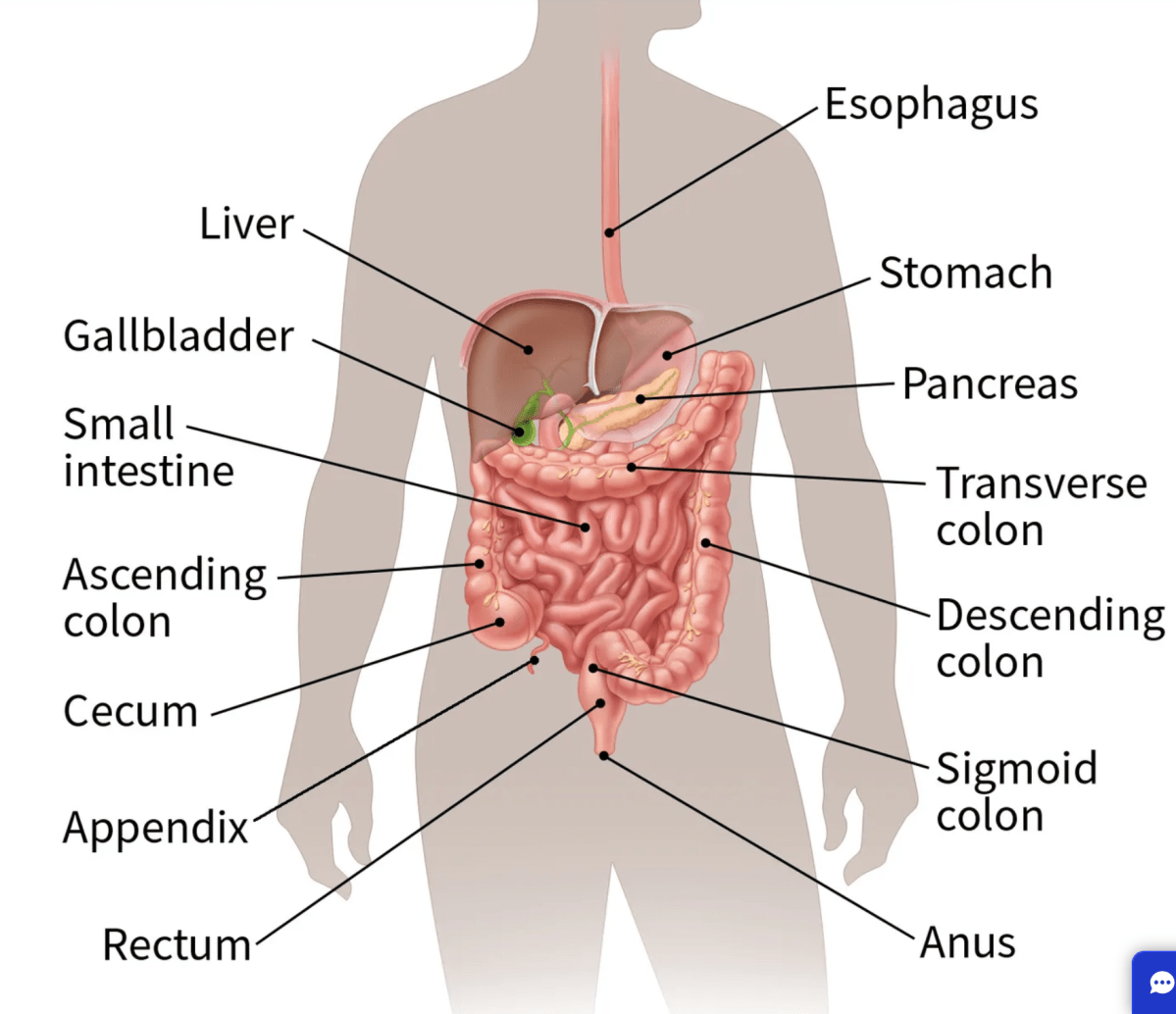
Colorectal cancer starts in the colon or the rectum. These cancers can also be called colon cancer or rectal cancer, depending on where they start. Colon cancer and rectal cancer are often grouped together because they have many features in common.

This article covers:

How do the colon and rectum work?

How does colorectal cancer start?

Polyps in the colon or rectum

How colorectal cancer spreads

Types of cancer in the colon and rectum

Be aware of signs and symptoms

It’s important for everyone to be aware of any changes in your body that are not normal for you, especially if you have an increased risk due to Lynch syndrome. Always get any changes checked by your GP, even if you have had a screening test or are due one soon.

https://www.cancer.org/cancer/types/colon-rectal-cancer/about/what-is-colorectal-cancer.html

https://www.cancer.ie/cancer-information-and-support/cancer-information/about-cancer/causes-of-cancer/cancer-and-genes/lynch-syndrome

Prevalence and Clinical Implications of Mismatch Repair-Proficient Colorectal Cancer in Patients With Lynch Syndrome

Conclusion:

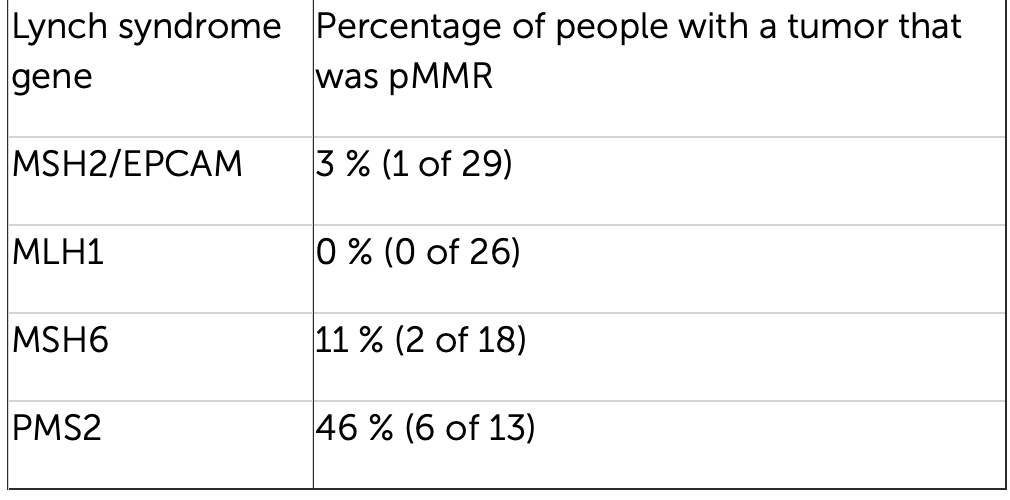
Patients with LS remained at risk for MMR-P(proficient) CRC, which was more prevalent among patients with MSH6 and PMS2 variants. MMR-P CRC was later onset and more commonly metastatic compared with MMR-D(deficient) CRC. Confirmation of tumour MMR/MSI status is critical for patient management and familial risk estimation.

When people with Lynch syndrome develop cancer, their tumours typically have a related set of features or biomarkers known as deficient mismatch repair (dMMR) and high microsatellite instability (MSI-High). However, occasionally people with Lynch syndrome have cancers that are proficient in mismatch repair (pMMR or MMR-P) and have microsatellite stability (MSS or MSI-Low) –more like the colorectal cancers found in people without Lynch syndrome. This study shows that 10 percent of people with Lynch syndrome may have these types of cancers.

https://ascopubs.org/doi/abs/10.1200/PO.22.00675

Estimating cancer risk in carriers of Lynch syndrome variants in UK Biobank

Conclusion:

 These results support offering incidentally identified carriers of any path_MMR surveillance to manage colorectal cancer risk.

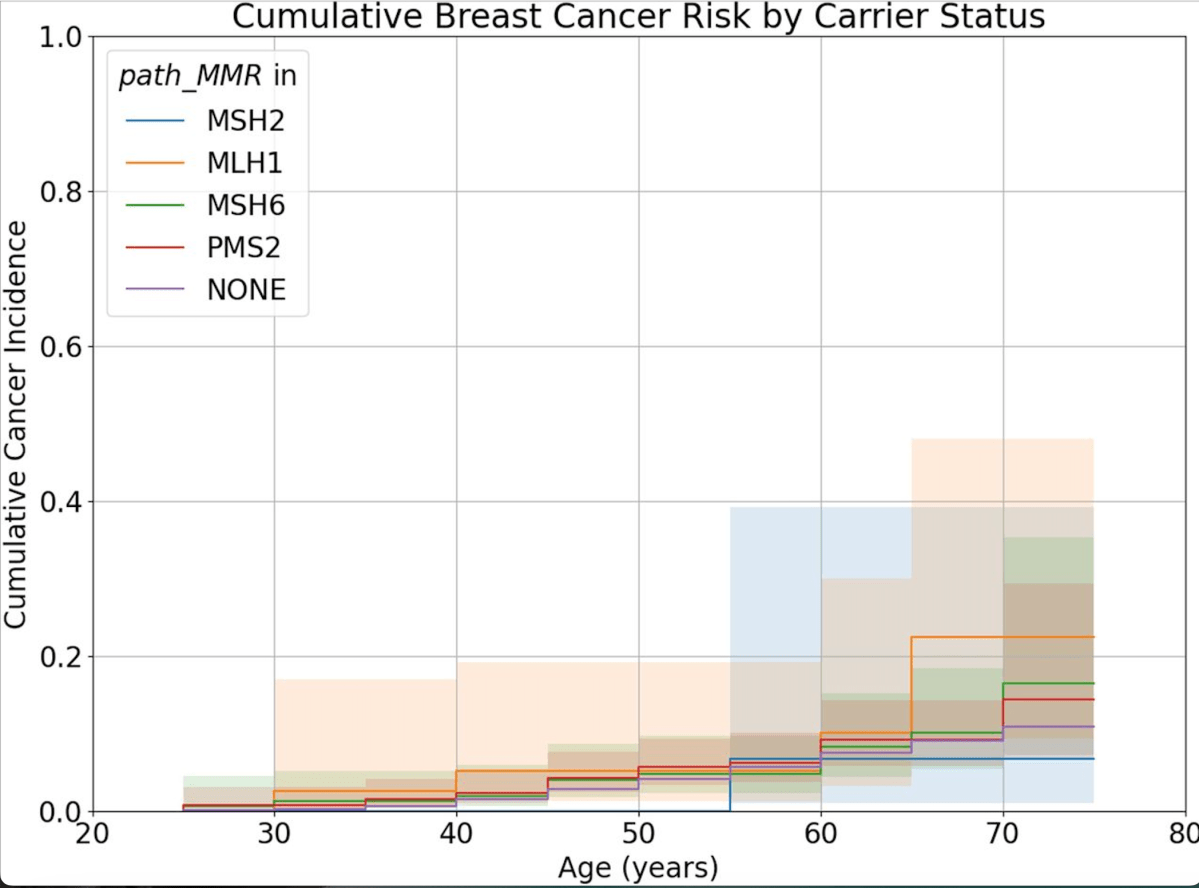
Incidentally identified carriers of pathogenic variants in MLH1MSH2 and MSH6 would also benefit from interventions to reduce EC risk. The results suggest that Breast Cancer is not an LS-related cancer.

https://jmg.bmj.com/content/61/9/861

Cork doctor with bowel cancer: ‘More people are getting it under age 50’

She talks with humour about her cancer journey. “I try not to take anything too seriously. With cancer and advanced cancer — and what might be called terminal cancer — people can be unsure how to talk about it. I’m very open about serious illness and humour’s important in helping have these conversations.”

She started her blog, Adventures of a Sick Doctor, after her first diagnosis, to let scattered-around-the-globe family and friends know how she was doing. She never expected its broad public appeal.

“Changes in bowel habits, losing weight, blood in poo; any of these, it’s very important to visit the GP. If you’re between 59 and 70, sign up for bowel screening.

“It’s one of the best ways of avoiding the bowel cancer journey I’ve been on.”

https://www.irishexaminer.com/lifestyle/healthandwellbeing/arid-41479222.html?fbclid=IwY2xjawFeCMNleHRuA2FlbQIxMQABHfiyLhYeqZ-3wXip9srbTmFVtYCGyElDA2XikxDvGWbvY_zDOa3nz1pVSw_aem_AmQPPxy0WF2Du1QNTqoxSQ

Lynch Choices

  • Lynch syndrome (‘Lynch’) is an inherited condition that increases the chance of developing certain cancers. The type of cancer depends on the genes involved.
  • This website helps people with Lynch to make choices that are right for them. It is designed to be used with support from the genetics service, GPs, healthcare teams in the community, charities and patient groups.
  • If you are concerned about Lynch but have not been diagnosed, please speak to your GP or genetics service.
  • Each session helps you think about your choices at home, so you are ready to talk through your choices with a GP, genetics or other specialist.

https://canchoose.org.uk

Gastric and duodenal cancer in individuals with Lynch syndrome: a nationwide cohort study

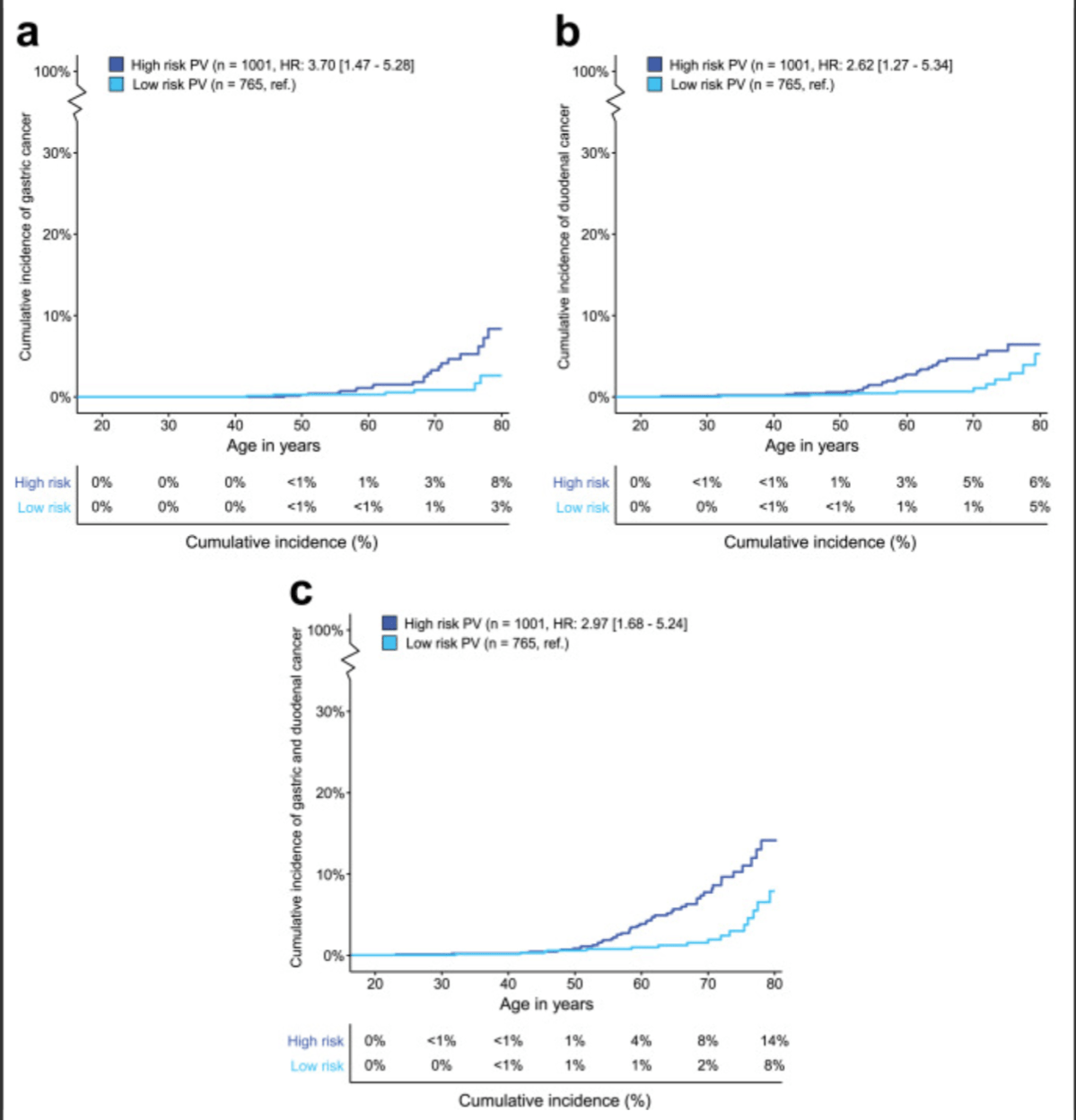
The benefit of EGD surveillance in individuals with Lynch syndrome is still a topic of debate.

Considering the invasive nature of the procedure, the patients’ burden, and—albeit small–the risks associated with conscious sedation and the procedure itself, it is essential to provide EGD surveillance only to individuals at high risk of developing GC and DC who could benefit from this procedure. 

https://www.thelancet.com/journals/eclinm/article/PIIS2589-5370(24)00073-7/fulltext#secsectitle0095

What is DNA Methylation?

Researchers have linked abnormal DNA methylation to several adverse outcomes, including human diseases.

So far, much of this research has been focused on cancer and tumour suppressor genes, since hypermethylation often results in the silencing of tumour suppressor genes in cancerous cells.

Compared to normal cells, the genomes in cancer cells have also been shown to be hypomethylated over all, with hypermethylation only occurring in the genes involved in tumour cell invasion, cell cycle control, DNA repair and other processes where silencing would lead to the spread of cancer.

In colon cancer, it is possible to detect hypermethylation early on in the course of disease, meaning hypermethylation may serve as a biomarker for the condition.

https://www.news-medical.net/life-sciences/What-is-DNA-Methylation.aspx