Understanding MSI-High and DNA Mismatch Repair (dMMR)

MSI-H and Lynch Syndrome

Microsatellite instability which is caused by deficiency of the DNA MMR system is the molecular abnormality observed in tumors associated with Lynch syndrome. Lynch syndrome represents one of the most frequent conditions of cancer predisposition in human, thus requiring specific care and genetic counseling.

Detection of MSI is important because MSI is the biomarker that identifies cancers more likely to respond to treatment with precision cancer medicines known as PD-1 immune checkpoint inhibitors. 

https://news.cancerconnect.com/colon-cancer/understanding-msi-high-and-dna-mismatch-repair

thisisGO – Lynch Syndrome

thisisGO.ie is an online personalised resource for you and yours who have been impacted by a gynaecological cancer.

Also an excellent resource for Lynch Syndrome.

MyLynch: A Patient-Facing Clinical Decision Support Tool for Genetically-Guided Personalised Medicine in Lynch Syndrome

Lynch syndrome (LS) is associated with varying cancer risks depending on which of the five causative genes harbors a pathogenic variant; however, lifestyle and medical interventions provide options to lower those risks.

“We developed MyLynch, a patient-facing clinical decision support (CDS) web application that applies genetically-guided personalized medicine (GPM) for individuals with LS. MyLynch informs LS patients of their personal cancer risks, educates patients on relevant interventions, and provides patients with adjusted risk estimates depending on the interventions they choose to pursue. MyLynch can improve risk communication between patients and providers while also encouraging communication among relatives with the goal of increasing cascade testing. As genetic panel testing becomes more widely available, GPM will play an increasingly important role in patient care, and CDS tools offer patients and providers tailored information to inform decision-making. MyLynch provides personalised cancer risk estimates and interventions to lower these risks for patients with LS.”

https://www.mdpi.com/2072-6694/15/2/391

“The MyLynch risk estimates and their clinical utility should be validated on larger samples of patients in future studies. We also plan to produce a mobile compatible version of the app as well as incorporate risk uncertainty into the estimates.”

Cancer Society ‘astonished’ at move to delay law banning insurer penalties

The right to be forgotten is the concept that cancer survivors who have gone a period of time without needing treatment should have their previous diagnosis disregarded when accessing insurance, life policies and financial products.

Insurance Ireland claims plans for mandatory action will undermine ‘fairness’ in the market, while the Department of Finance stalled the bill which would have stopped survivors being penalised.

“We published research in February 2022 which found that of the people who reported experiencing difficulties with financial providers, 49 per cent of the survey respondents who were affected by cancer were refused by one or more providers,” 

Online personalised resource for you and yours who have been impacted by a gynaecological cancer.

Gynaecological cancers refer to any cancer of the female reproductive system which includes the uterus (womb), the ovaries, the cervix (the neck of the womb), the vulva (the outer part of the female genitals) or the vagina.

Ovarian cancer and was launched in February 2022 and the genetic conditions, BRCA and Lynch Syndrome, were added in May 2022.  Uterine cancer went live in September 2022.  Vulva cancer and vaginal cancer will be live before the end of 2022.

Just log on to https://thisisgo.ie and select “My Profile”

HRCI 2023 Position Paper – Embedding research in healthcare

“While there are many aspects of health research in need of attention and support, we believe it is particularly urgent to support the embedding of research within the health service.

To this end, we lay out three recommendations:

Recommendation 1    Progress the implementation of a national electronic health record  

Recommendation 2    Build on momentum to support genetics and genomics research  

Recommendation 3    Establish research support functions within the health service

https://drive.google.com/file/d/1I14EY8MdChGaui6w5iXHU5oxrPuS_C7i/view

Medical gaslighting: ‘No man would be asked if they suffer from panic attacks while having a heart attack’

Women are more likely to feel their symptoms are not being taken seriously by doctors. Why?

“Medical gaslighting” is a controversial term that has emerged to describe a phenomenon some people – women in particular – may recognise. It refers to a patient’s feeling that their symptoms are not taken seriously, or are being misdiagnosed by healthcare professionals.

Now researchers are interested in understanding why this is, and whether gender stereotyping might play a role. Are doctors more likely to attribute pain or exhaustion in women to non-physical causes such as stress?

https://www.irishtimes.com/health/2023/01/28/medical-gaslighting-no-man-would-be-asked-if-they-suffer-from-panic-attacks-while-having-a-heart-attack/

How to be a Patient. It’s ok to make a fuss.

https://www.irishtimes.com/health/2023/01/22/how-to-be-a-patient-its-okay-to-make-a-fuss-about-yourself/

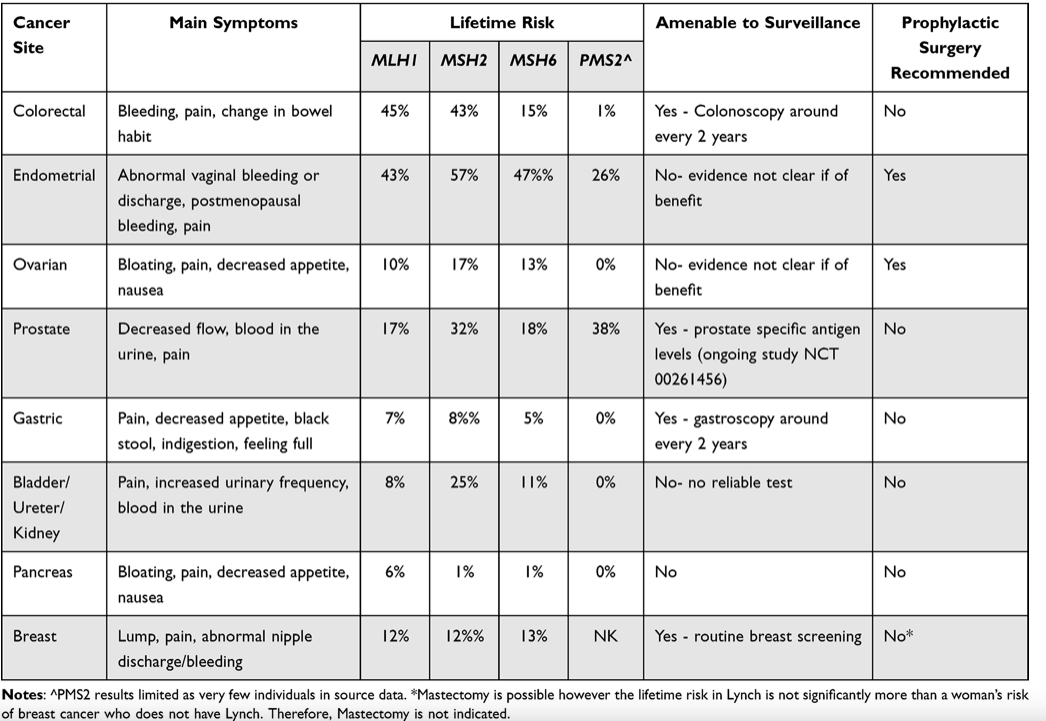
A Focused Clinical Review of Lynch Syndrome

In summary, LS care has come a long way over the last twenty years. We now understand the individual cancer risk to inform consent, tests to accurately diagnoses LS and ways by which we can reduce cancer risk.

However, more needs to be done to find those who are undiagnosed, develop less invasive cancer surveillance methods and develop new vaccinations and treatments.

https://www.dovepress.com/a-focused-clinical-review-of-lynch-syndrome-peer-reviewed-fulltext-article-CMAR?fbclid=IwAR33GEIsS9fAA63cUmvwRtWTrGALZ2a74tovR7JMBPYNVjDdsx_dDun9oMQ