

The GENE-ONC Education programme will support healthcare providers and cancer patients by integrating the study of a person’s genes (Genomics) into routine cancer care through both undergraduate and continuing education programmes. Genomic information and data are increasingly used to inform diagnosis and the choice of treatment strategies supporting much more tailored approaches to the management of cancer.
Category: Prevention
Genotes – a ‘just-in-time’ genomics education resource co-designed with clinicians

Have you heard about #GeNotes? Flagship resource of NHSE
designed to support clinicians in requesting and managing complex genomic tests – read all about it!Powerful new genomic technologies are transforming the way healthcare is delivered, shaping medical practice across all specialties. In this rapidly changing landscape, there is an urgent need to equip the clinical workforce with knowledge and skills to navigate the new healthcare terrain.
They describe the co-design and co-creation of the GeNotes genomic education resource by clinicians, for clinicians. We anticipate that this approach will have relevance and utility for other educators attempting to meet the needs of a diverse set of end-users in similarly fast-moving fields.
https://link.springer.com/article/10.1186/s12909-024-06059-w
Caregivers
Another incredible example of dedication, compassion & tireless efforts of a caregiver providing essential support to loved ones with #LynchSyndrome
Lynch Syndrome Ireland

Central point for Lynch syndrome related issues in Ireland. An inherited predisposition to certain types of cancer e.g. colon and endometrial.
Bluesky: @lsireland.bsky.social
Instagram: Lynch syndrome Ireland
Mainstreaming cancer genetics: feasibility of an advanced nurse practitioner-led service diagnosing Lynch syndrome from colorectal cancer in Ireland

Conclusion: Access to and timely delivery of specialist cancer genetics services represents a substantial unmet need in Ireland, the requirement for which is projected to increase significantly over the coming years. Our institutional experience confirms the feasibility, efficiency and efficacy of an ANP-led mainstreamed model of care for hereditary colorectal cancer. The development of this service aligns with national healthcare priorities to deliver timely and appropriate cancer genetics services in a coordinated way integrated with the patient’s cancer care pathway. Development and expansion of similar services would facilitate enhanced delivery of cancer genetics services into routine clinical practice, ensuring uniformity, safety, high quality, and cost-effective care. However, this will necessarily require appropriate resourcing and investment.
It’s time to Deliver the Cancer Care Ireland Deserves

https://twitter.com/IrishCancerSoc/status/1858645024570802553
@mccarthymt7 With the General Election in Ireland approaching, I had a look through the @FineGael, @fiannafailparty and @labour party manifestos this evening as they relate to cancer services – so that you don’t have to (although feel free to look)!
Uptake of Aspirin Chemoprevention in Patients With Lynch Syndrome
Two hundred and ninety-six participants completed the survey.
Uptake of regular ASA or NSAIDs was modest at 34.8% and was even lower (25.7%) when focusing on individuals taking ASA or NSAIDs solely for chemoprevention of LS. More than half (55%) were taking <100 mg ASA daily.
Conclusion: Patient perceptions of the pros and cons of ASA, more so than demographic and disease-related factors, were associated with chemoprevention uptake.
Cancer Genetic Counsellors in Ireland
Inaugural Event held this week.
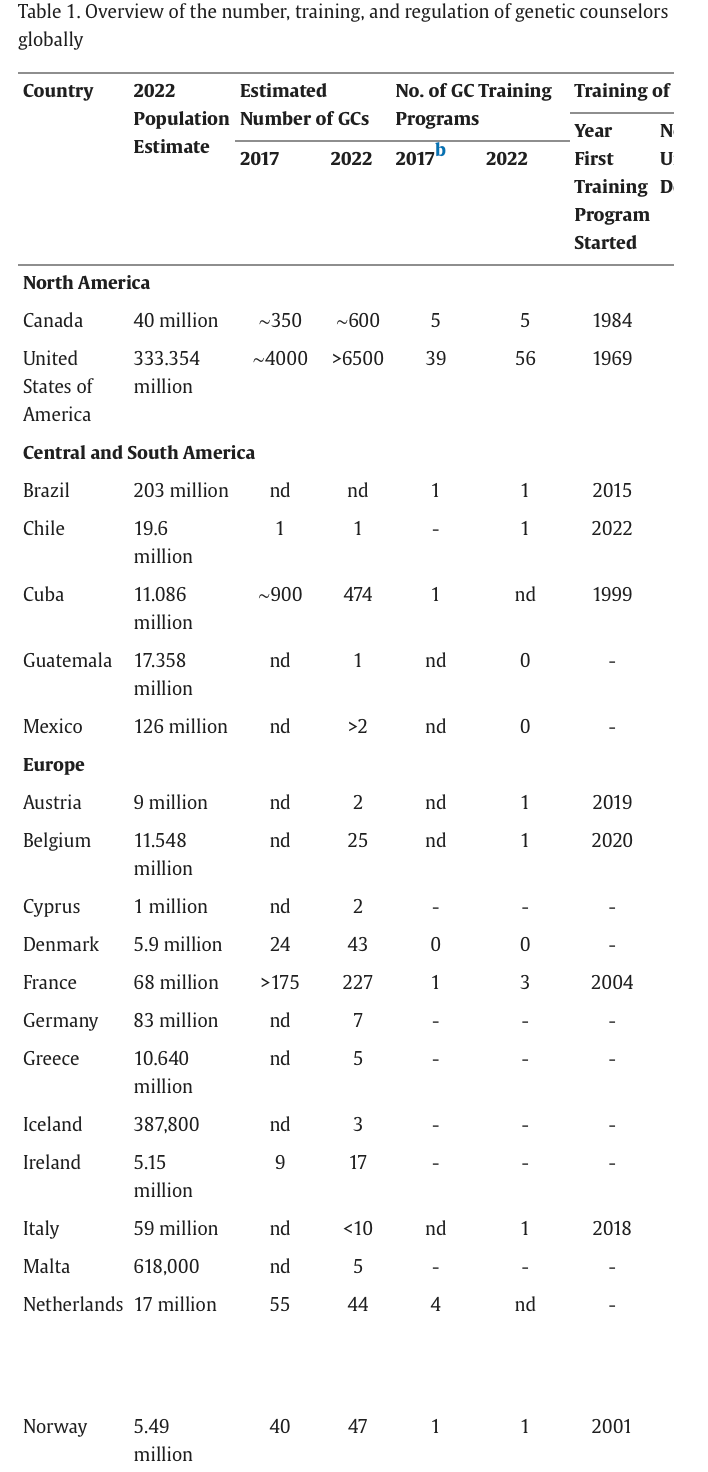
The global status of genetic counsellors in 2023: What has changed in the past 5 years? https://www.sciencedirect.com/science/article/pii/S2949774424010331
Ireland is poorly served by the HSE in relation to the number of clinical geneticists and genetic counsellors.
In fact the HSE does not even recognise Genetic Counsellors. Are they not aware that Genetics and Genomics is the future and requires to be funded accordingly.
It is now possible to prevent cancer occurring rather than waiting for it to occur. From a cost perspective it is a “no brainer” to ensure that genomic integration in routine health care happens now.
Bowels, Basics & Breakthroughs


Blood Clots

Cancer patients, especially those who are receiving chemotherapy, have a much higher risk of DVT than other people.
 Lynch Syndrome Ireland