
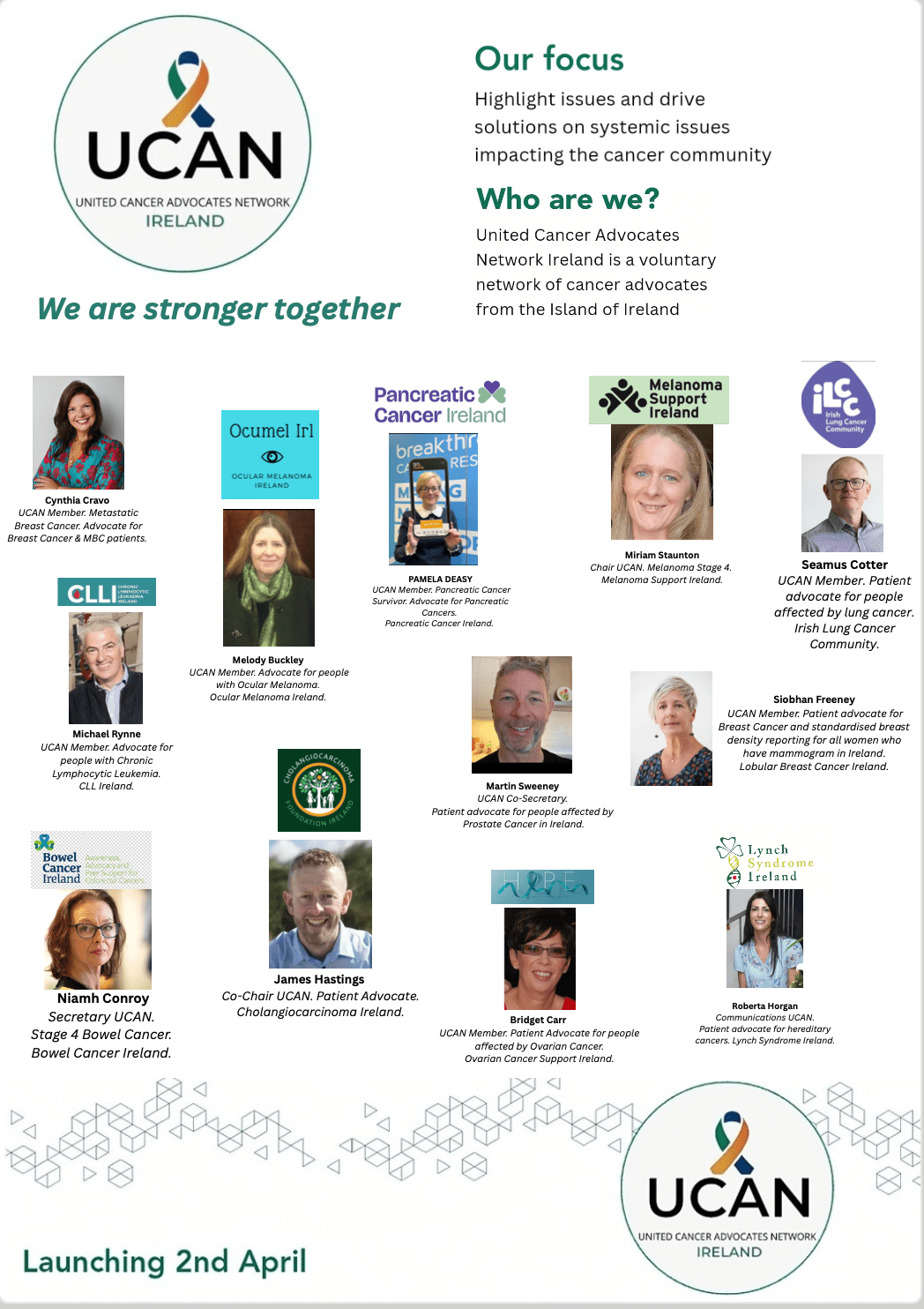
Launched today outside Leinster House.
Category: Research
More than ‘just’ a GP
Research has shown that junior doctors are exposed to significant negative discourse around general practice as a specialty during their hospital-based training. The blaming of GPs for emergency department crowding is almost as inevitable as brand-new Health Ministers blaming consultants for the failings of the entire HSE (brand-new Health Ministers don’t tend to blame GPs for anything; they just forget we exist).
Perhaps we need to change the hashtag to #JustaHuman.
New Approaches to Hereditary Cancer Risk Assessment in Lynch Syndrome and Beyond
Case Conference, during which Matt Yurgelun, MD (@MattYurgelun) from @DanaFarber discusses new approaches to hereditary colorectal cancer risk assessment.
Lynch syndrome- Georgia

Fighting against misinformation and watching science be dismissed is draining.
Social media, once a tool for connection, has become a battleground—especially platforms like Twitter (now X) and Facebook, where conspiracy theories and political toxicity overshadow genuine efforts to help.
CANCER TEST DESIGNED BY NEWCASTLE SCIENTISTS COULD IMPROVE SURVIVAL RATES
Lynch syndrome significantly increases a person’s risk of developing certain types of cancer, in particular colorectal which is the fourth most common cancer in the UK.
Screening for Lynch syndrome means that if a person tests positive, a DNA test can then be offered to their relatives to see who else has the condition, so that they can then be put on a regular programme of checks.
The test can also guide the best treatment to provide, as it can indicate whether a person will respond to immunotherapy, a new and effective approach to cancer treatment with increased accuracy.
Newcastle upon Tyne Hospitals NHS Foundation Trust is leading the rollout of the project and the test is being evaluated for patients at the Royal Marsden Hospital, Manchester University NHS Foundation Trust, Birmingham NHS Foundation Trust and Bristol NHS Foundation Trust.
Lynch Syndrome: A Single Hereditary Cancer Syndrome or Multiple Syndromes Defined by Different Mismatch Repair Genes?
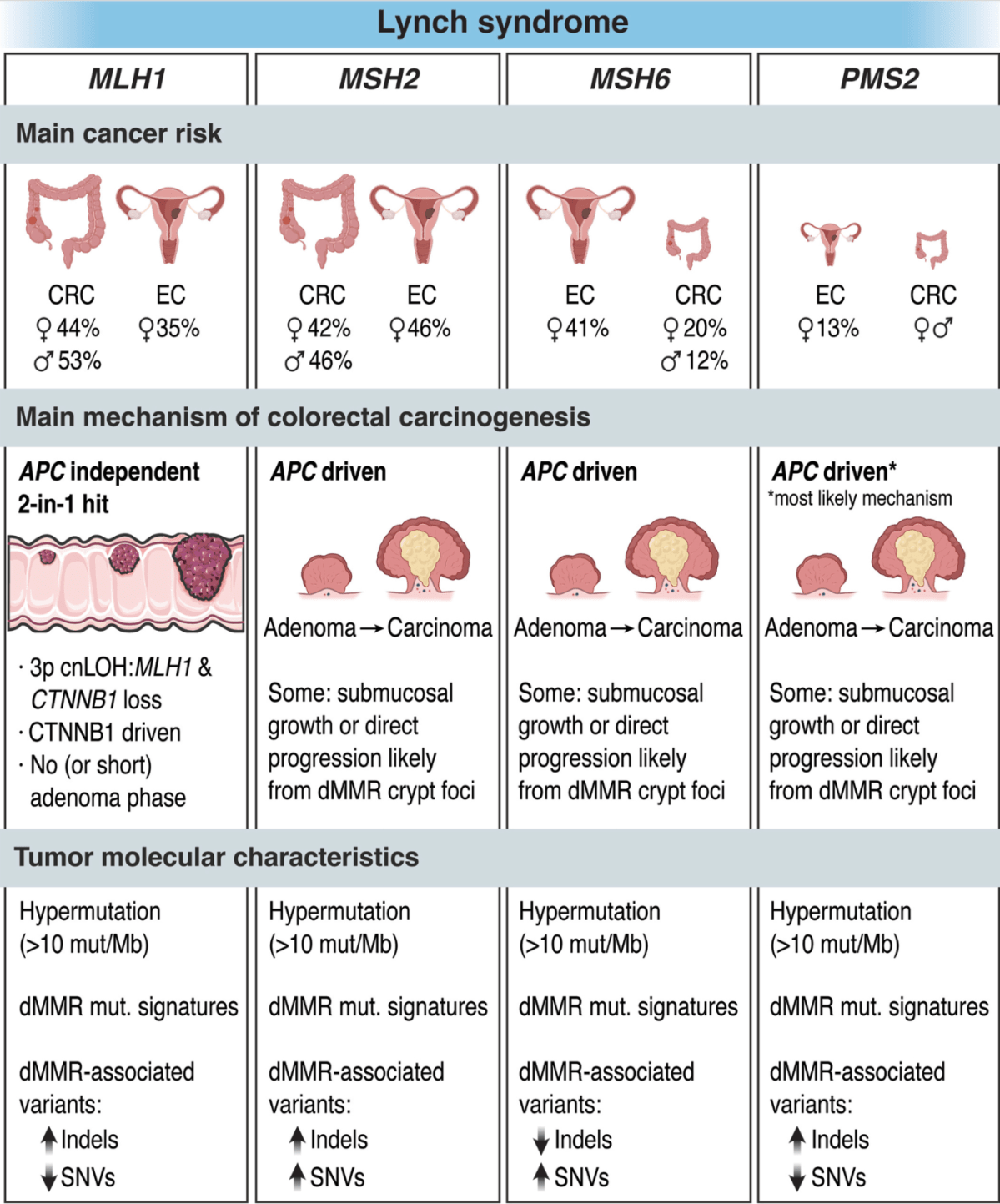
Lynch syndrome is the most common type of hereditary cancer syndrome, affecting 1 in 280–400 individuals. This predisposition to cancer is caused by inherited or germline pathogenic changes in the DNA mismatch repair (MMR) genes MLH1, MSH2, MSH6, and PMS2. In some cases, constitutional promoter methylation of MLH1 or MSH2 (secondary to an EPCAM5′ deletion) is also identified.
Conclusion: it may be appropriate to consider categorising Lynch syndrome as 4 distinct syndromes based on the specific altered MMR gene.
The varying carcinogenic mechanisms and associated cancer risks indicate the need for gene-specific surveillance recommendations in Lynch syndrome. Moreover, the growing understanding of gene-specific differences will likely affect treatment options and efficacy of Lynch syndrome vaccines.
https://www.gastrojournal.org/article/S0016-5085(23)00696-0/fulltext
CUTTING DOWN CANCER: The algorithms are not your friend when it comes to health

Today, an estimated 86% of people get their news from a smartphone, tablet, or computer. Between websites, social media, podcasts, and search engines, the sheer volume of digital information available is vast.
Alarmingly, about 40% of the traffic on the internet is not created by humans, and fake news stories are 70% more likely to be forwarded than real ones.Into this environment, 80% of us look for health information. Studies have found that the majority of this information is not in line with best medical advice.
Remember: The information we receive on our social media is determined by algorithms designed to show us more of what we want to see.
Misinformation is not new, but it is just as dangerous to big decisions now as it ever was.
Know the facts – own your risk – decide for yourself.
https://www.southernstar.ie/news/the-algorithms-are-not-your-friend-when-it-comes-to-health-4319905
Changes in faecal haemoglobin values over sequential rounds of faecal immunochemical tests (FIT) in a surveillance population
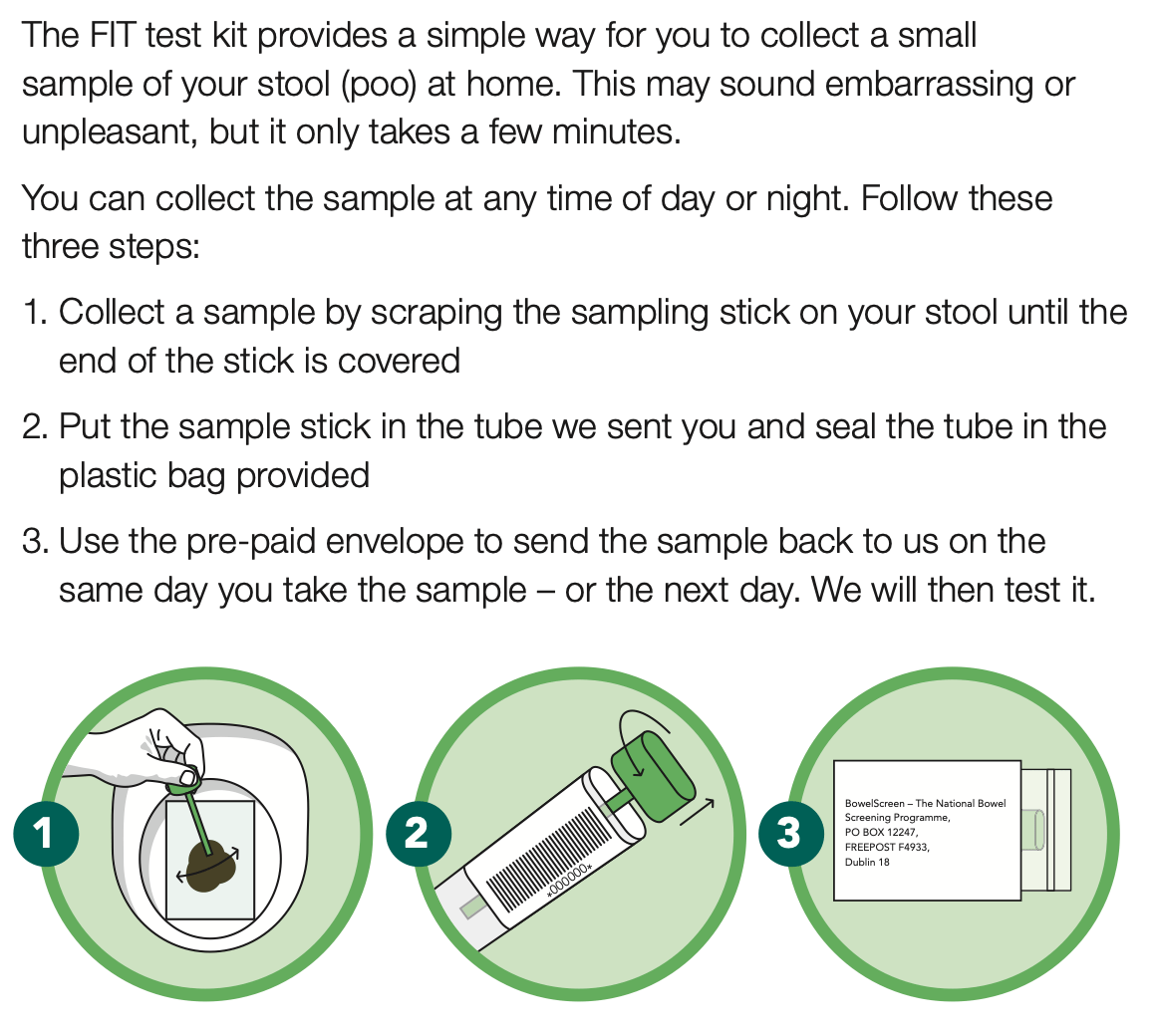
Objective: Colorectal cancer (CRC) screening enables resection of polyp precursor lesions, preventing cancer or detecting it earlier. Post-polypectomy, people can remain at increased CRC risk, prompting surveillance colonoscopy. Less invasive faecal immunochemical tests (FIT) could reduce the burden of surveillance colonoscopy. We investigated whether changes in FIT values over multiple rounds were associated with advanced colorectal neoplasia (ACN) detection.
Conclusion: No change in FIT result across multiple rounds was associated with a low ACN detection rate, while a serial increase was associated with higher ACN detection rates. Further research should consider if sequential rounds of FIT could be used for stratifying individual risk.
Creation of a future European Network of National Cancer Mission Hubs (NCMHs)

ECHoS is an European project, funded by Horizon Europe Programme, that aims to support the implementation of the Cancer Mission activities in all Member State and Associated Country (MS/AC) through the establishment and development of National Cancer Mission Hubs (NCMHs) operating at national, regional, and local levels. By establishing NCMHs in each MS/AC, European citizens and organisations in health, research, and beyond, will be voiced and their voices will echo together.
ECHoS broad scope seeks to take cancer-policy dialogues beyond research and innovation, and health systems, covering also other relevant areas in cancer control and support, such as employment, education, and socioeconomic aspects.
To guarantee alignment and progress in the field of cancer, ECHoS will be guided by impacting subareas of Cancer Mission – namely prevention, early detection and treatment, quality of Life and survivorship – as well as equity, sustainability, and cross-cutting EU priorities such as social engagement and digital health.
http://www.cancermissionhubs.eu
New prostate cancer test means some men could avoid unnecessary treatment

30% of patients have an aggressive type of this cancer needing urgent treatment, about 70% have slow-growing cancer and can be monitored without immediate treatment.
This new test was developed out of concerns over-treatment was becoming an issue for men with this type of cancer who may not need treatment.
Conclusion: https://bjui-journals.onlinelibrary.wiley.com/doi/10.1002/bco2.474?fbclid=IwY2xjawIJbD1leHRuA2FlbQIxMAABHUSnhz-ugdbis31f1RIiZ29Pfrmoz_JXAWilNVme-L3aFsCA35khswqsMA_aem_30sxxBEWlboKs6aqWleGgA
Biopsy-based MCRS improves risk stratification over standard clinical and pathological information and optimises patient management after diagnosis of prostate cancer.
 Lynch Syndrome Ireland