Blog

Managing Neuropathy

Each chemotherapy drug or combination has its own side effects. Most side effects can be easily controlled by medicines. Not everyone will have the same side effects. Your healthcare team will give you information about the side effects that are most likely to affect you. You might find it helpful to keep a note of any that you experience.

Oxaliplatin (Eloxatin®)

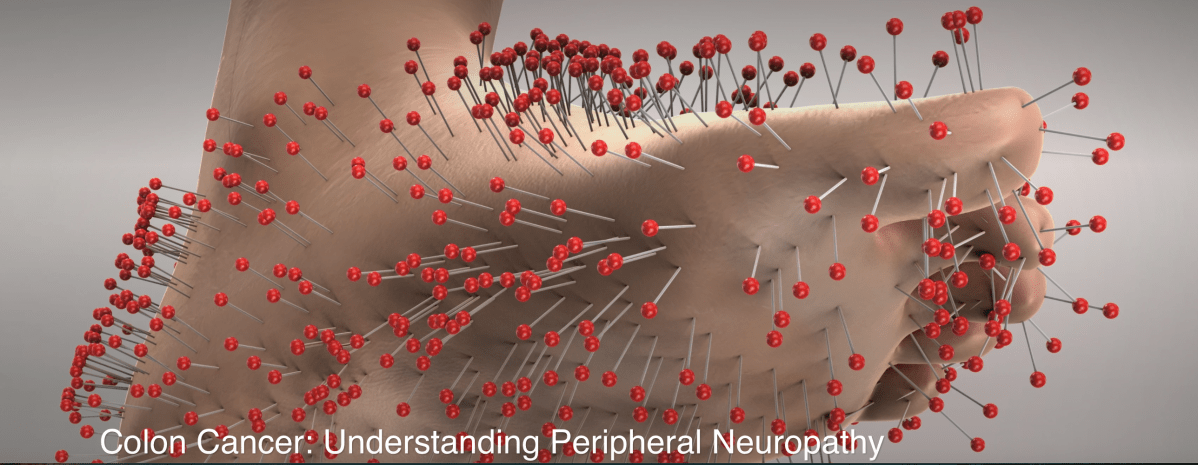
You might have tingling or numbness in your hands and feet. This is called peripheral neuropathy. Talk to your medical team if you have these symptoms.

You may get pins and needles, weakness or numbness. This can make it hard to do everyday things like writing, picking up small items and walking. These symptoms can be triggered or made worse by the cold. Your healthcare team may advise you to wear gloves when you use the fridge or freezer and avoid chilled food or drinks for a few days after each treatment.

You may get neuropathy symptoms during your chemotherapy cycle and for up to two weeks afterwards. Symptoms may improve once you finish treatment but in some people, neuropathy can last for months or years after treatment.

Tell your healthcare team if you have any symptoms of neuropathy. If the symptoms are affecting your daily life, your doctor may suggest lowering the dose of oxaliplatin or changing your treatment.

https://twitter.com/bowelcanceruk/status/1868033470100074851

Outcomes of 10 years of PSA screening for prostate cancer in Norwegian men with Lynch syndrome

Pathogenic germline variants in the mismatch repair (MMR) genes(Lynch syndrome) are associated with an increased risk of prostate cancer.

This is a prospective observational study of 225 male MMR carriers who were recommended annual PSA screening.

Conclusions:

The results of this long-term prospective observational study indicate that the MMR genes and especially MSH2 and MSH6 are associated with a significantly increased incidence of PCa compared to men in corresponding age groups and birth cohorts without any known genetic predisposition, and with a high number of cancers showing aggressive characteristics. While we still do not know whether screening has led to an improved prognosis, we conclude that our findings support continued PSA screening of MSH2 and MSH6 carriers. Further studies are needed to provide optimal recommendations for PSA threshold and to clarify whether such screening is not indicated in MLH1 and PMS2carriers.

https://onlinelibrary.wiley.com/doi/10.1002/pros.24711

What is an orphan drug?

The so-called ‘orphan drugs’ are intended to treat diseases so rare that sponsors are reluctant to develop them under usual marketing conditions.

Efforts have been jointly made at national and European levels by industry and health authorities (EMEA – European Medicines Evaluation Agency), in order to offer the incentives required to stimulate the development of orphan drugs. The goal was to rapidly make available, for rare diseases, drugs with a level of quality equivalent to that required for any other drug.

https://www.orpha.net/en/other-information/about-orphan-drugs?stapage=europe

What is the National Cancer Information System(NCIS)?

NCIS is a single national computerised system that records and stores information relevant to your health care. This information includes your:

  • Name and address
  • medical history
  • cancer diagnosis
  • treatment possibilities
  • cancer drug treatment (also known as chemotherapy).

What are the benefits of the NCIS?

  • easier access to your cancer care information for your medical team
  • information is available to all staff involved in your care even if it is not in the hospital you usually attend
  • better security of your personal information
  • greater safety in prescribing chemotherapy

https://www.hse.ie/eng/services/list/5/cancer/profinfo/medonc/projects/ncis%20patient%20information%20leaflet%20.html

Bowel cancer rising among under-50s worldwide, research finds

Experts are still in the early stages of understanding the reasons behind the rise. The authors of the study, published in the Lancet Oncology, said consumption of junk food, high levels of physical inactivity and the obesity epidemic were likely to be among the factors.

https://www.thelancet.com/journals/lanonc/article/PIIS1470-2045%2824%2900600-4/fulltext

“Ongoing efforts are essential to identify the additional factors behind these trends and to develop effective prevention strategies tailored to younger generations and local resources worldwide.”

The overall number of cases in young adults was still low, with only about one in 20 bowel cancers in the UK diagnosed in people aged under 50.

Sung said it was critical that more people know the symptoms. “Raising awareness of the trend and the distinct symptoms of early-onset colorectal cancer (eg rectal bleeding, abdominal pain, altered bowel habits, and unexplained weight loss) among young people and primary care providers can help reduce delays in diagnosis and decrease mortality,”

A patient-led survey on information and communication needs of patients with metastatic breast cancer in Ireland and Northern Ireland

Women with advanced breast cancer are living longer thanks to better treatment but they are “invisible” in services which could support their changed lives, a patient and scientist has warned.

This could easily apply to other cancers as well. “The experiences of patients with different cancers is more alike than different”

https://doi.org/10.1016/j.breast.2024.103837

National Cancer Registry Report

The National Cancer Registry was established by the Minister for Health in 1991. It has been collecting comprehensive cancer information for the population of the Republic of Ireland since 1994

This information is used in research into the causes of cancer, in education and information programmes, and in the planning and management of cancer services to deliver the best cancer care to the whole population.

    Understanding the treatment experiences of adults diagnosed with early-onset colorectal cancer: A qualitative study

    Early-onset colorectal cancer (CRC) incidence in adults aged under 50 is increasing. There is a critical lack of knowledge regarding the challenges faced by early-onset CRC patients and their experiences of treatment.

    Conclusions

    The small(21)study highlights numerous unique issues experienced by the early-onset CRC patient group during treatment. There is a need for change in clinical practice, along with the development of international guidelines and tailored resources for both patients and healthcare professionals, in order to improve care.

    https://onlinelibrary.wiley.com/doi/10.1002/pon.6367

    Irish Network of Gynaecological Oncology(INGO)

    Congratulations to INGO who was selected as the winner of the Patient Project of the Year Award at the Irish Healthcare Awards 2024 for it’s commitment to raising awareness of gynaecological cancer.

    INGO comprises over 30 of Ireland’s foremost gynaecological cancer campaigners, researchers and patient advocates(including Lynch Syndrome Ireland).

    Check out http://www.thisisGO.ie an online personalised resource for you and yours who have been impacted by a gynaecological cancer.