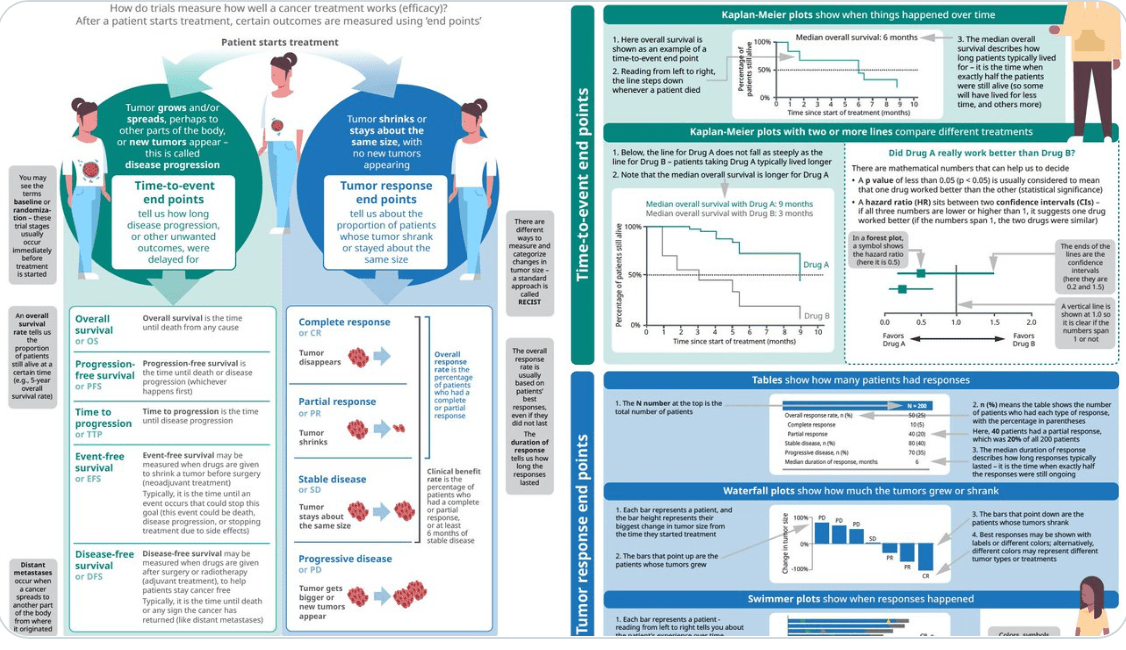
Decoding clinical trial jargon: helping people understand the efficacy end points used in cancer trials

People living with cancer should have access to clear and comprehensible treatment information to empower informed decision-making.

This podcast highlights the need to support this aspect of health literacy by bringing together the perspectives of a patient, a patient advocate and a medical oncologist.

Accompanied by two visual, plain-language guides designed to help general audiences understand the key efficacy end points that are commonly used in trials of solid tumor treatments.

https://www.tandfonline.com/doi/full/10.1080/14796694.2024.2433411?scroll=top&needAccess=true#abstract


The increasing role of cancer genetic counsellors

November 14 was Genetic Counsellor Awareness Day in Ireland and around the world. It’s important to note that it is an ‘awareness’ day rather than an ‘appreciation’ day because genetic counselling is still an under-recognised field. Genetic counsellors are healthcare professionals who provide information and support to families and individuals who are at risk for or affected by a genetic condition.

We have 17 cancer genetic counsellors and two genetic counselling assistants at City of Hope to handle this volume. In contrast, there are five cancer genetic counsellors at St James’s Hospital in Dublin.

Dr O’Shea said the St James’s cancer genetic service welcomed Minister for Health Stephen Donnelly’s announcement of funding to implement the Hereditary Cancer Model of Care in 2025. Genetic counsellors are a key part of delivering optimal oncology care. To respond to the demand for access to cancer genetic testing and counselling, permanent funding for 20 cancer genetic counsellors in oncology care is required nationally to serve a population of 5.3 million people. Additionally, a step forward to increase the capacity of genetic counsellors in the Irish health system is a HSE-funded training pathway.

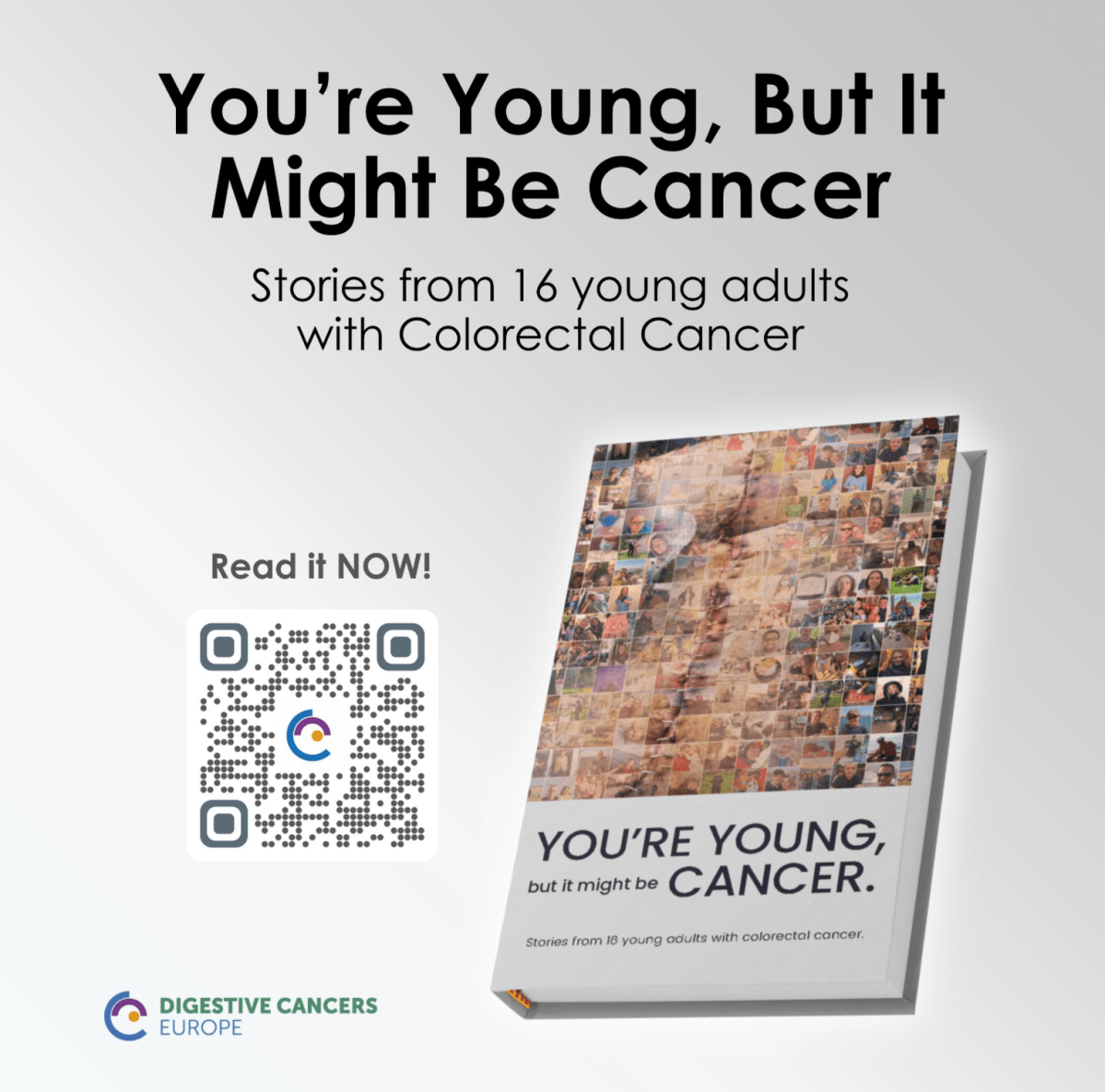
Colorectal cancer incidence trends in younger versus older adults: an analysis of population-based cancer registry data

Previous studies have shown that colorectal cancer incidence is increasing among younger adults (aged <50 years) in multiple high-income western countries in contrast with stabilising or decreasing trends in incidence in older adults (aged ≥50 years).

The increase in early-onset colorectal cancer, previously seen predominately in high-income western countries, has now been documented in various economies and regions worldwide, marking it as a global phenomenon.

The global reach of this alarming trend calls for innovative tools to prevent and control cancers linked to nutritional attributes, physical inactivity, and excess bodyweight, which might be more challenging to address than the tobacco epidemic.

Educational efforts to increase awareness of the increase in the incidence of early-onset colorectal cancer and its unique symptoms, especially among primary care providers, would have far reaching effects in reducing delayed diagnoses and mortality.

https://www.thelancet.com/journals/lanonc/article/PIIS1470-2045(24)00600-4/fulltext

The European Tumour Group Podcast

Delving into the world of hereditary cancer conditions, featuring conversations with opinion leaders, experts, cutting-edge researchers, and patients. Episodes explore key issues, groundbreaking research, and personal stories that shape the understanding, prevention, and treatment of hereditary cancer syndromes. Stay informed and inspired with every episode!

Who better to start it with than our very own @CaPP3 Sir John Burn

https://rss.com/podcasts/the-european-tumour-group-podcast/

Managing Neuropathy

Each chemotherapy drug or combination has its own side effects. Most side effects can be easily controlled by medicines. Not everyone will have the same side effects. Your healthcare team will give you information about the side effects that are most likely to affect you. You might find it helpful to keep a note of any that you experience.

Oxaliplatin (Eloxatin®)

You might have tingling or numbness in your hands and feet. This is called peripheral neuropathy. Talk to your medical team if you have these symptoms.

You may get pins and needles, weakness or numbness. This can make it hard to do everyday things like writing, picking up small items and walking. These symptoms can be triggered or made worse by the cold. Your healthcare team may advise you to wear gloves when you use the fridge or freezer and avoid chilled food or drinks for a few days after each treatment.

You may get neuropathy symptoms during your chemotherapy cycle and for up to two weeks afterwards. Symptoms may improve once you finish treatment but in some people, neuropathy can last for months or years after treatment.

Tell your healthcare team if you have any symptoms of neuropathy. If the symptoms are affecting your daily life, your doctor may suggest lowering the dose of oxaliplatin or changing your treatment.

https://twitter.com/bowelcanceruk/status/1868033470100074851

Outcomes of 10 years of PSA screening for prostate cancer in Norwegian men with Lynch syndrome

Pathogenic germline variants in the mismatch repair (MMR) genes(Lynch syndrome) are associated with an increased risk of prostate cancer.

This is a prospective observational study of 225 male MMR carriers who were recommended annual PSA screening.

Conclusions:

The results of this long-term prospective observational study indicate that the MMR genes and especially MSH2 and MSH6 are associated with a significantly increased incidence of PCa compared to men in corresponding age groups and birth cohorts without any known genetic predisposition, and with a high number of cancers showing aggressive characteristics. While we still do not know whether screening has led to an improved prognosis, we conclude that our findings support continued PSA screening of MSH2 and MSH6 carriers. Further studies are needed to provide optimal recommendations for PSA threshold and to clarify whether such screening is not indicated in MLH1 and PMS2carriers.

https://onlinelibrary.wiley.com/doi/10.1002/pros.24711

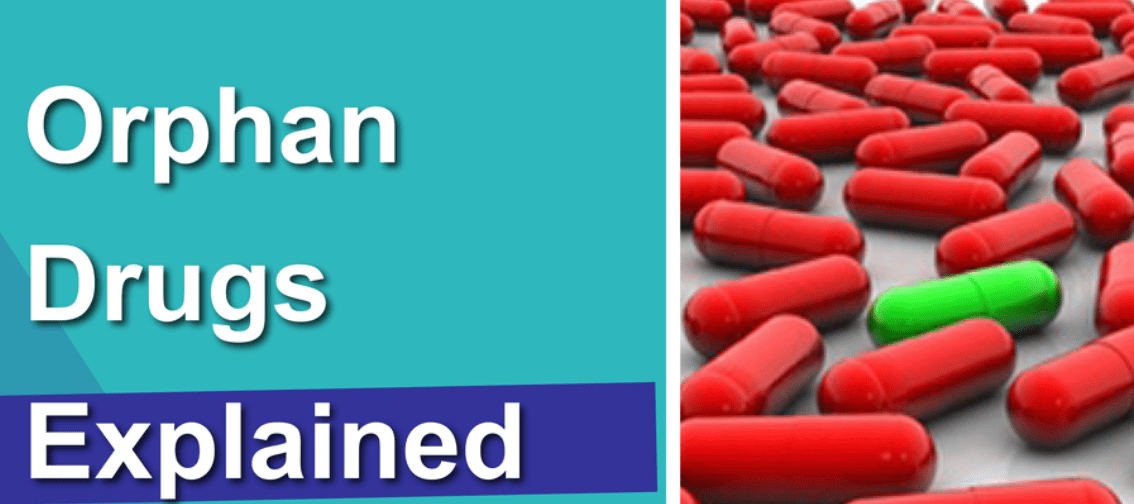
What is an orphan drug?

The so-called ‘orphan drugs’ are intended to treat diseases so rare that sponsors are reluctant to develop them under usual marketing conditions.

Efforts have been jointly made at national and European levels by industry and health authorities (EMEA – European Medicines Evaluation Agency), in order to offer the incentives required to stimulate the development of orphan drugs. The goal was to rapidly make available, for rare diseases, drugs with a level of quality equivalent to that required for any other drug.

https://www.orpha.net/en/other-information/about-orphan-drugs?stapage=europe

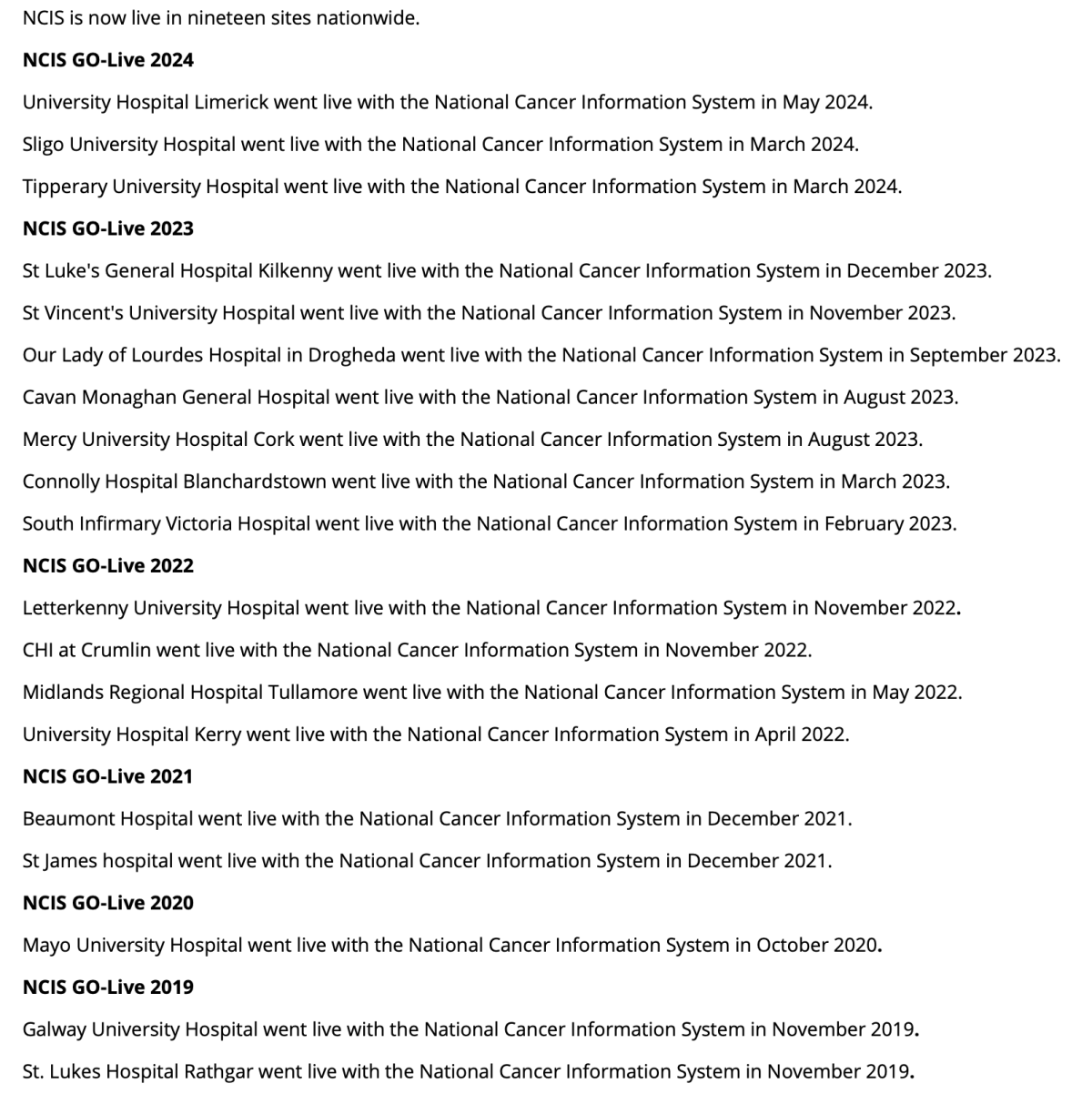
What is the National Cancer Information System(NCIS)?

NCIS is a single national computerised system that records and stores information relevant to your health care. This information includes your:

  • Name and address
  • medical history
  • cancer diagnosis
  • treatment possibilities
  • cancer drug treatment (also known as chemotherapy).

What are the benefits of the NCIS?

  • easier access to your cancer care information for your medical team
  • information is available to all staff involved in your care even if it is not in the hospital you usually attend
  • better security of your personal information
  • greater safety in prescribing chemotherapy

https://www.hse.ie/eng/services/list/5/cancer/profinfo/medonc/projects/ncis%20patient%20information%20leaflet%20.html