
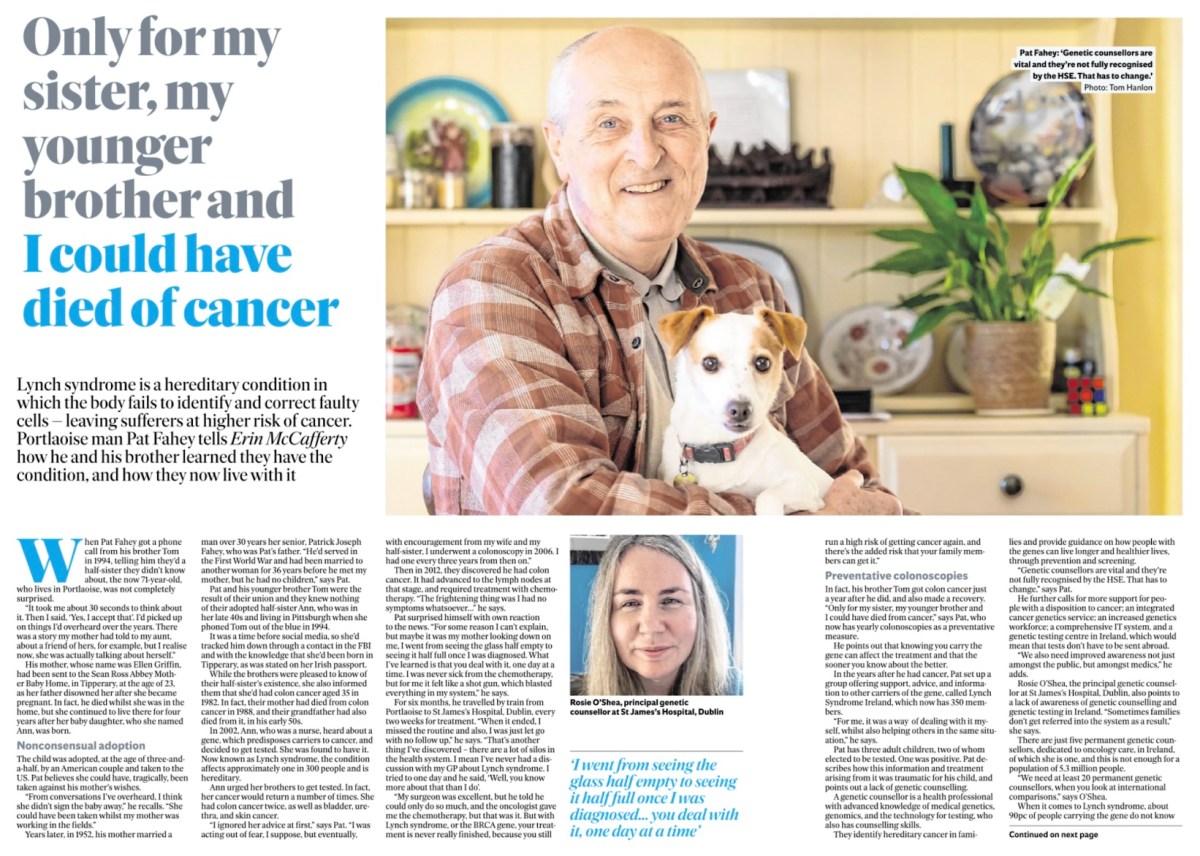
If Lynch syndrome runs in your family you really need to know.
Category: Genetic Testing
No other landscape in medicine has changed as drastically as the field of Clinical Genetics – Is Ireland behind the curve?
Advances in technology have been a major driver of the explosion of knowledge in genetics, now allowing us to sequence the entire human genome in a short period of time and at a fraction of the cost of previous years.
This has led to a better understanding of the natural history of cancer, the ability to assess genetic risk for cancer across populations, the development of clinical management strategies to reduce cancer risk, the development of novel therapeutic agents which target genetic alterations, and to improved education of patients and providers about genetic risk.
Hereditary cancer is hard enough to navigate, so we are thankful for patient-friendly information to help inform the decision-making process.
https://www.stjames.ie/cancer/yourtreatmentandcare/servicesandtreatments/cancergeneticsservice/
Genetic testing is a vital tool in enabling individuals to be proactive in their health care to achieve the best possible outcomes.
It’s very important for everyone to understand their cancer risks based on their personal or family history since their personal risk level may necessitate earlier, more frequent, and/or more intensive cancer surveillance.
This is the best way to ensure that you are doing everything you can to prevent cancer or catch it early when treatment has the best outcome.
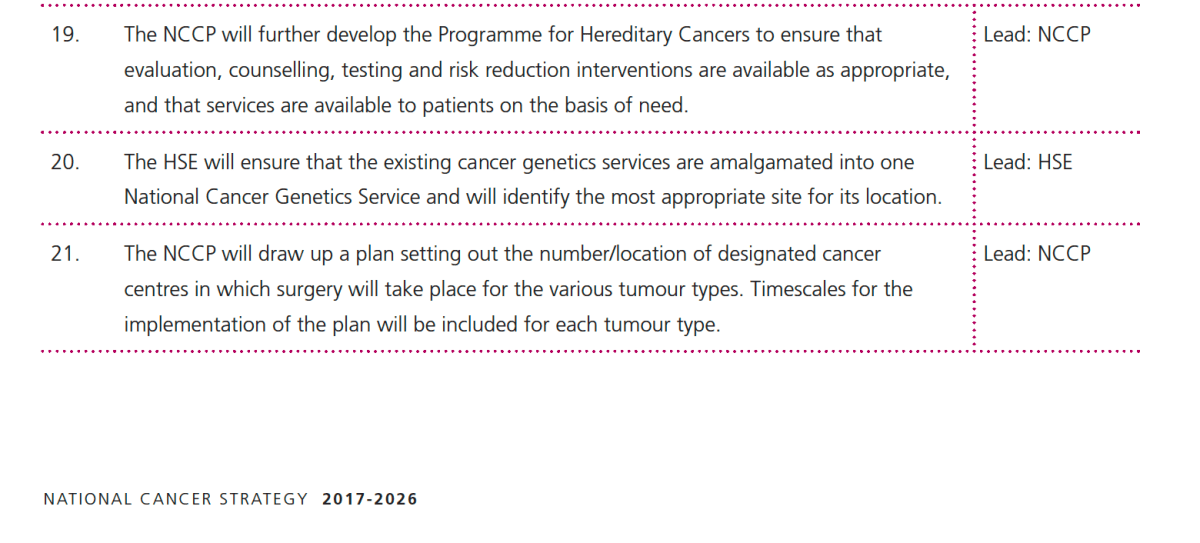
At present cancer genetics services in Ireland are underdeveloped and underfunded. Only a fraction of staff required are in place. As a result long waiting times, extra cost to the state because cancers are not prevented and discovered at a later stage.
VARIANT OF UNCERTAIN SIGNIFICANCE (VUS)

When analysis of a patient’s genome identifies a variant, but it is unclear whether that variant is actually connected to a health condition, the finding is called a variant of uncertain significance (abbreviated VUS).
In many cases, these variants are so rare in the population that little information is available about them. Typically, more information is required to determine if the variant is disease related. Such information may include more extensive population data, functional studies, and tracing the variant in other family members who have or do not have the same health condition.
AI and Machine Learning are poised to play a significant role in advancing Genetic Testing practices.
These study findings offer hope that further acceleration of VUS reduction is possible through advances in these rapidly evolving technologies.
Conclusions and Relevance In this cohort study of individuals undergoing genetic testing, the empirically estimated accuracy of pathogenic, likely pathogenic, benign, and likely benign classifications exceeded the certainty thresholds set by current VC guidelines, suggesting the need to reevaluate definitions of these classifications. The relative contribution of various strategies to resolve VUS, including emerging machine learning–based computational methods, RNA analysis, and cascade family testing, provides useful insights that can be applied toward further improving VC methods, reducing the rate of VUS, and generating more definitive results for patients.
https://jamanetwork.com/journals/jamanetworkopen/fullarticle/2825808
Let’s Talk About…Genomic Testing

Communication is crucial, and genomics can be a difficult topic to get across – especially when talking to patients. If you want to skill up, our ‘Let’s Talk About… Genomic Testing’ film series is a good place to start: https://buff.ly/4405Ozk
Featuring experts with many years’ experience, this series of films provides a helpful introduction for anyone communicating with patients about genomic testing and the possible results.
Let’s talk about… Possible results
Let’s talk about… Variants of uncert
Let’s talk about… Incidental finding
Impact of population screening for Lynch syndrome insights from the All of Us data

Data used from the All of Us (AOU) Research Initiative to assess the prevalence of LS in the general U.S. population, and analyzed demographic, personal, and family cancer history, stratified by LS genotype to compare LS and non-LS carriers.
The results suggest that population-based germline testing for LS may identify up to 63.2% of carriers who might remain undetected due to lack of personal or family cancer history.
Their analysis on family history of cancer indicates that cancer risk further escalates for LS carriers who also have a family history of cancer.
LS affects about 1 in 354 individuals in this U.S. cohort, where pathogenic variants in the genes MSH6 and PMS2 account for the majority of cases.
Cancer Genetic Appointments
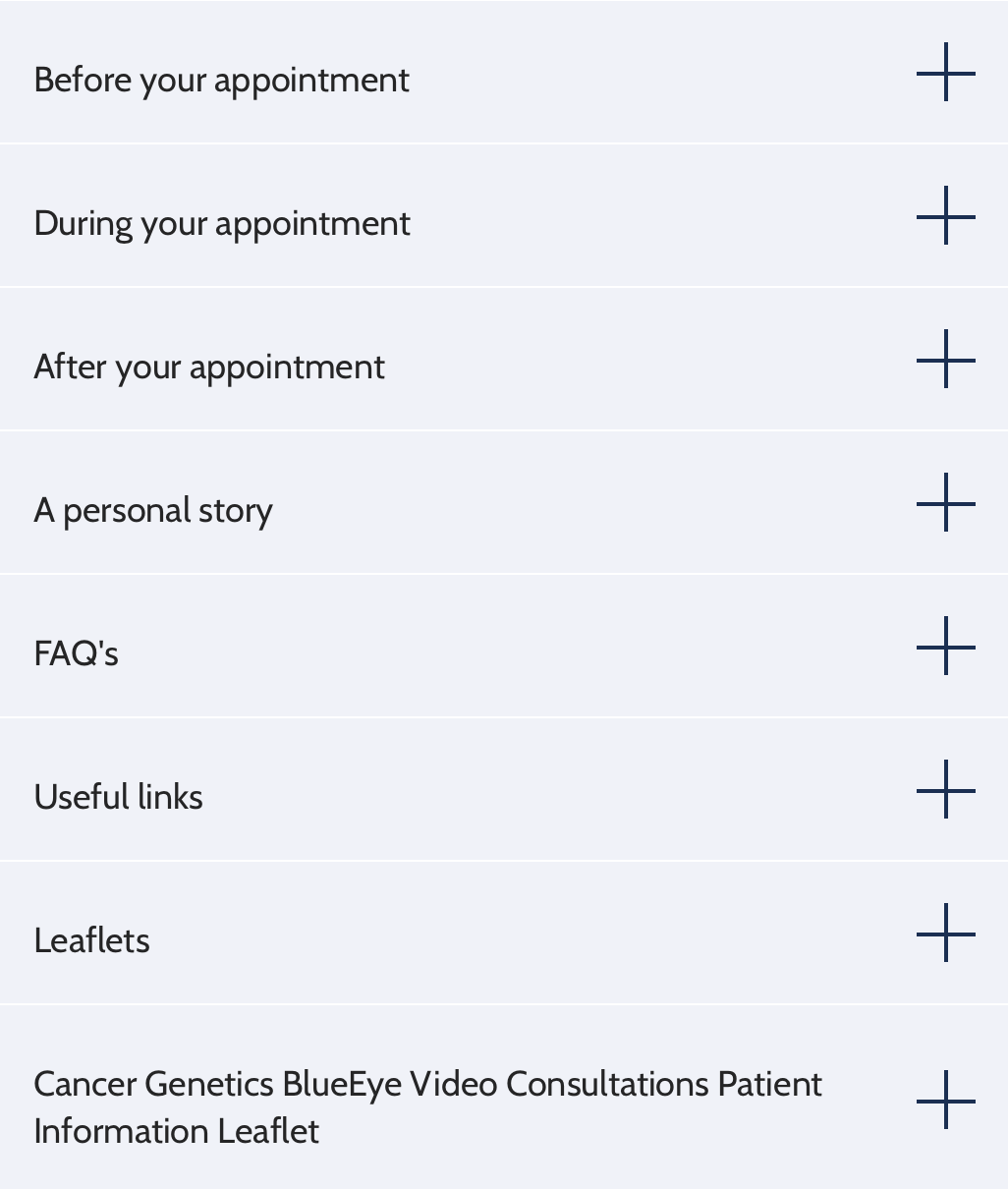
During your appointment, a member of the team will confirm your family history/ family tree details with you and may ask about other medical conditions in your family (where known).
If a cancer genetic alteration (gene fault) exists in your family, or there is a possibility of an inherited genetic alteration, our team will discuss the condition and outline the choices and options available to you.
What is ‘Diagnostic Cancer Genetic Testing’?
Diagnostic cancer genetic testing is helpful when an individual with cancer is unaware of whether a gene alteration is present within their family. A blood test can be taken either from you or an eligible family member (i.e. the blood test must be taken from someone with cancer), to identify any alteration (gene fault) in your DNA. If a cancer gene alteration exists, it may be responsible for causing cancer in you, and/ or in other family members.
What is ‘Predictive Cancer Genetic Testing’?
If a cancer gene alteration is identified in your family, you may opt to undergo a predictive cancer genetic test to determine if you carry your family’s alteration, using a blood sample taken from you.
https://www.stjames.ie/cancer/yourtreatmentandcare/servicesandtreatments/cancergeneticappointments/
GeNotes: Genomic notes for clinicians
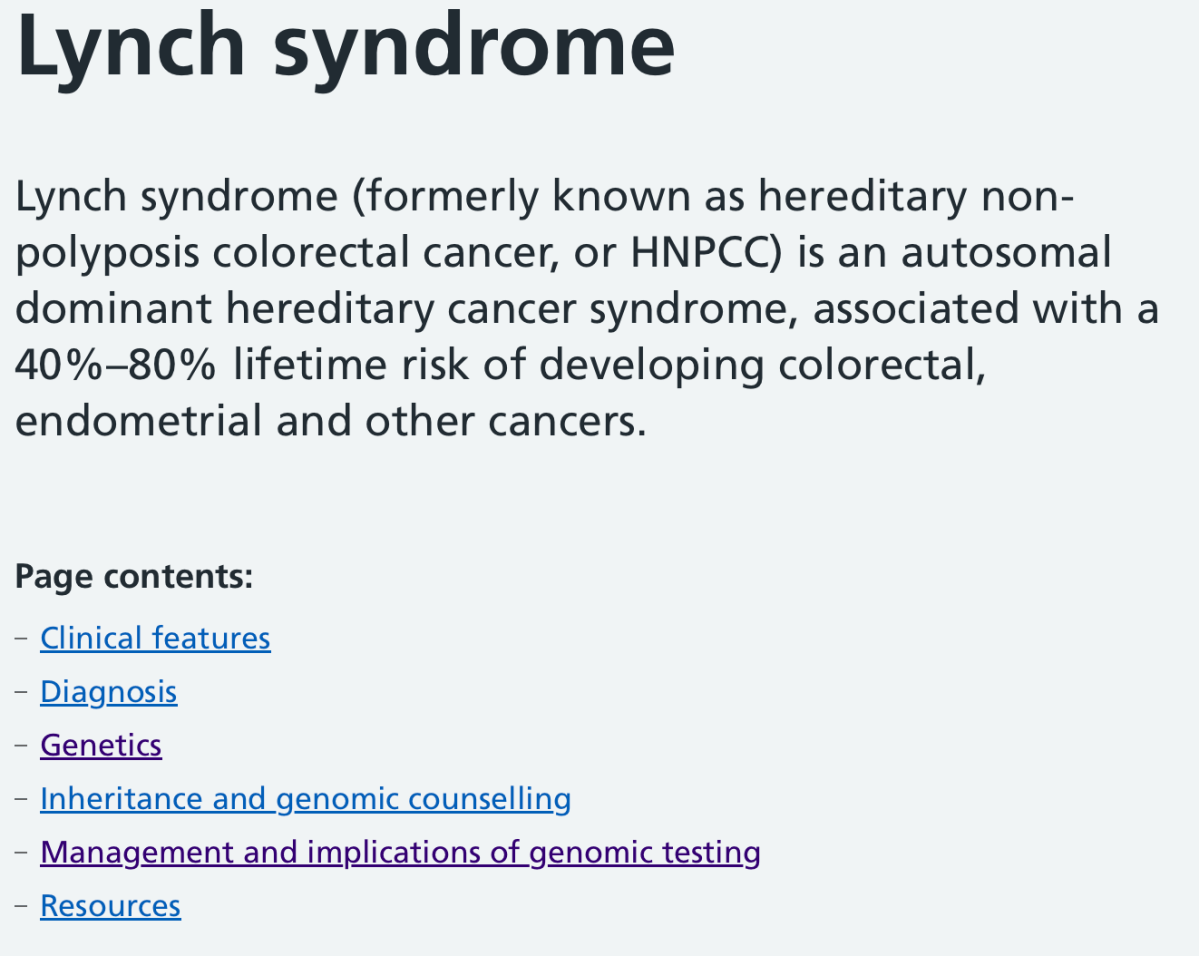
GeNotes has been created collaboratively with experts across the NHS to provide practical information and support for fellow clinicians who need to access genomic testing for their patients. Find out more here:
Who should I tell if I have Lynch syndrome?

It is important to tell your parents, brothers and sisters and relatives about your diagnosis, as they have a 1 in 2 chance of having Lynch syndrome. Knowing if you or a family member has Lynch syndrome can help them to take steps to reduce their risk of developing cancer.
If you have children, they also have a 1 in 2 chance of developing Lynch syndrome. You will need to talk to them as well. Deciding how and when to have this conversation can be difficult. Talk to your children using language they understand and, in an age, appropriate way. Children are often more aware of adult worries than we expect. Being open with them can make them feel included and ease their worries.
In general, healthcare providers will not offer genetic testing to people who are under 18, unless there is a concern about childhood cancer.
If you don’t have children but you are considering starting a family and have concerns about the risk of Lynch syndrome, it is important to discuss different options with your healthcare provider and genetic counsellor. They will help you make an informed decision.
If I have Lynch syndrome, will I get cancer?
Not everyone with Lynch syndrome will develop cancer, but you have an increased risk compared to the general population. People with Lynch syndrome have an increased risk of developing some types of cancer, such as:
• bowel (colorectal)
• endometrial or uterine
• ovarian cancer.
Lynch syndrome causes 1 in every 35 cases of bowel cancer, 1 in every 50 cases of endometrial cancer.
Your risk of developing cancer depends on which gene is affected, your age and being male or female.
Check out http://www.plsd.eu
Health literacy – clearer cancer communication for better Health

Health literacy is the ability to get, understand and use healthcare information.
The Irish Cancer Society want to empower people with confidence and skills to cope better with their cancer and avoid unnecessary physical and emotional difficulties.
Clear, efficient communication is vital to help patients to understand and make decisions about their treatment and to manage side-effects. Using established health-literacy friendly techniques can make interactions more effective, saving time and avoiding unnecessary follow-up and service use.
 Lynch Syndrome Ireland